Bees & Swarming --- It is that time of the year again

Some more news on bees and hives – it comes from the local city of Zurich government. They have passed a new legislation to protect the wild bees, which are competing with honey bees for resources. As such, they have decided to eliminate beehives from Zurich in two steps; first, they will not provide any more ‘licenses’ for beehives in the protected areas. As a second step, they will not renew any more of the licenses. Which means that 215 hobby beekeepers will have to depose their activities in the coming 12 to 24 months…

Here are the 'designated wild bee protected areas.

I am happy to report that our bees are (by 50 meters!!! )out of the protected designated area :smiley:

3 Likes

I love hearing about the bees.

2 Likes

Yah, the birds need equal time.

1 Like

Whaaaat? Bees can survive up to 1 week underwater provided they are hibernating. @Izzy is this something that could happen natural conditions?

https://www.science.org/content/article/how-bumblebees-survive-days-underwater-without-drowning

:open_mouth: :open_mouth: :open_mouth: wow. real hibernation + anaerobic metabolism. That’s pretty incredible.
Well, I know that the bees that I (accidentally) drown in water while cleaning the material come back to life and fly away once I ‘fish’ them back and lay them in the sun to dry. Pretty remarkably, even if they have been totally motionless for some time (>30 minutes).

Obviously not as brutal as the experiment of this lady, but it has always astonished me.

Thanks! now I know part of the trick —they close their ‘airways’ .. By the way…their airways are not on their ‘nose’…they are on their abdomen. You can actually ‘see’ how a tired bee breaths heavily, as their abdomen expands and contracts rhythmically after a heavy flight.

super interesting, but, oh my god, those experiments… I don’t think I have ever seen or heard about colonies drowning in water. The largest danger for bees is actually fire. Honey is very flammable (and wax also); when a colony catches fire, the bees will try to gorge in honey as fast and as much as they can, to fly away – but the whole colony is doomed. The Queen is too heavy to fly away, and without her, the bees will just be able to escape…and maybe (maybe!) be accepted individually in some other colony, but they will not be able to recreate a full colony without the Queen.

when I was a student, we would sink cockroaches (and some other insects) in liquid nitrogen. After they thaw, they would run away…as nothing would have happened. I learn through those experiments that we, humans, are an inferior species… :slight_smile:

2 Likes

“when I was a student, we would sink cockroaches (and some other insects) in liquid nitrogen. After they thaw, they would run away…as nothing would have happened.”
Wow, what a sheltered life I have led. All those years using liquid nitrogen without ever even hearing of this experiment. I found this: How Cold Temperatures Affect Cockroaches?
Must be the exoskeleton that protects them short-term. Wonder how their eyesight is afterwards?

I can bet the published results mention 1 week because a pesky ethics committee did not allow to push the experiment for a longer time :wink:

1 Like

Well…these type of experiments took place before any ethics committee existed…and before any professor would appear in the lab :smiley: : D :D…and of course, that’s just the ‘peak of the iceberg’ of the unscripted biology tests… Curiosity killed the…cockroach. ah no, it didn’t, I can tell you! :smiley:

1 Like

As a teenager, I once worked on a campsite and had a job to mop up. I had a wasp land on the mop and I tried drowning it. It was continually trying to walk along the mop up, so I was rotating it and making a kind of under-water treadmill for it.

After about 5 minutes, I realised the thing was not going to drown and I gave up. I guess it must have had some oxygen trapped along with it.

Aaaaand…hop!
it is April again! time to reproduce!

No, it is not me trying to improve the Swiss fertility rates (a topic of another thread), it is nature calling!
Humans also recognize it…" Frühjahrsunruhe" , " Être fleur bleue " ,“spring is in the air”, “la primavera, la sangre altera”… and all animals feel it…on their hormones.
Or wherever they feel it, who knows.
And bees also do! so they are getting ready to ‘reproduce’ themselves.
How? (this is new material, you can read the thread above to be reminded of the process)

The queen starts laying a lot of drone eggs. Drones (=male bees) are a clone of their mothers – just with half of the chromosomes.
Drones have only one mission in life – find a queen, and impregnate her. Well, it could be resumed with 4 letters, but let’s bee poetic here…
Easier said than done. Which are the odds of a drone being successful? (and dying on the attempt, during the happy ending).
An interesting question that I would not doubt to pose to any consultant new hire…

A bee colony creates between 2% - 10% of drones in a year. The stronger the colony, the higher the # of drones. Let’s assume an average size colony of 40,000 bees, with an average # of drones; 6%; That’s 2,400 drones. Let’s assume 60% survival rate – there are a lot of reasons why drones die - they are not the sharpest tool in the shed. That’s about 1,450 drones. And, how many virgins are around to be fertilized? usually, 1 or 2 per colony and per year. So let’s assume 1.5 virgins, who mate eagerly with an average of 10 - 15 drones…

So, the chances of a drone fulfilling its mission is about 1.34%. (NoA: this is just a back of the envelope calculation). According to IA, this is the same rate of condom breakage when used correctly. Ha. interesting :smiley: :smiley: :smiley:

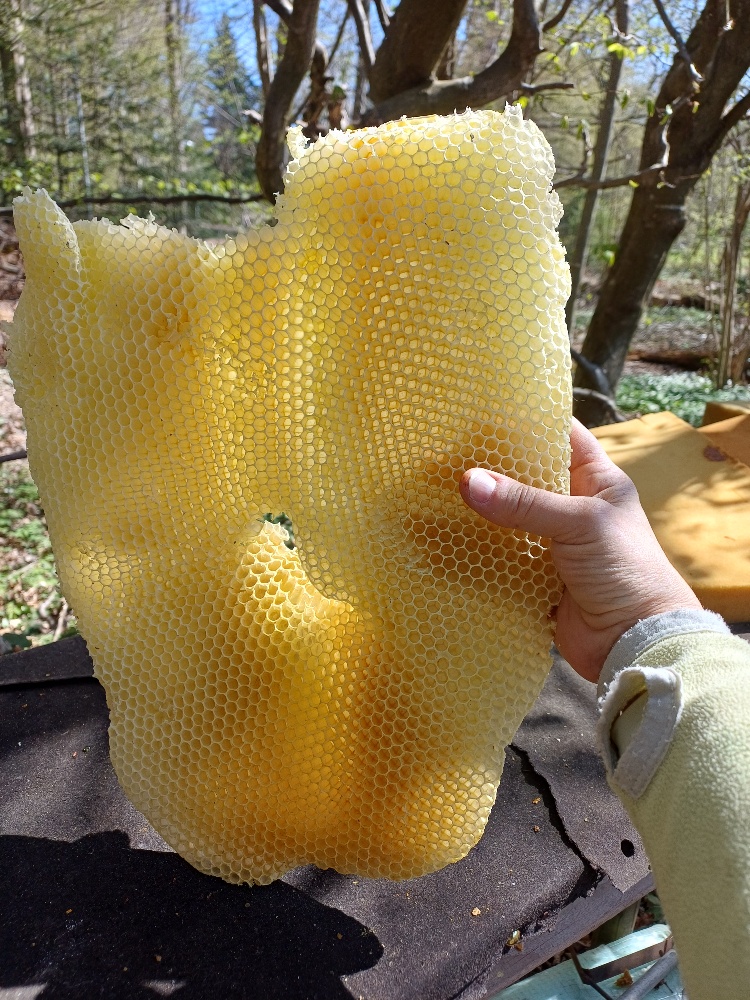
Of course, the odds decrease when the Queen decides to go ballistic, and do THIS. (see below). This should make about 4 kilos of honey…but instead, it is about 5,000 drone cells…with eggs on it. The perfect storm for swarming in 4 weeks…

3 Likes

I took the kids to a bee place in France at the weekend all in French so a bit beyond me. I managed to catch something about acacia honey being one that can be eaten by diabetics.

Acacia honey has a relatively low glycemic index (GI) of around 32–35 compared to table sugar (GI 65) or other honeys, due to its high fructose content (44–48%), which leads to slower blood sugar rises. This makes it a potentially better natural sweetener option for diabetics than many alternatives, as it causes more gradual glucose absorption.

While it “may be” eaten by diabetics it isn’t without consequences. Blood Sugar will rise and medication needs to be adjusted to compensate for the rise.

Diabetics can eat anything that non-diabetics can eat. Provided they adjust their medication to cover it. And if that sounds easy, it isn’t.

Acacia honey is less sweet than other honeys but it still is very dense carbohydrate which cannot be ignored.

I guess it’s that time of the year.

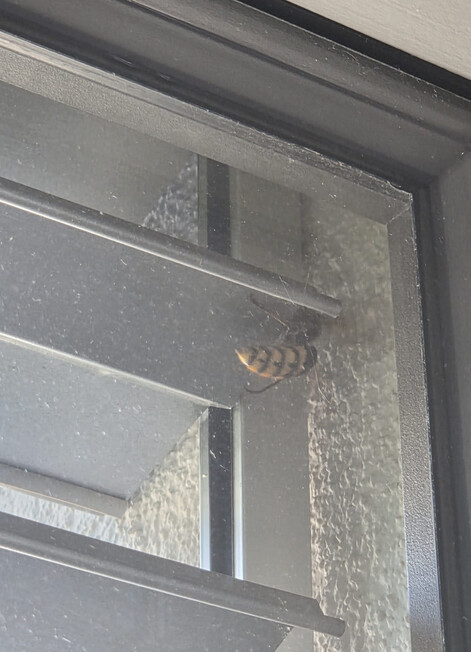
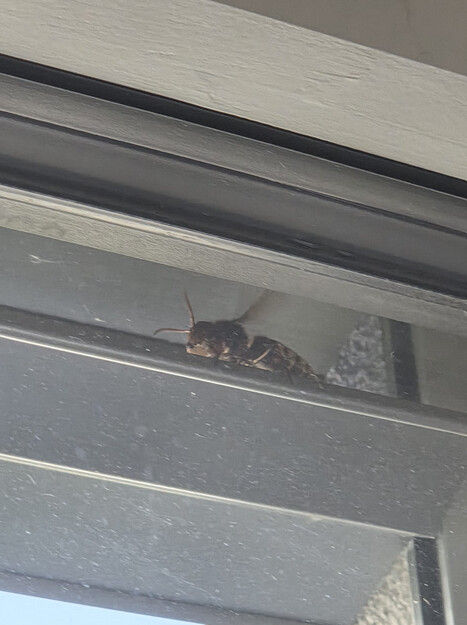
A wasp seems to be building a nest in the top of the blinds of the blinds at home. The wasp is carrying something in its mouth. I reached for the cigarettes and smoked through a small opening in the window. Wasp didn’t like it and left…but is it enough?

I don’t want to wait until it’s a big nest. That happened in my last apartment, the landlord did not believe it was a problem after my first call. He said one wasp or two is normal, no big deal. A year later, it became a big colony and the landlord then complained to me about not notifying earlier, he had to hire a specialist to solve it (:money_mouth_face:), etc. Is there some kind of repellent that makes wasp mom go away without killing it?
https://www.youtube.com/shorts/ig-WNgTXgq0

1 Like

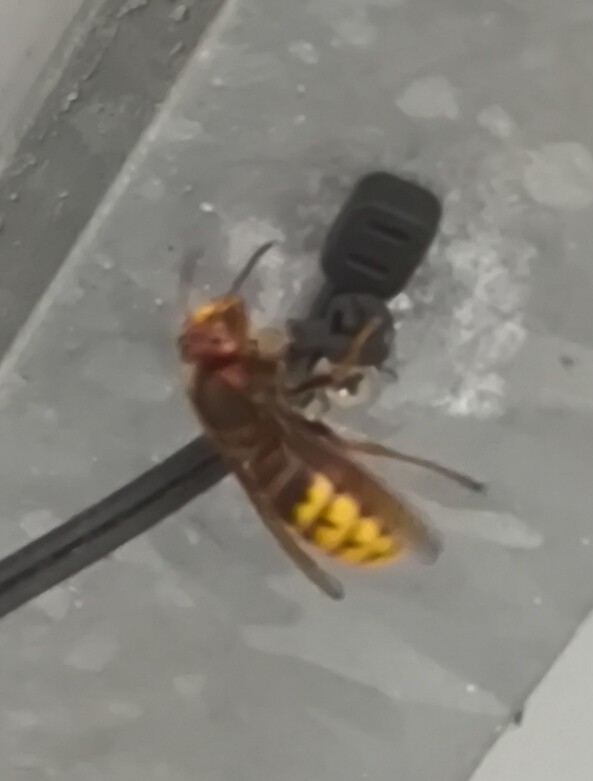
This MF was huge. The image is a bit blurry as I took the photo from ten metres away.
I think it’s a native hornet.

hahaha, I wrote no killing. The sound of the wings while it flies certainly makes you think about lighting that gasoline, but I’m resisting this urge. Also, it’s a 2nd floor window, and the hornet seems to be working behind a steel plate that protects the mechanism for the blinds. It would be comic to fall from this window while trying to do something to the hornet, and the hornet fights back.

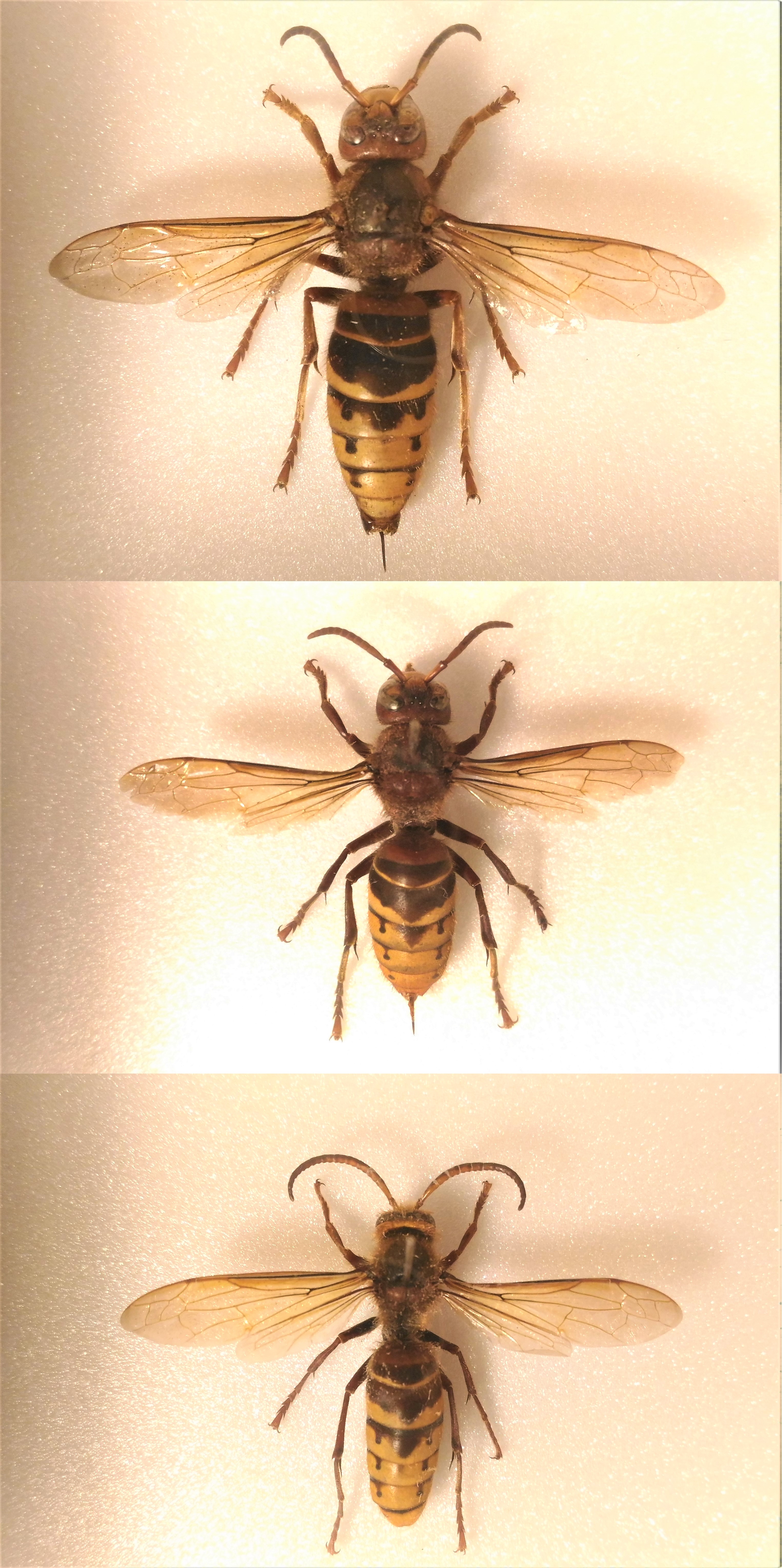
@Tom1234 I just checked the wiki, it’s an European Hornet (Vespa crabro). Queens can be up to 3.5cm long.

1 Like

This may have been a queen then. It was huge.

We used to use gasoline on yellow jacket nests in California…only way to destroy their huge underground nests.

Yes, it is a European one (Vespa Capro), and it is ‘protected’ in Switzerland. And it is definitely a Queen. The hornet’s nest has several dozens (and sometimes even hundred) queens, served by smaller looking (but more aggressive) workers.

Correct, they don’t like smoke, so you can ‘deter’ the first nest by smoking them. the nest is made relatively quickly, and is small (a baseball ) at the beginning – at that time, it can still be ‘handled’ with normal beekeeper attire and some care. You just relocate the nest to a tree branch, and they will not come back.
The problem is when they find a crack on the house structure (for example, entrance to the roller blinds ‘box’ and they nest there.

At least, it is not the Japanese one! (which is much more aggressive, also towards humans)

2 Likes

For some annoying reason I cant copy/psate youtube stuff.
So I’ii just ask you to google minuscule. Mouche à miel
I find this hilarious.

2 Likes