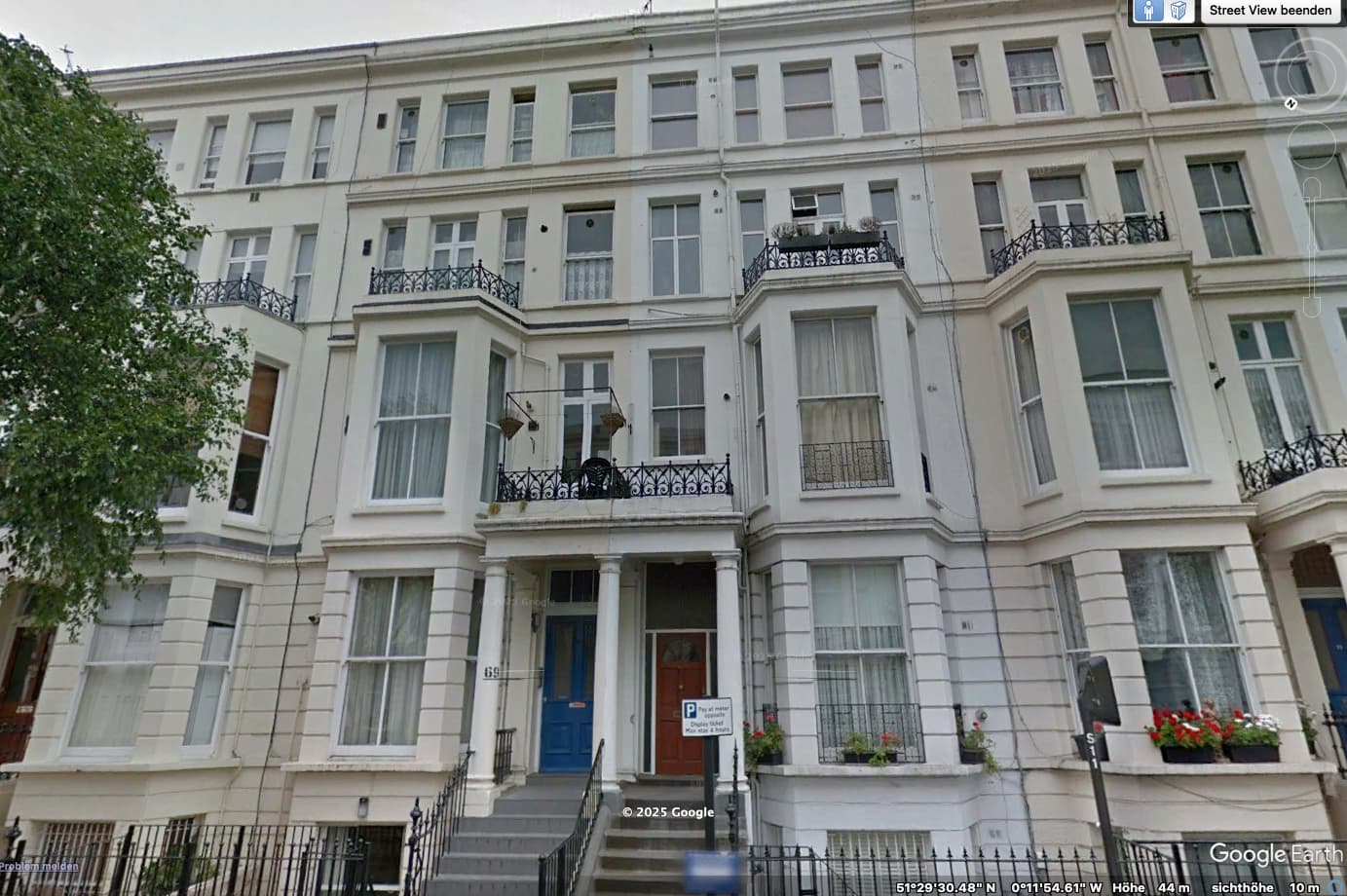
Australian in Earls Court in the 70s.
Couldn’t you at least have tried to be original?
Australian in Earls Court in the 70s.
Couldn’t you at least have tried to be original?
Squatters come in all shapes and sizes: Drei Nonnen besetzen leerstehendes Kloster in Österreich - News - SRF
“My freedom ends where your nose begins.”
The right to shelter should not be exercised at the expense of someone else.
I feel that the notion of a “bad landlord” is a manipulation. It is their property, which they earned, and they have the right to manage it as they see fit. Sometimes it’s more profitable not to rent than to rent. If the goal is to reduce the number of secondary properties, then measures like quotas exist.
Let’s also reflect once again on the right to shelter. Whose obligation is to realize this right? Is it a right to have a shelter in a location convenient to live in? Have those people tried to live in the least popular town in the country doing the least popular job paying the rent?
And you’d be surprised, there ARE rules about squatting (German but there is deepl) and in Zurich for example:
The Zurich city police are considered particularly strict: property owners must prove to the authorities, by means of a rental agreement or building permit, that at least 50 percent of the space will be needed after the eviction. Otherwise, the owner is left empty-handed and must accept the occupation, whether they like it or not.
I see, that’s very sad, I absolutely do not support it. I hope this law in future and ownerships is prioritized. I hope Switzerland is not like Zurich.
The squatters all left once the owners were far enough organized to ACTUALLY START rebuilding, renovating or reusing the places.
You give me an example where something bad had a happy-ending story, I don’t buy this as motivation to squat, no matter if a private person or a company, ownership must be respected.
This looks like a big stick to motivate owners to keep their properties in top condition. No one wins in a nice neighborhood if there’s a decaying building. Squatters are not protected, but used as pawns.
So, not sure if it’s about human rights or protecting sales and rent prices in the neighborhood.
I used the word “need” not “right”. Rights you either take by might or are granted by law.
You are making a case for the unacceptable face of capitalism. Just because it is more profitable does not mean that it is the right thing to do.
I used the word “need” not “right”. Rights you either take by might or are granted by law.
OK, I made a mental shortcut as it’s normally referred to as a right. Explain whose obligation is to fulfil the need of an apartment not in the least popular town payable by the least popular job and not in a tent, is it an obligation of a greedy capitalist?
You are making a case for the unacceptable face of capitalism. Just because it is more profitable does not mean that it is the right thing to do.
There’s no “unacceptable face of capitalism”. Look at the bigger picture. Here I’ll use “I” not personally but as an example. I choose not to live in a city centre but in outskirts making my life less pleasant but accumulating capital. I choose to study instead of enjoying my life early. I choose to build a career, or maybe risk making an investment. This “I” could be me or my parents or my grandparents. It’s an understandable system, i.e. even if I am rather poor (which I am, as a side not to this example), I know how to play by rules to achieve something. And at some point maybe I can afford a secondary home or event a firm managing apartments. What obligations do I have to others choosing a less ambitious life plan or simply less fortunate? None. If someone is allowed to take a shortcut to live, say, in the centre of Barcelona, bypassing all the rules, it degrades the system. There’s nothing to aspire for, no reason to be better or want more. Just like in all communist countries.
Interesting, so it actually exists
It does and is perfectly legal. No squatting involved.
“When acquiring an abandoned house, the canton generally has the right of first refusal. Interested parties can contact the land registry office or local authorities directly for more information. The entire process is regulated by law, but can vary greatly depending on the location and the respective administrative practices.”
There is information here in German about it.
As to the thread subject. It crossed my mind that some people might be thinking of rental nomads, which is a different thing. Those people move into flats (sometimes even on official lease, then stop paying rent), live there for free for years and often leave the places behind totally shattered.
That is plain fraud and has nothing to do with alerting the public of housing left empty.
I know it often happens in Germany and when I lived in Thurgau 25 years ago, I know tenants not paying rent was a wide spread problem there too. In fact it turned out that our successors after we left turned out to be such a case too.
Squatters do not highjack flats when people are on holidays. In fact they don’t squat in single flats. Their aim are entire houses having been empty for years. And they always make it very public.
Take a step back and look from farther away. There are plenty of reasons why your capital may be trapped in a property and not getting any cashflow out of it. Squatters is one of them. But the list is huge: natural disasters, the “rental nomads” described by Curley, tenants seriously ill or dying, insolvency & bankruptcy, addictions, or mental health problems. I guess the difference is squatting being intentional. But, if money is not flowing, who cares if there’s intent or not?
Also, a reminder of the current political environment in Switzerland. Zurich police evicted squatters without any opposition at all. Quite symbolic since the ZH city government is representative of the “left” in Switzerland. Just look at their actions: they literally evicted the squatters to hand over the land to developers who will build new apartments. That’s the Left in Switzerland 
Actually it’s the other way around. Houses standing empty (capital trapped) for years, then the squatters move in.
I wouldn’t be surprised if the attention squatters - purposely, very visible and loud - to those buildings speeds up things sometimes because it becomes a political issue, suddenly widely noticed and discussed.
Two important reasons for activities with buildings blocked here that you didn’t mention are: pending inheritance disputes and pending building permits.
Indeed, that’s why I suggested the local laws may weaponize squatters against indifferent owners.
Thanks. Inheritance dispute induce this, none of the heirs wants to invest a single franc until the dispute ends, properties decay.
And yes, building permits are infamously slow. That’s why renting for interim use ( Zwischennutzung) has becomes a business
Also, a reminder of the current political environment in Switzerland. Zurich police evicted squatters without any opposition at all. Quite symbolic since the ZH city government is representative of the “left” in Switzerland. Just look at their actions: they literally evicted the squatters to hand over the land to developers who will build new apartments. That’s the Left in Switzerland
That sounds awesome, but I’ve also read the occupation was lasting 10 years? In my ideal world it doesn’t last a few hours.
I guess digging that story will take time. Anyway, considering the rule of law in CH, I’d point at owner inability, negligence or incompetence.
We live in a place where the police are not private thugs of warlords, slowness is a feature, not a bug.
These parts have an interesting approach to old houses that are the property of out-of-area owners. The owners don’t want to sell–the market is incredibly tight in terms of inventory, they’ve probably inherited, and values are skyrocketing and will continue so. They don’t want the hassle of renting and risking nonpaying renters who can then stay there for a long time, and they are too tight to leave properties empty. So they rent to Caritas–it provides a reliable source of rent, Caritas finds refugees (Armenian, Ukranian, etc.) and installs them, educates them on how to live in the community (trash, recycle, quiet times…), provides basic stuff for them to set up house, and most importantly provides maintenance on the properties. Win-win-win.
Well, if they wouldn’t take years to decades between abandoning/leaving to rot buildings and actually rebuilding that would be the case.
The good thing:
“Since the late 1980s, the city of Zurich has only been clearing buildings shortly before construction begins.”
And with squatters it is about preserving housing not ripping off owners for living costs (electricity, water …):
"Not far from the Sihl paper factory near Giesshübel station, the “Rüdiger family” took over the house at Rüdigerstrasse 1 in early 2004. Here they opened a party room, studios, a metal workshop, and ran a guest room for foreign artists. The “Rüdiger family” itself – two dozen people between the ages of 20 and 40 – lived in two large shared apartments. They signed a “loan for use agreement” with the owner of the building, a corporation owned by major shareholder Martin Ebner. This agreement obliged them to pay the utility costs – and to move out again at a certain point in time. This form of tenancy has become increasingly common in Zurich since 1991, when such a contract was first concluded for a property at Freiestrasse 27.
In 2006, the “Rüdiger family” moved out of Rüdigerstrasse peacefully and without police intervention. "
It’s quiet interesting actually, as it’s all about Zurich, it’s all in German.
Squatters should be treated as domestic terrorists.
Bit drama-queen, no?
A drama queen? Not sure, maybe a rant king of the day