It’s more likely to be the city centre and even if it isn’t, and you flew, you’d probably have to go to wherever you were going via the city centre anyway, unless you were driving.
Going to Venice by train, for example needs one change in Milan.
Stepping out of the train station and having the Grand canal in front of you was pretty memorable even though I had been to Venice many times before.
I’m going to have to disagree with you here as I find trains much more comfortable than planes (at least in economy).
Fully agree, I need to clarify what I actually meant:
Most seating experience in the train is much more comfortable than (economy) planes. By ‘comfort’ I was referring to everything except the seating, i.e. booking, transfer, connections, delays. Yes, planes also have hickups. Still, you are generally better off off if something goes wrong with the plane schedule.
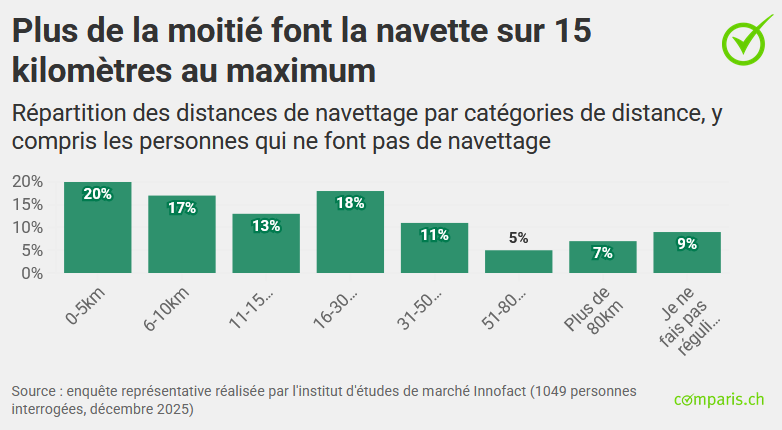
Comparis made a survey not long ago. 68% of people stay within 30 km from their homes. 77% people commutes less than 45 mins. Very few people considers moving as a solution to save on rent (plenty of rich people in Switzerland).
Rents are rising and housing is becoming scarce. Despite this, only 23% of those questioned for a Comparis survey accepted longer commutes on their last move to save on housing costs. More than three quarters are opposed. “Many would rather pay high rent than waste time, energy and nerves on daily commuting,”
A journey of up to 15 minutes is tolerated by 11% of respondents. For 16 to 30 minutes, it’s 38%. And 28% accept up to 45 minutes. Only 19% would agree to a journey of up to an hour, and 5% would go beyond that.
We foreigners may be changing something here by accepting longer distances compared to locals. The office for me is 1 hour away door-to-door. Longer for my wife, but shorter working time.
Also, using the car for commuting and driving between 7h00 and 8h00 and 16h00 to 18h00 objectively sucks. Times can double or triple. Recently I took the car to Aarau center and drove back home around 17h00, it took like 30 mins what is a 5-6 min drive later in the evening. So, it’s really hard to predict the time with the car unless I leave home after 8h30 and drive back by 19h00.
Yet aviation contributes a relatively small share of global CO2 emissions—around 2.5%—while delivering outsized economic and social benefits. Despite growth, aviation’s CO2 share remains under 3%, far less than sectors like road transport or energy production. Non-CO2 effects raise its warming impact to about 4%
But aviation supports millions of jobs and substantial GDP growth worldwide. In Europe alone, airports and air connectivity generate 14 million jobs and €851 billion annually, equivalent to 5% of GDP. Globally, it powers tourism (330 million jobs, 9% of GDP) and trade by connecting remote areas and enabling rapid disaster response.
Those frequent flyers you appear to dislike are the reason why airlines serve the markets they do. And in doing so they transport freight, some of which like pharmaceuticals and other perishables cannot be transported any other way or as quickly. Air cargo handles about 1% of global trade volume but 35% of its value—over $8 trillion annually. The recent pandemic was fought by shipping vaccines worldwide from a relatively few manufacturers, Protective gear, including masks might have been transported by surface by that would have taken weeks or months. Here in Switzerland we were wearing masks that had been made thousands of kms away the previous week.
Ya, right. Let’s get rid of all airplanes except electric ones.
It’s much easier to say that you are vegan to save the planet, while munching on tofu grown in Brazil and avocados in Mexico… both with massive ethical issues (deforestation, organized crime, massive pesticide useage, water abuse, etc)… but it’s easier to say that your strawberry is ethical, without looking at the real environmental impact of a Swiss grown strawberry from a greenhouse… (Winter greenhouse strawberries can approach the footprint of chicken - and ironically, it’s better to import them from abroad in winter… but then again, Spain has water shortages issues… so there’s that too…)
Sad fact is - if we really wanted to live “sustainably”, we would only eat what is grown and available locally and in season… and be very sad with life in general!
A reasonable compromise to go some way to living sustainably would be to reduce the millions of tons of waste food thrown away each year. I think that’s more within reach for the average family and just takes a modicum of planning / lifestyle changes.
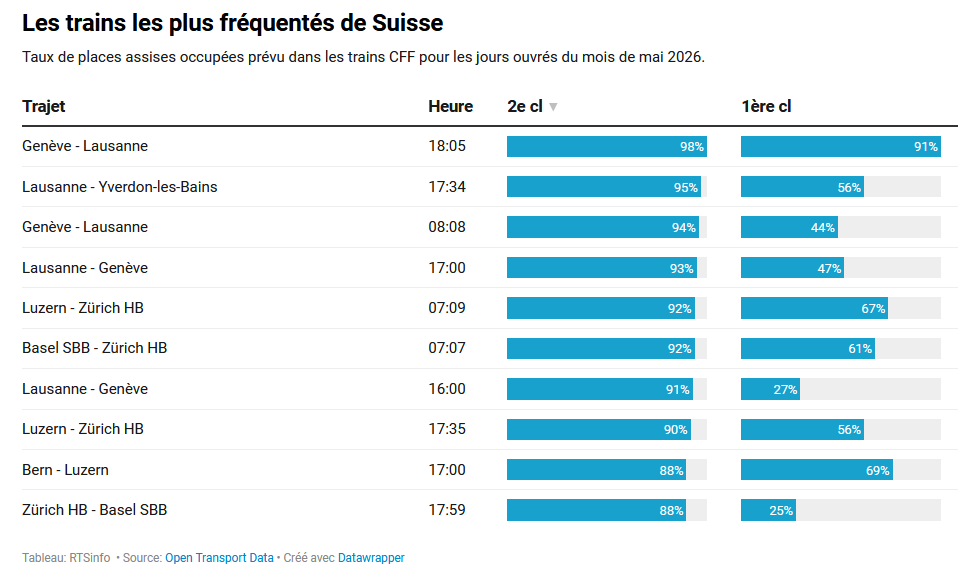
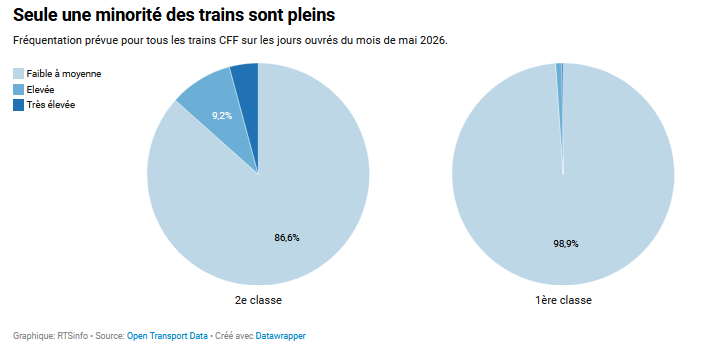
There’s also the complaint of “the train is too full”, so send more people to the train? Interesting numbers by RTS:
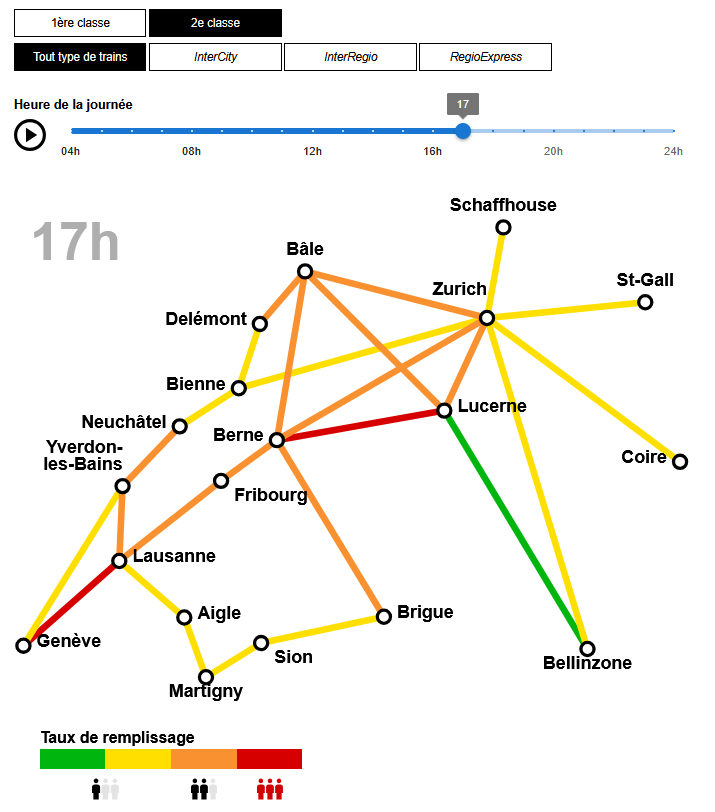
Certainly, there are issues. It really suck to go from Genève to Lausanne at 18h05. 98% occupied seats in 2nd class, 91% in 1st class. The same route is 3 more times in the top 10 of crowded trains at different schedules and directions of travel. Also, it looks like paying for 1st class is a waste because it’s also crowded.
Yet the CFF refuses to consider any solutions to alleviate the problems Geneva - Lausanne. There is one rail line which involves significant commuter cities - Coppet, Nyon, Gland, Rolle and Morges. Let’s not get into their insanity of Renens halfway between Morges and Lausanne which is responsible for almost all of the delays on the route. Getting on at Nyon heading to Geneva or at Morges heading to Lausanne at peak times you are likely to find capacity above 100%. Don’t even think of a seat on these trains.
And twice in the last few years the line has been severed for days and the solution was ro stick a 20 minute bus connection in the middle.
We left home near Zurich around 12-30 and checked in to AirBnB in London at about 17-15 local time. We only used public transport, there was a tube strike on that day and we took a wrong DLR train, otherwise we would have arrived even earlier. How can a train be a game changer?