Chinese Involution

Like many others, I’ve benefited from buying Chinese goods at low prices, either in retail stores or directly from China via AliExpress.

A few years ago, I learned a new term: involution. This is the term applied in China that describes the ruthless competition that drives lower and lower margins and forces companies to adapt or die.

An article in the FT describes one case where a Chinese manufacturer made a product for 40 and sold it for 100 making a tidy profit, but competition soon came and now he sells it for 10.

In China, there is a word that has come to describe the phenomenon: neijuan, or involution — a term that has become shorthand for a competitive dynamic in which everyone runs harder and harder for diminishing returns.

It forces companies like Mega-Senway to move fast. Huang explains how they cut their own costs so dramatically over just a few years. First they acquired the factory that manufactured the sensors they designed. Then he visited nearby factories to study their best practices.

A worker testing their finished sensors initially did it one at a time, he says. Huang redesigned the testing jigs to test four at a time, then eight, with a worker constantly loading or unloading batches. Now he has replaced the workers with robotic arms.

“We would update our processes two or three times a year,” Huang says. “The pressure came that fast.”

The five-year product cycles with annual price negotiations that the auto industry once ran on have disappeared, he says. One large automaker has cut out all middlemen and puts out tenders each month directly to manufacturers up the supply chain such as Mega-Senway. They submit prices, are told if they are the lowest or not, and submit again — round after round, until no one will go lower.

While good for consumers, the competition has become so bad the Chinese authorities had to step in as competition led to companies making losses and competing to see who could be the last man standing.

With higher tariffs in the US, more manufacturers are desperate to sell to other markets such as the Europe which may respond in turn to limit the goods coming in.

Switzerland a free trade deal with China a few years ago.

3 Likes

I used to be in the same position, but over time I realised that just because something is affordable doesn’t mean I should own it. These days I try to be more conscious in how I consume. I try to question whether I actually need something before buying it, and only go ahead if it feels genuinely necessary.

I also try to prioritise second-hand options where possible, and to repair or upgrade what I already have so I can extend its lifespan. I say “try” deliberately, because I don’t always succeed, the convenience and instant gratification of online shopping can still be tempting.

This is also my consideration. I’d rather fork out a bit more for something that’s going to last rather than falling for a “bargain” on the likes of Ali Express or Temu or one of the other junk sites, and have the wheels come off (literally or figuratively) after a few uses.

Someone in my swim class bought a swimming cozzie off Temu, which looked great, but the seam around the bum detached on about the 2nd or 3rd outing, which was hilarious for the rest of us but not so much for her. :laughing:

2 Likes

Well, you have to be careful, buying stuff that is so cheap that corners must be cut will lead to disappointment. But within ‘Chinese goods at low prices’ I also include things like iPhones, electronics and all of the other stuff that is often made in China at much lower prices than elsewhere not just the $5 plastic tat often associated with cheap Chinese goods.

I only hope they do more to stop the crap that comes out and increase the floor of the quality of goods they produce.

1 Like

I can look back to the time when it was Taiwan, Japan and Singapore that produced the “cheap crap”. Much of it proved not to be crap and their economies moved on. I guess Chinas will too but the need for regulations and control is only going to get bigger.

OH’s family and mine shared one thing in common: They didn’t buy much, but they bought quality–right now I’m sat on the 1974 fringed Jaeger cashmere throw my mother bought in London. We’ve just inherited a cache of gorgeous goose down pillows and quilts from his parents. I like Temu, for several reasons. First, free amazingly fast shipping with notifications all the way. Second, small items like zippers, jump rings, (real) silk pillow covers, etc, for a fraction of what they’d be locally. Some of their stuff is already in local warehouses–for 40€ I got a rolling kitchen cart of wood and steel. It’s good-looking, built like a tank, and of amazing quality. It compared very favourably to the junk Lidl sells for almost double that. Even though my last shipment arrived well within the target delivery time, they gave me a 5€ credit.

2 Likes

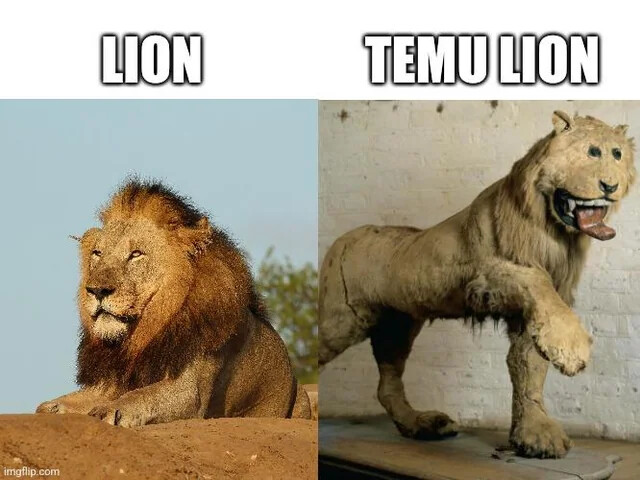
It’s good to hear the success side of it. I’d only really heard negative stuff then it kind of entered the realms of being a meme to denote anything that looked dodgy (exit “Poundshop Lion”, enter “Temu Lion”):

Ha ha…I was skeptical when ordering a pair of “100% silk” pillowcases for 13€. I can tell silk from polyester from a distance. I was really pleased when they arrived and proved to be real soft flowy silk, with “invisible” zips and perfect sizing. How much in CH, I ask you?

1 Like

Now you’re making me want these pillow cases!

3 Likes

I used to buy Xiaomi stuff on Ali Express and now it’s consumer products such as robotic vacuums are considered top-off-the-range.

The brands that tend to be much better quality are those that sell direct to the Chinese market rather than rip-off copy-cat brands which are generally cheap-tat.

They also have a Brand+ mark which means the parts you are buying are genuine, but sometimes not really cheaper than buying the same in Switzerland.

2 Likes

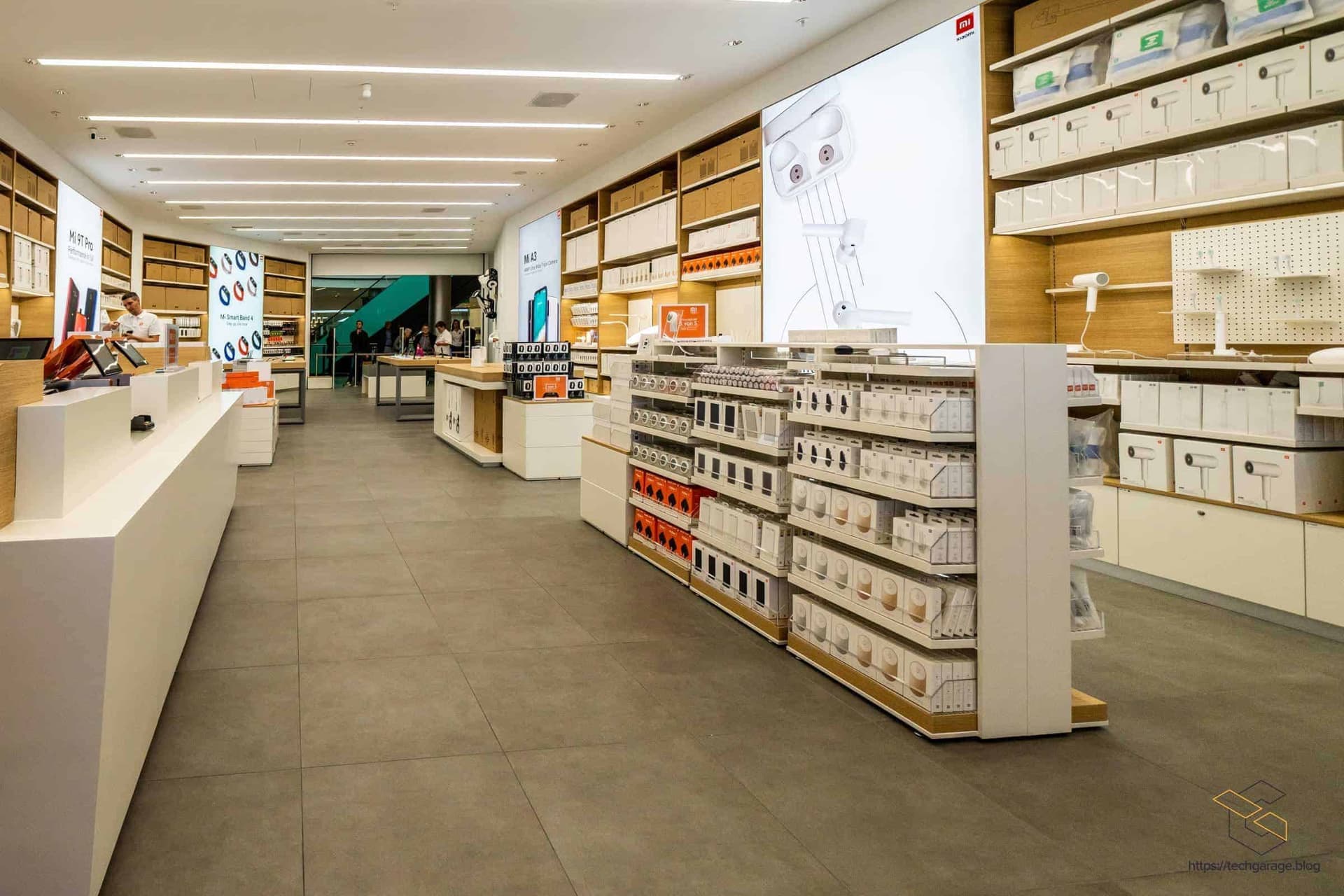
There is an excellent bricks and mortar Xiaomi Mi Store in Zurich, where you can try before you buy.

5 Likes

Other than autos that one can buy a year old for almost half price, I have not had much luck with secondhand products.

My Swiss wife would almost go into shock when something did not work and my immediate reaction was to get out my tools but she is used to me now.

Overall I am very satisfied with things I bought from AliExpress.
I only buy from sites who have sold a good quantity of the item I want and the comments are overall positive.

Of my recent purchases the wax filters for my hearing aid are a fifth of the official price and work fine.
The hearing aids use Bluetooth 6.0 which is not supported by my laptop.
I bought a USB Bluetooth 6.0 adapter with driver for CHF5 but the driver is not stable, it seems to conflict with the native Bluetooth.
That is the first one out of my last 30 purchases that was a problem.

Also for fun I bught an ear camera for CHF5 that links by wifi to my ipad so I can see huge images of the insides of my ears, I was not sure my ear drops were cleaning my ear fully.
My ear doctor still uses some sort of handheld microscope.

This is one area where Temu excels. There are plenty of reviews from all over the world, and many of them include pictures and/or videos.

1 Like

I’ve had some good stuff from Temu.
You just have to look carefully at the reviews and choose wisely.

We currently have a BBQ cover from Temu which has held up better than any other we’ve had and at a tenth of the cost of the Camping gaz one which barely survived one summer.
We had friends over on Easter Sunday and he actually asked where we’d bought it as he’d never had one that looked so good after being outside all winter.

5 Likes

I was not happy with a cover I got for a set of chairs for winter from Aliexpress. It was very thin and got damaged very quickly. No even a slight comparison with a grill cover from Weber which we have for almost 10 years already.

2 Likes

In China the CCP still has teeth and regulatory enforcement is strong. I recall the head of the China FDA was executed for corruption many years back because he compromised public safety.

Can anyone imagine trump forcing through legislation to reign in the worst excesses of capitalism, they’ll just pay him off.

Yeah, DJT in the US has gutted pretty much every organization looking out for consumer and public interests - turned everything about $$$, transactions and business. A huge pity, in my opinion.

A country can not be run as a business.

2 Likes

I always find it hard to find the direct seller/producer of the thing I’d like to buy on ali, but I always try. No one want’s to overpay but if you can pinpoint the direct seller it’s worth adding few chf for the piece of mind that you’re getting the right product (which doesn’t mean you’d be satisfied with it, but surely there’s more chance than buying some some even cheaper counterfeit of the cheap product)

Sure it can Robert F Kennedy Jr Shares Wildly Incorrect Math At Hearing

With taxpayer $$ any business can be run into the ground.