Surface temperatures may be that high but below the surface much lower. Many of the UN buildings in Geneva are heated and cooled using pipes laid on the floor of lac léman.
A lot of stuff is build in coastal areas with shallow continental platforms. Deep below the surface does not exist.
Anyway, only musings about the design of future facilities. Climate change impact today is small, but the impact on new projects that should last decades may be considerable. If the thing should run 24/7, it should be overbuilt to operate under unfavorable environmental conditions.
Water is densest at 4C so even shallow water can have cooler underneath
That is how fish survive in winter
Diver friends in Malta tell that the thermocline, usually at 10 meters in summer was all the way through 20 to 25 meters.
That usually happens in October when the first storms churn the sea to that depth.
Malta got clobbered by an intense storm just a week ago and although it did not have zhe highest windspeed measured, at over 20 hours it had the longest continuous high wind ever measured, also measured by automatic boje was the highest wave ever recorded at 16 meters plus.
The map of Malta will have to be re-drawn.
It’s a shallow continental shelf (<20m deep) on the tropics, tidal amplitude 0.8 to 1m. Of course, there must be a difference between the temp in the first mm of water and at 20m depth. But, shallow water, tide, wind, etc prevents any long term thermocline.
I was interested by the discussion so looked up thermoclines in Wikipedia: Thermocline - Wikipedia
which lead me to realise the big difference between the sea water oceans and fresh water lakes.
In both, the fish survive because the water at depth is insulated from colder air temperatures above the water by the upper warmer water layers or even a layer of ice. This gives a paradox. Even though the temperature of lake water is generally lower with depth, ice will start to form at the surface. Water density hardly changes below 4 deg, but the density of ice is much lower than that of liquid water, so the ice formed at the surface stays on the top.
Plan for the worse and hope for the best.
We are on the road to global catastrophe.
Graphics are rather cool!
And Reto is not surprised
Interesting report and study on what is wrong with software today and certification of the first blue Angel certified software program.
From the handbook:
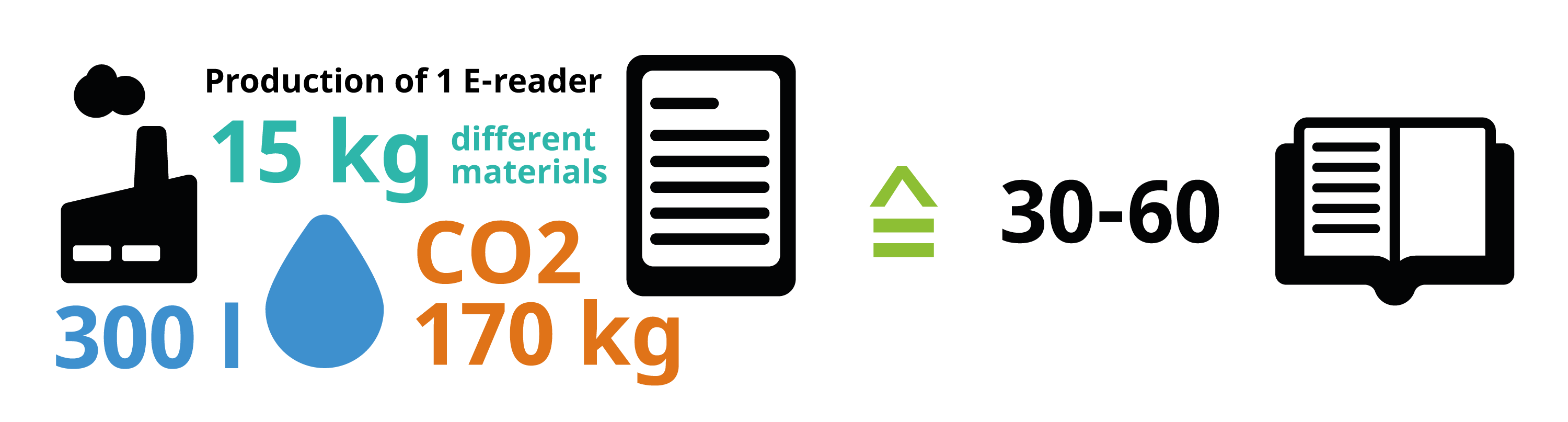
Figure : To produce one e-reader, 15 kilograms of different materials, 300 liters of water, and 170 kilograms of the greenhouse gas carbon dioxide are needed. If you read fewer than 30–60 books on the e-reader device, it may be environmentally better to read the paper books. (Image from KDE published under a CC-BY-SA-4.0 license. Design by Lana Lutz.)
Oh, I doubt that the numbers are that nice.
A ton pf paper releases 3 tones of co2 and that is just from the energy intensive pulping process and altbough modern paper is made from cellulose, trees still have to be felled and trucked and cut. Also optical brighting agents arr added to make the paper white.
Then there is the printing process where books meant to be sold in Germany will (say) be printed in France, trucked to Italy for binding then sent to Vietnam for finishing abd packaging before returning to Germany for distribution.
And unlike e-readers books cant be recycled… well they may become toilet paper, but that is rare because of the high cost of processing abd cleaning these old books.
But, according to the handbook, the average E reader has a lifespan of 1.5 years.
Mine is 11 years old, still going strong and has handled 100s of books. Think I’m in credit there! OH also has one, about 9 years old.
Actually that’s not what is says. The handbook says the average model lifetime on the market is 1.5 years (i.e. selling time until a new model is introduced), not the average lifetime in the hands of the user. It speculates that people might constantly upgrade their readers leading to old but still functoinal models being discarded but provides no actual evidence for this.
I believe most of the e-reader market are more likely to not worry about new models - historically there have only really been two big changes in that market that might have triggered early replacement - these were the introduction of backlights about 12 years ago and possibly (not certainly) the recent availability of decent colour e-reader screens.
1 Like
Ohhh, higher temps + rainy Switzerland. Ha, those foreign mosquitoes naturalized faster than me 
The canton of Basel-Stadt continued its measures to monitor and control the Asian tiger mosquito last year. The dengue virus was detected for the first time in a tiger mosquito caught in Basel, according to a press release. This is the first confirmed finding north of the Alps.
As the cantonal laboratory announced on Tuesday, the single detection indicates a very low prevalence in the local population. The invasive tiger mosquito is considered a possible vector of tropical viruses such as dengue, chikungunya and Zika. It has been native to the entire canton since 2024.
1 Like
Nice, so I die from a mosquito but at least don’t have to shovel snow every day in winter.
1 Like
Metropolitan Vancouver (circa 3m population) has just announced a hose-pipe ban effective 1May 26.
Who would have thought?
We’ve only had a third of the average rainfall for this time of year in Switzerland.
Fire bans have been in place for some time in some parts of Graubünden.
1 Like
In Spain I think it has never rained that much as this winter. And the temperatures are nice and low for end of April, never seen it that low here (close to Valencia) at this time of the year:

Planning a bicycle trip tomorrow, nice.
But of course, I am looking at the good part only. They had a lot of natural disasters here the last years, roads convert to rivers sometimes.
Amusing Donnie demonstrating his failure to understand science and is claiming the UN got their climate change forecast wrong.
When it was updated it to reflect the changes since that forecast including the unexpected rise in renewable enrgy which the US is walking away from.
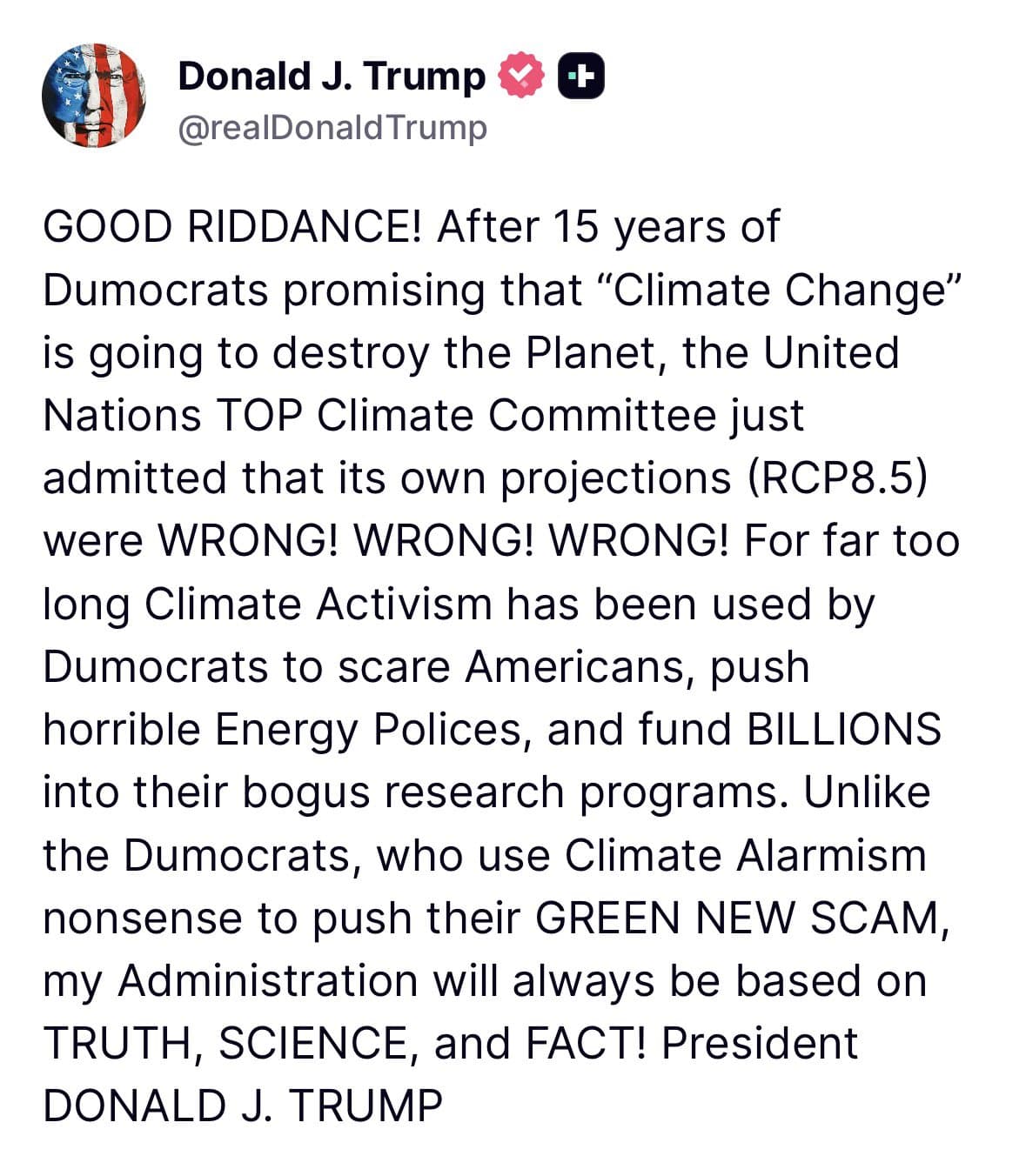
For the 21st century, this range will be smaller than assessed before: on the high-end of the range, the CMIP6 high emission levels (quantified by SSP5-8.5) have become implausible, based on trends in the costs of renewables, the emergence of climate policy and recent emission trends (Hausfather and Peters, 2020).