Thats the point, the “button” in your head has to be pushed.
One of my oldest friends, his wife and his son has had their stomachs taken out after featuring on the british version of “my 600lb life”
He looks pretty good but is on supplements for the rest of his life, the son got the weight back on and the wife died a few years after.
1 Like
@slammer, there are some genetic backgrounds (the Thrifty Gene theory) that simply cannot be thwarted, apparently. There are many interesting studies of, for instance, the natives of the southwest USA states. Scientists have kept them immobile for weeks, and their metabolisms simply power down until they use minimal calories and store any overage in fat. Interesting stuff…
https://academic.oup.com/emph/article/12/1/214/7724648?login=false
My experience is that I can only successfully lose weight by slightly cutting down on what I eat, and then slowly over a long time, lose weight.
1 Like
Which is in fact the formal indication for these drugs:
"Mounjaro is indicated as an adjunct to a reduced-calorie diet and increased physical activity for weight management, including weight loss and weight maintenance, in adults with an initial Body Mass Index (BMI) of
- ≥ 30 kg/m2 (obesity) or
- ≥ 27 kg/m2 to < 30 kg/m2 (overweight) in the presence of at least one weight-related comorbid condition (e.g., hypertension, dyslipidaemia, obstructive sleep apnoea, cardiovascular disease, prediabetes, or type 2 diabetes mellitus)."
They are not a license to gorge (not that one can when taking them).
I am really curious if I’ll get them, my issue is not bad food - I eat very high quality food, mediterranean diet, but I am a pig (albeit a discerning one). The way I see it is that these will give me some needed push, early success to build some motivation and try to change habits. But also worried about muscle loss, discussed with the Dr, said that protein supplementation is incredibly important for someone who does a lot of weightlifting, but some muscle loss is inevitable.
I agree that Wegovy et al pay (mostly) for themselves via the reduced food intake (even more so if you respond well to Rybelsus pills, they’re around 100 a month). But I don’t think your statement stands scrutiny because it ignores the outcome later in life.
Wegovy et al help postpone the phase you need grave medical support but they don’t eliminate that phase. And the older you are when you do need it the more expensive it gets - that’s one main reason why healthcare costs keep increasing (in GDP terms) the older the population gets.
As for bariatric surgery, keep in mind that depending on the particular type of surgery it’s lethal in up to 2% of the cases.
I haven’t looked at data because I frankly don’t have much interest in it, but having worked extensively on cardiovascular disease and cholesterol “the lower the better” (in terms of LDL-C and major CV events) data are very robust.
Obesity in and of itself is more indirect compared with LDL-C or HbA1C so we need to see what comes out, however logically it makes sense. Don’t forget in many disease areas the NNT for primary prevention (the number needed to treat to prevent few events) to make up the cost is not big (30-50).
Eli Lilly’s triple-whammy drug in clinical trials. Let’s see what happens in Phase III:
https://www.discovermagazine.com/a-new-obesity-drug-delivered-surgery-level-weight-loss-in-clinical-trials-49145
I saw that people were already buying raw Retatrutide from Chinese vendors.
1 Like
And the chances those are fake?
I had a good look over the weekend, frankly it sounds awful to me.
Needs 2 week pre- and 2 week post-op clear liquid diet. You can’t lift a pencil for a month, can’t lift groceries for two, serious heavy weights for 3-6. Need to eat pureed food for months, and just sip water (I drink water like an elephant) for years/life, vitamin and protein supplementation for life. Post op pain can be severe, can have chronic GERD. One bad food choice can send you projectile vomiting, dehydration is a real worry for life. Muscle loss at 800 calories/day must be catastrophic.
Then there’s the op infection worries, leakage, pancreatitis and gal bladder issues, fear that the recovery won’t be complete, or something will break at some point in the future.
Couldn’t bring myself to do that to an otherwise healthy body/organ. I don’t have body or any other confidence issues, not out chasing tail as I’ m happily married (and if I did chase tail I am pretty sure I’d do fine even as obese, especially in my age group of 40+). I do enjoy food and exercise and don’t want to lose either, and if it means dying at 70-75 instead of 80-90…who the F needs to live that long anyway?
PS some more counterpoints: testimonials describe the joy of being noticed by the other sex, shopping for clothes, feeling more confident, not being winded climbing 1 flight of stairs…all valid but…not applicable to me. One can and people do look good even as overweight/obese, needs the right selection of clothes*, stamina and overall fitness can be good (mine are) but indeed, reducing the weight to my joints (and motorcycle!) is important. Maybe I’d feel differently about the surgery if I really didn’t feel fine with myself, or had some comorbidity, but luckily neither apply, so GLP1s would be my choice.
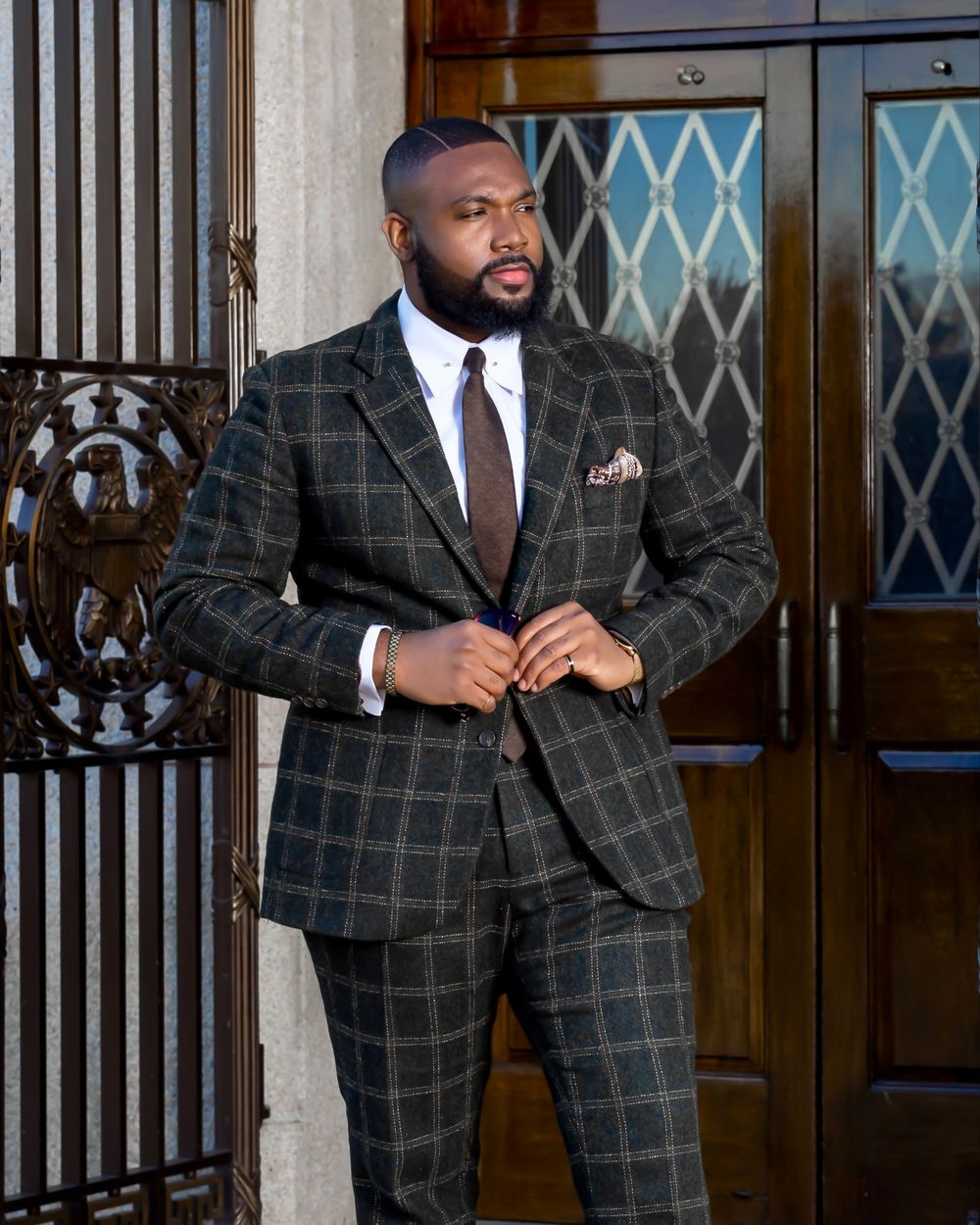
*Look at this guy, could he be thinner? Absolutely! Does he look bad? Absolutely not!
I got y’all beat.
Up untill 2013 I had a nice comfortable 140kg, hefted a oodles of weights, long distance walking, long distance swimming, did a bit of boxing and travelled a lot for work.
Then it all stopped very suddenly and for a few years I had a deskjob… I developed severe sleep apnoe and piled on the kgs, topping out at 255kgs.
The apnoe was catastrophic, hallucinations during the day along with voices in my head, vomiting bile and stomach acid at night and breathing it in searing my lungs. Kidneys failing, blood pressure through the statosphere and nolonger able to drive a car without falling asleep at the wheel after a kilometer or two.
I was dying, slowly.
Then I got the cpap, the fog cleared and for the first time I realized the situation.
Now 11 years later I am down to 160, it fluctuates a lot, the fog is gone and I function as a normal human being (debatable)
But regardless of what I do, it isnt enough, thing is I dont want to lose muscle mass, I want a targeted solution to get rid of this medicine ball I’m pushing around and a stomach removal isnt going to do this without affecting that what I dont want to lose.
5 Likes
Sounds more like “I got you” 
I also had sleep apnoea, my wife had noticed for many years and when I finally got to the Dr to check it it turned out I was having 50 episodes per hour (with “severe” being 30/hour), the CPAP machine reduced this to 1-2/hour which is below what a perfectly healthy person has.
100%, I did boxing too, along with weights. Best thing ever, really and yet I was and remain at BMI of 44-45 since COVID-19! Through some lucky fluke I don’t have elevated LDL-C or HbA1C, or visceral fat; that’s been confirmed over 3 times the last 6 years, Drs are puzzled both in CH and Greece, and keep telling me (correctly) that I am extremely lucky and need to make sure I capitalize on this good genetic luck, but I am now convinced having radical surgery isn’t the way.
2 Likes
Most likely you are not genetically pre-disposed to it. For those people who do have it in their genes and will have high cholesterol no matter what their weight / diet / exercise routine is, there seems to be a one-shot miracle in the pipeline:
Victorian Heart Hospital: world-first clinical trial for cholesterol treatment - Monash Health
The Victorian Heart Hospital, operated by Monash Health in partnership with Monash University, will be the first clinical trial site globally to begin testing the investigational therapy STX-1150, developed by Scribe Therapeutics.
The trial will be led by Monash University’s Victorian Heart Institute, which serves as the study’s academic and operational lead.
The therapy is designed to reduce LDL (‘bad’) cholesterol by silencing a gene in the liver called PCSK9, a well-established regulator of cholesterol levels and cardiovascular risk.
Elevated LDL cholesterol is a major cause of atherosclerotic cardiovascular disease, including heart attacks and strokes.
STX-1150 uses a next-generation CRISPR-based approach known as epigenetic silencing.
The therapy is being evaluated as a single-dose infusion and is designed to reduce cholesterol levels for years without permanently altering a person’s DNA.
1 Like
You’ve grossly simplified that.
It’s not a question of dying 70-75 instead of 80-90. Who knows what will happen to us.
Being obese though is quite likely to mean for those last twenty years of your shortened life, you are going to be suffering from a multitude of health problems which will impact the enjoyment of your daily life.
You may not notice the decline - it may be gradual but it will happen.
P.S. Non overweight people enjoy food too.
I actually find that quite tragic. Moving like that is a basic human function.
Indeed it is, yet it seems “testimonials” mention stuff like that pretty often. As I said, not applicable to me. What is does sound like is that some people who get it and bother to write about it had pretty poor lives in every aspect: physical, mental, emotional, social, sexual, hence the difference it made for them is huge and worth it, along with its risks and challenges. Fun fact, I was in the camp who thought gastric bypass is the “easy way out”, now that I read about it it doesn’t sound like it’s the case, GLP1s are probably that instead.
Indeed, but there’s a difference between eating rich once in a while, and vomiting after eating three spoons of rice instead of one, which sounds like some peoples’ experience after gastric bypass.
One of the Problems I See is that medicals dont differenciate between „fat“ weight and muscle weight.
Of course, man, BMI is a blunt, population-level instrument. There’s a friend of mine, taller than me by 5-6 cm and looking like what you’d call “a pretty fat guy”, yet he’s 10kg lighter than me. Caveat he hasn’t ever exercised.
Oh, I see.
I thought you were one of those people who thought that non-overweight people didn’t enjoy their food.
Anyway, perhaps your doctor was just viewing the long-term outcome of bariatric surgery in terms of regain of weight rather than including other factors such quality of life, long-term medications, surgery complications and so on?
There’s been a massive drop in bariatric surgeries since GLP-1 medications have gained a hold.
Nah, I know plenty of lean people who eat very well indeed and enjoy it (including very rich food), but measured. This is my problem, I don’t eat junk but I do eat a lot. I call myself a “discerning pig”!
We didn’t discuss it in any detail, but they did say it has the best long-term outcomes as I noted above. I want to discuss it with them though and hear the professional opinion about all aspects about it.
Saw something like that on reddit, makes sense.
70-75 YO is out of reach for people with morbid obesity. As far as I remember, bariatric surgery is/was recommended to people with morbid obesity since childhood. Diabetes Type 2 since teen years, orthopedic problems in the 20s, lifetime expectancy around 40 YO. The surgery is for emergency cases where the choices is between chopping the stomach or die within a few years. Anyway, more than a few mildly obese people have done it for aesthetic/professional purposes, but that’s their choice and their money.
PS. I’m 5 kg overweight and wind myself up climbing 1 flight of stairs, specially when the train is late is the 6 min connection becomes a 1 min connection. So, being relatively slim is not enough, higher cardio level is also important 
2 Likes