I sometimes wonder how sustainable Big Pharma as an industry is. Surely over time, medicines are found for all major illnesses and these all eventually go off patent. Doesn’t it eventually end with the pharma companies not having the money to research, or not being worthwhile to research some tropical disease affecting only 100 people once all the big things are solved?
I’ve actually wondered about this many times, both individually and collectively at work.
Indeed there are thousands of rare diseases not researched exactly because it doesn’t make financial sense.
What’s also true is that we’ve made amazing progress (since ~1990, and accelerated since the human genome sequencing in 2000), and in terms of non-communicable diseases we are sort of taking care of many patients in many big disease areas, so now pharma is searching in niches. The future is looking bright for us, in terms of medicine, and don’t want to say that big pharma is not sustainable, but the consensus among colleagues is that there aren’t many last hurrahs left for pharma.
Well costs have been increasing so trend is bad.
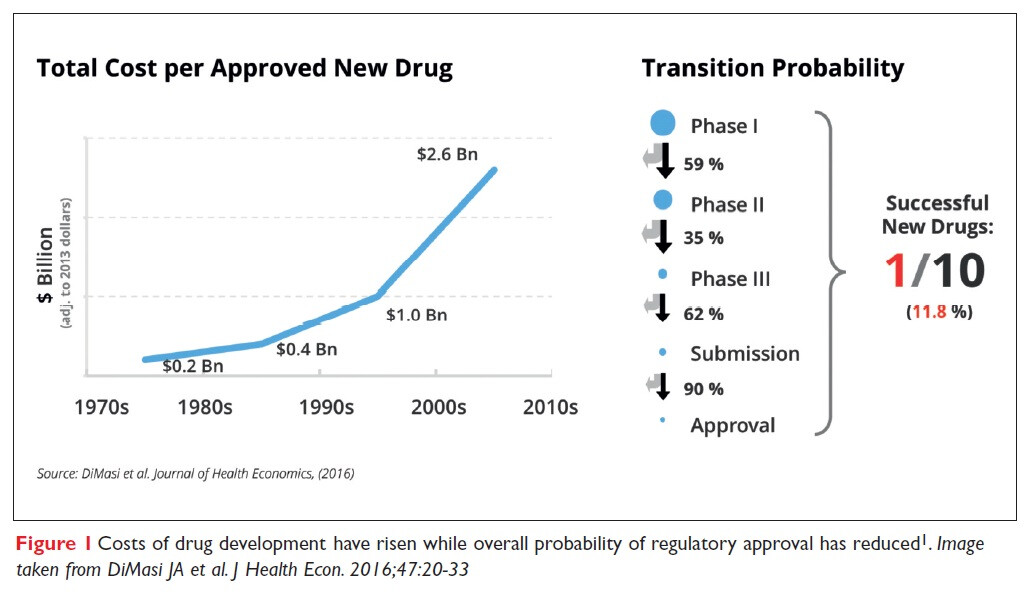
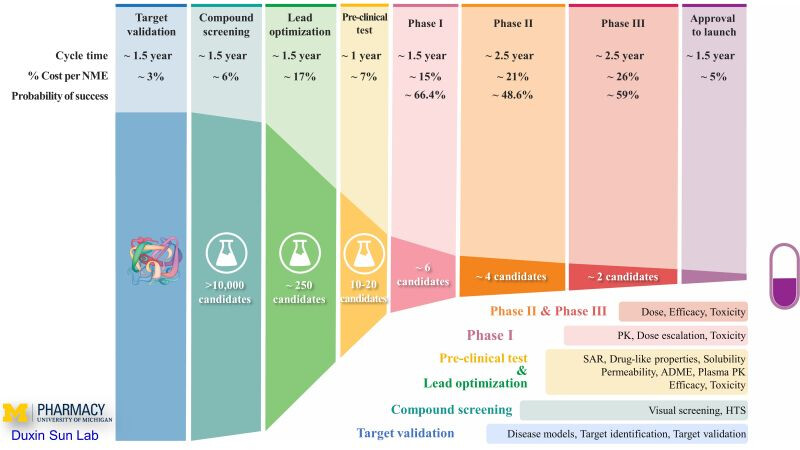
I think one hope is that technology (AI, automation) might help to quickly and more accurately identify targets, screen and optimize and maybe also simulate some of the pre-clinical testing.
Cheap intelligence and automated testing might help address the long tail of rare diseases.
1 Like
Not so sure, an issue of rare diseases is that they’re…rare, meaning it’s hard to find enough patients to run good quality trials. There are many incentives for rare diseases drug development and commercialisation. Automated testing, don’t know where it’s at now, but in my Master’s in 2003 (!) we visited GSK’s R&D HQ at the time in Stevenage and they had floors upon floors of automated testing robots.
I mean at the pre-trial stage, where you try to identify the pathways and maybe simulate on the computer interactions without the expense of physical testing at the early stages to try to find/optimize a good candidate.
1 Like
Ah yes, target finding, molecular docking modelling, protein-protein interaction - there’s already some early success with this, GPUs are perfect for this kind of work, if I remember correctly.
I think I read some months ago that a drug was designed by AI (maybe it was even in Nature or Science) but haven’t followed up for a while.
yes already a while ago, i heard of people using computers in materials science to create compounds/alloys (non-pharma setting) and this sped things up from a year to a few months and they were able to get good results.
i imagine with faster computers and newer technology, things are probably much better now.
Oncology is still one area which is relatively in its infancy. It’s developing all the time but survival rates from some cancers are still very low. I would say this area of pharma is going to be very active for a while to come.
1 Like
This looks like a very promising solution for skin cancer.
But so far as I understand it is a personalised solution so probably very expensive and not suitable for mass production unless they find enough commonality between different people’s tumours.
Like the “spike” they focussed on in COVID.
1 Like
Big Pharma is in most cases the result of decades of consolidation. The accumulated remains of smaller companies that once had their own scientific cultures, priorities and appetite for risk. These innovative companies then get merged into these bloated bureaucracies where internal politics and short-term portfolio management takes precedence over innovative research and risk taking.
So I would love to see more of these big pharma giants broken up, or spun back out into smaller, independent companies.
I think the current system works well: you have the smaller innovative companies which takes the risks and then the big pharma companies acquire them and provide the financial resources to take things through the clinical trials and bring the products to market.
3 Likes
There are different models, and perhaps the Roche acquisition of Genentech was the more successful because they retained their autonomy. A better model IMO is venture capital funded R&D where it’s less hands on.
That works well in theory but in reality so many assets and potential cures for patients get shelved after acquisitions as big pharma is often only interested in one asset from a small and agile company. Furthermore, the only thing where Big Pharma is really good at in my view is the commercial launches in several markets which is also their core competences.
This already happens from time to time, with Viatris, Sandoz and Organon as spin-offs from the cure business from Pfizer, Novartis and Merck. However, these giants are still way to bureaucratic to really get the pipeline advancement. Therefore, buying smaller Biotech compagnies is the way to go. It would just be great if there could be a good solution to not discard so many promising drug candidates as it is already hard enough to get a drug over the finish line.
It’s not just small companies alone: 90% of novel drug targets started in academic labs even though it’s pharma who conduct the late-stage clinical trials and bring the drugs to market.
Having said that, many of the small start ups began life as University research.
1 Like
It is somehow in the area of market exhaustion and technology limits.
They are left with cutting costs to get the maximum benefit from existing products and waiting for new pandemics to come along.
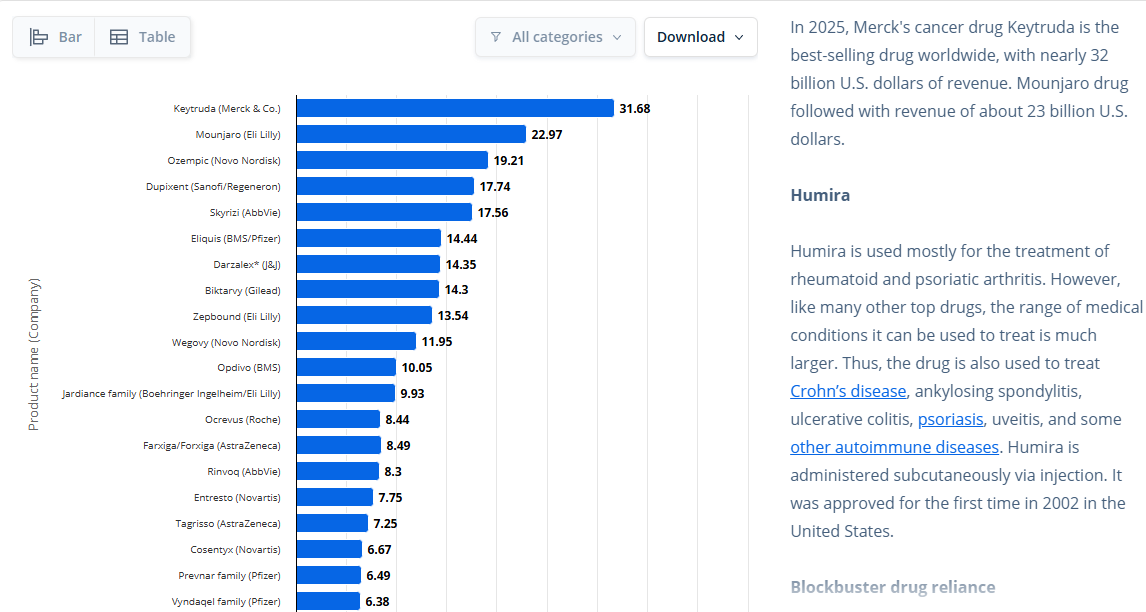
I wouldn’t worry much about Big Pharma running out of work.
Those tropical diseases affecting only 100s of people could spread a few degrees north after temperatures change.
As Earth warms, the creatures that spread neglected tropical diseases are gaining a foothold in Europe. Wealthy countries must prepare themselves for more cases.
Bacteria also keeps evolving. Antiobiotic resistant bacteria may return us a century ago.
The majority of companies aren’t in infectious diseases.
1 Like
…and sadly Pharma is not very interested in developing new antibiotics.
1 Like
So, there might be work to do, but no business case?