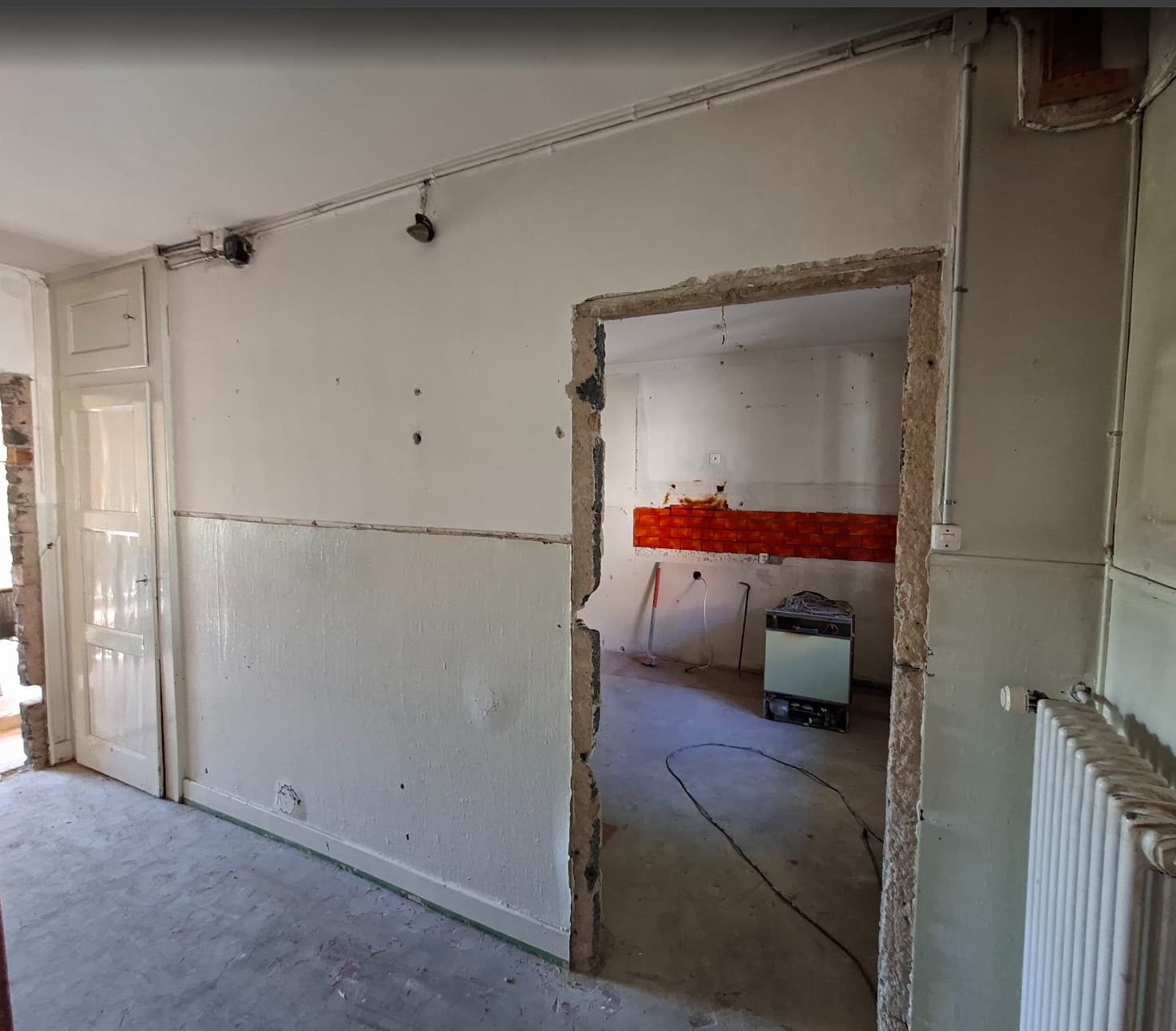
I’m looking to remove this wall. The material looks like a very thin breeze block. It seems too narrow to be load-bearing but then again, I don’t want the ceiling to collpse.
Near the cupboard on the left is a 40cmx40cm concrete pillar which supports the ceiling and runs through the house top to bottom, which I guess is the load bearing element.
It was not intended to be a supporting wall, however with an old house after some settlement there may be much more mess than expected if it’s removed as some of the ceiling comes down 
1 Like
the original architect plans should tell it to you. My experience in Paris (a 1700-building).
It was CLEARLY a non-bearing wall – very thin, very old, made of wood and plaster.
I called an expert demolition company. One week later, I had
(a) the wall removed
(b) two architects (from the building and the insurance)
(c) a massive hole on my ceiling
(d) an ever larger hole on my floor
(e) headaches for the coming 6 months.
my advice? Call an architect before you remove it.
2 Likes
Check each corner you will see that the load bearing pillars are found there. This is the way they built decades ago.
So that wall can go with no problem at all. In fact kick it a bit harder and you will tear it down
Also, check the room above if it has the same wall, I bet it doesn’t
It wouldn’t hurt to talk to an engineer, just to have a piece of mind and that I am wrong just by looking at the photo
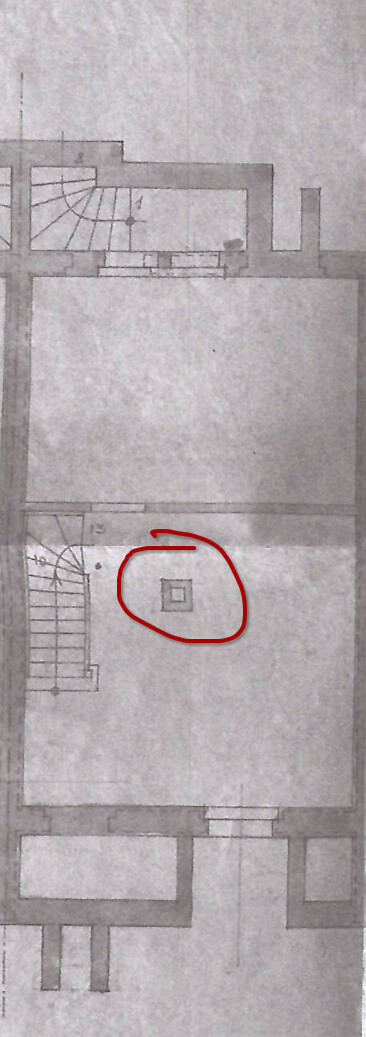
Unfortunately, from the blurry original plans I do have, the house was built in 1923 and unfortunately, the ground floor plans are missing even at the Gemeinde.
In the plan for basement is shown the supporting pillar. Left and right walls are adjoining houses in the terrace. So no other pillars.
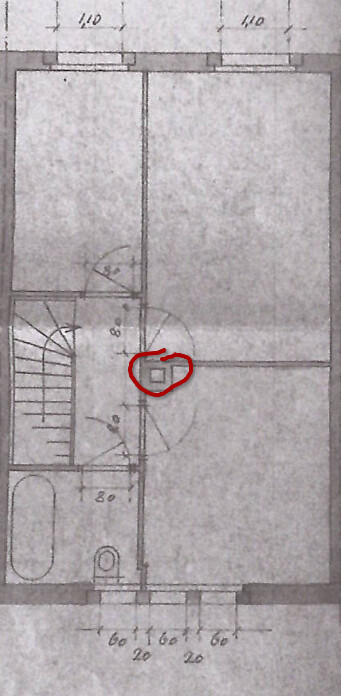
First floor shows pillar in same place:
plans for the ground floor are missing but I checked that the ground floor has the pillar in the same location.
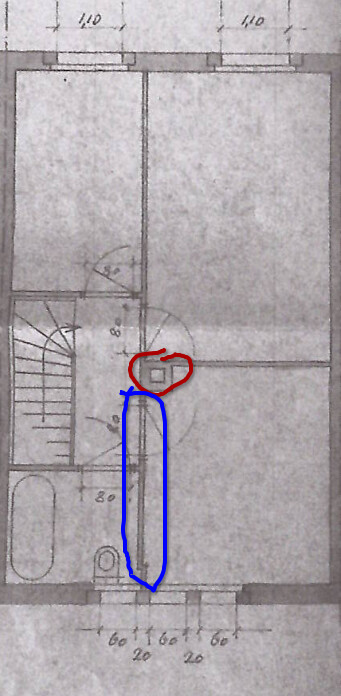
Ground floor is similar to the first floor and essentially the wall in blue would be removed:
Pity that there is wall above, if there was no you would be certain to remove it.
Talk to an engineer, worst case scenario you would have to install a beam
4 Likes