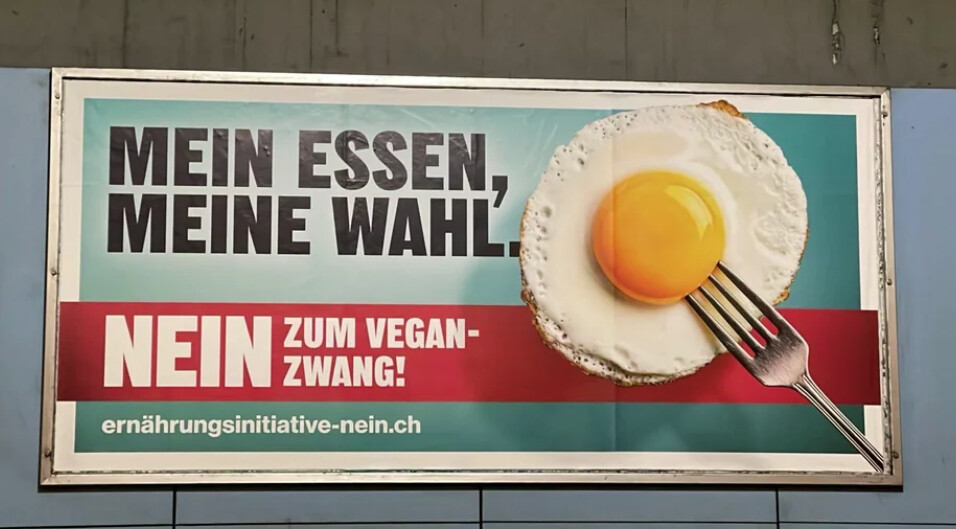
I did like the posters though.
Why are you surprised? What makes it special
At present, Swiss agriculture meets just under half of the country’s food requirements; the rest is imported. To protect the environment, biodiversity and drinking water, the Swiss agricultural sector must comply with a number of requirements.
The food initiative wants Switzerland to produce significantly more of its own food. The aim is to make Switzerland less dependent on other countries. In future, at least 70 per cent of the food consumed in Switzerland should be produced domestically. This requires the Swiss agricultural sector to produce fewer animal-based foods and more plant-based foods. This way, more people can be fed using the same amount of land. In addition, the initiative aims to better protect the environment and drinking water, and to preserve soil fertility and biodiversity. Farmers should use fewer plant protection products and fertilisers. The aim is to achieve these targets within ten years of the initiative being adopted.
Food security is important. At the same time, 40% of the cheese made in Switzerland is exported.
This initiative goes precisely against the cheese surplus that allows to export to other countries. Those maize, sorghum and other feedstock grains that you see in the Swiss Plateau generate food for milk cows. I guess this initiative would limit the use of arable land for cattle feedstock and mandate to cultivate wheat or kohlrabi.
I like the word “Zwang” !
3 Likes
The stir in the parliament:
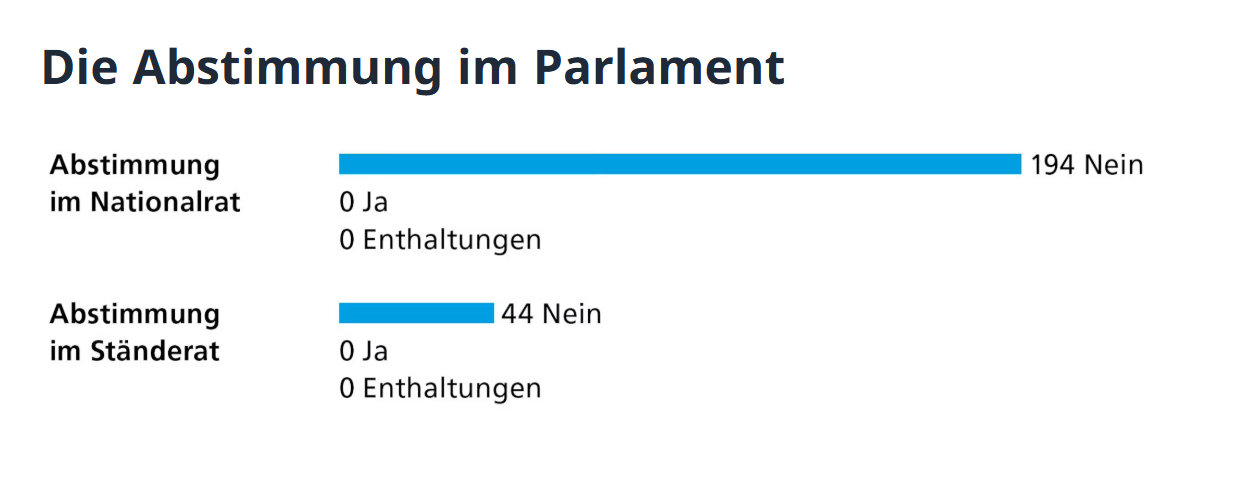
(Source)
That said, it’s surprising that apparently a fair amount of the voters want to say yes.
Goofy Commentary
Actually, not that surprising, if you look at the stock market as a reflection of people voting with their money: there is always plenty of dumb ones available.
Bad dog, Goofy! Pfui!
I am not Swiss so I cannot vote on it, but if I could, I would vote ‘no’:
- IMO, food security is about extensive trading routes, not homegrown vegetables.
- As per my brief research, even during WWII with extreme measures - like sacrificing sports club fields to grow food - Switzerland still didn’t manage to become fully self-sufficient.
PS A while ago I saw a vertical farming Swiss start-up searching for investors, maybe this could help the situation 

Seems very low key compared to other initiatives which generated a lot of discussion e.g. sausage adverts a few years ago.
I see! Maybe because it’s a bit of a different kind of debate: importing vs protectionism* masked under a debate on vegetarianism, similarly to how anti-migration initiative was masked under sustainability
This is counterproductive to the aim to grow more in the same country.
I agree increasing home grown is not the best route for food security.
Having said that vertical farms use less ground space, less water and less fertilizer so are worth encouraging.
The poster sums up the problem with both iniatives on 27 September. They would both try to put a straight jacket on Swiss policy that is totally unnecessary. Practical ways forward are required, not badly formulated initiatives. In the case of the nutrition initiative it is clear that less meat and dairy should be produced as the market, home or export, is not there, but is this the way to do it?
Polls show that this, and the neutrality initiative are doomed to failure.
I’m more interested in the Vaud Cantonal vote on reducing taxes by 12%.
Edited to add:
There is currently no publicly documented poll showing a clear lead for either side. The best description is an uncertain, closely watched vote, with the outcome likely to depend heavily on turnout and centrist voters.
2nd edit.
This centrist voter has voted in favour of the initiative. I see a lot of inefficiencies and waste and see no reason why someone in Vaud should be paying more than someone in Zurich. Time to get the attention of those at the top.
That’s only true from a completely myopic POV.
Vertical farms throw a huge shade, whatever is shaded gets accordingly less sun. The primary limiting factor (around here) isn’t the ground, it’s the sunlight.
Ok, you might be able to light the shaded parts it artificially but that requires far more input energy than you get out in the produce. Probably three orders of magnitudes or even more.
And that they need less water and fertilizer is just an empty unproven assertion by the very same people who have a vested interest in that being true. The idea isn’t new, there’s a reason why urban gardening (which it was part of) turned out to be a fad that fizzled entirely.
If vertical farming really were a thing, and used less fertiliser, then the indoor weed farmers (especially the illegal ones) would definitely have switched to it long ago.
Vertical farms sounded like a crazy idea to me, but I guess there might be some reason for giving up free sun and soil and water and doing everything industrially. I guess there might be some dystopian future which requires the food production to be isolated.
As to the Initiative itself: My kneejerk reaction is an immediate No, I’m fed up with this endless barrage of stuff on the same issues primarily pushed for ideological reasons by people who have zero practical experience in the agrarian or food sector.
The list is AI composed, only broadly checked by me.
PI is short for Popular Initiative, Volksinitiative.
| Date | Proposal. What was it about? | Result |
|---|---|---|
| 7 June 1998 | PI “For the protection of life and the environment from genetic engineering” (“Genetic Protection Initiative”). Restrictions on genetic engineering involving animals, plants and microorganisms, and protection of the environment, health and nature-friendly agriculture. | Rejected, 33.3% in favour. |
| 27 September 1998 | PI “For affordable food and ecological farms”. Lower food prices, more ecological farming and a stronger focus of agricultural policy on the environment and consumers. | Rejected, 23.0% in favour. |
| 27 November 2005 | PI “For food from non-genetically modified agriculture”. A five-year moratorium on the commercial use of genetically modified plants, animals and seeds in agriculture. | Accepted, 55.7% in favour. |
| 28 February 2016 | PI “No speculation on food”. Ban on speculative transactions involving financial instruments based on agricultural commodities and food. | Rejected, 40.1% in favour. |
| 25 September 2016 | PI “For a sustainable and resource-efficient economy” (“Green Economy Initiative”). Conservation of raw materials, soil, water and other natural resources, and promotion of a circular economy. | Rejected, 36.4% in favour. |
| 24 September 2017 | PI/Federal decree, on food security. The decree was caused by a PI which was voluntarily withdrawn as a reaction to the decree. Constitutional basis for securing the food supply, protecting agricultural land and using natural resources sustainably. | Accepted, 78.7% in favour. |
| 23 September 2018 | PI Fair Food Initiative. Promotion of food produced in an environmentally friendly, animal-friendly and fair manner, both domestically and abroad. | Rejected, 37.8% in favour. |
| 23 September 2018 | PI “For food sovereignty. Agriculture concerns us all”. Strengthening domestic small-scale farming, better producer prices, ecological production and stronger state regulation. | Rejected, 31.6% in favour. |
| 25 November 2018 | PI “For the dignity of farm animals” (“Horned Cow Initiative”). Financial support for owners of cows and goats with horns. | Rejected, 45.3% in favour. |
| 13 June 2021 | PI “For clean drinking water and healthy food”. No direct payments to farms that use pesticides or prophylactic antibiotics, or that purchase animal feed. | Rejected, 39.3% in favour. |
| 13 June 2021 | PI “For a Switzerland without synthetic pesticides”. Ban on synthetic pesticides in agriculture, processing and private use after a transitional period. | Rejected, 40.6% in favour. |
| 25 September 2022 | PI “No factory farming in Switzerland”. Stricter constitutional requirements for animal husbandry, slaughter and imports of animal products. | Rejected, 37.1% in favour. |
| 22 September 2024 | PI “For the future of our nature and landscape” (“Biodiversity Initiative”). Greater protection for biodiversity, landscapes, natural monuments and habitats; relevant to agriculture, soil and land use. | Rejected, 36.96% in favour. |
| 9 February 2025 | PI “For a responsible economy within planetary boundaries” (“Environmental Responsibility Initiative”). Limitation of resource consumption and environmental impact within planetary boundaries. | Rejected, 30.7% in favour. |
| 27 September 2026 | PI “For secure food supplies – by strengthening sustainable domestic production, increasing plant-based foods and ensuring clean drinking water”. More domestic production, a target net self-sufficiency rate of at least 70%, more plant-based foods, and stronger protection of drinking water, soil and biodiversity. | Not yet decided; vote on 27 September 2026. |
From Swissinfo:
Food security initiative also losing momentum
Support for the food security initiative, which calls on the Swiss federal authorities to promote the production and consumption of plant-based foods, has also declined since the first poll.
In mid-August, supporters and opponents were running neck and neck. Today, nearly two-thirds of respondents (64%) say they intend to vote no. Support has dropped to 33%, while 3% remain undecided.
I look at this under an economic prism, and it would be an excruciating agony for the mid & lower class (among which I put myself).
Self-reliance on national production of…what?
potatoes and apples?
wheat & barley?
At which cost? clearly higher than current imports from EU.
Will then the government support the transitioning of current grass-producing areas (for milk, cheese, meat, eggs), into much poorer nutrition products?
– Will we then have to pay additional grants- for the downsizing of meat producers, and for the support of ‘competitive’ veggie production?
Will in that case, Switzerland be able to produce enough, or enough of the diversity needed for a balanced and rich diet?.
How is the non-swiss 30% being controlled? through import taxes? tariffs? higher prices?
Kiss goodbye kiwis, mangoes, avocados, sea-fish, bananas, ananas, berries, oranges, lemons…
do these people really think when they propose these initiatives?..
4 Likes
to coffee and English tea.
And to chocolate.
2 Likes
This initiative was cleverly worded in that it tried to appeal to traditionally SVP values of self sufficiency. This is why it is then attacked for being against personal freedom. Swiss farming is in a dilemma. Its traditional political outlet, the SVP, is against subsidies unless they are for farmers or to protect small business. Production is too expensive compared to other countries. People are eating less pork, meat in general, and dairy products. Farmers do adapt, but slowly and the political process does not always help.
As regards political initiatives that fail. This is a problem from both left and right. Most fail. You can argue that they serve to further public debate but it is a risky process.