Not really. There’s a lot more to language than just remembering the words.
The act of simply broadening your vocab in a language is a pretty big key to unlocking the more nuanced aspects, quirks and fluency of it, though.
Ugh, I’m so depressed about my German. I’ve tried and failed so many times.
I cannot learn the traditional way with grammar etc. my brain just shuts down when I try. Add to that I have social anxiety, I’m scared to just speak with people. I have yet to find a learning method that works well for me and I feel so terribly embarrassed about how shit my German is every day.
I do like EasyGerman’s podcasts for listening practice. I really need to find a way to practice speaking without it being anxiety inducing and/or costing a fortune.
2 Likes
Use your phone…
Aww, hang in there IM. You don’t have to be perfect. I’ve accepted that I’ll probably be at A2-B1 forever. I make a ton of mistakes and I am a bit embarrassed sometimes, but I just apologize and ask people to correct me. I think getting over the embarrassment is part of the battle.
Apps have helped tremendously. As an example, our washing machine broke recently. I know my German vocabulary for “broken washing machine stuff” is a bit limited. I grabbed the user manual and used Deepl to translate some phrases from it to English so I could hopefully understand what the tech was talking about.
I’ve also found that a hybrid of English and German works, at least in Bern. I use as many German words as I know, and if I get stuck I just say “Ich weiss nicht, wie zu sagen auf Deutsch or Ich weiss nicht, das Wort auf Deutsch. Auf Englisch es heisst…” and the other person helps me along.
That’s probably grammatically atrocious in and of itself, but people are pretty forgiving if I at least try. 
3 Likes
obviously, it’s about memorizing the patterns, you can’t just replace words in language X to speak language Y. With enough time spent immersed you just start feeling it like a music, if something is not correct it just doesn’t feel/sound right
Took me a while after moving to work in Basel, it was mainly my fear of cases and articles that stopped me, having been irreversibly put off German when I did it at school and we were told in one of the first few lessons to just learn the whole Der Die Das.. table with no idea what it was about.
But after some months I recall seeing some local place signed in Basel Deutsch, actually painted on an alley wall, but simply used d-apostrophe, or possibly Dy, or both, for the definite article. So I realised not only that it can’t really be that important but also that Swiss people are not going to think you’re stupid for getting it “wrong” when half of their own population would also be wrong according to the other half.
(Edit, it was actually dr, at the bottom of this sign but the rest of the text made me realise how unimportant the grammar and spelling were.
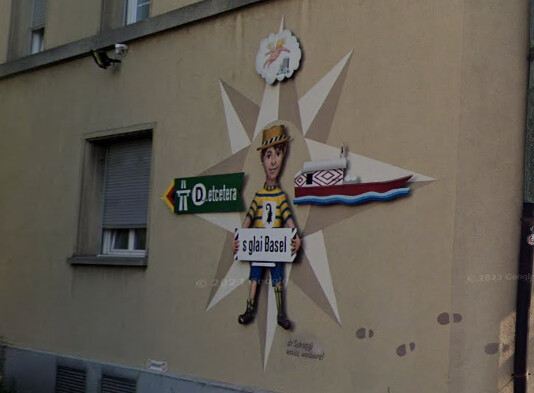
Another revelation come some time later when I realised that when someone in a mountain restaurant “corrected” my request for white wine by sayin “Weeswin?” back to me they were simply confirming my order, not suggesting that there was anything wrong with my pronunciation of weiss Wein.
4 Likes
This actually tripped me up. I know a lot of words, but I never learned the gender and pluralization with it, which means I need to go back and learn these.
Genuinely confused by this. How did she get through her written work at school in Austria only using “d” ??
I guess she got one in three right. Though ‘des’, ‘dem’ etc would have reduced these odds…
Believe that D is the symbol for Germany.
Well yes, obviously. It’s the small text at the bottom right to which I was referring.
In a more general sense this, and other written Swiss-German I came across, made it clear to me that variations of pronunciation and indeed of actual real-world grammar, both between “Hoch” and “Schweizer” Deutsch and within Switzerland itself (and later I realise within Germany itself) are great enough that my own trivial mistakes were nowhere near enough to make me difficult to understand, and that deliberate attempts to slur the definite and indefinite articles when unsure could actually improve comprehensibility.
It’s like listening to a British footballer speaking - yes, they sometimes make me cringe, although I don’t watch football so it’s quite rare - but probably half of the ordinary people you see being interviewed on TV are far from grammatically perfect. Does it make them more difficult to understand if they say things like “if I was” or “I’ve went”? No, it does not.
In other words, I stopped giving a shit about whether I was ‘correct’ or not, and made a big leap forward in my confidence as a result.
1 Like
I’ve seen recently a group drinking beer and talking German in train. The language was far from correct, but obviously not stilted in a Swiss way, neither filled with English words, rather beginner level international community. Yea, they had a good time and I must admit I understood everything too. I was actually jealous, even though I knew all the words I wouldn’t be able to keep the conversation even with such simple, mostly incorrect grammar
Work trip to Stuttgart. It’s so easy to understand German here. Technical work in English but registering at customer’s office, restaurant, hotel…everything is so easy 
Go farther north to Hannover–so crystal clear.
I was translating something with Google Tranlsate app today and noticed a new feature: they added some German practice features so you can practise listening and speaking. Worth checking out!
Does anyone have ‘reading material’ recommendations for learning German. One thing I realised is that a lot of the written German I’ve come across is in a formal German that isn’t spoken. e.g. esp. präteritum which almost doesn’t seem to exist in spoken Swiss German.
It could be worse, you could be attempting to learn Le passé simple or le passé antérieur which are seldom, if ever spoken.
That’s the nature of the beast.
Perhaps some comic book style text with characters speaking to each other in the present tense, or the script from a play, or film which by, nature, will be spoken German?
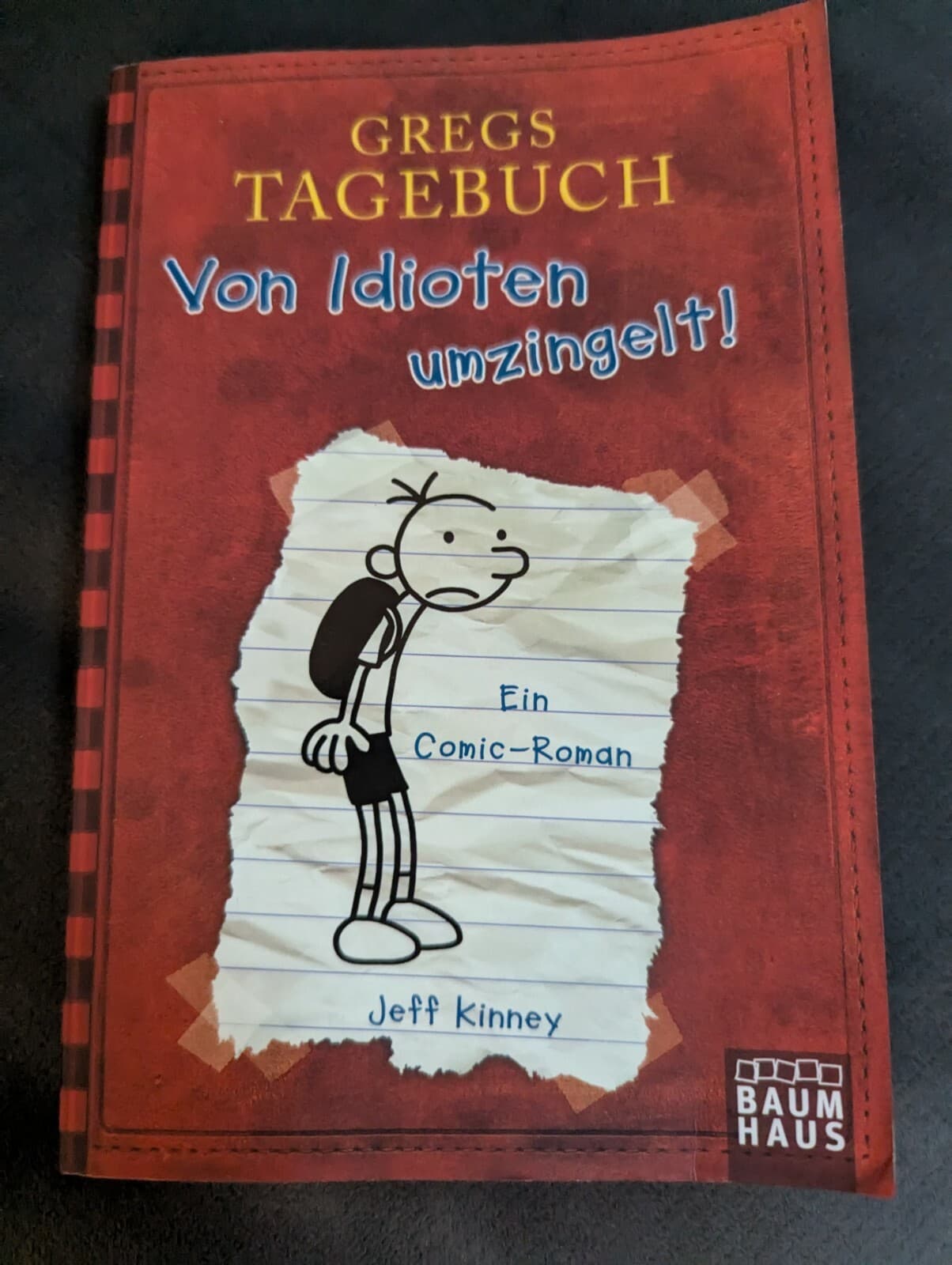
Not sure what level you are at but if basic, how about Diary of a Wimpy Kid?
2 Likes
Thanks. I’m seeing what comics there are and possibly German plays to download from project Gutenberg.