I was looking for Swiss regulations on PFAS and found this:
and then saw this documentary:
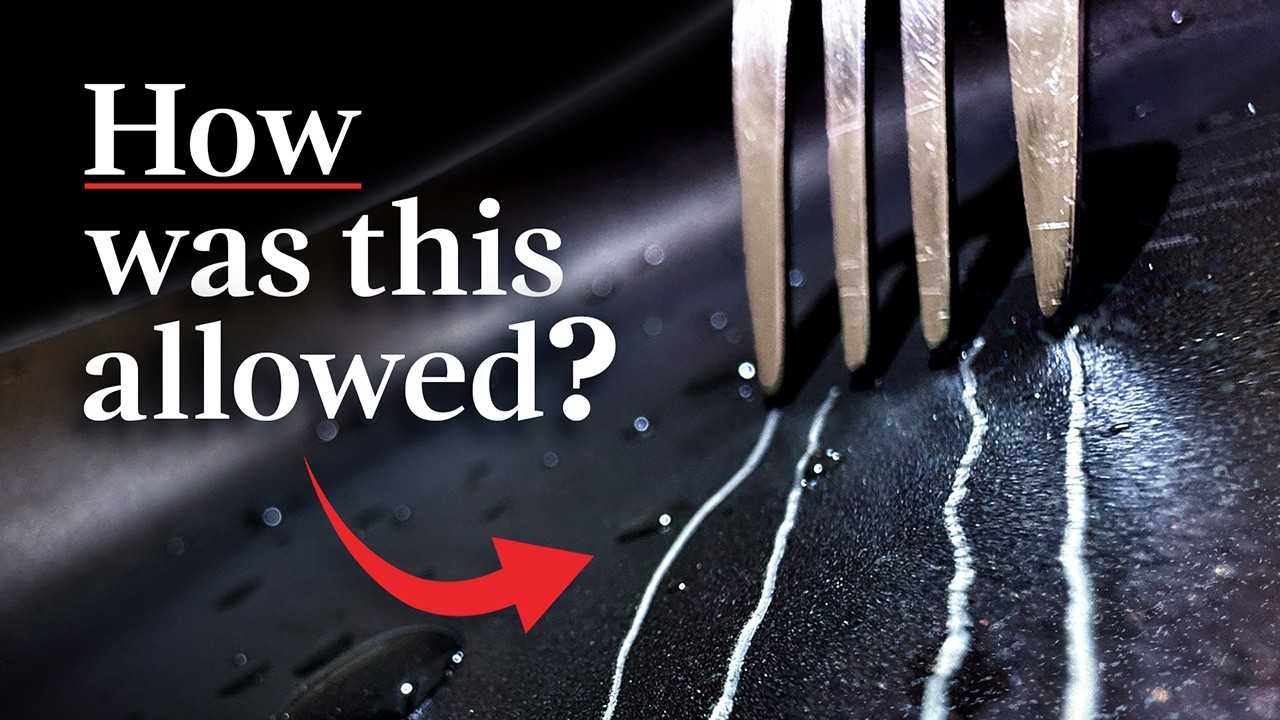
It’s interesting that the world is now contaminated with this stuff.
I was looking for Swiss regulations on PFAS and found this:
and then saw this documentary:
It’s interesting that the world is now contaminated with this stuff.
Funnily enough I just finished watching when I came across this thread. Excellent documentary and while potentially scary, for most of us it’s thankfully not the end of the world - yet…
if you want to really get very disturbed (and definitely scared) see this movie on PFAS – based on real facts Dark Waters (2019) - IMDb
If I understand correctly, last month some PFAS mud were released in Thun lake…twice! – the fine that the company got was ridiculisly low…
So there is something eternal in all of us after all!
well, that’s a positive twist to it…
The topic came up in the news today. , 0.1 micrograms per liter kilogram of water means 1e-10 difference between PFAS and water. I’m surprised PFAS can even be measured. Modern marvels!
In Aargau, the PFAS limit of 0.1 micrograms per liter in drinking water is currently being met in all municipalities.
PFAS are recognized as risky, but not ban on firefighting foams that contain them in Switzerland yet:
Despite the dangers to humans and the environment, the use of firefighting foams containing PFAS is still permitted in Switzerland. So far, only a few substances have been banned. In Aargau, the Aargau Building Insurance (AGV) oversees the fire departments. According to media spokesperson Olga Kuck, the company has already generally switched to PFAS-free firefighting foam. Since 2022, AGV has only provided fire departments with alternative products without the problematic chemicals.
In contrast, not so far from here the invoice to have clean water is high. Some places in Jura (the canton) have similar problems with groundwater pollution, not with PFAS but chlorinated hydrocarbons…but that’s another story.
Since May 5, a drinking water ban has been in effect in eleven municipalities in Alsace, directly on the Swiss border. Pregnant women, small children, and the sick are no longer allowed to consume tap water because it is contaminated with PFAS chemicals.
PFAS are a group of several thousand industrial chemicals found in, among other things, pans, cosmetics, and textiles, as well as in firefighting foams. These are the cause of the contamination in Alsace. The airport fire department at EuroAirport Basel-Mulhouse used large quantities of PFAS-containing extinguishing agents during training exercises. Since the chemicals hardly degrade in the environment, they accumulated in the soil and groundwater. They are considered carcinogenic.
According to French authorities, the Basel airport fire department has switched entirely to alternative firefighting foams. However, this does not solve the problem of high PFAS concentrations in the groundwater. In the Alsatian municipality of St. Louis alone, the cost of the new water purification system with activated carbon filters is estimated at CHF 20 million, plus CHF 600,000 in annual operating costs, as reported by the SRF Regional Journal.
Wait a min…the limit for PFAS in drinking water will be lowered by EU + Switzerland in 2026. Some places that today meet the regulations will have to install expensive purification systems. Then, if the limit is 0.1 micrograms/liter today, which will be the new one? Any chemist here, how can you measure that? 
Such costs could also be incurred by Aargau municipalities. The EU plans to tighten the limit for PFAS by 2026, and Switzerland is expected to adopt the regulations.
One absurd joke in environmental engineering: the solution to pollution is dilution.
This in an educational joke to show the limits of policing pollutant concentrations while trying to protect the environment. Take municipal sewage, if you add enough clean water, the concentration of pollutants will be below the limits set to “protect water resources”. But, what’s the point in adding clean water to polluted water when the objective is to protect water resources?
Now, the Swiss Federal Council may be considering that the solution to pollution is dilution as an alternative to deal with PFAS polluted meat: mix polluted meat with unpolluted meat.
Sounds like Homeopathy to me.
At the airport I saw signs advising against drinking tap water. Now I saw this article. Does this also impact Basel given the proximity to the airport?
I had the same concern but it was pointed out to me that Basel is upstream of the problem.
I would worry about other sources such as industry, agriculture, your own kitchen (Teflon pans), your wardrobe (rain coats), Sporting equipment (Ski wax), etc.. It has even been found in mineral water. Not because of the water itself but due to the plastic bottle.
There was a plan to study the impact of PFAS on the Swiss population (SRF article).
The “Swiss Health Study” was largely based: hundreds of thousands of volunteers between the ages of 20 and 69 were to participate, representatively put together according to age, gender and region. For at least 20 years, urine and blood were regularly to be tested for pesticides, PFAS chemicals, heavy metals and other substances for volunteers. Their health, lifestyle and environmental impacts in their residential region would also have been documented.
The Bundesrat said NO to the study.
On one hand, it’s the health and safety of the population.
On the other hand, WTF? 100k blood sample analysis per year? 10 million/year per 20 years = 200 million francs. Any expert around here, is 100k people really needed to get statistically significant results?
- In view of the high costs of a long-term cohort study (around 10-12 million CHF per year with a number of participants of 100,000), opportunities for financing and organising such a national cohort were examined. The work has shown that although there is a great interest in such a health study, the financing by the third parties has proved to be extremely difficult. Thus, and in view of the tense financial situation of the federal government, the BAG, in consultation with the Federal Department of Home Affairs, has had to decide not to pursue the project any further. The results achieved so far will be reviewed in a report and published on the BAG website in the fourth quarter of 2025. This would enable the findings on the implementation of a health study to be used at a later date.
They should invest that money on keeping PFAS out of our lives.
With the orginal study what would the result be after 20 years? “Gosh, the situation within the Swiss population is real bad, we gotta start doing something about it” or “ah, it’s not that bad here”. Both results are nonsense as the information of the harm is on the table.
The immediate need now is to start eliminating the causes, not spend 20 years on how highly harmed is the Swiss population now and in 20 years time.
No. Actually, if ‘carefully selected’, a cohort of 110 - 150 (to be on the safe side) would be enough to get statistically significant results. Even if you tell me, oooohhhh different cantonal laws for disposal, etc, OK, I give you that --let’s ay 150 x 26 cantons. That’s faaar away from 100,000. Ridiculous. Yet, god knows what they are looking at, really. What a waste of money.
I only had in mind about 1k people in clinical trials, or 10-20k for “longitudinal health studies” in countries with populations much larger than Switzerland. But, no experience. Only layman reading of articles. That’s why 100k looked odd.
Hopefully, health authorities reconsider and propose a more sensible monitoring plan/study.
Imagine! The government would have had a good excuse to wait 20 years until the results were in.
By concentrating on numbers in a study one is missing the point. There is good evidence that PFASs are harmful: Our Current Understanding of the Human Health and Environmental Risks of PFAS | US EPA.
Epidemiology studies generally require much higher numbers than clinical trials. You are often looking for small effects that my be significant in a particular cohort e.g. small children, but not in others , so there is a need for sufficient numbers in each cohort.
In terms of risk, it seems sensible to reduce exposure to known toxins without conducting long expensive studies that statistically speaking are likely to yield inconclusive results. The decision of the government seems sensible.
they knew. Everybody knew. This is not news…
DARK WATERS | Official Trailer | In Theaters November 22
Excellent Film. Sold my DuPont shares after watching it.
The film is excellent – (even if it made me physically sick for days after, and I threw away all of my Teflon pans- what is troublesome is that, after everything that is known (particularly the effects of release of slurry containing PFAS in the waters), it happened again, TWICE in Switzerland this year… and the fines are minimal (but we touched on this subject already on another thread).