He has, on occasion, if you’ve followed him long enough, but true, it’s rare.
The one video I remember is him admitting to owning Apple but cutting back a little due to its valuation. Probaby many years ago.
I used to find this hard as well (selling), but have arrived at a somewhat practical approach: if it looks richly valued in FASTgraphs, just sell some of the initial position. The Sell value doesn’t have to match the initial average investment sum, but just take some chips off the table.
Of course, there are regrets to be had, but I feel much better about selling some of my AVGO and CMI than about the book profits if I had just held onto my original full positions.
This might be one of the few things that I have actually learned along the way while investing.
Others would argue to the contrary, of course.
Your full reply is so much richer than any of my subsequent (picked excerpt) replies, so let me add as follows.
I responded to what I thought was worth an obvious response, but I did not respond in full. I am afraid I cannot promise to respond in full, either, even if I often aim to.
Anyway, long winded way to thank you for your detailed answer that I might not respond to in the deserving detail.
I’m fine with agreeing to disagree, thanks for the discussion. And it’s fine to focus on a particular aspect of what’s said.
I phrased it poorly, he doesn’t explicitly mention his selling criteria. But now that I think of it, it’s fairly clear: While there’s of course wiggle room, the amount of which will differ from stock to stock, he peobably sells when it’s above his fair value curve.
And you’re right, he does mention occasionally that he held XYZ, it slipped my mind.
I was close to buying them several times over the course of the last few years, but its dividend yield was always 2% or lower which made me shy away from a buy.
It’s a problem you don’t have as you’re also living off capital gains (market dividends, as you call them). Maybe I’ll jump that shark, too, someday, once I’m older and wiser. I’m pretty certain about accomplishing the former – we’ll see about the latter …
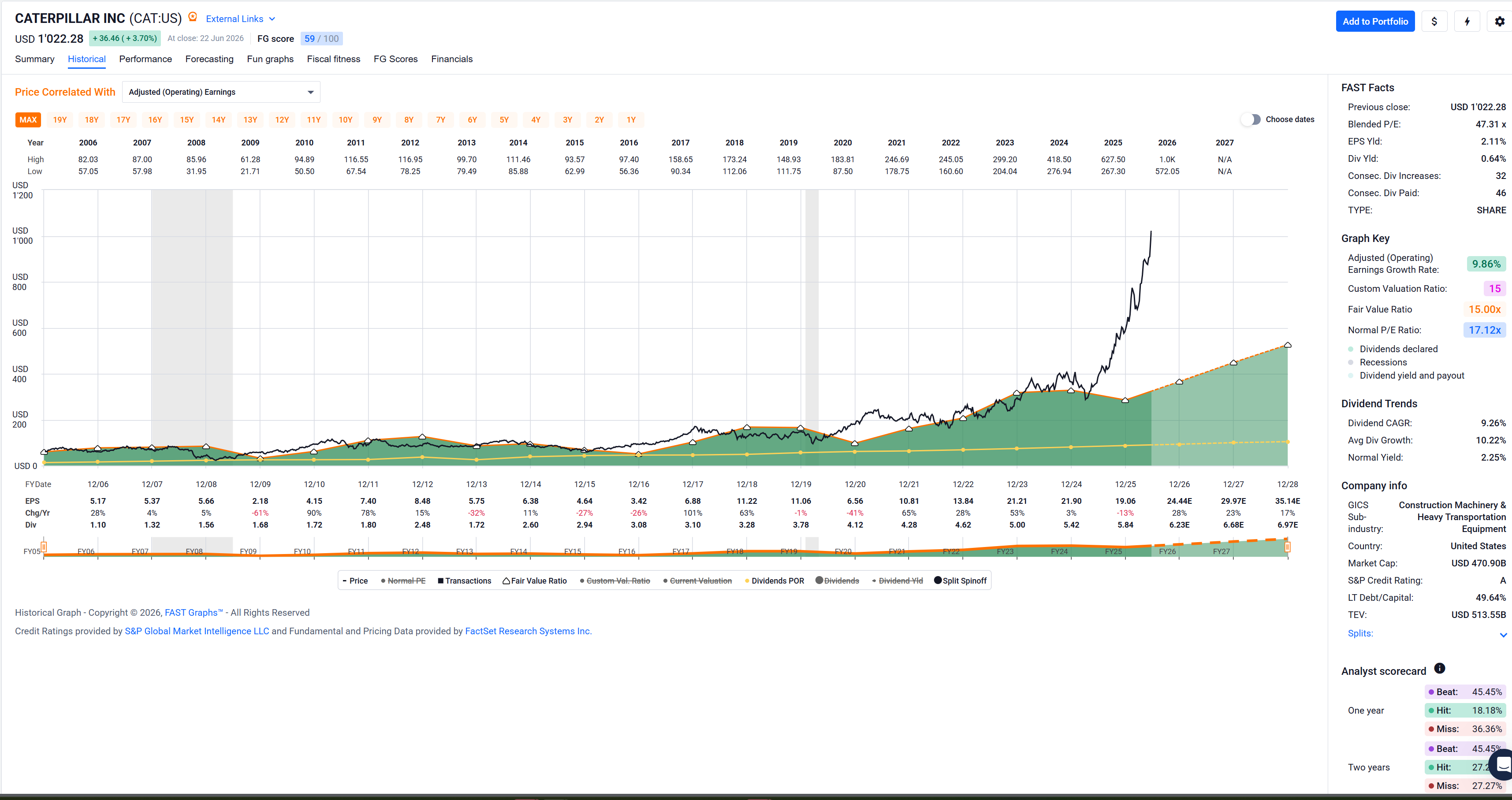
Yes, CAT is a wonderful stock. Started buying at $82 about a decade ago. Was nice and cyclical for some time, sold high and bought low. But then it started to rocket, last sell was over $1000 per share. I already got back many times my investment with dividends and market dividends and still hold a big position.
Addendum to my “buy-low-sell-high” part of the dividend strategy: it is like always a compromise. Of course you are better off with a rocket like CAT if you just do buy-and-hold. But what about risk?
The dividend portfolio is my source of funds for living. I don’t play around there and almost every rule is to reduce risk. To gain performance one must use other rules, take on more risk and, most important, have an aggressive money management. Something I do with the gambling portfolio, 6.5 years now very successful.
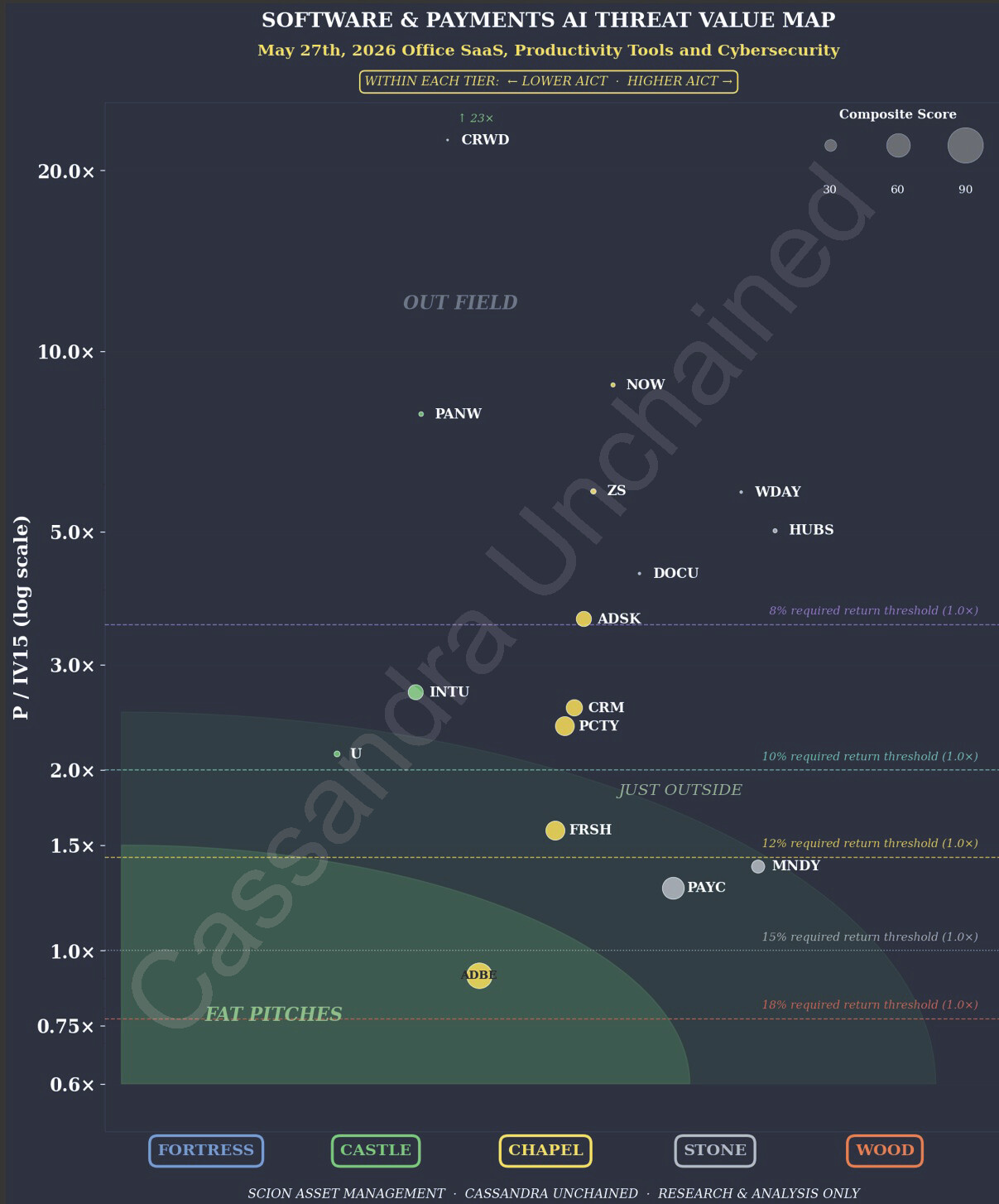
Here’s another free article by Cassandra Unchained aka Michael Burry, this time focusing on software stocks:
I only skimmed over it, but found it interesting how differently he views each of them. This is the summary chart if you don’t want to read a couple dozen pages of his research.
Out of the ones he discusses in more detail I like Adobe best, followed by Intuit. I already bought ADBE into my son’s growth portfolio and will likey add INTU now.
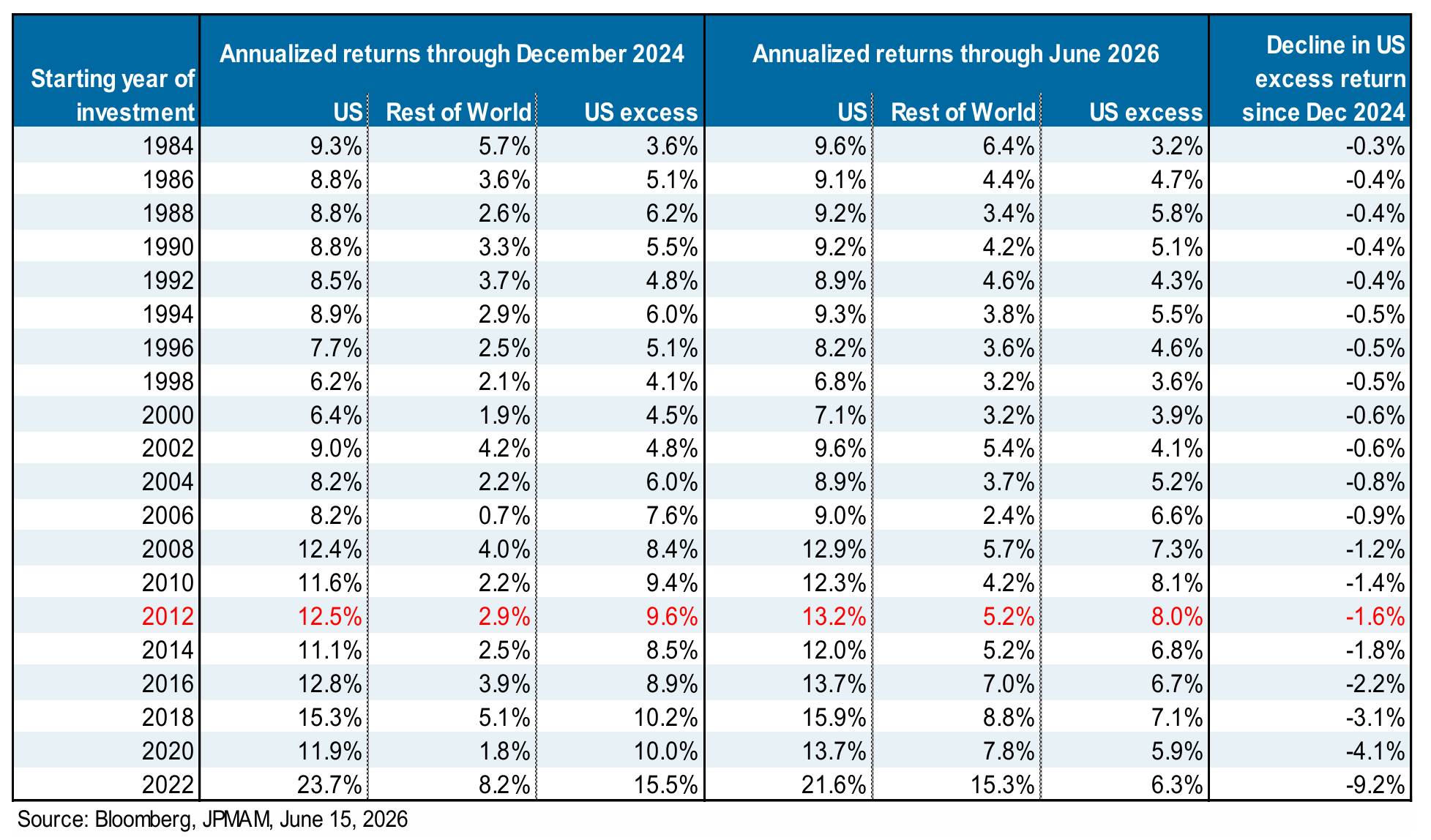
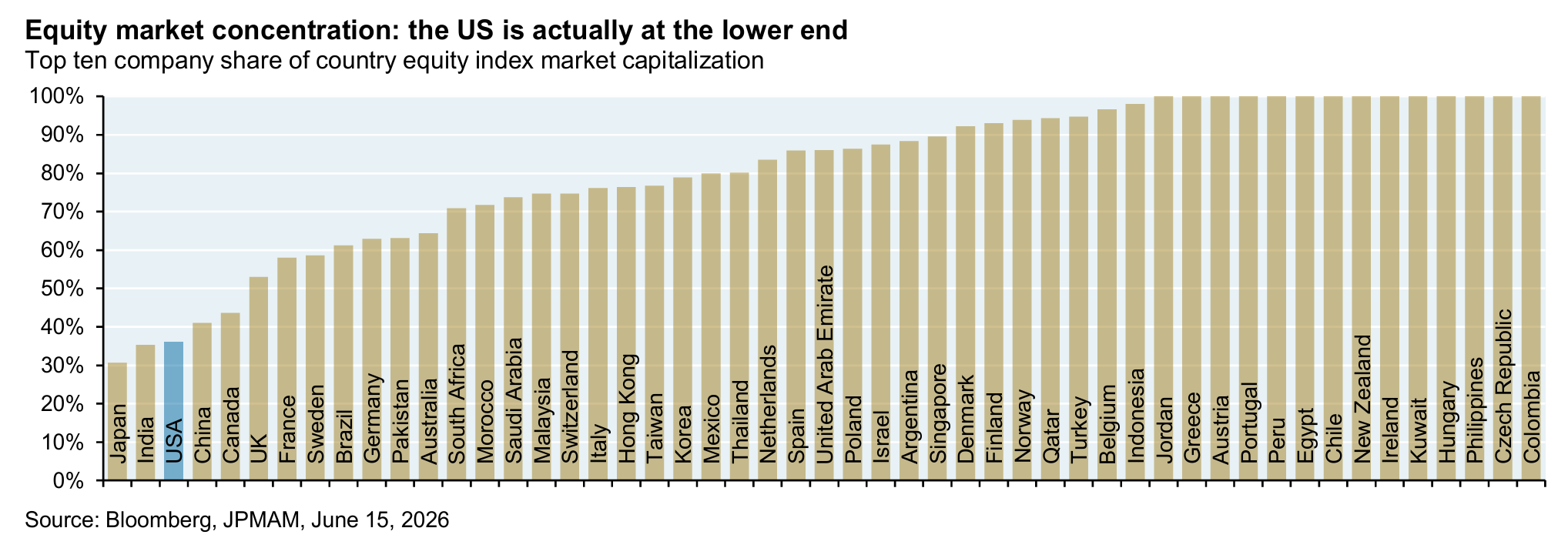
If you believe in the “Sell America” trade, the dollar being replaced as the world’s reserve currency, US markets being top heavy, etc then this paper was made for you.
Teaser triggers:
Introduction
Behold the Aquilaceph, half-bald eagle and half-octopus. On the semiquincentennial 250th anniversary of the US Declaration of Independence, this imaginary beast is a metaphor for the continued US grip on global markets. In this special issue we look at the details: US reserve currency status, capital flows, the much anticipated but still unprofitable “Sell America” trade, US corporate profitability and productivity in the age of AI, investing in Security & Resilience, equity market concentration, energy independence and the revival of the US IPO market.
There’s also some fairly detailed and IMO interesting discussion on other topics – AI, defense, decline of the rule of law and belief in science in the US (all as separate topics) – in the paper, but I found the above more interesting and a little less political.
After all, this is still the stock trading topic and I guess what I am highlighting is that it’s probably still true what Warren Buffett coined: “Never bet against America”, also in the stock market.
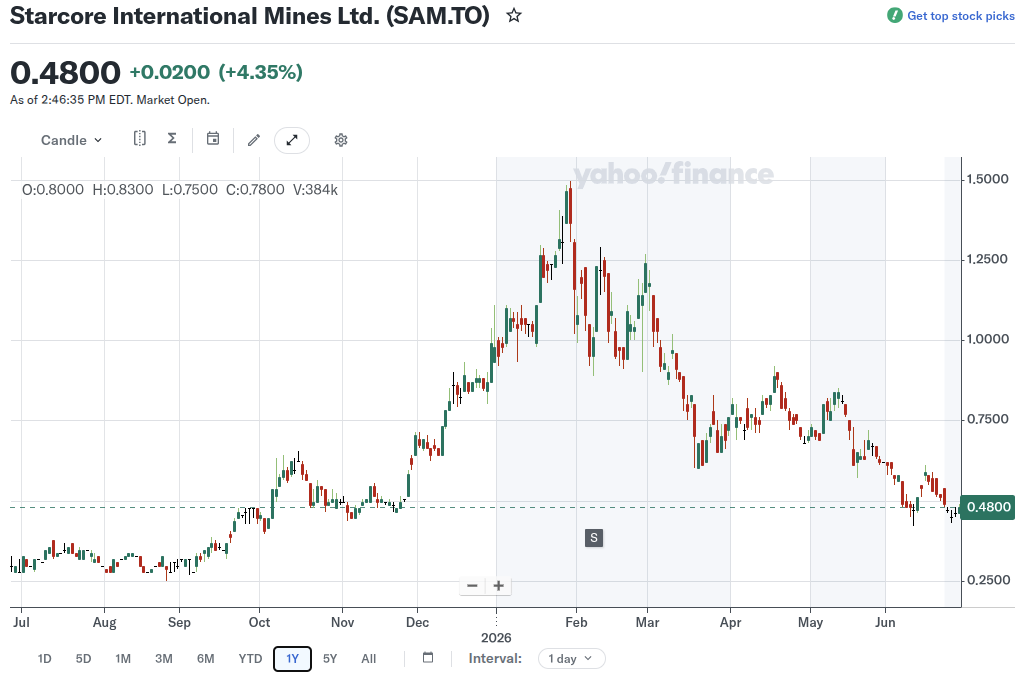
I have been always curious to gambling on mining. Currently paying stressing debt, so I can’t play. But, at some point…550g Ag/ton of ore (anything else) is something.








 … or maybe it was just AI slop.