Simply stock trading

Not sure if many of you invest in stocks. I do, since like 45 years. Took out my pension in 2014 (2nd and 3rd pillar) and did invest it in the stock market. Working is nice, I even liked it, but it takes too much time. I started to make real money when I stopped working.

The most important thing to know in the stock market: you don’t know nothing! Nobody knows the future and anything may happen. Our brain is not made for stock trading because a lot of automatism that helped us survive do very bad in trading stocks. I call it our cavemen brain.

I think most of private stock traders lose money. That is why ETF are that popular. I’m not very keen of ETF for various reason, I may go into detail if you like.

There are over 100 bias that make us do the wrong thing in the stock market. That is why I concentrate on mechanical systems. If interested I can go into more details here too.

Since 2014 I do a high cash flow low risk dividend strategy (I call this the MOFO-home strategy). The CAGR since 2014, calculated with the XIRR function, is 11.61%. Changed the rules a bit in 2020 and since then the CAGR is 14.9%. In 2020 I found that I make too much money to spend it so I could gamble it away in a high-risk momentum strategy. That one made me a incredible 29.76% CAGR and did overpass my MOFO home strategy in value last year.

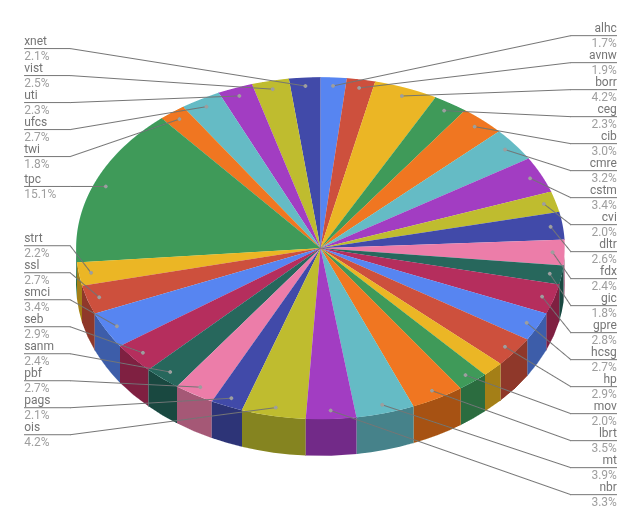
Here the contents of my MOFO-home and my gambling strategy in form of a “wheel of fortune”:
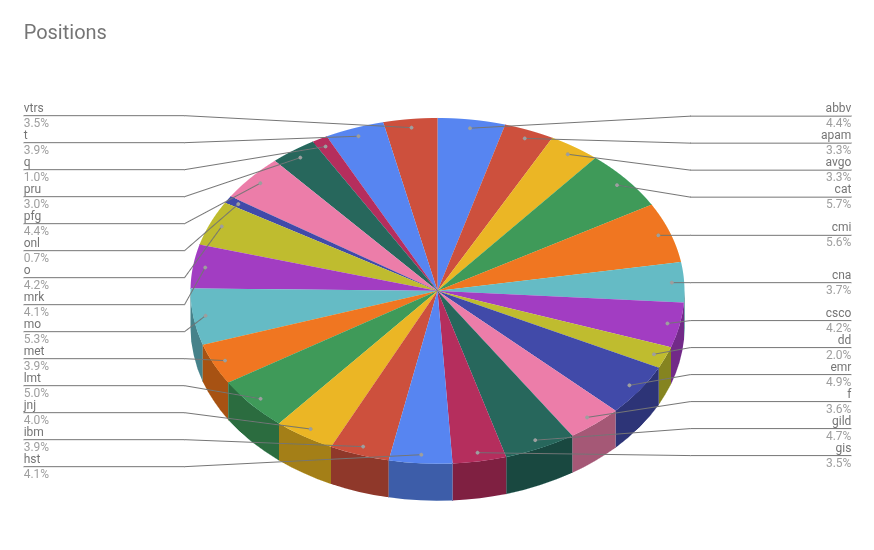

BTW: Much volatility today, but seems I am positioned quite nicely. In the MOFO home strategy I use sector and company diversification, in the gambling strategy I do not and hold a lot of oil stocks.

Don’t do that at home, the risk is gigantic! Stock market gains are paid with the currency called volatility. While the MOFO home strategy tries to reduce risk in any way the gambling strategy aims to take as much risk as possible, but only if the risk brings performance. The main task for an investor is to find out how much risk he can stand and then which risks bring the highest probable gain.

And don’t get blinded by the performance numbers. That were historically very good stock markets. There were only 3 minor bear markets and they did not last for long. My performance therefor may be pure luck!
5 Likes

@Fatmanfilms has retired now and doesn’t post so often, but I think he went nearly 100% into Fundsmith which did well for a few years, but recently had some issues as GBP/USD FX went against them and also Novonordisk stock did badly, but they should have done well with FB, MSFT picks.

Not sure if he changed his investments since then.

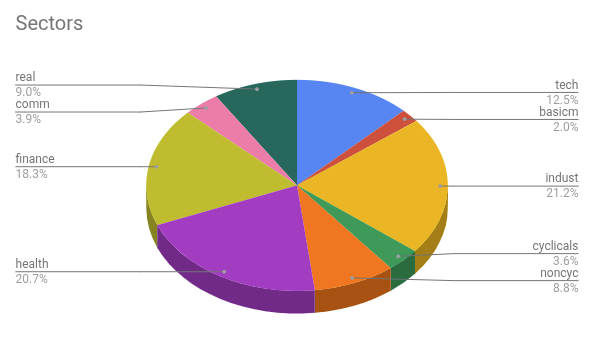
Had a look at Fundsmith, nice, CAGR more or less like my MOFO home portfolio. But more risk I think, 30% in healthcare sector, I have a limit of 20% per sector. At the moment health and industrials are over this quota, I stop buying there, not even re-invest dividends.

Here a wheel of fortune of my current sectors in the MOFO home portfolio:

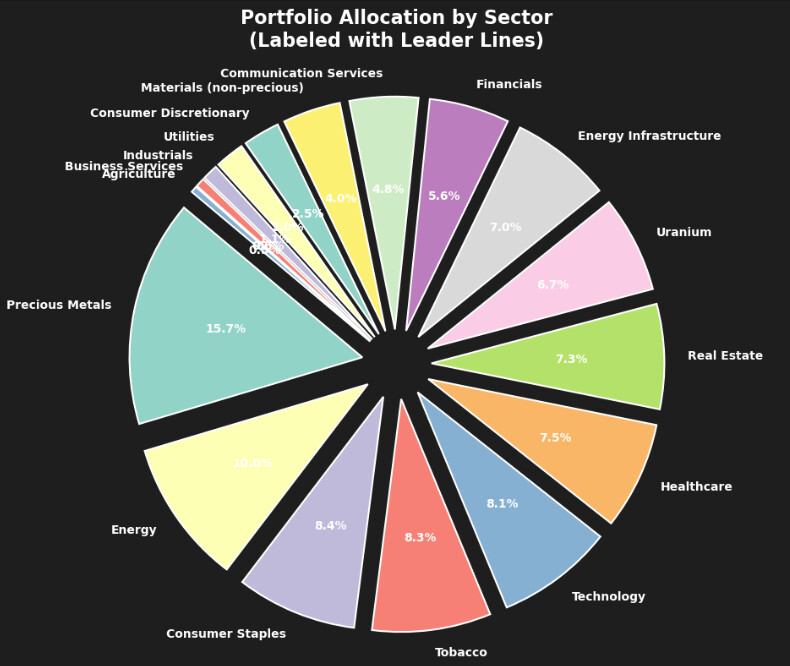
The website I use doesn’t really render it great. Also, I’m not convinced about some of the official sector classifications any how.

EDIT: ChatGPT to the rescue:

1 Like

I call my rules “the captain”, I have rules for every little aspect of my stock trading.

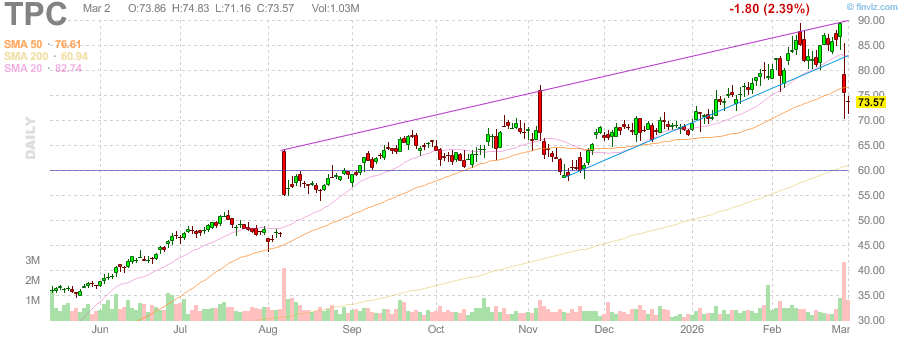
Today the captain finally did let me sell some Tutor Perini. Still is the biggest position in my portfolio, but at least I could reduce the risk a little. Sold at a gain of 476%. A few days earlier would have been nice, check the chart below. But rules are rules and sometimes you are lucky, sometimes you are not. Everything in stock trading is a compromise…

Now I have the next problem: what to do (what stock to buy) with that much cash. The captain will tell me and I’ll let you know.

1 Like

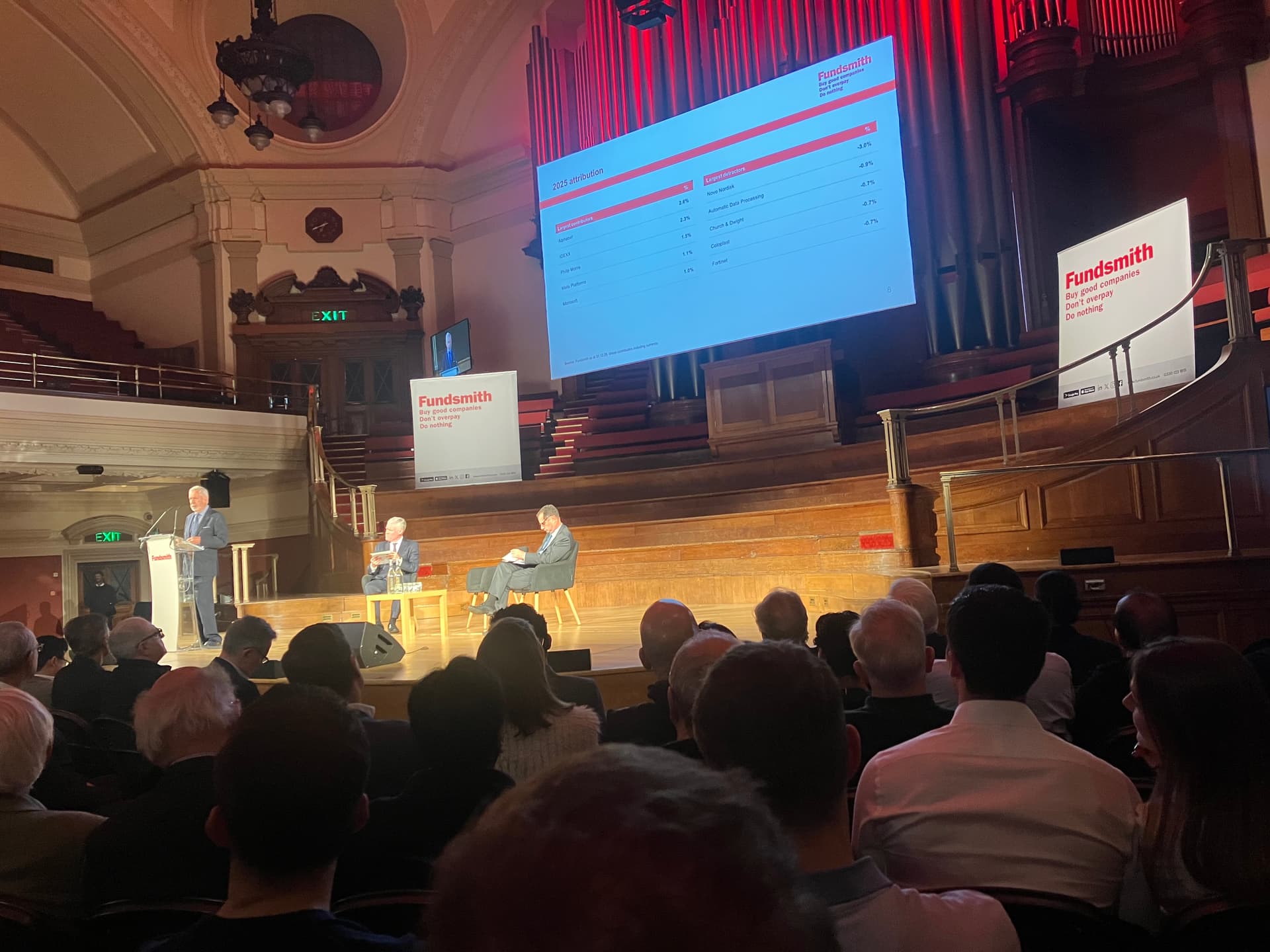
I went to the Fundsmith AGM last Tuesday in London, this will probably be on the website within a month & is definitely worth watching.
What’s interesting with the FS portfolio, is the Free Cash Flow is now 3.7% v S&P Non Financials st 2.8%. The FCF growth rate of the FS portfolio is 16%. For the first time since inception of the fund its companies are substantially cheaper than the index, whilst being of superior quality.

Terry Smith described their performance as poor! He said the time to have sacked him was in 2019 when he was doing very well!

Over 85% of my investments are between FS & Smithson, something that seems painful at the moment but I believe will pay off well.

He has reduced Amazon, Meta & Microsoft by about 50% recently.


3 Likes

Interesting. Cash flow is king. Indeed investing in stocks is easy: enough cash flow so the company cannot go bankrupt and wait for it to rise meanwhile collecting dividends.

For my MOFO home portfolio I use operating and free cash flow, debt and enterprise value. I have the following stock picking rules: market cap >500M (used to be 2B), FCF payout ratio under 1, dividend yield >2%, EV/FCF <34 and OCF/Debt >0.1.

To make stock picking completely mechanical I use the Dow Jones U.S. Dividend 100 Index, sort it by dividend yield, check my parameters, check for sector diversification and that is it. Could program a computer to do that for me.

But then stock picking is probably the least important part, even if professionals would deny that. A complete strategy in order of importance:

  1. Money management.
  2. Position management.
  3. Stock picking

I do this since 2014 with some changes in 2020. If somebody is interested I can provide all the rules I use in that dividend strategy. The rules for the gambling strategy I keep for myself, nobody should do that at home, too risky!

No disrespect but any investment strategy should be compared to the general market performance, specifically S&P 500 which averaged at the same ballpark figure for annual returns.

1 Like

Yes, of course. I do that always. Not that performance is the most important, specially if you live off it, but let’s see if I can put it into a table:

Year SP500 Dow Nasdaq100 Russell2000 my dividend strategy my gambling strategy
2020 16.26% 7.25% 47.58% 18.41% 3.32% -2.02%
2021 26.89% 18.73% 26.63% 13.67% 36.41% 56.4%
2022 -19.44% -8.78% -32.97% -21.56% 6.95% 7.73%
2023 24.23% 13.7% 53.81% 15.11% 3.33% 64.4%
2024 23.31% 12.88% 24.88% 10.02% 17.2% 25.64%
2025 16.39% 12.97% 20.17% 11.29% 18.37% 20.12%
2026 (YTD) -0.42% 0.91% -2.1% 5.09% 8.51% 19.45%
CAGR (XIRR) 12.85% 8.97% 18.35% 7.52% 14.71% 29.26%

Performance does not say much if you don’t calculate it per “unit of risk”. But almost 30% every year for more than 6 years is nice. That was money I could afford to lose and now it is worth more than my “pension fund”, the dividend strategy. In the dividend strategy I seek to reduce risk in any possible way while in the gambling strategy I seek maximal risk if the risk adds to performance.

6 Likes

Very nice comparison, thank you.

Goofy/YFN gave his dividend stock picks here:

1 Like

Hi, is that the yield of the “safe approach”?

Why the focus on dividends at all? They’re severely taxed as opposed to capital gains.

2 Likes

Came here to ask the same. Dividends aren’t very popular in the FIRE communities because of the heavy tax and limited stock upside.

Yes. Since 2020 where I made some changes in the rules. Since 2014 it was only 11.5%.

1 Like

OK, I FIREd 2014. Tax is almost a shame, I pay near to nothing. The dividends protect a little so I can manage debt without falling into a professional status.

I used to live in a tax-free country (Costa Rica, not tax free any longer for expats AFAIK) and payed more tax than I do now in Switzerland. Because they do not have a double tax agreement the withholding tax is 30% instead of 15% then. Now in addition there is an expat tax, so I could not even keep half of my dividends…

So tax is not an issue. There are two reason I invest in the less risky strategy in dividend stocks:

  • They help my “buy low sell high” part, I re-invest dividends only on stocks that are worth less than the medium of all stocks and that are still on buy. I think I’ll post all the rules from this strategy, that would make it easier to understand.
  • Stocks that pay dividends and fulfill my cash flow requirements are usually in a state where they present lower risk than companies that don’t. Less risk but less gain too.

I think this means total return, rather than dividend yield.

1 Like

While dividends are not tax efficient, I think if you are retired, it is simple as you just receive dividends regularly and don’t have to specifically sell stocks to generate retirement income.

If dividend income is matched to spending, this will also hopefully grow with inflation.

1 Like

Exactly.

Actually I am now in the second month living completely off AHV which I just got today. :slight_smile:

Of course that is only possible if you don’t have to pay rent. And in October my first AHV did exactly to the Rappen cover my gardener’s bill. :frowning:

I never sell any stock because I need money, that is a bad reason to sell. I just take it out on margin debt and pay it off when my capt’n tells me to sell or with dividends.

1 Like

OK, before I go into the details of my dividend strategy, some general points about the why and the how. I think I first write about why, then about how and at last as an example my dividend strategy.

Why the hell don’t I trust myself and use a rule-based completely mechanical strategy that a computer could trade for me? Because my brain works the same as most brains since we were cavemen. We survived because of that but it works very badly in investing.

Two of the most known phenomena are fear and greed, we sell at the worst moment because we fear dead and we buy at the worst moment because we get greedy.

The legendary fund manager Peter Lynch once said something like: “I made 29% per year during 20 years. Yet most of my clients did lose money; they bought my fund high and sold it low.”

Now this has to be digested: the probably best stock picker in the world could not make his clients make money because of their cavemen brains!

There are over 100 psychological bias, covered in many books, I think I did read more than 100 books on financial themes. Yet, psychologists are not the richest men on earth. They may be rich, but only because they charge a lot, you don’t get really rich working and I did work for 37 years to find out. We may know every detail of a bias and still fall for it. Life is hard!

Most private investors in stocks lose money. ETF did help a little, but I am not keen of ETF for several reasons. I may go into more details later if you wish. And one of the most important parts of investing is money management; you have to do that if you invest in ETF too!

If you don’t have rules there is the queue problem: you switch queues and end up mostly in the slower one.

And of course there is age. My brain does not work as good as a few decades ago. When I suffered from a bad illness during years I had to consult my written strategies to find out what to do. Lucky I did write it down.

Trying to catch highs and lows is a losers game. Once you understand this you may start to make real money instead of gambling.

Objective rules are better than subjective trading; our mood could destroy everything without strong rules!

And there is the ease of mind you reach when you always and in every situation know exactly what to do. No decision making when shots are fired in your direction; those decisions would be bad most of the times.

1 Like