Simply stock trading

Now for the how. My methods did evolve over decades, but the rules can be categorized in three parts, ordered by importance:

  • money management
  • position management
  • stock picking.

Money management is the most important part. You can have the best stocks and still lose money, as my example with Peter Lynch in the last post. In the other hand you can choose the worst stocks ever; if they do not correlate you can still make money thanks to Shannons demon which is money- and position management.

Sounds strange and is strange, but true.

Money management answers the questions how much to invest in each position, how to diversify stocks and sectors or even other assets, but that I would put a level higher than the stock market methods. It covers margin loans too, that is a very important part if you use margin loans. If you don’t have a clear strategy you will sooner or later go broke with margin loans.

Position management is the second important part. It answers questions like when to sell, when to sell partially, when to buy more of a position. Very important, but not that important as money management. It is easy to gain, everybody knows that. But to lose is hard and therefor at the end more important. Take losses whenever your strategy tells you, even if it hurts. It will hurt much more if you keep losing.

The least important part is stock picking. You may even decide not to fully automate it as most investors do. But I would strongly recommend some rules to exclude stocks. It is simply statistics and probabilities. Nobody knows the future but there are probabilities that are not fully priced in. That is my special department. I think excluding some stocks is more important than including others; you avoid losses. Gains come in automatically.

Some literature, there is tons of good books, but I would recommend starting with those:

3 Likes

Yay! Mention of Daniel Kahneman’s great book. Could have been even greater if edited to 30 pages, but take the good, mind the rest. Maybe it’s time for a reread.

1 Like

OK, now for the detailed rules of my MOFO home strategy, the dividend portfolio:

Money management

  • 4% of total value for each position.
  • 20% of total value max per sector.
  • No or very little margin loan. Except for crash recovery protocol margin loan is only used for not having to reinvest dividends every few days and not having cash laying around.
  • Optional: crash recovery protocol described later

Position management:

  • Market dividend: when a position reaches 6% of portfolio value, sell down to 5%.
  • Check the stock picking rules for every quarter. If year data or quarter data are not OK set the position to hold. If both are not OK set it to sell. Positions on sell or hold are not bought any longer.
  • For positions on sell check the momentum. A position can be too expensive and continue to rise for a very long time. Hold as long as possible but not longer. Once a position is in the lower half of momentum, sell it.
  • No cash except in bear markets (S&P500 20% and more under last high).
  • If cash has to be invested check for positions on buy that are worth less than 4% of portfolio value. Then buy round robin 5% more of every of those positions. If there are not enough positions to place the cash, open a new position.
  • Minimum holding period is 6 months. Again: hold as long as possible, but not longer!

Stock picking rules

  • Dividend yield >2%
  • EV / FCF < 34. EV = Enterprise value = debt + market cap - cash. FCF = Free Cash Flow as operating cashflow - capital expenditures. This is a value parameter and should leave out companies that are overvalued or that do not produce enough cash flow for their value.
  • OCF / debt > 0.1. OCF = Operating Cashflow. Debt interest is already contained in operating cash flow. This is just a measurement of how manageable the debt is, just precaution.

And that is it for stock picking, very simple rules. I enter the numbers every quarter in a spreadsheet to check out the state (buy/hold/sell) of every of my holdings.

Now for the optional crash recovery protocol. The point here is to add risk when everybody else is taking out risk, in a bear market.

  • First SP500 has to fall 20% from its last high.
  • Then wait for signs of recovery, I do half of the stocks in SP500 and all important indices over 50 day moving average and the VIX Future is 3 months in contango.
  • If the market climbs back to 95% of its last high before those signs of recovery appear, the crash recovery protocol is over and normal operation resumes.
  • I calculate the margin amount as % of the difference last low to last high of the SP500. As a bear market starts at 20% this is the minimum. If the market fell more than 50% this is the maximum.
  • Then I buy positions until I reach the desired 120% to 150% of my portfolio value.
  • Now the recovery phase starts. Dividends and sales pay off the margin debt. The market dividend is paused, let positions grow over 6% of portfolio value.
  • If the market continues to fall, sell to keep margin loan under 300% (then the market would have lost like 75% of its value, can happen, didn’t in my time).
  • When market makes a new high restart the market dividend, but use 5.33% instead of 6% as trigger until margin debt is paid back.
  • While margin debt, sell the worst position based on momentum every month.
  • When margin debt is paid back, crash recovery protocol is over and normal operation resumes.

OK, that is it. I do this since 2014, but some rules were changed or added in 2020. One could use this strategy and check only once a month or even once a quarter. The crash recovery protocol did work very nice in the last 4 bear markets it was involved 3 times.

Those are rules that work for my special case. They work better if I don’t have to take out money, but I have to live somehow, don’t I? OK, since my gambling strategy overtook the MOFO home I take out money to live from there.

Feel free to define your own rules. Post it here if you want to hear my opinion. Good trades!

3 Likes

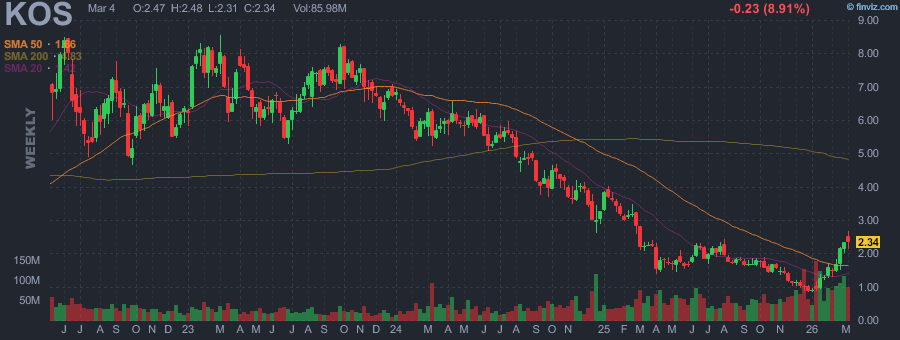
And for my gambling strategy I just bought some Kosmos Energy (KOS). Really captain, a penny stock? OK, BORR was a penny stock when I bought it, now it is no more. But KOS is a oil and gas sea ground lottery, probably my first stock that goes to zero value. Life is hard…

BTW: if you like I post my trades and a monthly recap here. Try to do it on-time but will be probably a bit late when travelling.

1 Like

As we all know after watching Landman what KOS does is called “wildcatting”.

The company seems to have working wells but at the ones exploring there is a 90% chance of … well of just nothing. And a 10% of making 10’000 or 100’000%. That odds are nice, exactly what I want to see in a gambling strategy.

It is kind of nasty of me to buy those oil explorers, I bought a lot of them since October. Because I don’t know anything about that sector, but I know numbers. Landman is not a very good learning tool I’m afraid. But then my captain knows what he makes me do… at least I hope so.

Maybe some of you did or do work in that field and can talk a little about it? A very good friend of mine was an underwater welder, worked in many of those rigs. But unfortunately he died last year. Of old age, at least he reached 75 years.

OK, now for a very controversial theme: ETF.

Bogleheads

Some people like Mr. Bogle (who profits a lot from that) did spend the last decades getting investors to think ETF are like the holy grail of investments. They are not, but just the fact that many youngsters call the all-world index ETF the “holy grail” speaks for itself.

too much is just too much

The success is a problem. Stocks are not analyzed any longer, the more overvalued they are the more they are bought, because most indices do position sizing by market capital. Means you buy a lot of what already did rise and almost nothing of what still will rise. This problem was never worse than just right now. I think many ETF had to remove the label “diversified” because they invest most of the money in very little stocks.

Overdiversification

Diversification is nice, but after like 50 stocks there is no more performance gain. People buy ETF with thousands of stocks, literally investing only cents or even less in a single company.

Take the trash out!

And there is a lot of garbage. Zombie companies, overvalued companies that cannot make in centuries what you pay for it, companies that cheat, companies with strange business models, companies that buy growth at exaggerated prices and so on. By leaving out that garbage you gain a lot. As you know I think leaving out is more important than including.

All the power and none of the responsibility

The SP500 which is described sometimes as worse than a managed fund because the “fund manager” (the committee that selects the stocks) is anonymous and did break its own rules many times, making investors lose a lot of money for no reason other than the FOMO of those anonymous members.

too much to choose from

And a problem little people know of: there are more indices than single stocks. And every index has at least one ETF, bigger index have more. So the ETF picking is probably more difficult than stock picking. Anyhow, stock picking is not that important as I described earlier, but ETF picking is important because you don’t pick one stock but a stock strategy.

…And now for the good part

That said I sometimes recommend using ETF. Errors in investing are expensive and everybody, including me, commits errors.

An ETF once selected does help with the stock picking. But you still need money and position management. This can be easy anyhow, but is important. Otherwise you may end up losing money anyhow by selling low and buying high.

I recommended to a friends a mixture of 4% RE, 76% Dow Jones U.S. dividend 100 and 20% Nasdaq 100. Then rebalance every 7 months (7 to avoid seasonal effects). Works perfect, did beat the indices with just a few minutes every 7 months. For RE he did choose Realty Income (O), for dividends the Schwab product SCHD and for Nasdaq100 the (a bit expensive) QQQ Trust. Both funds are mechanically constructed.

I think both O and SCHD are very solid. SCHD was out of favour for a long time, but is up around 20% YTD.

Yep. But then there is Shannons demon. There are cycles and QQQ and SCHD have not much stocks in common, almost nothing. So by re-allocating periodically you buy low and sell high, always. You may even make money when investing in only one of those would not bring you gains.

1 Like

Not sure what the moderation policy is on this forum as I just joined, but as a FIRE person, please allow me to say the following:

  • Living off dividends is not tax efficient.
  • I mostly[$] like paying taxes on my dividends: as a FatFIRE person I feel there’s already plenty of rich people evading taxes as best as they can and I don’t want to be associated with them. In any way.
    The bottom half of society struggles to get by and I concentrate on further optimizing to not pay any taxes? Not me, for sure.
    YMMV, of course.
  • Are any of the two of you RE?
    Apologies if this should be visible from your profiles (which I clicked) or your posting history (which I did not read up on).
  • When you say “dividends aren’t very popular in the FIRE communities” are you referring to the FIRE communities you know first-hand?

$   I live in the city of Zurich. Sometimes I feel like tax money is being wasted here. Oftentimes, actually.


Wow, coolest portfolio* I ever came across!


* Disclaimer: It’s mine. :blush:

6 Likes

Sold some UFCS today for my gambling strategy.

Most stocks are sold before one year, minimal holding period is 6 months. If I keep it for longer than 12 months, a rent has to be paid: I sell some. Except they are still on buy, what United Fire is not. 35% gain in 12 months.

Welcome @Your_Full_Name.

1 Like

Hey, long time no see, @cubanpete – great to meet you here again!
Still a little disappointed you’re not using a  The Mask based avatar … :wink:

As a dog myself, here’s what I would use as you:

(For those not in the know, @cubanpete introduced himself into a different forum with a scene from The Mask – https://youtu.be/A8VqdhNnwdY?si=TOfjKPncLdnYQn3t – which I quite liked)

I fully see your point, though I’m not fully convinced yet that a dividend portfolio is more tax efficient in the long term in Switzerland.
My issue is the rebalancing. As for my own portfolio, I’m more than happy to look at it and periodically do some work. Still, it is an effort that you would need to do to make good use of such a portfolio. I can’t imagine my mother doing much rebalancing on her portfolio. So I would need a set-it-and-forget-it solution for her.

For those of you trading in New York like I do: New York still does Daylight Saving Time. This year they start 3 weeks earlier end end it one week later than we do. In Swiss time it would be today 15:30 until 22:00 and up from Monday 14:30 until 21:00. Yippie, one hour earlier!

Dividends are never tax efficient, not in Switzerland not anywhere. There are exactly two reasons I use dividend stocks at all:

  • Stability. Companies paying dividends usually are more stable and less risky than other companies.
  • Mr. Tax Commissioner. That guy that usually works for the Kanton is the king, god, justice and executioner of tax decisions in Switzerland. The second best finance minister we ever had did cut their power a little with Kreisschreiben 36. There it says you should not have debt or the dividends in proportion to the debt interest should be higher. So the high dividend stocks are a protection against Mr. Steuerkommissär.

BTW: I called Mr. Villiger the second best finance minister ever in Switzerland for exactly Kreisschreiben 36. But of course, he cannot beat the “Bü…Bü…Bündnerfleisch” of Mr. Merz.

OK, but you can I suppose. Come on, it is once every 7 months, will take you a few minutes, for your mother. If you want to spend money you could go to one of the many robo investment brokers. I think a simple rebalancing as I did describe would be possible there, even if you probably pay a lot for that few minutes of work.

2 Likes

some platforms also offer automated re-balancing.

1 Like

Actually just checked, the TWS in Interactive Brokers has that. Trading tools - multi instrument - rebalance portfolio. You define the target distribution and it generates the orders for you. Never used it…

1 Like

TWS does support it but it is not fully automated and the feature is somewhat limited as it doesn’t let you define sub-baskets. TWS is already complicated enough, but if you need to set-up a script to do and API call, that takes it way beyond your typical mom. Unless your mom is this one:

1 Like

Yes, of course. I think you can enter the desired proportion once and then every time you need it (in my case every 7 months) you get all the needed orders with one klick. I meant for him to do this of course, to do this for his mother. TWS (Trader WorkStation) is quite complicated, didn’t change its interface in like 30 years. I like that but anybody used to the modern GUI world of apps probably has problems using TWS.

1 Like

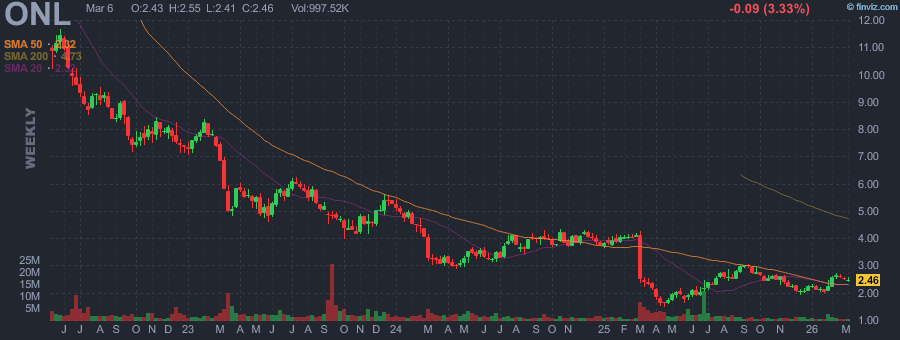
For my dividend portfolio finally I could get rid of Orion Properties (ONL), a spin-off from Realty Income (O). Thanks capt’n, now it can start to rise again. :frowning:

The money was distributed to MET, GIS, CNA and F.

2 Likes

Just to make sure I understand: would you recommend such an allocation to 95% of people? This would include my mother. Or rather to 20% of people? Then I would have to think about my mother again :slight_smile:

No, I would not recommend that to anyone else, 0%, nothing from nothing is nothing… :grinning_face_with_smiling_eyes: