Simply stock trading

Got rid of ONL as well already a while back after the spinoff from Realty Income. It was already clear back then that office REITs were coming under pressure.
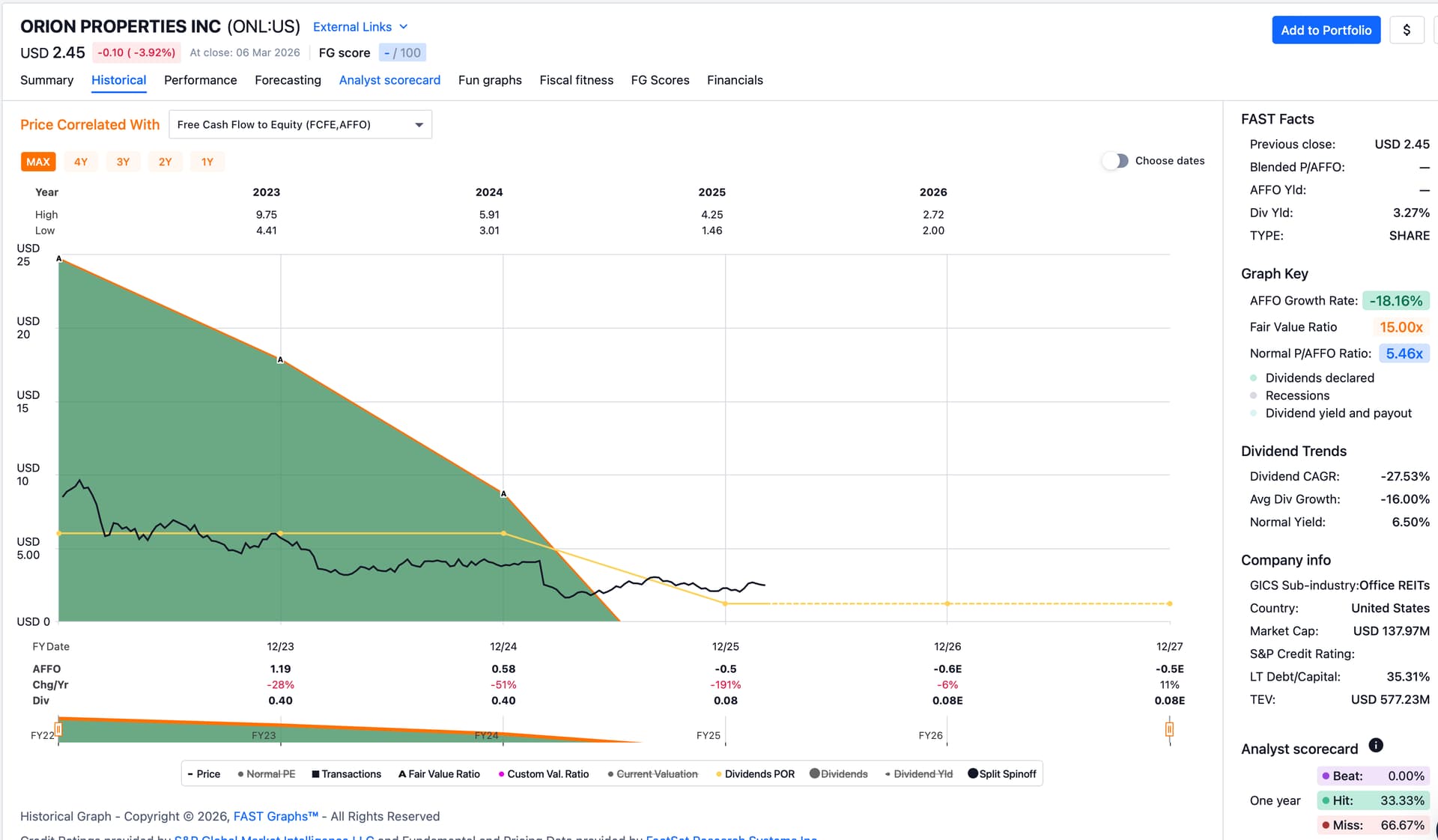
In fact, it’s a little astonishing ONL still paid out a dividend despite going negative with Adjusted Funds From Operations (AFFO) and no improvement in sight in the coming years … possibly some legal issue with REITs having to pay out a percentage of AFFO despite the prospect of upcoming years with dried up or negative AFFO?


Slightly off topic, but I’ll still bite:

I think (almost) everyone’s investment situation is different and hence everyone would be best suited with a custom solution.

Unfortunately, most people cannot articulate their investment goals,[$] let alone implement them.[$] For most of the ones I know, investing in anything but savings accounts and maybe bonds is just speculation.[$$]

That’s where the finance industry conveniently comes in and “saves the day”. They’ll let you choose your risk level on a scale from one to ten, they’ll then explain to you in tempting terms why their funds or fund of funds provides exactly what you need, and that it costs you just 0.8%. Zero point 8 percent in fees. Such a small number!
(To be fair, people investing in such banking products will on average still do better than the ones with the savings account (or equivalent).)

So, yeah, I also believe there is no “this is fine for 95% of people” investment approach.
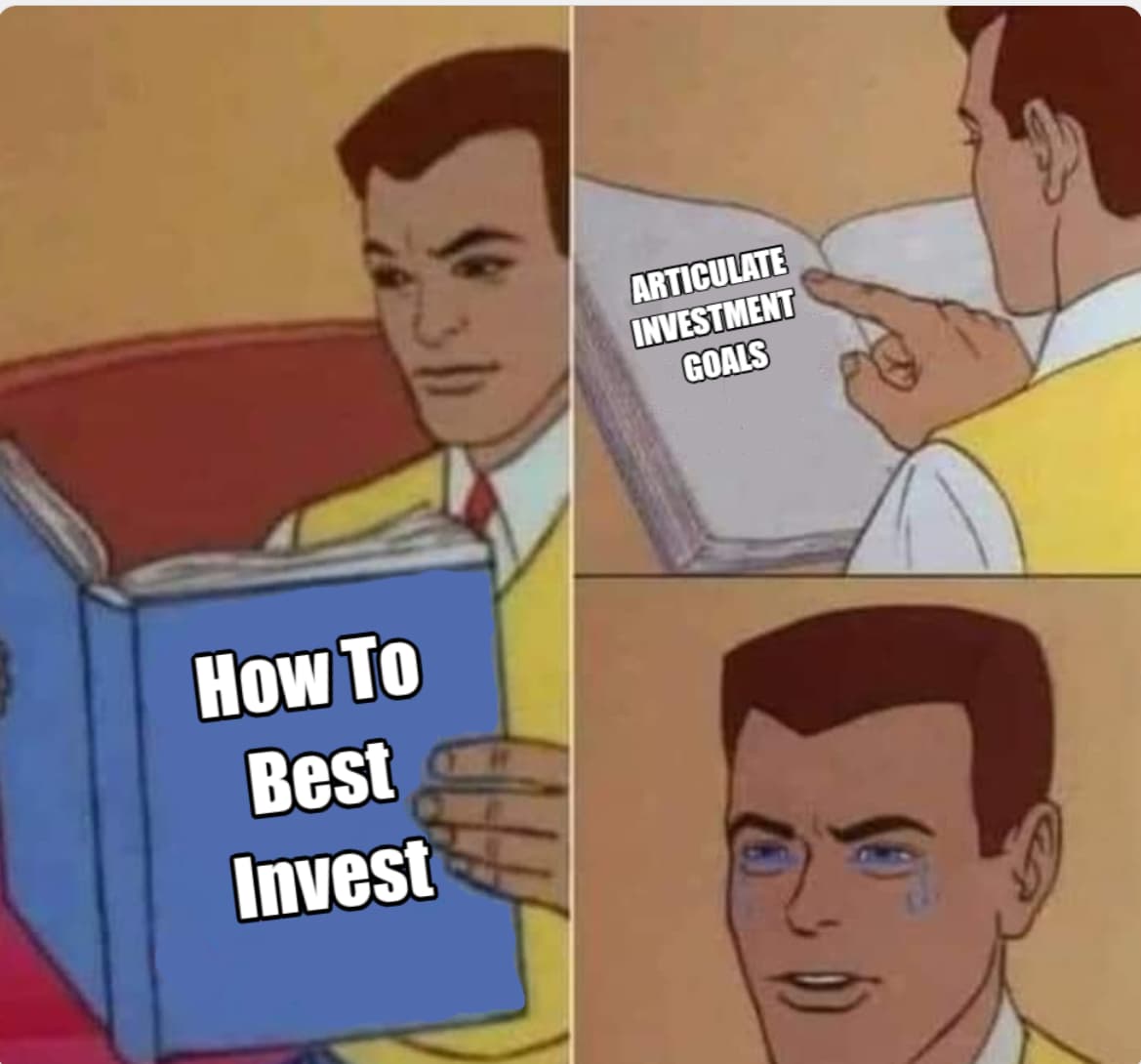

$ This is actually harder than it sounds, even for people who have taken the 101 course on how to invest, as depending on your phase in life, it’s unclear what capital you need non-volatile and liquid, depending on your family situation, cash flow needs, employment, pension money semi-available, etc.
Even if you can articulate your investment goals and the uncertainties around them, it’s not straightforward to pick the right instruments with confidence.
Experience helps, but sadly that usually only comes with hindsight for most people (including myself).

$$ As one of my friends says (he’s turning 63 this year), the stock market is “just the casino”. I tried explaining to him once just how his pillar 2 pile has grown way more than in a savings account thanks to the stock market, and that he will once be paid above 5% on the capital accumulated in his pillar 2 thanks to the stock market.
I couldn’t get past the ear and the initial sound processing part of his ear, translating sound waves back into words. Then his hard filter shut down any further processing, insisting that this was just all speculation.

1 Like

Very good text from @Your_Full_Name.

With help of a financial consultant or a bit cheaper with an AI you can do a risk assessment and then you get an investment plan, very detailed with asset allocation and planned return up to the last digit for the next 50 years.

Read it, then throw it away as far as you can. Nobody knows the future and investing is all about probabilities. But there are risks and risks. The biggest risk is the reason why most people who invest by themselves in the stock market… lose value, some a lot. The main risk is never mentioned because it is between your own ears.

This are the three types of risk:

  • Single company. A company can go broke, even a whole sector can do very bad for a very long time. The only thing that helps here is diversification.
  • Market risk. I have seen a lot of crashes, some of them were very big went on for a very long time. That is how it is, you cannot do anything against it. But you can plan what you will do in such moments.
  • Behavior risk. The over 100 bias that makes investment a losing game for most investors. The only thing that helps here is a detailed plan that you can and do follow. I have seen many good plans, but when panic knocks on the door much of them were just thrown away.

Investing is time sensitive, but exactly in reverse how we normally see time. We may know exactly what we do in the next minute, but probably not in the next decade. With the stock market we don’t know what will happen in the next minute but have quite a good idea of what will happen in the next 2 decades: stocks will rise.

Whatever kind of investment you want to do: plan as much details as possible, plan for every situation. Your plan should always lead to exact instructions. Write it down. Imagine yourself at a 70% loss, that happens in the stock market. Will you be able to follow your plan? If not, probably better don’t start at all.

I did plan every little detail of my two strategies that I trade, up to the point that I can call my strategies “fully mechanic” now. Most people don’t want that, they want to feel in control, think their decisions are better than a plan. They are usually not. If shots are fired in your direction you cannot make good decisions; you have to have a plan ready and you have to follow it.

1 Like

I read somewhere that the best investment plan is to use other people’s money.

Isn’t it just ‘money pile get bigger’? :stuck_out_tongue:

True. I think this is why it makes sense to invest early and often so that you make mistakes when the stakes are low so that hopefully you are better once the amounts get bigger.

2 Likes

Of course it is. But more important is the risk of the pile disappearing. When I started investing my 2nd and 3rd pillar myself I had lots of experience with that. The risk is real, with stock markets sometimes you lose half of your money or more.

So I decided to go with a low-risk low-volatility high-cash flow strategy, the dividend strategy that I did present here as example. But don’t get me wrong: you cannot escape the market risk!

I started in 2014 with a target of 10% per year, so it should still grow a little after my spending. It did and my spending went down as I lived in central America for two years. After 6 years I felt I have money left and did define a high-risk high-performance high-momentum strategy, the gambler strategy. There I did put a target of 20% per year. Both targets are more than reached today. But to be fair, the gambler strategy could lose most of it in the blink of an eye…

Currently after a losing week the CAGR since 2020 are 14.33% and 28.99%, but then it was a very beautiful market!

1 Like

Of course OPM! That is the complete financial sector in Switzerland I’d say.

I wouldn’t like that, because I admire freedom after all. Of course I could make more money that way, but what for? I make more than enough now and to know “enough” is important. Now that I finally can do whatever I want, have no boss, no clients, no worries! I feel like a swim in the Mediterranean? Next day I go there!

1 Like

Fully agree. My original question about the 95% did not reflect my intentions.

I guess I could simply do a historical comparison of

  • 100% VT
  • 4% RE, 76% Dow Jones U.S. dividend 100 and 20% Nasdaq 100

That would give me an idea of historical returns. Afterwards, I can all personalized aspects to make a decision.

1 Like

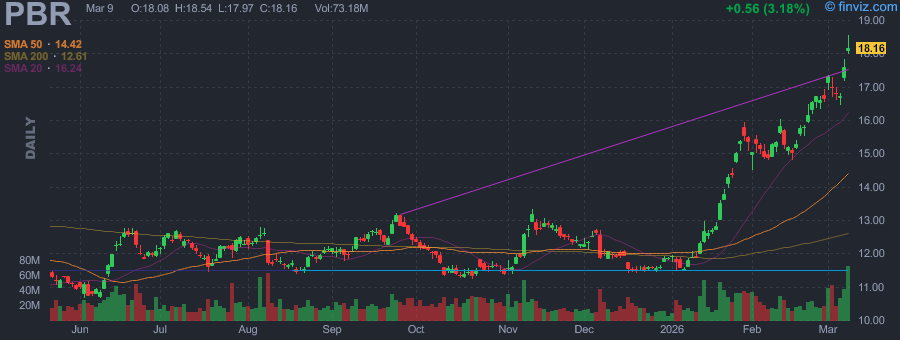
I thought I can retire as an Oil Sheikh. But my capt’n had other ideas. He had to look all around the world for more oil stocks and found promising companies in Colombia, Brasil and Norway.

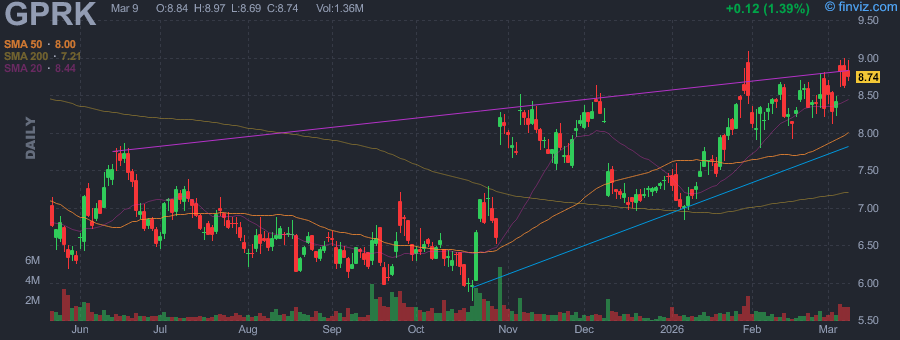
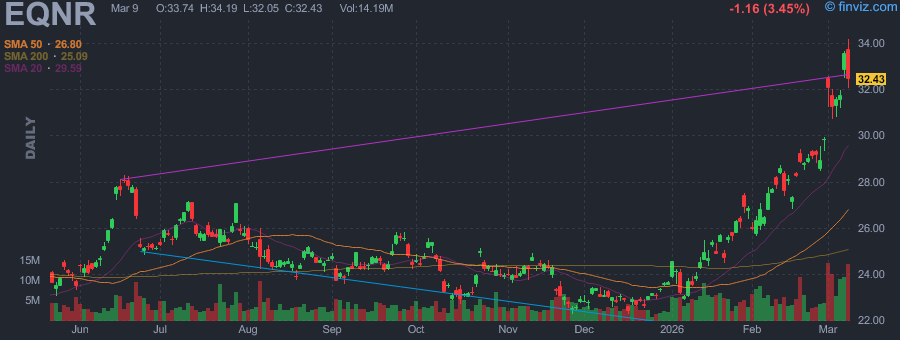
I bought today for my gambling portfolio Petro Brasil (PBR), GeoPark (GPRK) and Equinor (EQNR). Finally all that money I made with the partial sale of Tutor Perini is invested again.

Have a bad feeling about that. I own already tons of oil stocks. They had a really good run, I made piles of cash and probably have to give back a little now, so what. But then whenever I have a bad feeling about what the capt’n makes me do… I make a lot of money.


2 Likes

I have nothing to contribute, but I wanted to mention that I appreciate that I can (continue to) follow these discussions here!

Looks like the forum format is not suitable to what I was trying to express with claiming that most people cannot articulate their investment goals.

I am not very hopeful that my further comments will clear this up, but here we go.

First, as per textbook, the postive feedback:

  • Regardless of any strategy, I believe we can all agree with the principal axiom as highlighted by @cubanpete: the most important goal is to not be wiped out. Ever.
  • Yes, over a long enough time horizon, most of us aim for “the money pile getting bigger”.

Already iffy territory:

  • Perhaps or maybe probably we already disagree about whether the goal of “bigger money pile over time” applies to the “accumulation phase” only. Perhaps also during the “distribution phase”? Maybe, maybe not, depending on your personal strategy of depleting your pile when no longer accumulating.
  • The majority of my sample of FIRE CH people I can count on two hands prefer to have a steady income produced by cash flow produced by dividends. A minority – which I only know online – says they sell their nest egg as needed, evading income taxes as best as possible.
    The one person I know (online) who (I think) is pursuing a mixed approach is @cubanpete .

Going back to my criticism of people not being able to articulate their investment goals. Any return comparison should be preceded by what you want to accomplish with your investment amount over the next 5, 10, 20 years, including a detailed assessment of what cash flow and capital requirements you expect to be exposed to.

If it’s indeed just “I for the foreseeable future or the next decade or two don’t need any liquid capital that is not volatile at all and I can finance my cash flow needs for sure from my employment”, then yes, by all means, compare “100% VT” against “4% RE, 76% Dow Jones U.S. dividend 100 and 20% Nasdaq 100” or any other strategy, backward testing while acknowledging that you’re investing in the future, not in how things panned out in the past.

If you don’t pass that test, go back to square one and try to articulate your investment goals. To be clear, these investment goals can come with a lot of volatility, too, as you don’t know who you might fall in love with, whether they or you want to have children, a home of your own, etc, but do try to plan with those uncertainties taken into account if you want to plan, as I believe some people reading this thread do.

Full disclosure: I did not do any of this planning until about age 50 or so. Sue me.

1 Like

I think most people just retire and collect their pension. If they saved up more, they get a bigger pension payout, or have a bucket of money to dip into.

My parents are retired, but don’t do much, so their modest pension income ends up being more than they need, since they paid off their mortgage.

@Fatmanfilms retired early, but not sure if he had a specific strategy for spending money, maybe it was just spend the dividends produced and sell shares when more is needed?

Sorry not sorry…what about the RE in FIRE?

I don’t understand your comment.

I am in in my mid fifties. I started FIREing in my early fifties.

Maybe you meant to say something else entirely? Maybe I am too dumb to understand?


Edit: if you meant to say retiring in your early fifties is not RE: I have some swear words for you. I wont recite them here.

TLDR: risk is important and you need strong rules.

I did not do much planning for my retirement, even thought I may have to work again. I was in stock and bond markets for 3 decades, winning some, losing some. Fortunately sometimes losing a lot, so I knew the risks.

With sweet 51 years I had accumulated enough capital so I made more in the stock market than working. I was molested by the lousy returns of my 2nd and 3rd pillar. So I decided to take it out (not that easy at that age) and invest the money myself. Unfortunately to do that I had to stop working and leave Europe for at least 2 years.

That is now more or less 13 years ago. I went to Latin America where I could live for very little money (but didn’t). After two years I thought that I even make enough to come back to live in Switzerland, where I am now already another 11 years enjoying life.

It is all about risk. I went for a low-risk high-cash flow dividend strategy first. The dividend is not my source of income, I normally invest them according to my plan which I presented earlier. When I need money I take it out as credit, then pay it back with sales or dividends. Dividends are stupid tax-wise, but dividend companies are usually less risky than companies that don’t pay dividends.

After 6 years of living the good life I found that my “pile of cash” was even growing while living off it. So I decided to define a high-risk high performance momentum “gambling” strategy. That was 6 years and a few months ago. It worked well, but the risk is still enormous, all than money can vanish in the blink of an eye. And I can stand that risk, because I still have the dividend strategy to pay for my living.

My dividend portfolio is growing more at the moment because the gambling portfolio performed that good to overtake it in value and I take out my living costs from gambling strategy at the moment.

My investments are completely mechanical, no decision making needed anymore, did decide a long time ago. I hate what I have to do sometimes, but I know that in the heat of the moment I would make tons of mistakes… and those are very expensive.

So one could say I accidentally FIREd kind of young. But to say the truth… it was the best time of my life.

4 Likes

I guess I earned them. Sorry for the dumb joke, this time for real.

Back to something more productive. This is the key. We all have a different perception of risk. The point of all this is to live better. Nothing is gained if the numbers are great but the stress is high because uncertainty. So, generic rules don’t apply to everyone. The implication here is that cubanpete seems to be happy with “his” rules. So, regardless of the yield, the strategy implicitly includes a cash flow and capital requirements he can live with.

I’m boring, I like my job. A cash flow that allows a month or two of extra vacations would be very welcome. I’m getting there. Could it have been done better? For sure. That’s precisely why I agree with that detailed assessment of what cash flow and capital requirements you expect to be exposed to.

1 Like

That is exactly what I thought, but then I made much more.

I recommend a mechanical strategy the way I did describe it at the start of this thread. Because you can reduce the single stock or sector risk by diversification and you can live with the market risk if time is on your side. But the behavioral risk is worse, can wipe off everything and is completely unneeded. Without strong rules everybody falls for it in investing, even professionals.

You should start with money and position management. Stock picking most people do not want to automate, so define at least rules for excluding stocks or ETF.

Thanks for challenging me. Very much appreciated!

Sorry but I can’t find the reference of @cubanpete . Does ‘wipe out’ mean that you don’t lose money? I guess not, but what is meant by wipe out?

I’m not yet FIRE, but would count myself to this minority.

That’s probably the hardest task of all. 20 years is a long time.

Indeed, it is. Also, I now realize that past performance is not relevant for my question. Interpreting (or maybe misinterpreting) @cubanpete past posts, I see “4% RE, 76% Dow Jones U.S. dividend 100 and 20% Nasdaq 100” as a temporary allocation to do market timing. I’m assuming a larger crash in the next two years. My assumption is that “4% RE, 76% Dow Jones U.S. dividend 100 and 20% Nasdaq 100” will crash less than 100% VT, since VT is heavily technology based. Once the crash has happened I will switch back to 100% VT.

Wipe out means you lose all your money.

Think Texas Hold’em :smiley: ..as long as you have a stack, you’re still in the game.

That is part of money management. Survive to trade another day. If you use margin credit like I do you won’t survive without strong money management. You must define rules and more important… follow them.

Your whole body and soul will be against it when it is most needed: after losing a lot.

If you don’t use margin credit the chances of ending up losing everything are close to zero. But the error rate goes up when you are losing. Without rules you will sell low and buy high. The losing market is where a successful investor makes the difference.