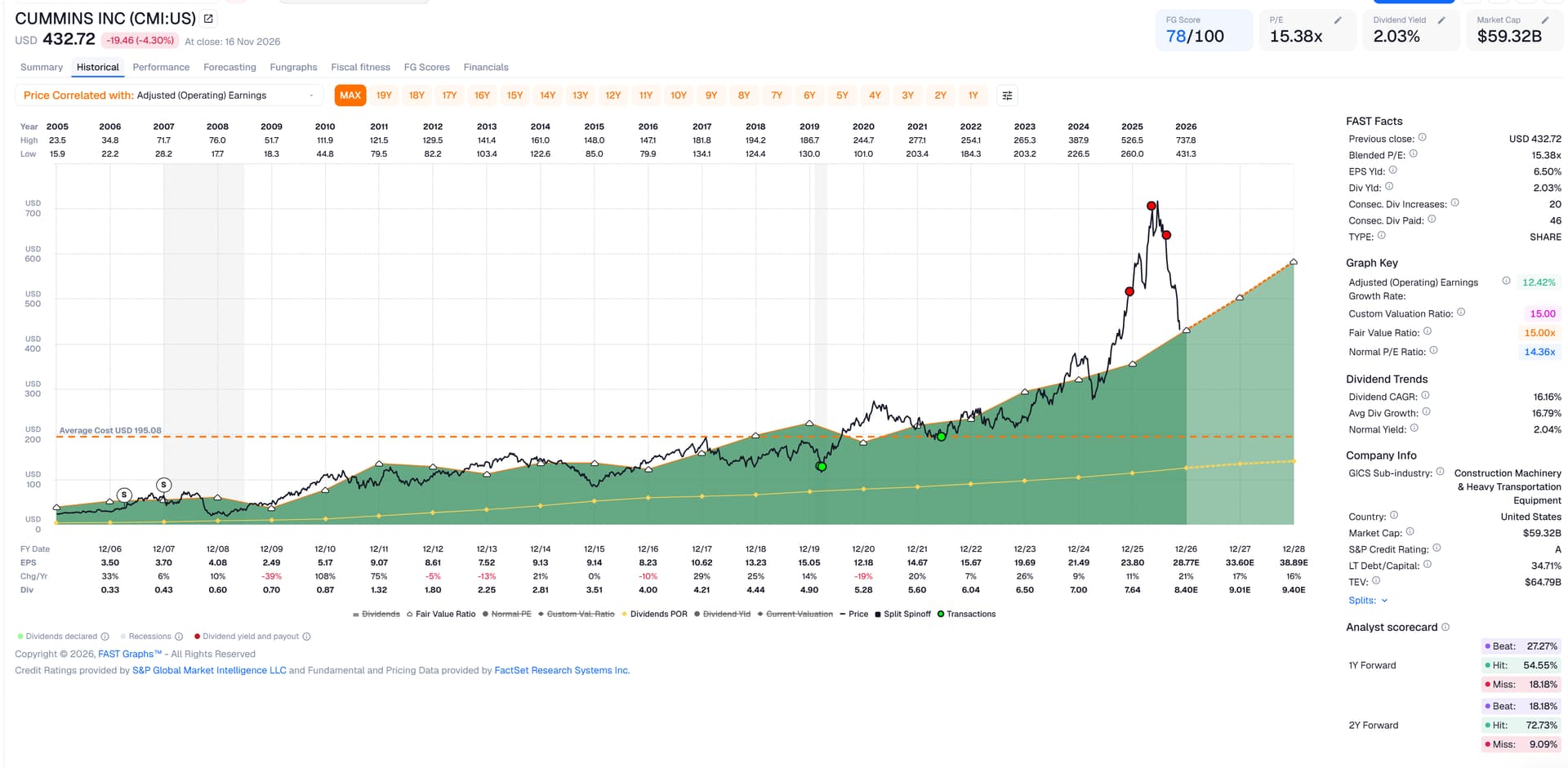
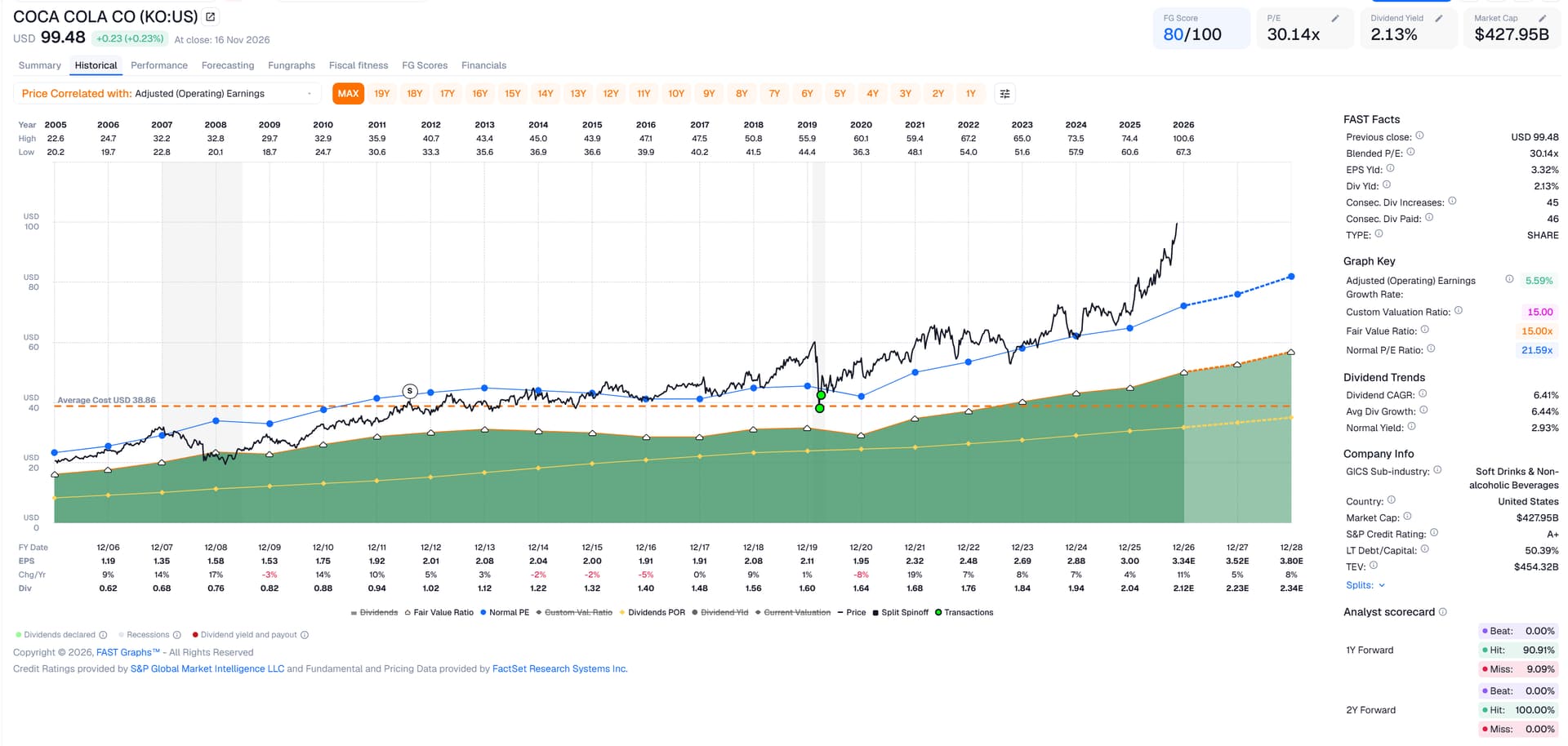
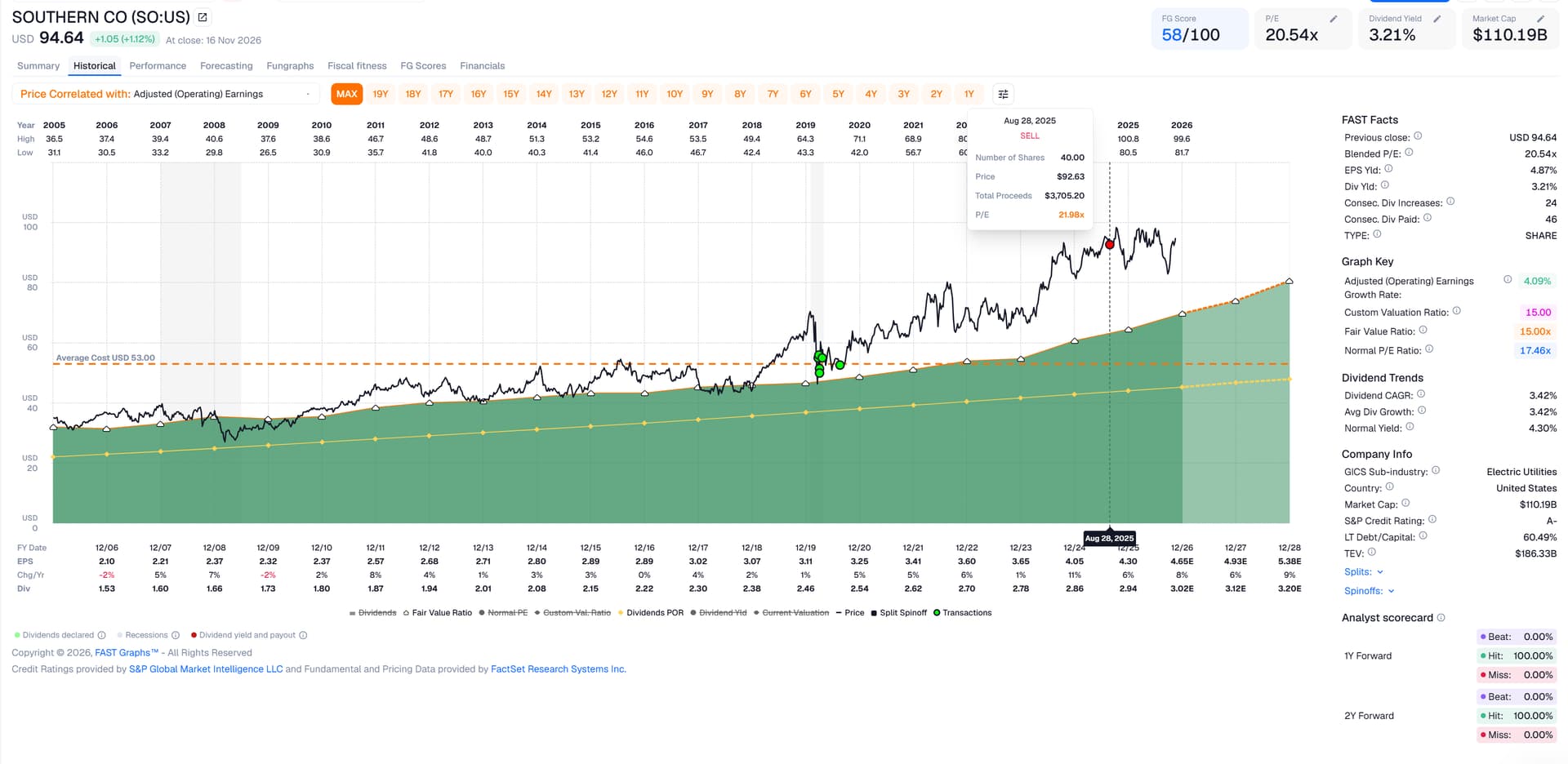
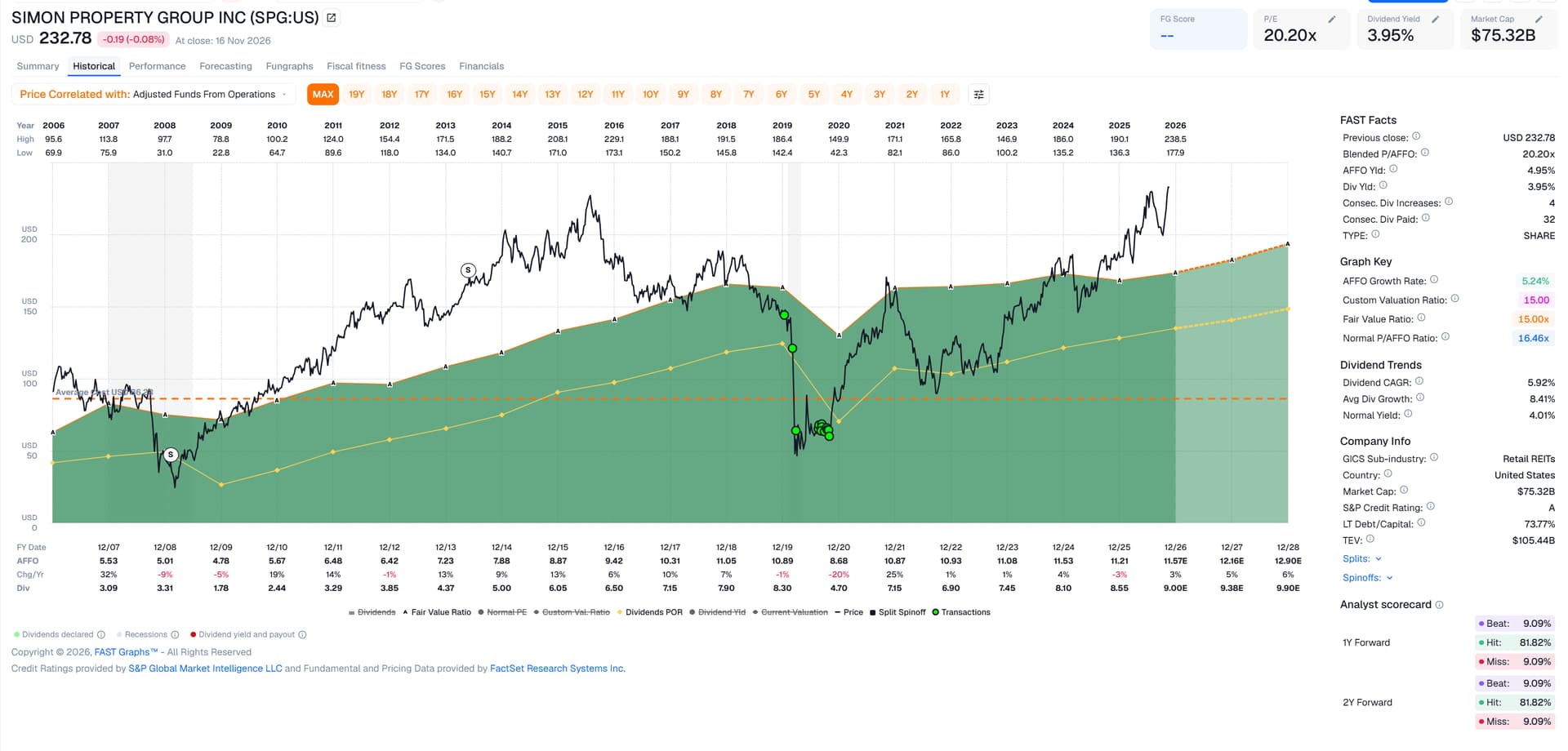
I did for the first time use googles AI to translate a text about when to sell an investment. I was surprised how good the text came out, at places it is better than my original. Here it is:
TL;DR: Exits should always be executed according to a predefined plan. I audit OCF, FCF, FCF-payout ratio, OCF/Debt level and a few more for every quarter and year in my dividend strategy.
A solid equity investment plan relies on three pillars: stock picking, money management, and position management. Below is an overview of the framework I use to manage my exits, which may offer some useful ideas for your own strategy.
Determining when to sell is a question that position management must answer—ideally in a completely rule-based, mechanical way. When the market is crashing and volatility is high, making rational decisions becomes exceedingly difficult. Those rules must be established in advance. In fact, once you hold a position, it is nearly impossible to evaluate it objectively. You should always know your exact exit criteria before you ever enter a trade.
My Approach: There are fundamentally two methods I rely on, depending on the strategy.
The Pull Method (Dividend Strategy):
In my dividend portfolio, a stock is sold when it no longer meets specific fundamental criteria, and a new stock is purchased to replace it (“pulled in”). My evaluation system is based on annual and quarterly financial statements, focusing primarily on debt levels, operating and free cash flow (FCF), the FCF payout ratio, and dividend metrics. Every existing position falls into one of three categories:
- Buy: All criteria are met in both the quarterly and annual reports.
- Hold: The criteria are met in either the quarterly or the annual reports.
- Sell: The criteria are met in neither the quarterly nor the annual reports. However, I do not sell immediately when a stock triggers a “Sell” rating. Instead, I wait until its momentum drops into the bottom half of my portfolio, as overvalued stocks can often continue climbing much higher.
The Push Method (High-Risk / Speculative Portfolio):
I apply this method to my high-risk, speculative account. Here, a new stock is purchased, and the weakest existing position of equal value is sold to fund it. This approach works best when new opportunities are scarce. So far this year, I have only identified 12 new candidates for this portfolio and doubled down on 3 existing positions. Holdings are ranked by momentum, and whenever money management rules require it, the lowest-ranking positions are liquidated.
Partial Profit-Taking:
While not strictly mandatory, scaling out of positions is an effective way to manage risk. Investing in equities always involves trade-offs; trying to time exact tops and bottoms may work occasionally, but it generally erodes returns over time.
- In my dividend strategy, I use a concept I call the “market dividend.” I initiate a position at 4% of the portfolio; whenever it grows to 6%, I trim it back down to 5%.
- In my speculative strategy, I take an “annual rent” of 20%, selling one-fifth of the position each year. Additionally, I sell another one-fifth whenever a position reaches gains of 500%, 1,000%, 1,500%, and so on.

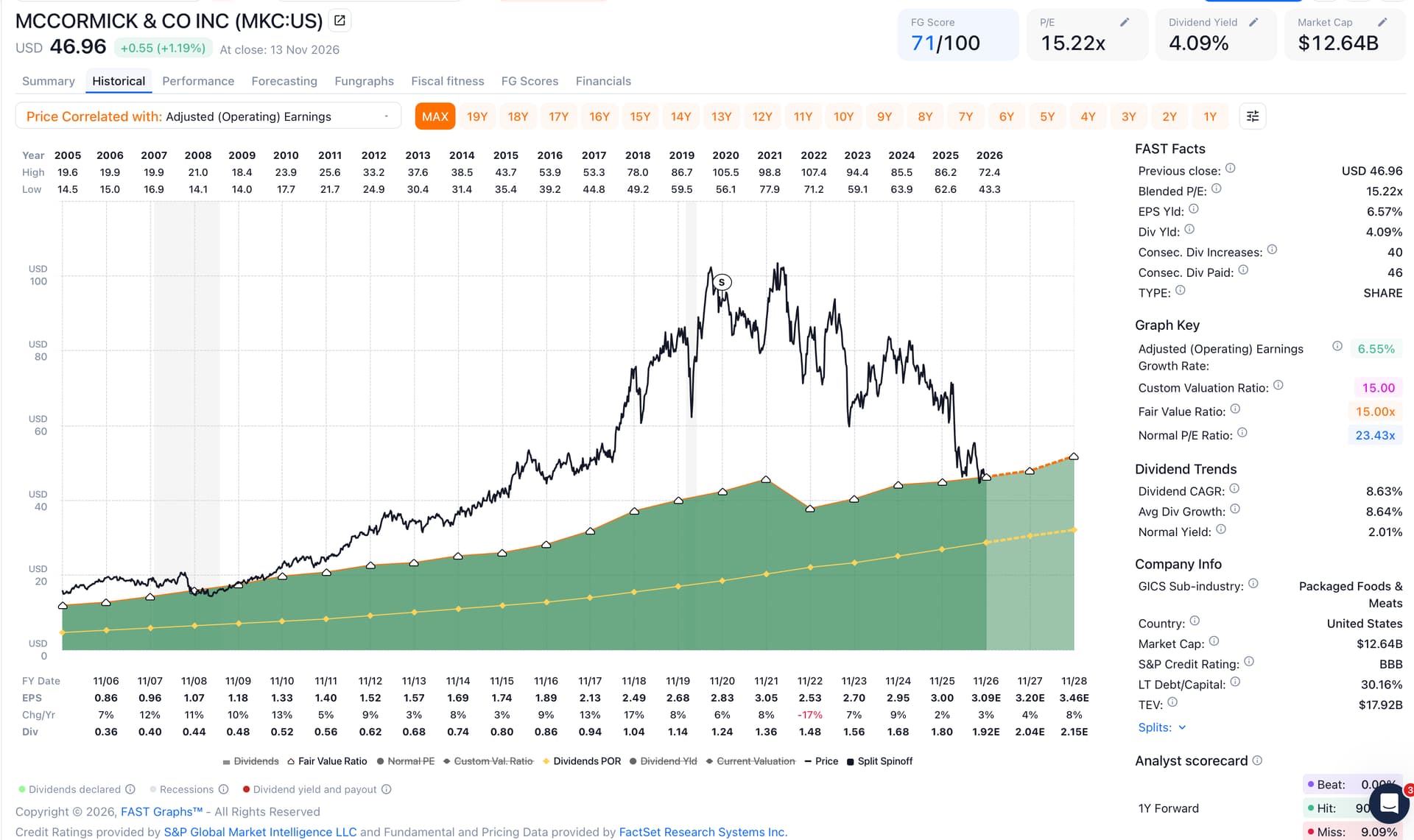
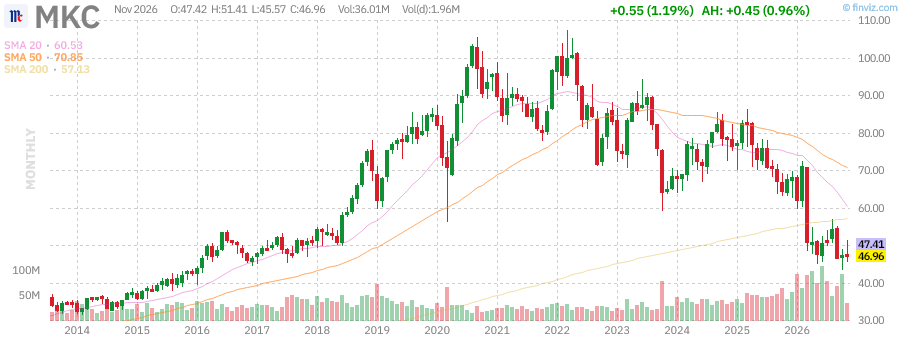
 – but they’re selling their food division to McCormick. Transaction was announced April 2026 and is expected to close mid next year.