Lots, like this one at almost 700,000 km and on its original battery back. There is another at almost 2,000,000 km but that has had multiple battery packs and electric motor changes.. still the same chassis though.
That’s what I thought….as I said, employers will have to adapt.
BTW: GM/Opel has a very spotty track record.
You could be lucky and get a car like yours that runs forever - or you could get a total lemon.
That’s also why I suspect that for a while they changed their warranty every year.
I remember when GM took over Saab, it was the end of that legendary reliability and build quality… and ultimately the end of Saab.
Bad Blood’ Stalks a Lithium Mine in Serbia
A Rio Tinto mine that Europe sees as a critical source for electric vehicle batteries has been the target of enormous protests. “I don’t need green cars. I need green apples and green grass,” said one opponent.
By [Andrew Higgins]
Andrew Higgins talked to residents of Gornje Nedeljice, Serbia, the site of a planned lithium mine, and protesters in Belgrade, the capital, who are opposed to the project.
Aug. 18, 2024
Their windows broken and roofs smashed, the abandoned homes in an otherwise bucolic valley carpeted with cornfields and orchards near Serbia’s border with Bosnia look like the wreckage of the Balkan wars of the 1990s.
But the houses are actually the casualties of a current struggle freighted with geopolitics: where and how Europe can get the materials it needs to make electric car batteries and break its dependence on sources like China.
The houses, in the Jadar Valley in the west of Serbia, were bought up years ago by the minerals behemoth Rio Tinto, which planned to tear them down and start mining and processing lithium, a crucial element for electric car batteries. Its plans stalled by vociferous opposition, the company left the properties to crumble.
The project has been supported by the United States and the European Union, which is in desperate need of lithium to meet its climate goals. But it has generated a wave of public fury in Serbia, where fears that the mine will poison the air and water have set off huge street protests against President Aleksandar Vucic.
Europe has plenty of lithium and more than 20 mining projects for the mineral at various stages of development. But none have started producing battery-grade lithium. The giant project in Serbia was aimed at filling that hole.
“There is no green transition in Europe without this lithium,” said Chad Blewitt, the head of Rio Tinto’s Serbian operations, adding that the company planned to invest more than $2.55 billion in the project.
The Serbian government gave preliminary approval in 2019, but, worried about losing votes during protests against Rio Tinto before a 2022 election, canceled it.
Under pressure from the European Union, which Serbia aspires to join, the government changed its mind in July, allowing Rio Tinto to revive the project. The British-Australian multinational says it has already invested nearly $600 million to buy land, dig 500 exploratory holes, commission studies and make donations to the local soccer club and other entities.
Serbia’s mining minister, Dubravka Djedovic Handanovic, said mining probably would not start for another two years, but once it did, lithium from the Jadar Valley would allow Serbia to manufacture batteries and electric cars, providing about 20,000 jobs.
Serbians took to the streets this month in Belgrade to protest Rio Tinto’s plans to develop a lithium mine.Credit…Fedja Grulovic/Reuters
estimates that if it is to reach its goal of carbon neutrality by 2050, Europe will need 60 times more lithium by that year than what it imported in 2020 from China and elsewhere.
Michael Schmidt, a lithium expert at Germany’s Federal Institute for Geosciences and Natural Resources, said Europe might be able to reach its targets without supplies from Serbia. But, he said, “the Serbian project is one of the largest, and that is why it is so significant.” He added, “We need each and every project to reach targets.”
The success of the projects ultimately depends on the price for lithium on the global market and whether companies like Rio Tinto can recoup their investments. The price has [collapsed over the past 18 months as Chinese demand has slackened and its output soared.
The proposed mine in Serbia has not only provoked fury among farmers, environmental activists and ordinary citizens, it also has become a proxy battleground in the West’s efforts to extract the country from the [orbits of Russia, its traditional ally, and China]
Geoffrey R. Pyatt, the U.S. assistant secretary of state for energy resources, [this past week cheered] the Serbian lithium project on social media as “an opportunity to contribute to the green transition at home & abroad.”
For those who view Serbia as a partner for the United States and Europe rather than a Moscow-aligned and authoritarian regional bully, Mr. Vucic’s support for Rio Tinto, along with his assent to [Serbian-made weapons being sold covertly to Ukraine] is evidence he was serious about disengaging from Russia.
Russia has [strong support among hard-line Serb nationalists] and some diplomats and analysts say Moscow has been stirring the unrest over the mine. Mr. Vucic, however, has said Moscow told him that the West is orchestrating the protests because it wants to topple him.
“Unfortunately, it has become a political fight, a big political battle,” said the mining minister, Ms. Djedovic Handanovic.
Among those taking part in recent nationwide demonstrations against Rio Tinto have been leaders of People’s Patrol, an ultranationalist group aligned with Moscow. Social media accounts known for spreading Russian disinformation have been active in promoting horror stories about the planned lithium mine.
An employee of Rio Tinto showing where the mining company conducted research in the Jadar Valley area.Credit…Vladimir Zivojinovic for The New York Times
![A blue pole is seen surrounded by dirt. A green field planted in rows is in the background.]
A pole showing where an exploratory hole was dug by Rio Tinto.Credit…Vladimir Zivojinovic for The New York Times
![A hand holding a rectangular rock.]
A Rio Tinto geologist showing a sample of Jadarite, a mineral containing lithium.Credit…Vladimir Zivojinovic for The New York Times
But leftists and middle-of-the-road pro-Europeans have also joined the protests, chanting opposition to a project that has become a lightning rod for diverse grievances against the government.
“He sold out Kosovo but is not going to take away our clean water,” read a sign denouncing Mr. Vucic that was held by Angela Rojovic, 25, at a recent protest in Belgrade, the capital. She said the president had not done enough to defend the interests of Serbs living in mainly ethnic Albanian Kosovo.
And she said Mr. Vucic was sacrificing Serbia’s environment to serve Europe’s climate goals. “I don’t need green cars,” she said. “I need green apples and green grass.”
In Gornje Nedeljice, a Jadar Valley village that sits atop Europe’s biggest known deposit of high-grade lithium, the project has alienated Mr. Vucic’s previously stalwart rural base.
Dragan Karajcic, the district head for a cluster of small settlements around the proposed mine, said he was a member of Mr. Vucic’s governing party but still joined a local protest group hostile to Rio Tinto and the government.
“We are not trying to bring down the government,” he said. “The government is doing that itself.”
Goran Tomic, a native of Gornje Nedeljice who now lives mostly in Germany, said he understood the need to combat climate change by moving away from gasoline-powered cars, but he was still appalled that his older brother had agreed to sell his house and land to Rio Tinto.
“He allowed himself to betray himself for money, and in doing that he betrayed us all,” Mr. Tomic said, sitting on his front stoop with his mother, who was also angry but proud that two of her three sons refused to sell to Rio Tinto.
![A man, standing, talking with a seated woman in front of a table.]
Goran Tomic and his mother, Milija, in front of his house in Gornje Nedeljice, Serbia. “He allowed himself to betray himself for money, and in doing that, he betrayed us all,” Mr. Tomic said of his older brother, who sold his own home.Credit…Vladimir Zivojinovic for The New York Times
Its assurances over safety undermined by past [misbehavior] Rio Tinto has tried to counter what it dismisses as lies and disinformation spread on social media by recently disclosing [preliminary findings of an environmental impact assessment] It was carried out by Serbian and foreign scientists who debunked much of what protesters believe about lithium mining.
Wild claims on social media included one last week that an exploratory hole bored by Rio Tinto was belching radioactive fluid.
Mr. Vucic, rattled by the scale and intensity of public anger, has also veered into fear-mongering, claiming protests were led by “anarchists, Marxists and hidden fascists.”
The real leaders, however, were people like Nebojsa Petkovic, a villager from Gornje Nedeljice and an activist who traveled to Belgrade to help organize a demonstration on Saturday, Aug. 10, that attracted tens of thousands of people.
“Let the Germans save the planet,” Mr. Petkovic said. “We need to save ourselves.”
Eager to get mining started, Chancellor Olaf Scholz of Germany and executives of Mercedes Benz, which has big electric vehicle plans, visited Belgrade last month to applaud the Rio Tinto project.
Germany’s role, however, has only amplified opposition.
Mr. Karajcic, the district head, said he was infuriated by German assurances that the mine would be safe, recalling Nazi [atrocities in a nearby town in 1941] that the Germans had promised would be left unhurt.
He said his great-grandfather fought nearby against Austrian troops during World War I. “He fought to keep our land, and now I’m supposed to give it away to Rio Tinto. No way,” he said. “There is a lot of bad blood in these hills.”
Image
The Jadar River runs through the area where Rio Tinto plans to build the mine.Credit…Vladimir Zivojinovic for The New York Times
Right. Better keep polluting the Niger Delta.
1 Like
…which begs the question…: “How green is green technology?”
Much greener than oil. Very much so.
1 Like
The European Commission said on Tuesday that Teslas manufactured in China could be subject to an additional levy of 9 per cent on top of existing duties of 10 per cent applied to all foreign-made cars.
The announcement comes after Tesla requested an individual investigation into its operations in China in the hope of avoiding the higher rates that Brussels has applied to Chinese manufacturers of up to 47 per cent.
Elon Musk’s car company had also complained to European capitals about the probe, an EU diplomat said.
Maybe Switzerland will have a different approach?
I don’t believe Switzerland has decided to match the tariffs imposed by the EU. Ot the assumption that they haven’t it certainly doesn’t mean that Swiss prices would reflect the lower cost of import. This is Switzerland.
1 Like
Tesla got the largest “discount” on the import duties.
I guess they could prove that they don’t receive direct subsidies per car sold (or the amount is very small) - else they’d have been lumped in with the rest of the crowd at 20-47%.
‘we don’t want green cars, we want green trees and green grass’. More seriously, green agriculture. Something that will be taken away from the affected population (lithium excavation refugees) so that German car owners can enjoy their green cars. Very much greener than oil. Very much so.
1 Like
The days of lithium batteries will be short lived. Sodium batteries are the new kids on the block. Cheaper, lighter, unaffected by cold and sodium is plentiul world-wide…
I wouldn’t hold your breath. Although Sodium is cheaper, they are less energy efficient, have a poor cycle lifetime and crucially are much less energy dense than Lithium, both by wieght and particularly by volume. Short to medium term applications may include energy storage but imo full substitution for Lithium is still a fair way off.
…and who will benefit from the Lithium mining in Serbia? 
It’s funny, Hungary gets BMW investments in a factory for producing car batteries in Debrecen and Serbia gets…Rio Tinto! Just saying. ;)*
I am beginning to like Viktor Orban!  (nah, not really)
*in all fairness there are some other Chinese investments too as they have the ambition to become a “hub” for electric vehicles batteries.
Sodium batteries are being considered for low cost, entry level cars. I have a LFP (phosphate) in my car which is inferior to NMC in terms of energy density, charge speed and low temp performance, but they can handle 100% charging and have less degradation so win some, lose some.
Salt of the earth 
Maybe it is time for the nuclear powered car…
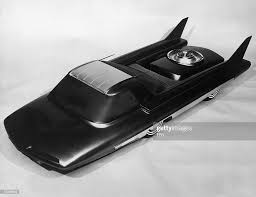
Ahhh! The sixties, weren’t they great…. By the way… where is my flying car?
Still, don’t think it’s Hungary, but directly German manufacturers. No wonder that Sholtz was accompanied by Mercedes Benz CEO. No wonder that the last visit of Merkel was to Serbia. To give support to the little dictator who can do whatever he wants as long as Germany gets Serbian lithium. While saving their own reserves, as someone said… no wonder. Serbia is a perfect EU landfill, and EU will support any dictator that will ensure anything can be dumped there (while lithium will be taken away of course). Climate change? sure, just wait to see EU position on lithium excavation refugees.
edit: reply to Gaburko:
Serbia is luckily not in the EU so it can be used for EU garbage disposal. At least EU has secured its puppet government that couldn’t care less about polluting Serbia in order to keep the EU green. Way to go EU!
How prehistoric, where are the teleportation cabins and X-ray specs 
…along with my missile firing polaris submarine and the sea monkeys.