We have cold spots on the floor of our living room since we installed a new heat pump. The company installing the heatpump says there is no problem on their side, their might be sludge built-up in the pipes (although everything was all fine when we had our old oil-based heating…). Can anyone recommend a company to flush the pipes of sludge if that is the case? can that actually be done easily?
Are the temperatures of the rooms with the underfloor heating lower than they were before?
If they are, could it be that the whole thing is a bit colder so the spots that were not so warm before are now colder?
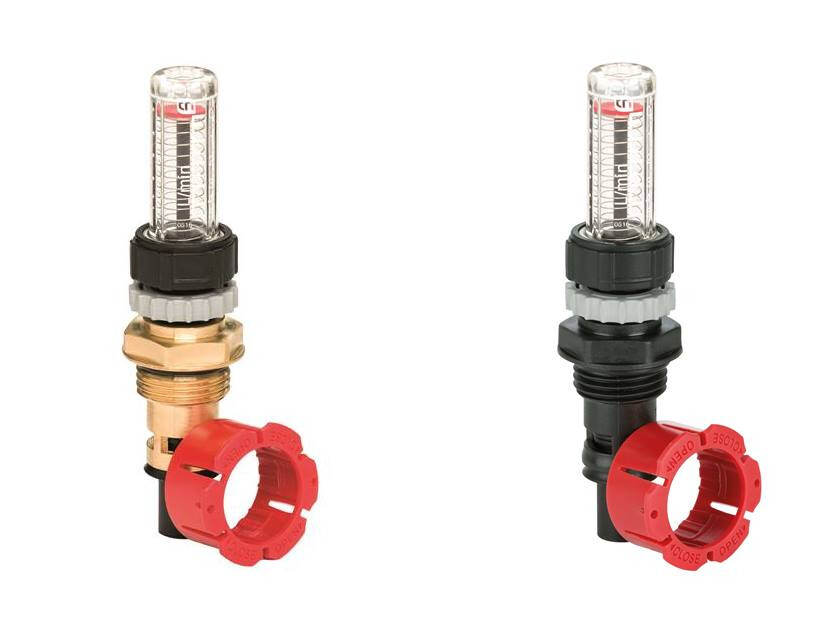
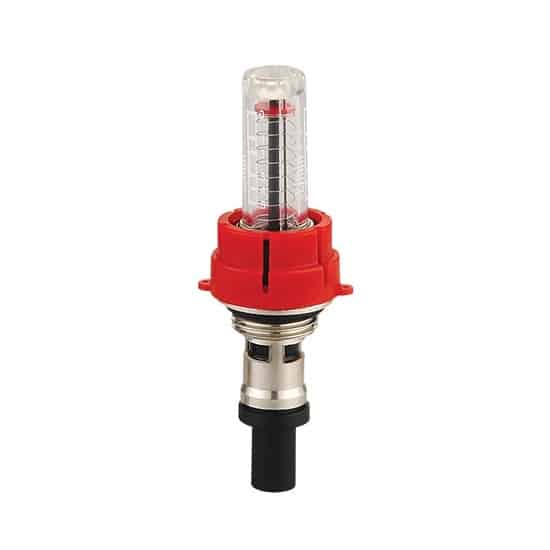
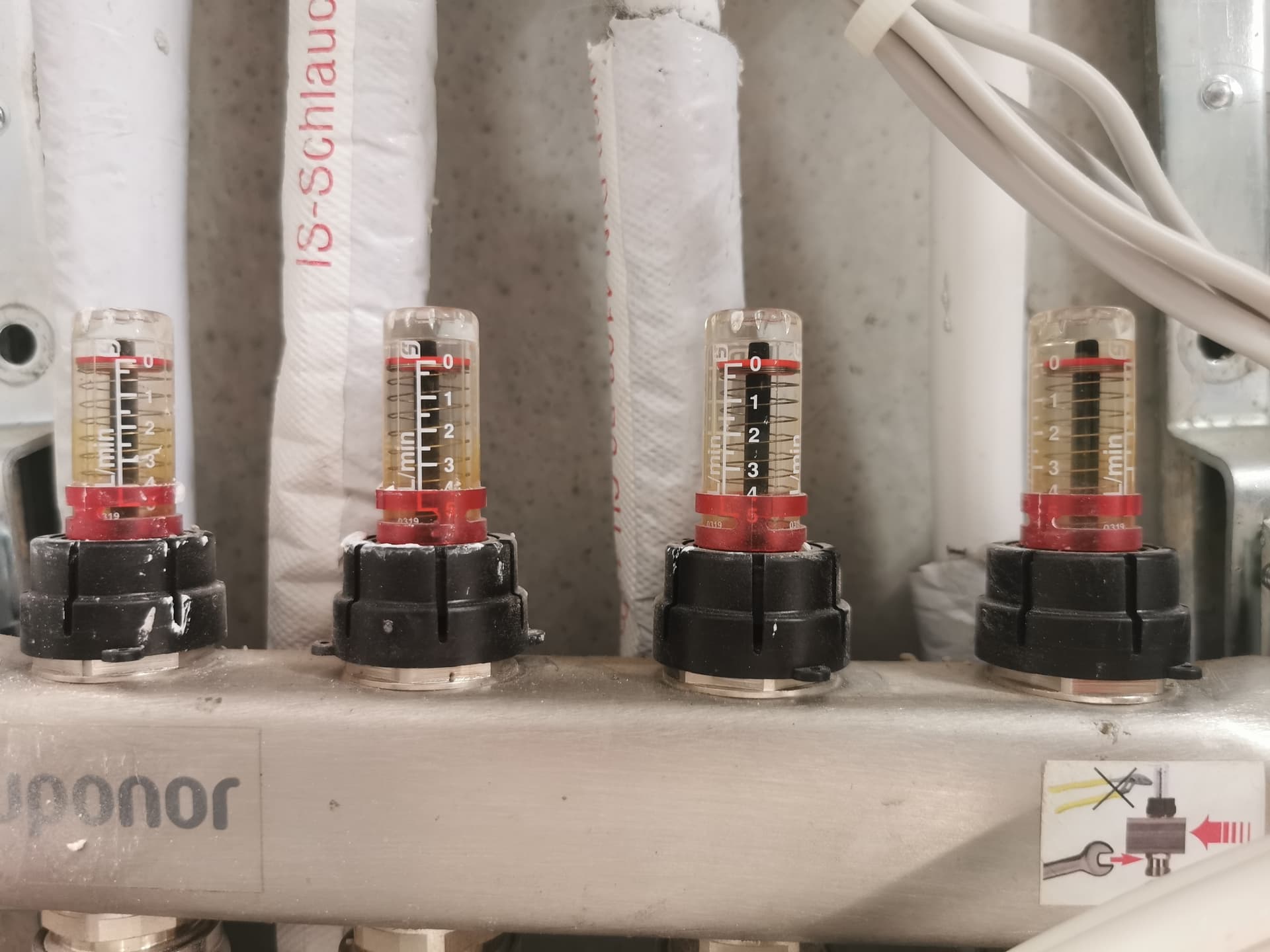
You can usually see the flow rates for the different circuits through the flow meters (see pic), in liters/min or something like that. If one has no flow or little flow then it may be blocked but if you are just getting cold spots rather than a whole room cold then my first suggestion may be right.
You can adjust the flows but systems are usually set up well and shouldn’t be fiddled with (make a note of the old reading before any adjustments. Of course you also need to know which meter feeds which room circuit.
How many years was the underfloor heating running? 20 years is the usual recommendation for flushing the system. The cost should be around CHF1000 to 1200…
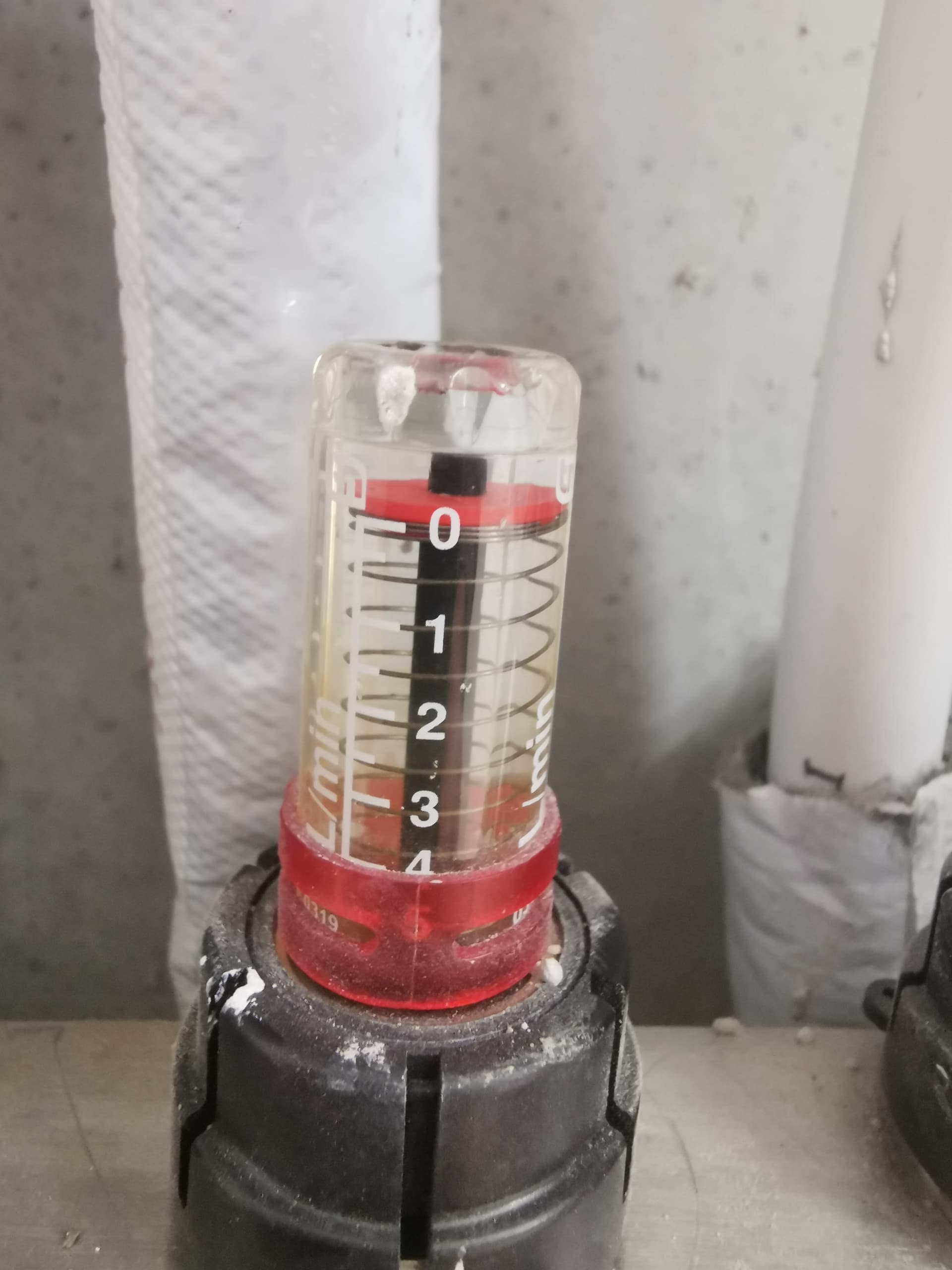
You got me interested, how do I read these things? All seems to me empty, or completely full, can’t tell.
I also have parts of the floor cold, parts much warmer than the rest. It didn’t really bother me, but once I’ve learned it can be potentially adjusted…
It also depends on the layout of the pipes in the floor, some areas of rooms deliberately have more pipes than others.
We have warm spots in front of the patio doors for example.
Thermal images take a bit of practice lighter/brighter areas are warmer, darker ones cooler, so those floor temperature differences are exactly what the camera is picking up and what you can potentially
That’s a protective cover. Slide it up and the thumbwheel should be underneath but I’ve found that valves from different manufacturers have slightly different mechanisms.
Be careful of blindly changing all the settings. Systems are normally carefully balanced when initially set up and turning one valve full on will mean that other circuits won’t get much heat.
Also, bathrooms are normally warmer as are hallways.
The latter as the pipes for other rooms go along the hallways so they are more of them and the pipe runs to further away rooms will need a higher flow rate as the water will cool down more with the further distance it needs to travel.
@Olivia11 mentioned a thermal IR meter . I’ve got one- from Ali Express and they are useful because we’re bad at guessing absolute temperatures but good at detecting differences so you can come inside to a cold house but it feels beautifully warm if you’ve been outside.
IMO floor heating sucks. But once I lived in a cleverly built house where the heating was built into the ceiling. That really sucked. Good old base heating, IMO, is still the best.
yeah, I don’t have any proof but it feels like I have to vacuum more often here, as the floor heating exaggerates the dust circulation
also I don’t like walking on warm surfaces, this is the first apartment where I have to wear flip-flops to isolate my feet from the floor for comfort, heating feet skews up my cardiac thermal regulation, especially when siting at the desk
Floor heating can be super annoying. We have the issue where the main floor (downstairs) gets warm (25C) while the upstairs barely breaks 21C. We had the system flushed as a renovation last year involved a new manifold upstairs. I read the downstairs may have too much flow, preventing (as hot) water from getting upstairs. I killed all the valves downstairs (we don’t have flow meters downstairs, the manifold is old, from the 80s’)… the floors are still warm.
I need to get someone in to help us out, at this point we’re just guessing and we have a safari in the kitchen and fridge on the top floor (isn’t heat supposed to go up???).
 the thermostat does ding-dong from time to time, especially at night. I’ll check it again when I hear the click