Useless university degrees (Zürich version)

Ayayay…young graduate complains about no jobs in Zürich: useless Master Diploma. This arrived via office gossip. Mr. Oiviredet has been jobless for several year and now spills out everything to social media.

New word for me: Vetternwirtschaft (EN: Nepotism). A RAV officer working on his case said: “hey you have to meet people to get any job”. The surprise is that meeting people is framed as Nepotism. People you went to school with? Nepotism. Ex-colleagues? Nepotism. Keeping professional contacts? Nepotism.

Of course, the root of the issue is not any peculiar framing of social relationships but a common problem around industrialized countries around the world. For some reason people with good formation (Uni, Apprenticeship) ends up in the gig economy. China, USA, Switzerland, Germany, Austria. Young graduates are not to blame, jobs for qualified positions are scarce (!). And, you know where this is going:

Wir eben keinen Fachkräftemangel haben / We do not, in fact, have a shortage of skilled workers.

Good thing is that the guy keeps motivated to chug along. I agree, having small jobs or living in a room in a shared flat are no reasons for shame. Breaking down mentally and ending up drinking at 9h00 in the train station is the issue.

Ahhh, people from the medical jobs are scarce, engineering related workers at my job are scarce, wifey has heard about a children daycare in desperate need of workers. Some sectors of the economy go up, others down. There’s no overall crisis.

Personally, I’m learning German as plan B in case of harder times. But, it’s clear that there are other skills that influence the outcome. A question arises, does being local ensures full integration or locals not integrated to their own society are more common than expected?

To some extent, it depends on luck: how good economy is, how many job vacancies there are, how many people are also looking for jobs.

You can also make your own luck by targetting a job/industry, making contacts there, studying for it and getting internships. Or deliberately targetting jobs/industries with shortages, moving to geographic locations with shortage of people etc. or just striking it out alone and become self-employed.

Then on the other side you can just be very good. Someone I know already retired but had OpenAI and Anthropic falling over themselves to hire him - he only took the job to get access to compute as his hobby computations with AI was starting to get very expensive.

1 Like

It can also depend on your willingness to take on jobs that are not related to what you studied. My first jobs were assistant roles and I then got a job with a bank due to the languages I know and I took certifications and degrees in that field from there on.
But then, times have changed so that may not be longer possible.

People here shamelessly flaunt their “Vitamin B” (Beziehungen/Bekannte) — in other words, personal connections and networking. Merit-based hiring seems to have become the exception rather than the rule.

Before Brexit, several British recruitment agencies were active in Switzerland, and there was at least some emphasis on merit and qualifications. British recruiters generally seemed more open-minded and willing to put forward candidates regardless of their nationality or background, provided they had a valid work permit and met the requirements of the job description.

Since Brexit, many of those agencies have left or reduced their presence, and over the past four or five years, I’ve noticed what feels like a significant deterioration in merit-based recruitment in Switzerland.

It’s genuinely disappointing to see personal connections seemingly outweighing qualifications, skills and experience. In the long run, such practices only undermine Switzerland’s competitiveness and deprive the country of talented professionals who could contribute to its economy.

What a shame that a country known for excellence and professionalism appears to be allowing such practices to undermine its own strengths.

1 Like

I should have been a bit more clear. The mention of nepotism is a bit weird because not being an asshole to people and trying to be the average agreeable person is branded as “nepotism”. As immigrant, it would be laughable if I believed longtime personal connections outweigh skills and ability. I arrived here on an airplane with a carry on “item” (the laptop) and a 22 kg roller suitcase. If long time personal connections mattered that much, I’ve had nothing.

Back to Mr. Complainer from Züri, the guy got a Swiss education, Swiss German as mother language, allegedly fully integrated and somehow these things regarded as very important, don’t matter much.

1 Like

Ability to do the job has little to do with any chance to be hired. Hiring is a political choice and therefore an opportunity to collect future favours or improve positioning or at least thwart potential risks or threats. Most of the operational work will get done one way or another and it’s usually not important at all. Making the right alliances is everything

1 Like

Before I left our CEO had become enamoured with Jack Welch and fell over himself introducing JW’s policies.

One of which was to remove the line manager from the hiring process. Candidates were reviewed/interviewed by existing employees of the same level and HR made the decision based on their recommendations.

You are probably thinking what a disaster and you would be wrong. It was a numerous adjective mess. Half the hires didn’t complete their probationary period, many of the rest actively looking for other employment and left within 18 months.

2 Likes

I have been jobless for a bit more than half the year after graduation with engineering diploma with bells and whistles. My money run out, so I moved to a forgotten pit hole to work on some totally messed up financial software, just to build up my CV, and I still had to borrow money because the job didn’t cover minimal expenses. After 1.5 year, the next job at least paid for my living expenses and a few extra booze, only after another 3 years I finally got a job from which I could afford anything above basic living expenses or start savings a little. Looks like the history repeats, I guess that’s something new for the generation raised in rich families (rich, comparing to the times I happened to make my first steps on this world)

2 Likes

Yeah, my first job had the first year or two increasing my debt (on top of student debt) as living costs > salary. But at least I was on a career path where there was expected salary increases at 3yrs and 5 years down the line, so I wasn’t too concerned.

Some numbers for the “jobs for qualified people are scarce” part. I keep a count of what Zurich employers list on their own careers pages. This week it’s about 1,680 open roles at roughly 250 employers, and around 960 of those went up in the last 30 days.

They’re not spread evenly. Education and research posts the most (193), then consulting (174) and tech (144). Private banking is further down at 94.

On Vitamin B: not every role reaches an agency or a job board. Plenty of employers put it on their own site and wait. Applying there directly, after a coffee with someone already in the team, is less nepotism than homework.

For a fresh master’s grad without contacts, I’d pick 20 to 30 employers in one of those sectors, check their careers pages every week and apply direct. You send fewer applications, but each one lands in a smaller pile.

3 Likes

I’ve only skimmed the comments in this topic, so apologies if my angles below have already been discussed.


1. What exactly is his Masterdiplom?

Is it “politics” (as he calls it in the video) as the major, which I assume would be Politikwissenschaften?
Is Statistics the major (which would mean a math curriculum and specialization in statistics)?
Is “data science” the major (not exactly sure what science this aligns with TBH)?

Anyway, if it’s “politics” … well, good luck. Only the public sector hires such people … or perhaps news outlets. Even my left SP voting wife, former social worker and now HR Fachfrau laughs when she sees applicants with a political science degree. What skills do these people have for the jobs they apply for, she asks?
My own take: political science is a liberal art as in “my family has so much money that I don’t ever have to work, so I am liberal about what I can study and this satisfies my interests” versus “I actually need to earn some money some day in a job that people will pay me to do”.

If he’s indeed a statistician (as a major), I’m surprised he has not found a job yet … after four years. Not that there are thousands of statistician jobs available in Switzerland, but these people have somewhat rare skills and eventually do get hired – in the worst case, you become a math teacher … well, maybe not even the worst case, pay and vacation wise.

Data Science major … hm … out of my depth to describe what these people actually do. Seems to me like some Python scripting on local and perhaps now cloud databases. Something I did as a student as a side job (at the time with Perl, Maple, Mathematica and some R). Not sure why a master is needed for this (personal opinion). It’s something that you just do if you deal with lots of data, no course work needed for that.
Nowadays you don’t even need to really understand the script languages to instrument things: you ask AI. Results are probably worse, but still “good enough” versus hiring a data scientist with a “politics” minor.

2. Why does he not link his LinkedIn profile to this seemingly popular video?

Seems like a no-brainer: video gets lots of attention, scattershot the resume into the viewers to perhaps finally land a job?!

I’ll speculate:

  • his LinkedIn bio isn’t actually that impressive:
    • the major degree is in a category that is fluffy (see above)
    • he spent 10 years getting that unimpressive degree
  • he actually does not want to get a job
    • instead he’s looking for more clicks to monetize his YouTube channel which has largely been unsuccessful (until this video) but that he seems to have curated for over a year

3. Why does he think of himself of being a victim?

His basic narrative is that “despite a good education people (including himself) do not get a job”. Well, if 90% of the population studies political science or philosophy and gets A+ degrees, does society need that many majors in these degrees and give them well paying jobs in those areas?

I hear that he’s taken up other jobs seemingly below his qualification, but are they? Maybe those jobs are adequate for what he chose to study. I’ll skip over the part of how much his studies cost society (the tax payers paying the university) for the years he spent studying.

In short, I believe his belief system boils down to:

  • “the system” is there to provide suitable jobs for people who studied whatever they chose to study
  • if “the system” does not provide suitable jobs, it’s not the fault of the person who chose to take on these studies, it’s “the system’s” fault

To end on a positive note (I did not watch until the end of his video; midway reached my painpoint), but I like that he’s not giving up and keeps applying and taking on jobs that he views as below of what he thinks his degree should “provide” him with.

3 Likes

My observations from many years here is that the people you shared a tent with while in the military are the most useful for both career and social advancement.

What happened in the tent stays in the tent - to paraphrase a well-known saying
:rofl: :rofl:

2 Likes

he should put his skills to professional practice instead of producing these “woe is me” veedjoos. start a substack for instance and demonstrate your still existing mettle(while updating them and inherently improving your writing skills), after 4 years without practice (and thus updating) the skills that got him the title are almost certainly no longer relevant.

4 Likes

To whom are you asking? Please use the proper reply button.

1 Like

That’s what happened for my current job. I sent an spontaneous application, I got an email response “not now, but please ask again in 3-4 months”. I did, phone interview, then in-person interview and I’m still there.

Almost a decade later, ex-colleagues work in other companies, I’ve subcontracted others, others have subcontracted me, past competitors are consortium partners for some jobs, I do QC on others, others QC me…it’s incredible how social the “technical” work is. During this time, the plan was to not be an asshole to others. You never know, next time this person may be in charge of the tender process, or in the role of technical advisor to the person in charge of purchases. It’s a small country. Is this nepotism?

2 Likes

TL;DR. University degrees are not useless, uncertainty is part of being young, discovering the world and searching for meaning.

TBH, it’s hard to transition from school to work life.

At the same time, these 2 premises apply in general because we swim in a diverse economy.

What I have seen around (no names, no details, privacy, etc.) is people looking for meaning and social interaction in the job. No surprise here, I was also young once and had thoughts like those.

As soulless corporate drone of a certain age, I’ve seen people come and go. People that leave say something about looking for a smaller company, less fake (whatever that means) and with clearer objectives. Emphasis on “clear objectives” when the person talking is 30, 40 or even 50+ YO.

I know that the objective of my work is that someone pushes a button and the light in the room starts shinning or powering the fridge in the kitchen. But I’m closer to the power plants, far away from people. There aren’t many clear objectives beyond technical proficiency and EBITDA. The mental image of someone arriving home and powering on a light in the room is an abstraction.

So, my employer and work deliver little to no direct meaning. But no worries, I can find those in my private life. Thus, I can be a happy little nameless and forgettable cog in the big machine that delivers electricity to homes, shops and workplaces.

Anyway, I was young once too and also looking for meaning. But, the search should not be endless,it needs to end at some point and then the real work starts. University degrees are quite useful when properly aimed and applied at specific targets.

1 Like

This resonates with me!

On point, I am ambivalent, I’d like my kids to learn something that will help them earn money because I know and have seen how not earning because of a degree is, but at the same damn time I’d love that they learn what they want to learn.

On broader point, I don’t like a world going to something that means that only utilitarian education leading directly to a P/L number makes any life sense. The absolute biggest RoI is subsidized education and healthcare - I am not a leftie, I am pragmatic.

3 Likes

I agree that the world should not only allow utilitarian education.

But frankly, the guy in the video seems to argue that no matter what curriculum you pick, as long as you study hard (?) and get your degree in whatever, there should be a job available for you. And it’s “the system’s” fault if you don’t get a job afterwards.

But wouldn’t you want your kids to be able to eventually sustain themselves? That means compromising on what to decide you will learn. Sometimes even at a (too) young age if you do an apprenticeship?

I don’t have a wealthy or an academic family in my ancestry, but when reaching the degree for being able to go to university, I would have loved to do Germanistik (German studies) as my university degree. It was clear to me an my unripe age of 19 that this would be a direction of either becoming a teacher (which is a profession I already frowned upon at that young age) or become basically jobless (or take on jobs completely unrelated to what my German studies degree would be in).
Fine, if I always wanted to become a German teacher … that’s then perhaps the path to take. If not, i.e. if I want to study Germanistik because I find it just interesting (which would have been my reason at the time), then maybe not: not only is the tax payer in Switzerland financing my studies (like 99%), I will also then have a degree on something with job prospects I am not really interested in.

Perhaps the YouTuber was actually interested in landing a job in the subjects he studied, but I would again argue that it is not really clear what degree he got. And he doesn’t seem keen on sharing it in detail.

A long term sustainable society to some degree mandates that on average jobs taken up in such a society are utilitarian. Doesn’t mean everyone needs to be a worker bee. For the society to just function, it needs to be utilitarian to some degree. Of course, you need to occasionally throw in lunatics in growth sectors that will advance the economy, too, but I wonder how many of those come from liberal arts fields. Anyways …
How, armchair economist Goofy has spoken.

Ah, yes, finding satisfaction in private life, totally: It’s (a) spending time on what stocks to pick. And (b) commenting on forums like this one.

(or was the importance the other way around?) :wink:


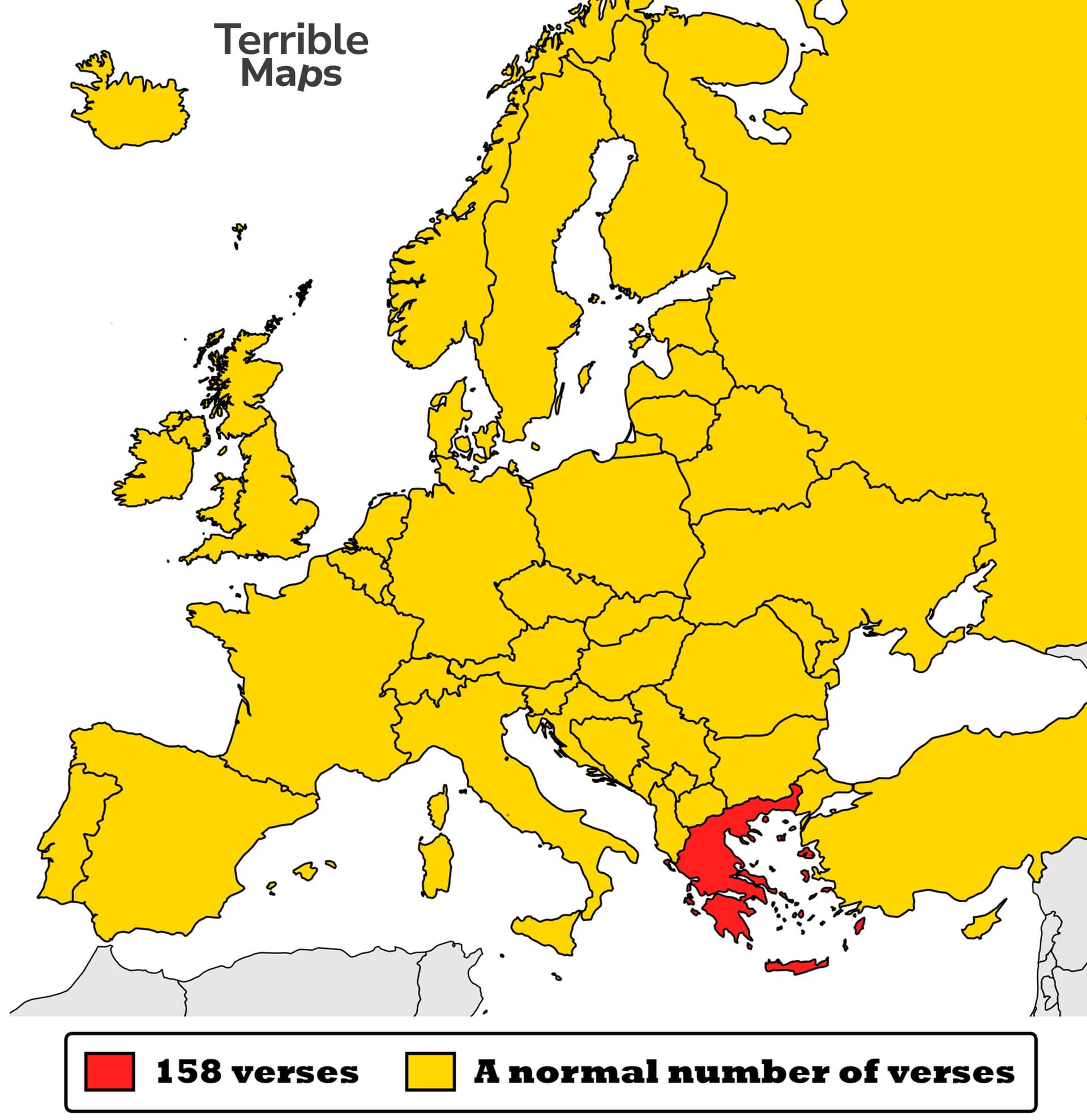
Regardless, there’s more important things to discuss, my dear Feta friend:

(Source)

1 Like

These days some of these “open positions” may be just data harvesting sinkholes where no one gets a call or even an email acknowledgement. Data is the new gold.

1 Like

At the end of the day such people need to be pragmatic and find a solution.

I have a grandchild in England who has a batchelor in “music” but neve managed to get a well paid job.
So he did an apprencticeship as a plumber and now he is fully occupied as a freelance plumber.

I remember when I was working here in IT as a feelancer and I needed some plumbing done; the plumber’s hourly rate was much higher than mine.
Of course, the plumber’s salary is much less than that unless they are working as an independent.

2 Likes