Hm, maybe it was legit, but an error by Swiss Post.
Ah thanks for the update, I got that one as well (lorum ipsum) and deleted it although the email looked legitimate.
And today
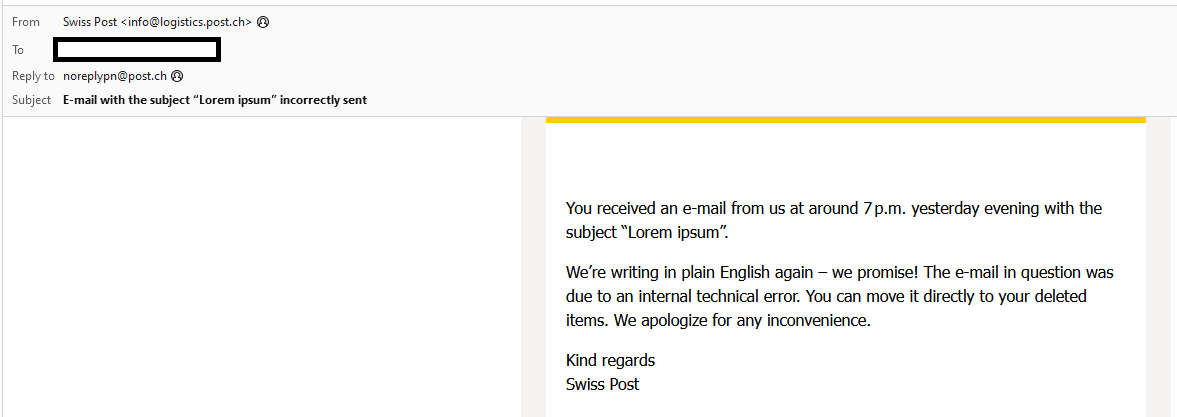
You received an e-mail from us at around 7 p.m. yesterday evening with the subject “Lorem ipsum”.
We’re writing in plain English again – we promise! The e-mail in question was due to an internal technical error. You can move it directly to your deleted items. We apologize for any inconvenience.
Kind regards
Swiss Post
Whatever I am not clicking on anything…
I’ve had quite a few more targeted ones recently, asking for room bookings, not really sure at what stage the scam would appear, but the initial mail is just a generic request for a room between certain dates. I imagine they would want to ‘confirm’ the booking and then go down one of the overpayment scams (they pay with a fraudulent means which initially shows as a credit in your bank, and ask you to refund some of the over-payment, with some semi-plausible reason for it, then their payment is refused by the bank several days later. Or it may be some phishing attempt down the line.
I usually respond with a generic ‘prices and availability are on the website’, just in case any of them are real, but I doubt it. None of the suspects ones has ever replied.
I do get genuine enquiries by email too, so I can’t afford to just ignore them unlooked-at.
There’s usually a couple of giveaways, like a greeting not including either my or the chalet name, and when they ask for rooms in my “hotel”.
1 Like
that must be a real pita!
tell them return-payments only cash in person at the b&b. 
1 Like
Stats show that most phones in Switzerland (55%) are i-phones. Update whatsapp now.
All the attacker needs is your phone number, add you in whatsapp and send an image.
2 Likes
Not having WhatsApp does have advantages 
1 Like
Not having Apple does have some advantages.
3 Likes
I’m not feeling left out anymore, I finally got the scam call with the arrest warrant from the ‘police’, all in English with an American accent. I didn’t bother listening until the end.
2 Likes
So pretty much most of us are now wanted by interpole? Interpol also trolling this website?
1 Like
You had to wait so long for it and didn’t even enjoy it to the end?
2 Likes

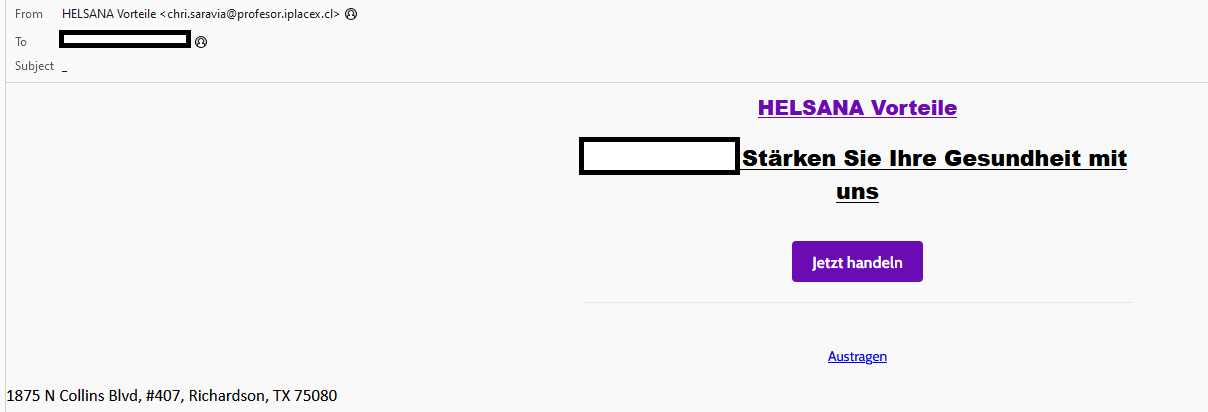
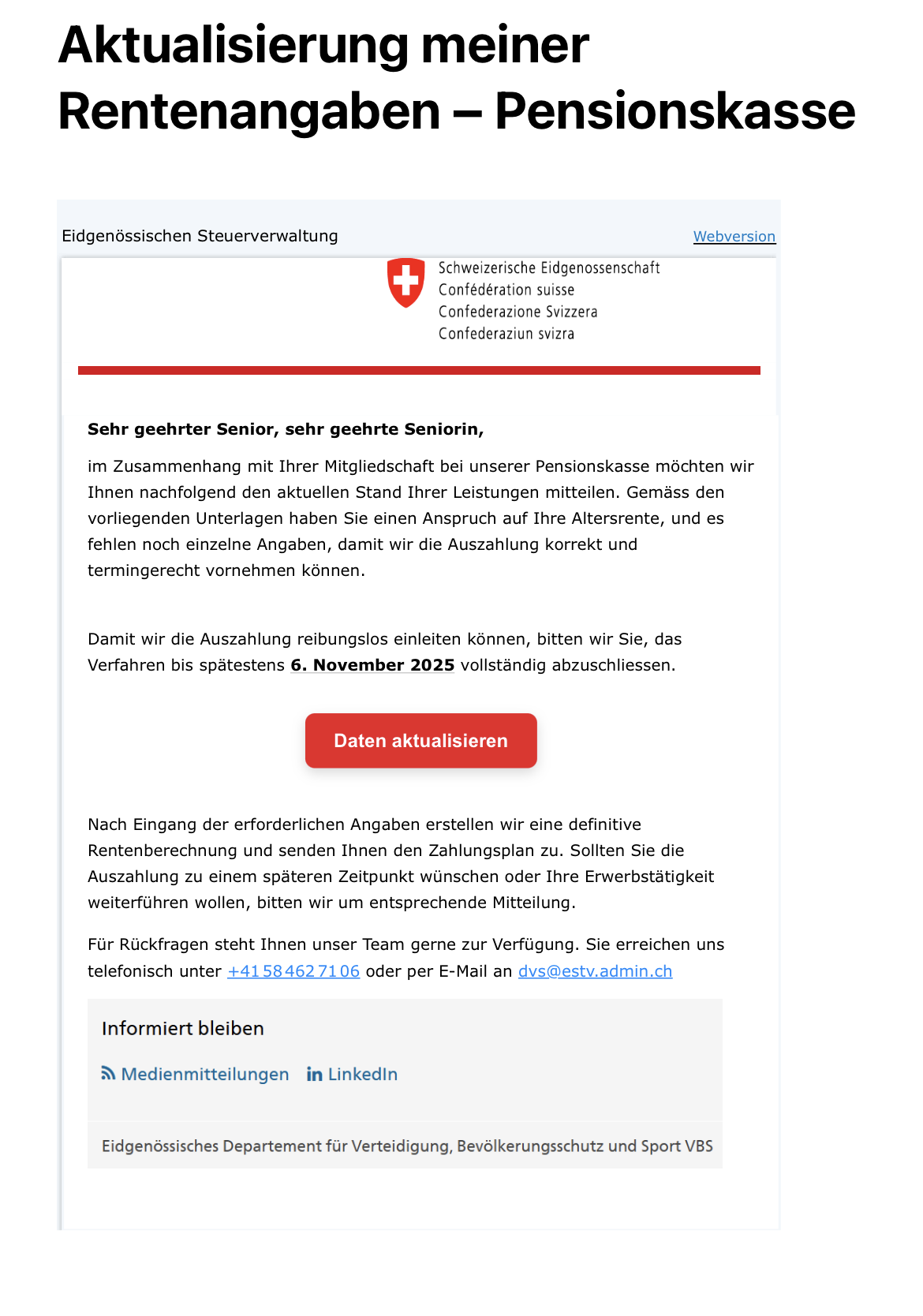
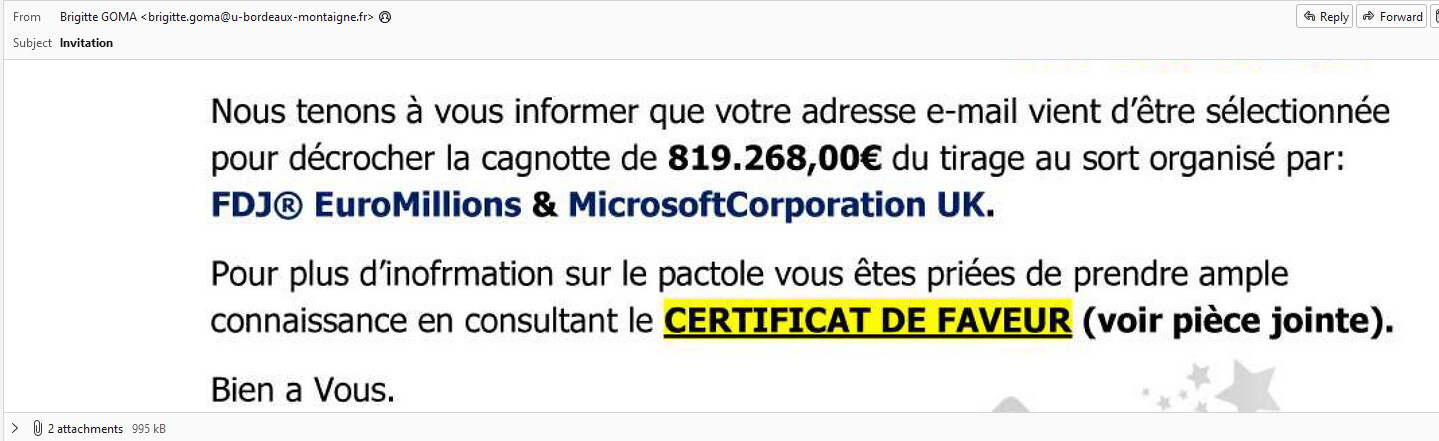
Received this official-looking email today. Wonder how many pensioners fall for it.
The sender is [email protected]…
1 Like
Too many I imagine.
Just got a nice one saying we need to pay CHF40 for parking and if it’s not paid by the 12th it’ll go up to CHF80. Only problem is at the bottom it says it’s from Geneva Parking and we haven’t been to Geneva for about 15 years.
This is who sent it; doesn’t seem to have much to do with Geneva.
Notification-Amendes.CH chrismasse30(at)10089427.brevosend(dot)com
URL edited by 3W to remove the hyperlink so people don’t inadvertently click on it.
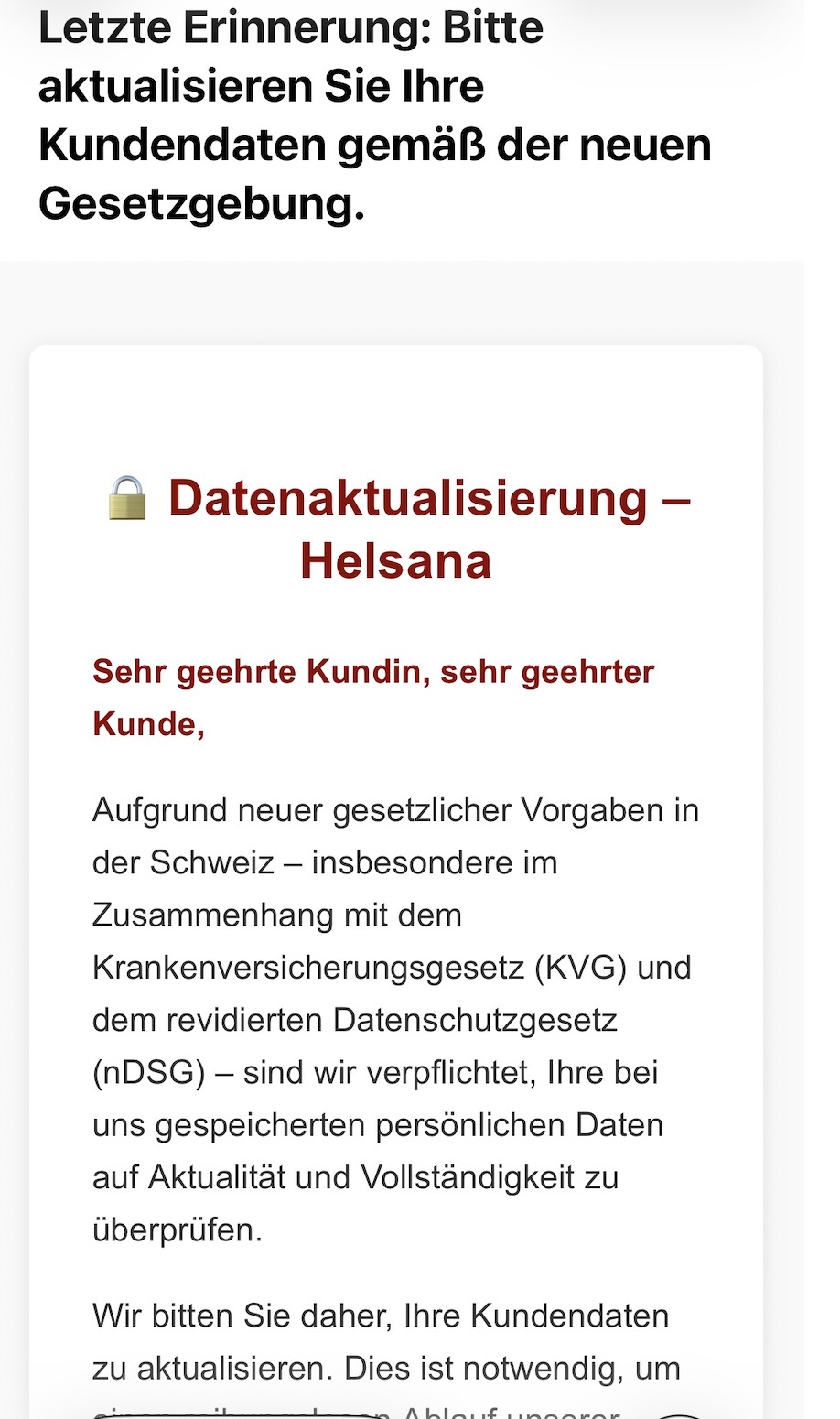
Email from “[email protected]”:
1 Like
Well, clearly the email gives it away…but I come from a region on a country when (on the old times) that was a potential reality – as a terrorist group would steal cars, and ‘double’ the license plates of 3rd parties, and then commit all types of fellonies… yep, not all old times were good times…
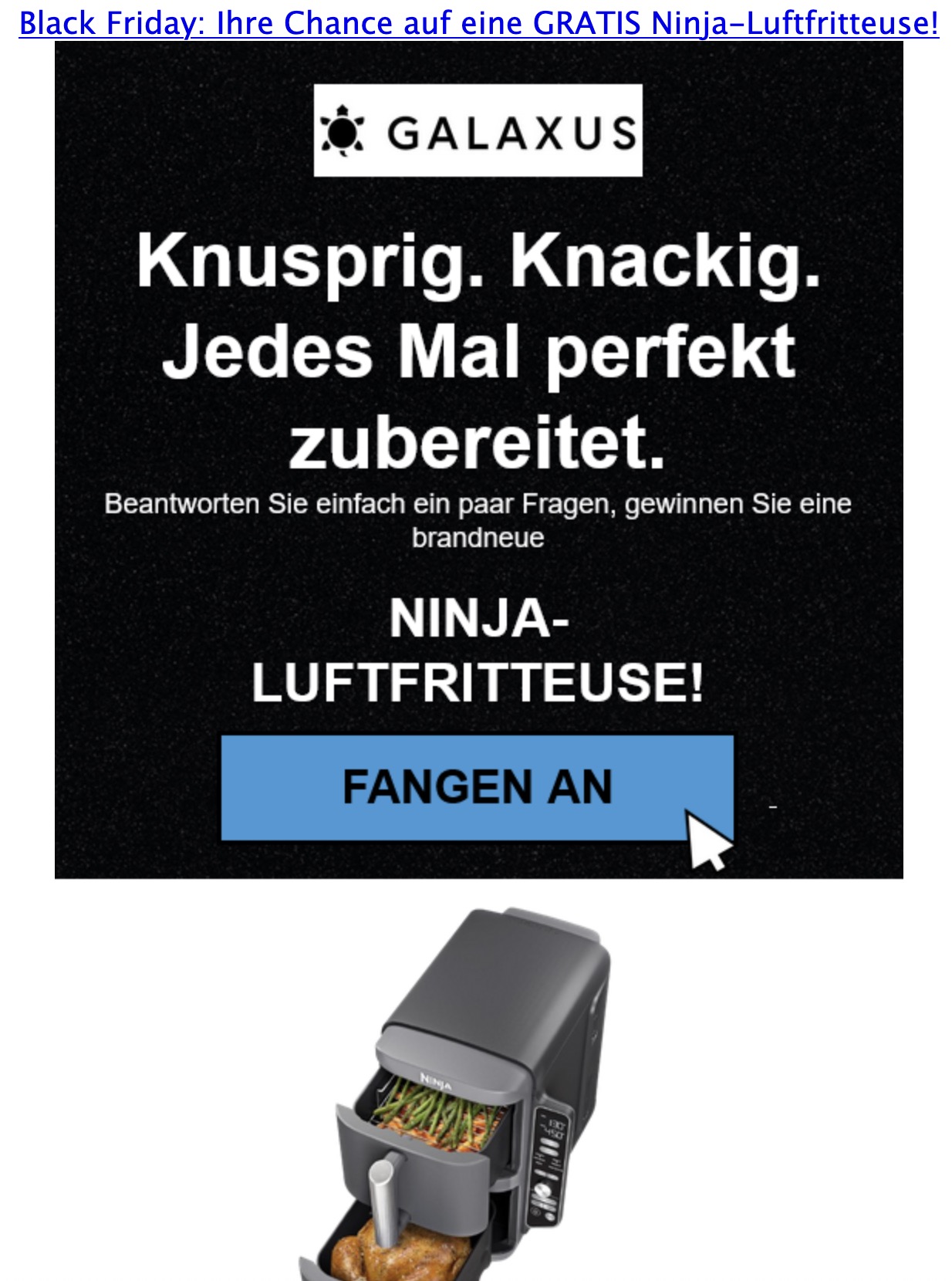
Black Friday scam from [email protected]
Those who can do, those who can’t teach 
Rumors are swirling in the halls of the Burier Gymnasium in La Tour-de-Peilz. A student is alleged to have embezzled money from cafeteria transactions using the Twint mobile payment app. The amounts mentioned vary: 15,000 francs according to some, 35,000 according to others. He is said to have amassed this fortune by affixing a fake QR code over the cash register’s code, using the same method as parking meter scams.
The Vaud cantonal police confirm that a complaint has been filed and an investigation is underway, without providing further details. The Public Prosecutor’s Office and the Directorate General of Post-Compulsory Education add that since the suspect—presumed innocent—was under the age of majority at the time of the alleged offenses, the Juvenile Court is expected to be involved soon. The investigation should reveal the duration of the fraud, if it is confirmed, the amount embezzled, and the method used.
And there’s more:
According to Sarah*, a high school student, some students always carry a printed QR code in their phone case. In line, before paying, they discreetly scan this fake QR code, then lower their phone’s brightness and pretend to scan the one displayed at the register. After raising the brightness again, they show the payment receipt to the cafeteria employee. No one is the wiser: they thus make it seem as if the transaction has taken place. They have even managed to display the company logo where the recipient should be.
Julien*, also a student at Burier Gymnasium, describes another technique used by some students. This involves recording a video of their screen during a Twint transaction in the cafeteria, then reusing this recording. “The system works, as long as the movements are the same and the same amount is displayed,” he explains.
On one hand, these students are breaking the law. On the other hand, this is a payment system designed by very serious people who dedicated long hours to think about how to make it secure. If a teenager can override it…there’s something fundamentally wrong. The issue is not probably due to twint, but on the seller side that keeps the sales employees in the dark without a way to verify if the money is effectively received.
And this student has still a lot to learn. The money should have been sent to an account in an online bank created with an ID found on the street and then move it around a network of shell companies to be finally transferred somewhere around the world. A beginner’s mistake.