The irony is that cars have AC but houses don’t. Rolling down the window makes driving possible. No way to cool a room at 25+°C at 1AM which seriously perturbs sleeping.
For me the bigger irony is that it’s allowed to use the single-unit portable a/c’s which simply don’t work. For every meter of air expelled from the hot air hose, they suck in the same amount of hot air from outside (through door cracks, etc) - as otherwise you would have a vacuum in the house.
Instead, we demonize the split units which actually do work…
Air Conditioning Installation Permission in Geneva
Strict Regulations in Geneva
Geneva is the strictest canton in Switzerland regarding air conditioning installation.
To install a fixed (built-in) air conditioning unit, you must:
Obtain official permission from the cantonal authorities.
Prove a legitimate need, such as by providing a medical certificate.
Install systems that capture heat emissions and condensation produced by the AC[3][6].
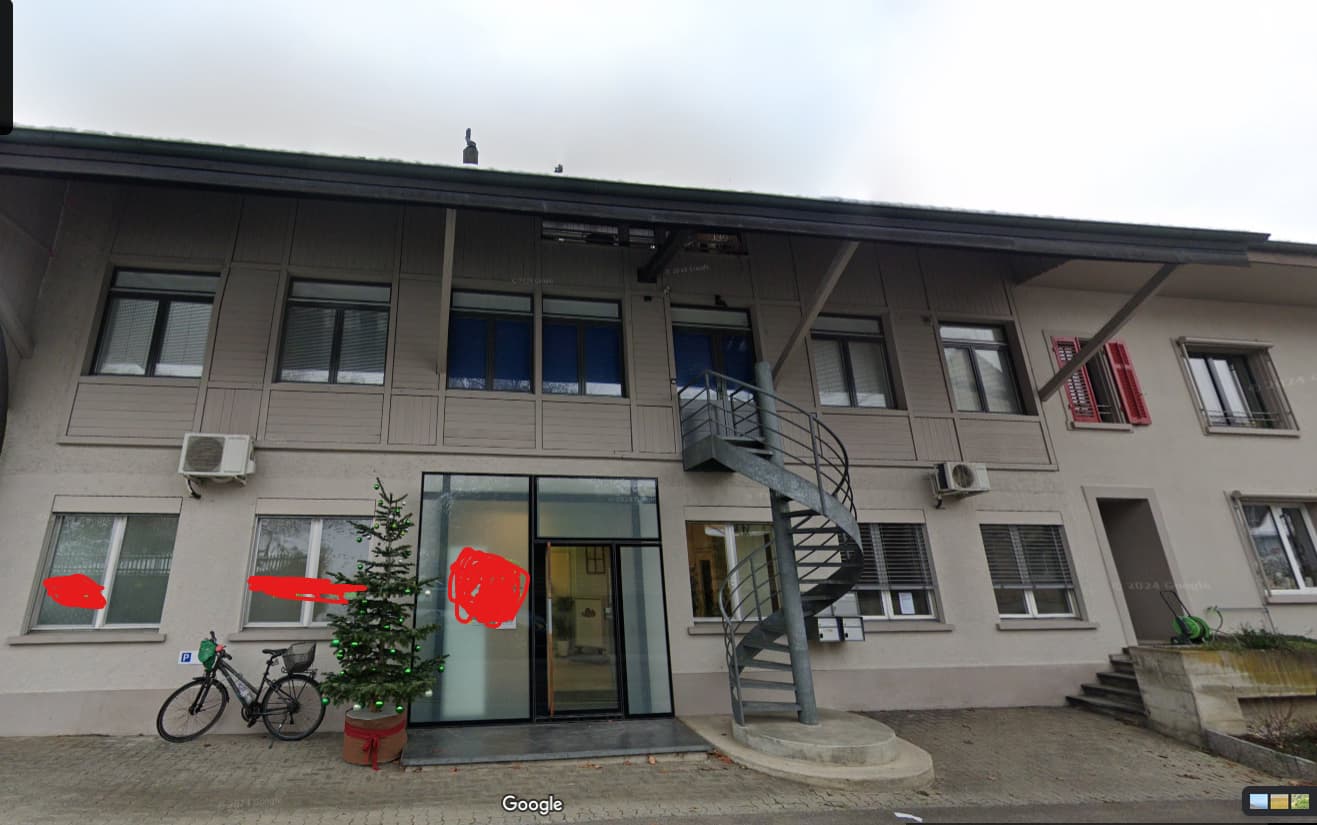
The process may also require approval from neighbors, especially if the installation alters the building’s facade or involves drilling through walls[2].
Mobile vs. Fixed Units
Portable (monoblock) air conditioners generally do not require official permission, as they do not alter the building structure[5][7].
Most restrictions and permit requirements apply to split or built-in systems.
Summary Table
Type of AC
Permission Needed?
Notes
Fixed/Split System
Yes
Strict process; proof of need required[3][6].
Portable/Monoblock
No
No building alteration, so no permit needed[5].
Key Steps
Contact the Geneva Building Department for precise requirements.
Prepare documentation (such as a medical certificate) if applying for a fixed system.
Consult with neighbors if building alterations are involved.
Alternative
Due to strict rules, many residents opt for portable AC units, which are less efficient but easier to obtain[3][6].
Bottom Line:
For fixed AC in Geneva, expect a strict approval process; for portable units, no permit is needed, but efficiency is lower. Always confirm with local authorities before proceeding[3][5][6].
In other words no rules or restrictions on installing inefficient‘ portable’ units but if you want to install a professional efficient unit you need to sacrifice your first born child
But, I see several houses around with air-to-air heat pumps in the gardens. Some of those systems are for both heating and cooling.
Maybe the issue is in the wording: it’s a heat pump for heating and hot water, no more oil burning!!! No one needs to know which specific heat exchanger unit is connected to the heat pump inside the house
The answer is neither nor. Outside temp at the moment 31 deg C. Inside the flat I have 27 deg after having the windows open at night, closed now. Shutters are down and I am feeling good with a cylinder fan cooling me down.
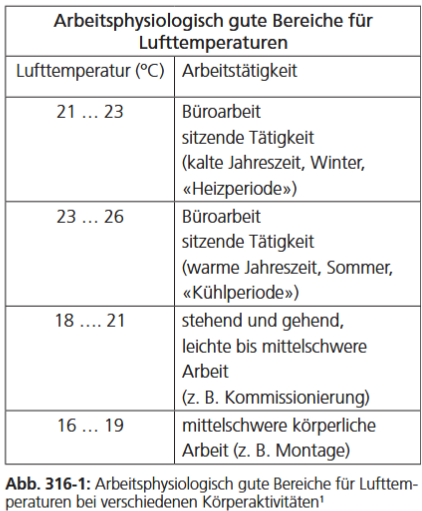
All rooms must be adequately ventilated, either naturally or artificially, according to their intended use. Room temperature, air velocity, and relative humidity must be measured and adjusted to ensure a room climate that is not detrimental to health and appropriate for the type of work being performed.
So, maybe the trick is “I NEED AC FOR WORK”, and everything needed for work is as sacred as a milking cow. I’m no lawyer, but it would be interesting to analyze this in the context of “home office”. People renting offices the size of a dentist office can install a split unit, does home office apply?
They’ve been in the rise, but appear to be in the low thousands… (as much as I dislike quoting fox news) Heat is the deadliest weather in the US | Fox Weather
" The deadliest year from extreme heat was 1995, when the deaths of 1,021 Americans were blamed on excessively hot weather. 1989 and 2004 had the fewest number of people killed by heat, with only six such deaths."
This site suggests about 2000 in 2023 was the highest year… https://www.nytimes.com/2024/08/27/climate/heat-deaths.html
Keep in mind, the US, like the middle east, air-conditions every building (and in some cases outdoor spaces).
Heck, last week I was still surprised to see wall-less gazebo’s air conditioned to get a cool breeze… (Dubai)
At work, we recently rebuilt the building and were told we would struggle to get approval for ac’s outside the server room. We ended up with ceiling water coolers (so cool water pumped into the ceiling, and 8 hours later the room gets marginally cooler, warm water is then pumped back to the lake)…
I would be curious to see if my gemeinde would allow a/c installs for a home office!
It’s mainly older people with pre-existing, chronic health conditions who are dying from heat-stroke.
Those people are unlikely to get A/C even if rules were relaxed.
People working in offices are not dying of heat-stroke.
However, I do think with inevitable global warming, generally cool countries up to now need to look at solutions to deal with the heat. Perhaps less glass-fronted buildings for a start?
My mum in the UK has finally conceded that an on-all-time Aga perhaps wasn’t such a good idea after all.
While in part I agree with you, the statistics are pretty shocking… Yes, Europe has roughly twice the number of people that the USA does… but to have a delta of heat related deaths (Especially with the weak medical system that the US has) is pretty shocking.
There’s older people in the US too, so the comparison is pretty similar.
More confounding factors: our genes have a solution to adapt to heat, but exposure is needed to activate said genes.
If we expose ourselves to heat little by little during spring, said genes get the signal to activate and then send a subsequent signal to cause changes in how our body works.
It’s possible to train your body to better handle high temperatures in just a few weeks.
The point is people living in temperate climates do not adapt to heat in “normal life”. Unless you make a conscious effort to take a sunbath or exercise when it’s hot, it’s quite probable that there is little adaptation to heat when a heat wave arrives. That causes the mortality in temperate climates. Or when people from temperate climates goes for vacation to 40°+C place and can’t survive a short walk (tourists in Greece). People in hotter climates is already adapted just by existing.
It’s heat-related causes so ultimately something like heart failure will be cause of death but more so in those with chronic conditions.
None of the UN guidelines for keeping cool recommend A/C but I do appreciate that the guidelines are for all people, anywhere:
Keeping out of the heat: Avoid going out and undertaking strenuous activities when the sun’s at its hottest. Stay in the shade and do not leave children or animals in parked vehicles. If necessary and possible, spend two to three hours in a cool place, such as a supermarket or cinema.
Trying to keep your home cool: Use night air to cool down your home. Reduce the heat load inside your home or hotel room during the day by using blinds or shutters, opening them at night to ventilate your home.
Keeping your body cool and hydrated: Use light and loose-fitting clothing and light bed linens, take cool showers or baths and drink water regularly while avoiding sugary, alcoholic or caffeinated drinks which will leave you dehydrated.
Taking care of yourself and others: Check on family, friends and neighbours, especially the elderly, especially if they are on their own.
I’ve only seen one real case of heatstroke in my life and it’s one of the few times I probably saved someone’s life:
When I was in India, when I was much younger, there were a group of us staying in the same very basic place.
At dinner, I asked where one of the people was who was travelling with a couple of girls. They told me he wasn’t feeling too well so he was in bed. They didn’t seen at all bothered.
I went to check anyway in case he needed anything and he had all the symptoms of advanced heat stroke - hot but dry skin, semi conscious and confused - and a high temperature.
There was no hospital in the vicinity so I got him cooled down with cold wet towels and had someone stay with him in turns until he had stabilised.
Tip: if your kids are intent on backpacking in hot climates in more out-of-the-way places, get them to read something like John Hatt’s The Tropical Traveller The Essential Guide to Travel in Hot Countries (now out of print) or something similar.
These figures aren’t statistics, they’re guesstimates. If even that. Of course the type of message you want send would never ever influence which way you’re going to err (cough, cough).
Frankly, I find the notion quite implausible that 1/3 of all guesstimated deaths occur in Europe, despite its high living standards and the fact that it has just 9% of the population. That gives a per capita heat-related death rate that’s easily six times above the non-European rate. Let me point out that high living standards generally includes the availability of decent medical services.
Unless the (not yet) elderly die earlier elsewhere for different reasons, in which case Europe’s high rate would be testament of its high living standards, an outright celebration even.