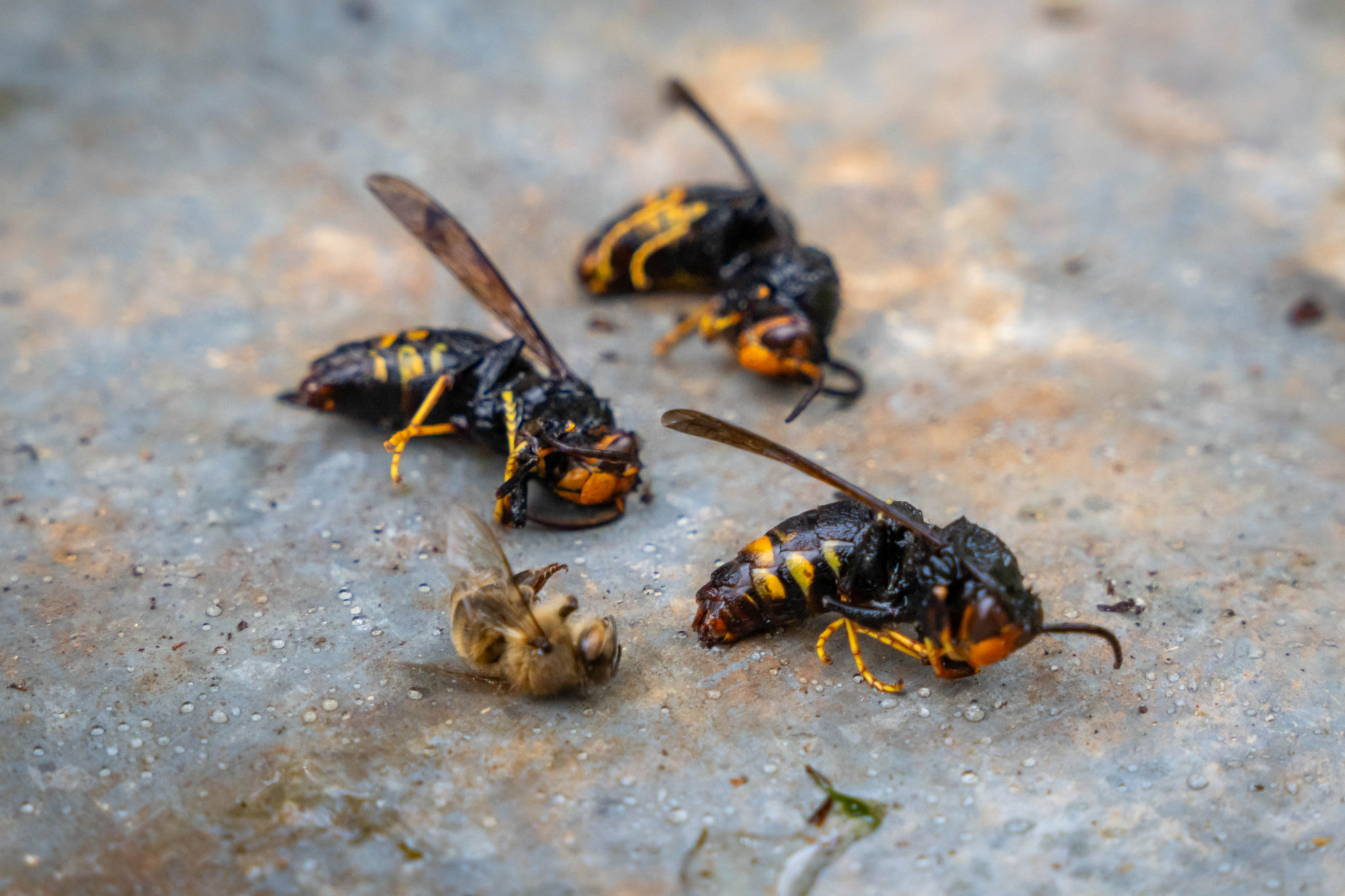
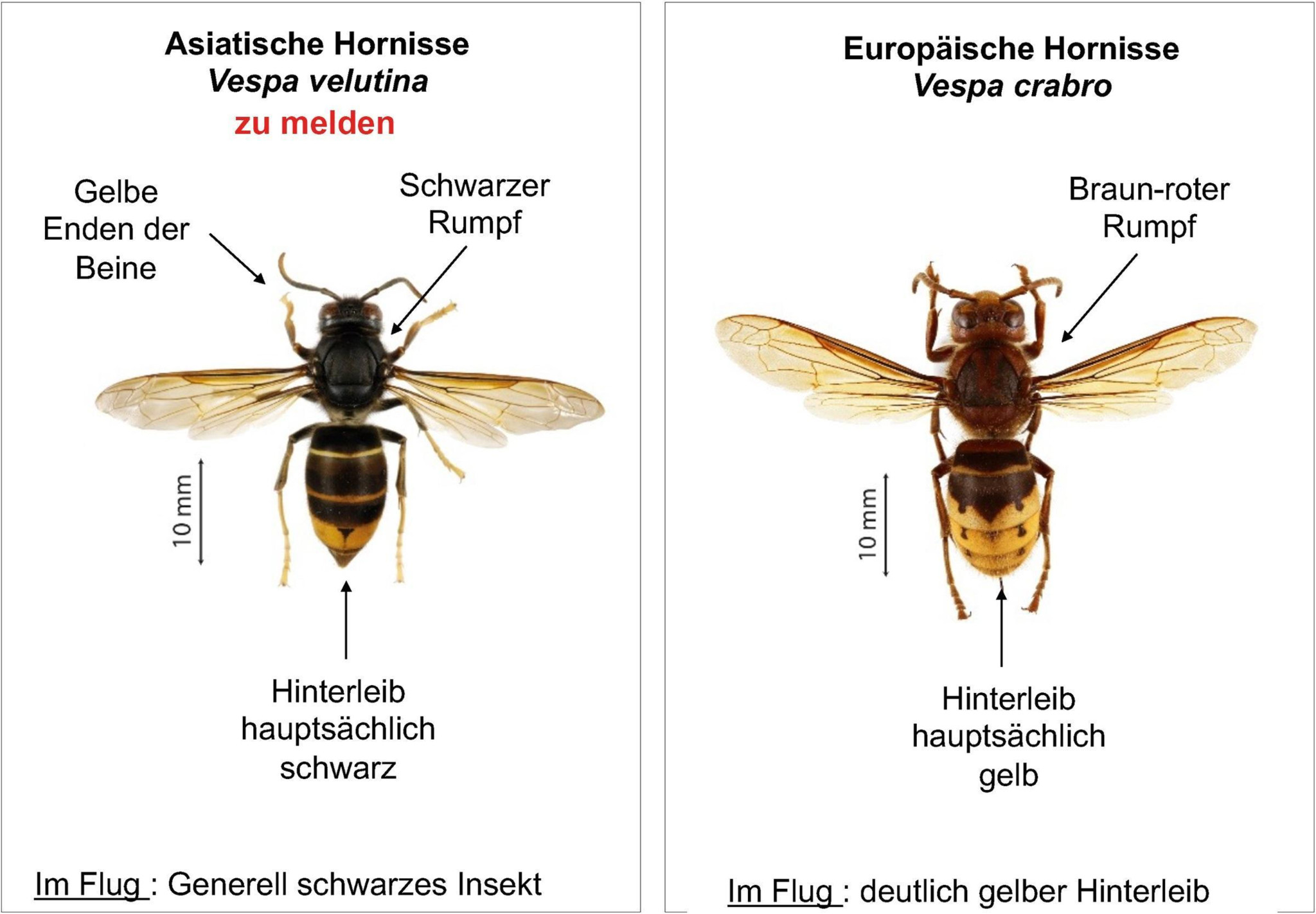
This is what the Asian Hornet looks like, in flight they appear largely black.
The legs are yellow, their “face” is orange.
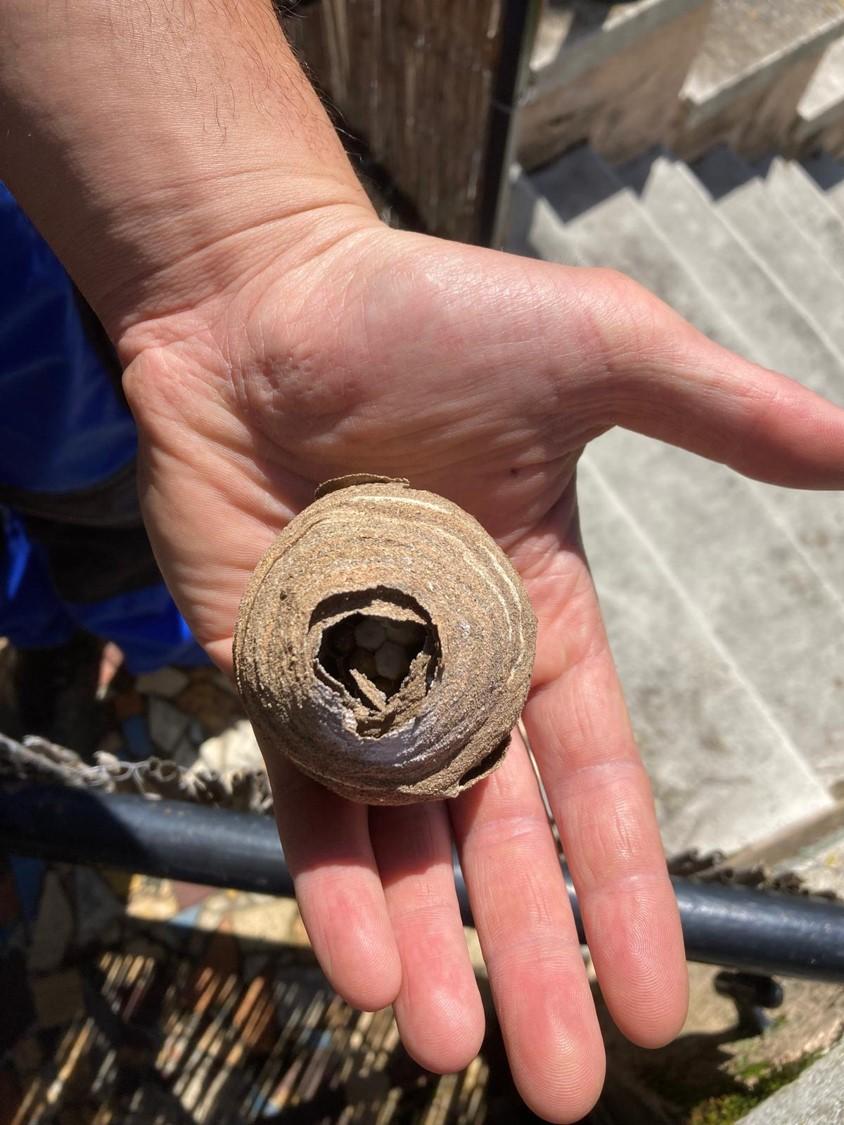
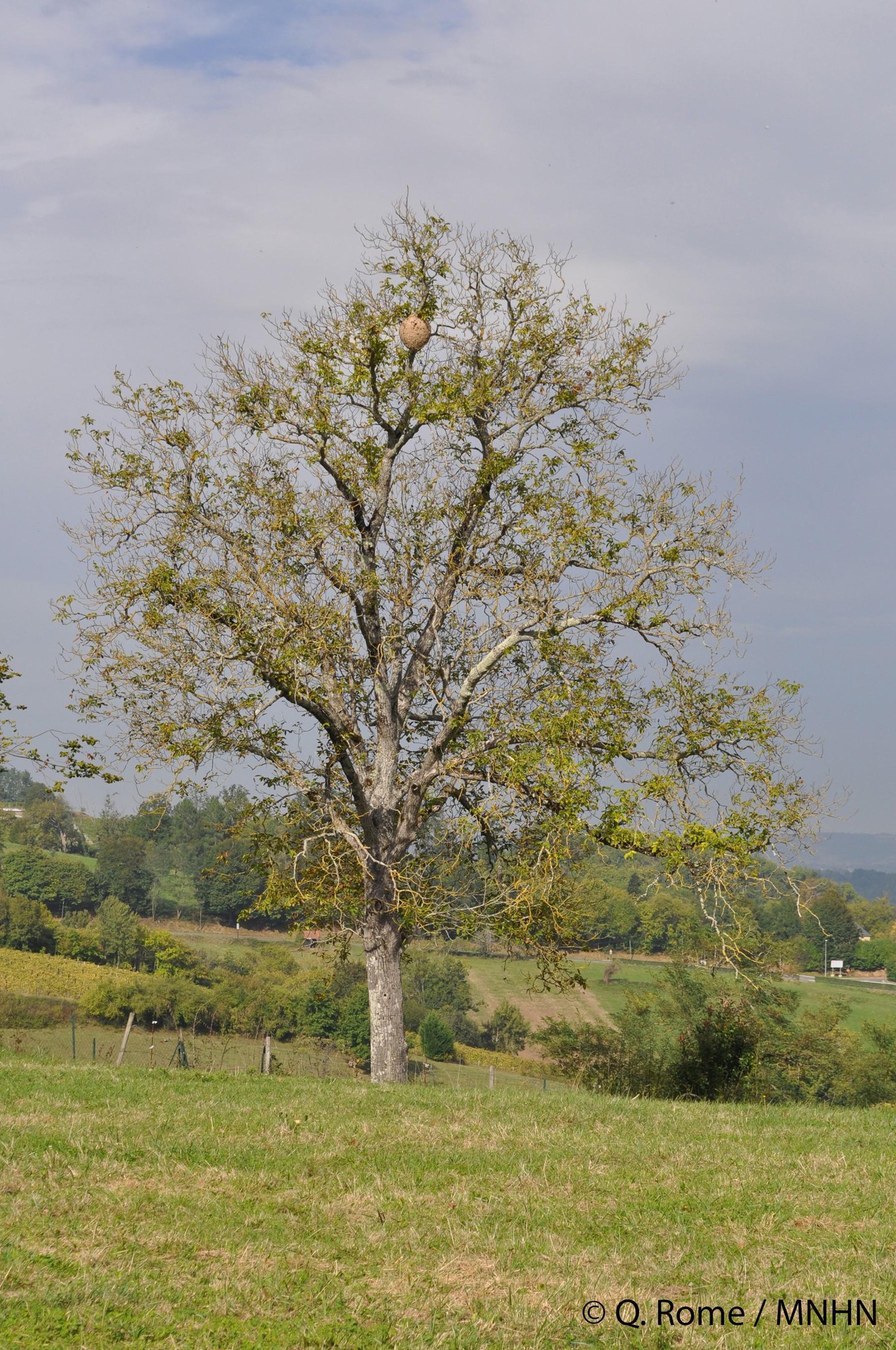
They build two nests. The first is small and round, the size of a fist. When that becomes too small they move on and build a second large one elsewhere, often up in treetops.
Act immediately if you see any. Take pictures if you can and report them. The relevant authority depends on the canton, it’s probably the Amt für Umwelt or similar. Alternatively I’d probably call 117, the police.
We are installing this winter closer slits and a ‘chicken wire’ at the entrance of the hives to try to protect the bees from the hornets. Unfortunately in Switzerland it is forbidden to use the ‘Japanese’ method Outsmarting the Giant Hornets: Beekeeper’s Innovative Method to Protect Honeybees
(or, with a more cute lady) Capturing Japanese giant hornets with a glue sheet
As such, prevention is better - getting rid of the Asiatic hornet’s nest is the best measure!
(I am sure that any Kiwi in the Forum would agree in any measure to prevent invasive species to take over…)…not? @KiwiSteve
In a similar vein, there are now strict rules and document filling when moving registered boats from lake to lake (if they are registered) and rules for cleaning for smaller craft such as canoes - because of foreign aquatic creatures such as quagga mussels.
Bees themselves do not naturally get diabetes like humans do, because they lack a pancreas and insulin in the way mammals have. However, research has shown that when specific genes controlling bees’ sugar taste and metabolism are experimentally deactivated, the bees develop high blood sugar levels and low insulin-like peptide levels, conditions that resemble diabetes (similar to Type 1 diabetes in humans). This diabetes-like condition in bees is linked to impaired insulin signaling and can be influenced by their gut microbiome. So, while bees do not normally get diabetes, they can be made to show diabetes-like symptoms through genetic modification or disruption of their insulin-like system [1][2][3][4].