Axpo, the operator of Beznau nuclear power plant in Döttingen (Aargau) has announced the plans for the end of life of the plant. 1 reactor to be stopped by 2032, the 2nd one by 2033. Press release here:
Beznau is the oldest commercial nuclear power plant still in operation, so far 55 years old. It will be 63-64 by decommissioning time. Other plants were built before, but not in operation anymore.
Beznau uses direct cooling with water from the Aare. Hot water is directly discharged on the river. The plant started operating before environmental regulations for the temperature of water discharged in the river. As times passes, the regulations become stricter and the plant is slowed down (less electricity is generated) during summer to meet the regulations. Less electricity, lower profit. The other 2 plants, Gösgen and Liebstadt have cooling towers, so they don’t have this cooling issue.
I guess this is the start of big changes in Switzerland, electricity for 800k people is no trivial matter, 10% of national demand. From electricity deals with suppliers in EU countries to exploring new alternatives here.
Yes, the water is being used for a local remote heating network, [it serves ~18k] (The Refuna district heat supply system in Switzerland|INIS) people in the surrounding villages. The issue with remote heating is very little energy arrives at the end of the pipeline due to all the loses in the way after a few thousand meters.
Also, remote heating is not a heat sink big enough to take all the heat to condense steam after it moves the turbines.
Provided the regular inspections and maintenance do not find any problems then these stations can just keep running, in the US they are even restarting old ones.
No, they do not just “keep running”. Axpo is talking about an investment of 350 million. My maths tells me that would be better invested in wind farms and water- pump storage.
For information on the accident history of the nuclear industry:
This list, especially the numbers of fatalities/illness, almost certainly represents a huge underestimate as in most countries the nuclear energy industry comes under defence regulations where there is very limited disclosure.
The expansion of solar power production is to take place primarily by installing panels on buildings. In suitable areas, there will be less strict planning conditions for wind power and large solar energy plants, which are particularly important for the electricity supply in winter. The 16 hydropower plants mentioned in the new legislation will also be subject to more relaxed planning conditions.
Maybe that’s the plan, substitute nuclear with renewables. But, getting those 16 hydropower plants and unknown number of wind farms and solar plants ready by 2032 will be a challenge. Something is needed between now and the time the new sources are available.
On nuclear incidents, a lot has been learned and changed. The most relevant incident for Western Europe has zero deaths. The sad part is that the Blayais incident happened 12 years before Fukushima. The investigation and recommendations resulting from this incident would have prevented the accident at Fukushima.
Does Switzerland still have 16 large untapped hydro projects? What total power output are we talking here? Also are these limited to seasonal summertime melt-waters? If so, it doesn’t address the winter energy shortages.
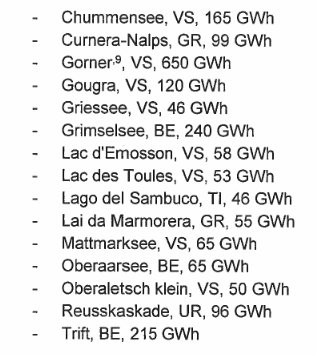
The 16 hydro projects included in the June 2024 referendum are mix of new dams + tunnels to send water from a valley to another valley with an existing plant, making other dams higher to increase capacity, pumped storage, even new plants. The units are GWh because it’s estimated winter generation capacity.
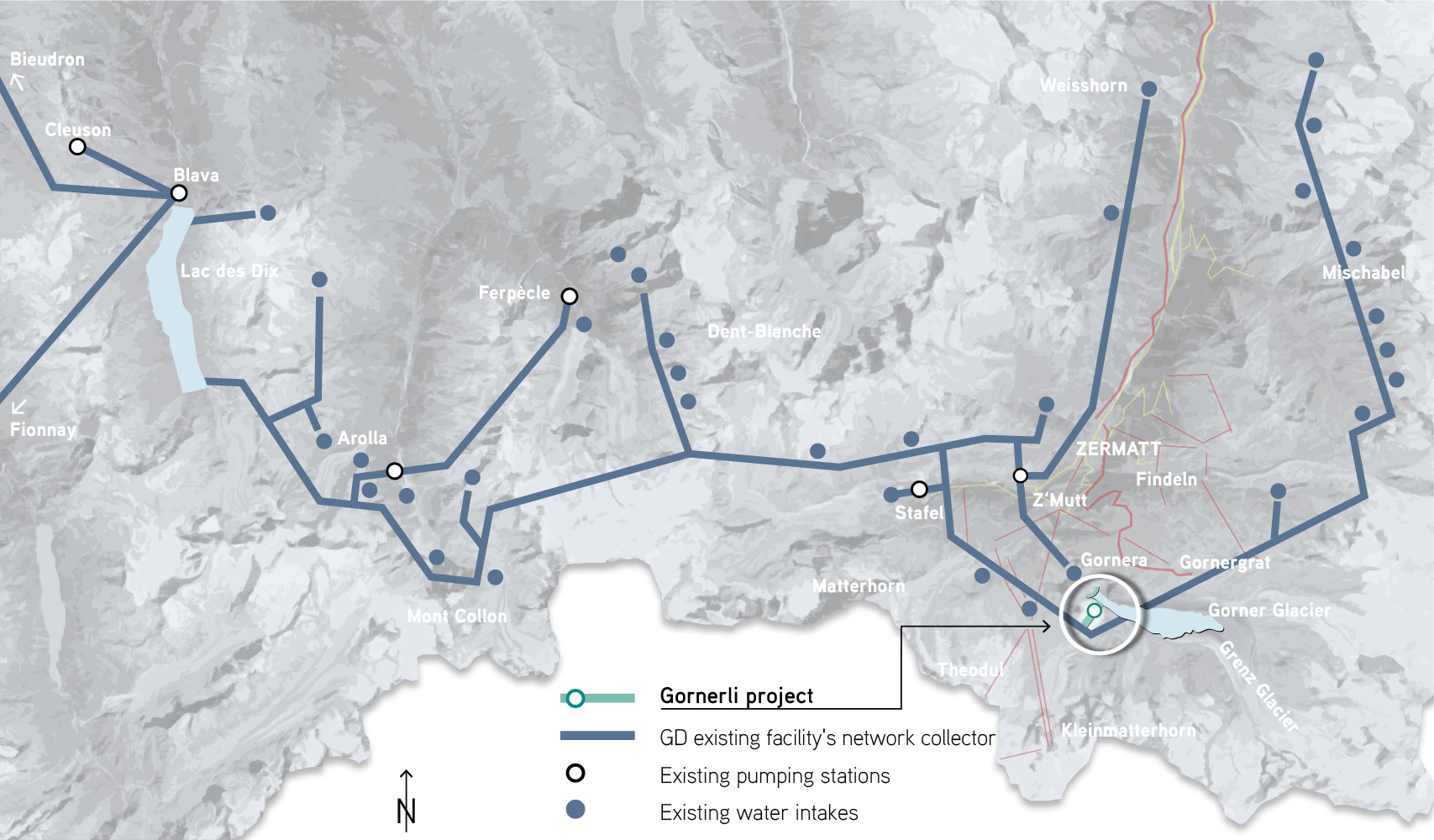
The largest one (Gornerli project - Gorner on the list) is a new dam + a tunnel to connect to the Grand Dixence system in Valais. An existing dam can operate at full capacity by bringing water from neighboring valleys. The extent of the existing tunnels is incredible, from Zermatt to Nendaz, all collectors bring water to the same dam/power plant.
The Swiss seem to have made a more pragmatic (and sensible?) approach to phasing out nuclear than the Germans. However continuing with nuclear long term seems absurd both in terms of economics and risk assessment. At the moment it is a no-no, but some would like to change that. Axpo would of course love to prolong and then re-build on the same site so they can lower decommissioning costs.
Fossil fuel pollution leads the illness/death figures by a long way - nuclear is a different risk, maybe lower, but if it goes wrong it can go wrong big time. Added to that come the disposal issues, they increase the overall cost hugely.
Hydro alone is not the answer for Switzerland but the underexploited wind and solar opportunities are there -the figures depend so much on who produces them.
The plan in Switzerland is to phase out nuclear power plants by 2044. The current regulation is that plants can operate as long as it is safe. But, operating in a safe manner costs money. At some point operating safely will be more expensive than getting electricity from other sources. So, year 2044 is a forecast of that moment when the plants become too expensive to operate safely.
Speculation warning: the decision to power off Beznau may have been precisely the opex to run safely VS electricity prices. It’s an old plant with an efficiency from a 1960s design. Accountants and finance people crunched numbers with estimates of future electricity prices, it should be profitable to generate electricity until 2032-2033. As an old car, even larger investments are needed to keep it operating safely the older the plant becomes. Quite probably, those larger investments make the plant unprofitable around year 2033. A decommissioning plan takes year to develop, so 2025 is good moment to start working on it.
Even more speculation: but, and this is a big BUT, all depends on electricity prices. If something happens in the world and electricity prices go significantly up, it may still be profitable to keep the old car running…enter Federal Council, activists, referendums, etc.
There’s a bit more to it than just that. The production already needs to be reduced in the summer due to high river water temperature (harms the fish), and that’s unlikely to get better anytime soon.
Can you provide information to support your claim.
Chernobyl was arguably the worst NPP accident but there is consensus that a total of approximately 30 people died from immediate blast trauma and acute radiation syndrome (ARS) in the seconds to months after the disaster respectively, with 60 in total in the decades since , inclusive of later radiation induced cancer.
I have a colleague who went there to help and he had massive radiation exposure but he is still around and never had any health issues that could be linked to that.
For fossil fuels, there was The Tacoa disaster, an immense boilover from a fuel oil tank within the premises of a thermal power plant. It caused about 150 fatalities
I would not agree with your “consensus” numbers for Chernobyl, but you are quite right about large dams - they are a risk especially in areas where there are large populations in the flood zone downstream - fortunately in Switzerland most of the hydro power comes from smallish dams or from river flow turbines.
The main points about nuclear are firstly that it makes no economic sense -it is simply much more expensive than renewables. Secondly the risks are there and the disposal issues remain largely unsolved - most of the waste is at present in temporary storage which is ticking bomb.
Large power stations of any type are liable to have accidents with fatalities. One of the beauties of wind and solar is that they are much more decentralised. This disrupts the present energy business and is the cause of much of the push back.