Its an excellent car and was the highlight of the very lacklustre, final Geneva car show in 2024.
Its also just been awarded ‘Car of the year - 2025’ by What Car, and the year has only just begun.
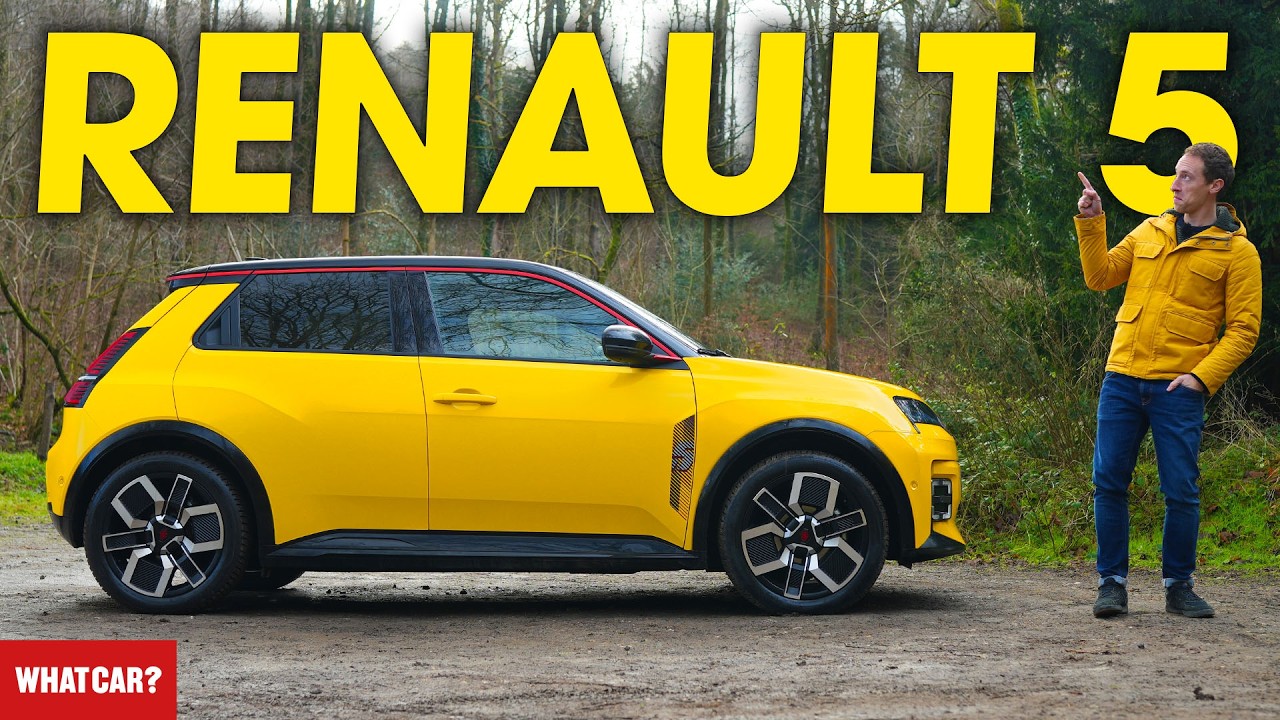
Its an excellent car and was the highlight of the very lacklustre, final Geneva car show in 2024.
Its also just been awarded ‘Car of the year - 2025’ by What Car, and the year has only just begun.
It looks like they always announce the year’s winner in january. So, nothing noteworthy or special.
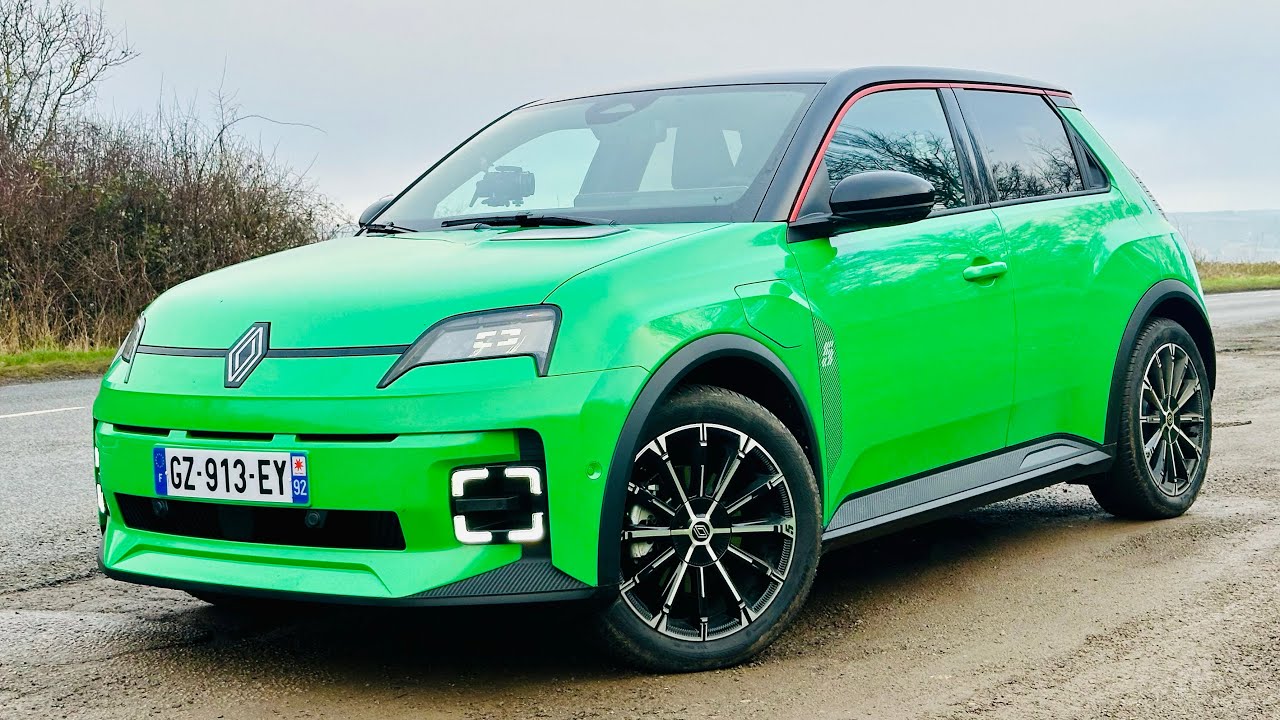
Well Flash Car Harry is also a fan.
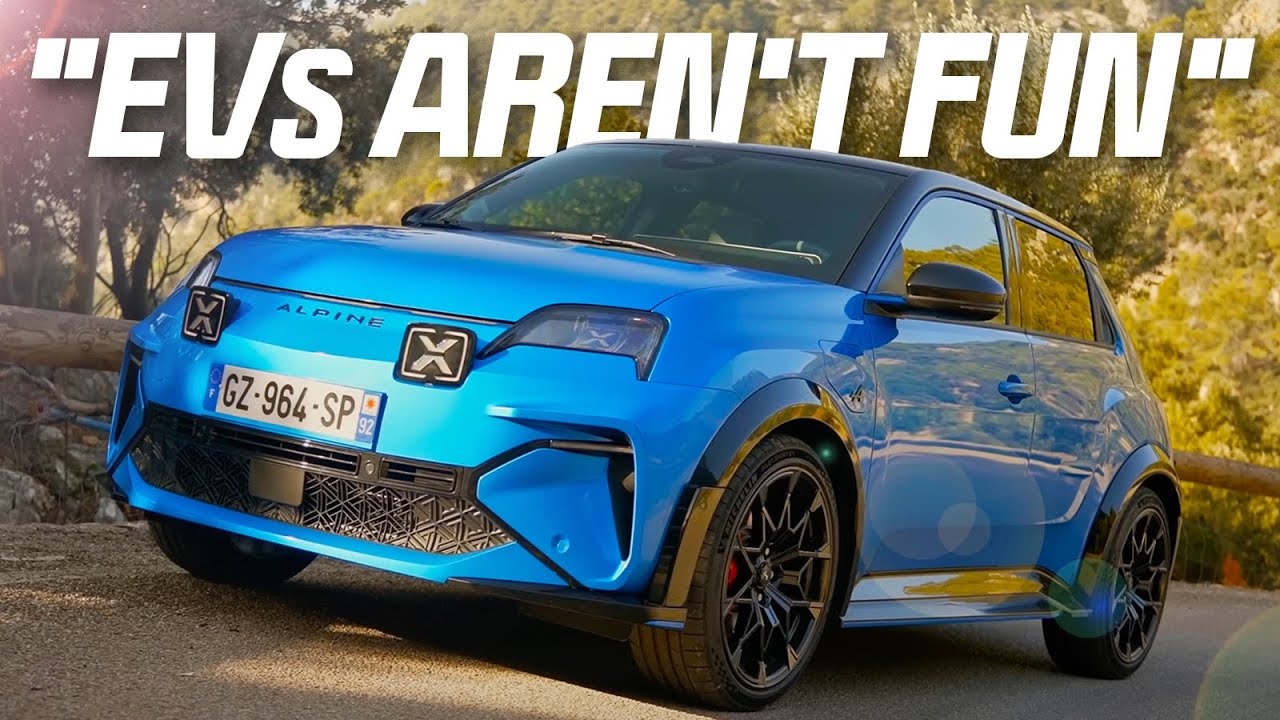
And there is even a more rapid Alpine version available.
My post is not a critique of the car (if I was looking for a new EV I’d be interested), it’s about your “and the year has only just begun”.
Fair enough, its actually strange that they should call it so early. I guess they know from the 2024 pipeline that nothing else will be in showrooms this year that could wrestle the title from Renault.
Such a small car but weights as much as a VW Golf. A 2017 VW Polo has 5 star NCAP test result while this Renault 5 EV test result is 4 stars. I thought anything less than 5 starts was reserved for Dacia and cheap Korean and Chinese cars 
Reading a summary of the report it seems like the raft of new safety requirements is what caused the loss of a star, had it been tested to the same standards as the 2017 Polo then it might well have achieved 5.
Child Occupant Protection (80%):
- The Renault 5 scored well in this category, offering good protection in frontal and side impacts. However, the absence of a ‘child presence detection’ system, which alerts drivers if a child is left in the car, affected the overall score.
Vulnerable Road User Protection (76%):
- The car’s autonomous emergency braking (AEB) system responded adequately to pedestrians and cyclists during daylight but was less effective at night. Moreover, the vehicle lacks a system to prevent ‘dooring’ incidents, where a door is opened into the path of an approaching cyclist, resulting in a loss of points.
Safety Assist Features (68%):
- While the Renault 5 is equipped with several safety assist systems, some areas were lacking. The driver monitoring system detects fatigue but not distraction. Additionally, the speed assistance system identifies local speed limits, but the intelligent speed limiter is not set as the default, impacting the score in this category.
Of course. It’s a cheap small city car for 30, 50, 80 kmh roads. Driving it on a motorway, it’s wilful misuse. Anyway, I drive between home and train station between 30 and 50 kmh streets. Same speed limits for getting food from several shops. The farm is on a 60 kmh road. Other stuff and errands are on 80 kmh roads.
I don’t drive because I have to for my work. It’s just a hobby, going to interesting places while having fun. For that, there’s another car…
Why? What a stupid thing to write.
It’s got a max speed of 150Km/h.
Article paywalled, anyway what matters is the first 2 paragraphs:
Emil Frey about to start sales of BYD cars in Switzerland.
There has long been fear in the industry that Chinese cars could enter the local market on a large scale. In 2024, BYD became the official partner of UEFA Euro 2024, signaling: We are coming to Europe. Now, after much wrangling, the launch in Switzerland is imminent.
The largest electric car manufacturer in China is currently setting up a luxurious flagship store near Zurich’s exclusive Bahnhofstrasse. BYD is going all out. At Uraniastrasse 31, a stone’s throw from the Jelmoli building, a showroom is planned that will span two floors, with the latest design and interior and a gallery on the first floor from which the models can be viewed.
This seems to be a no-brainer for Chinese EV companies since Switzerland will not impose the same punitive tariffs as the EU.
Essentially consumers in the “entire EU bloc” are being punished by tariffs of up to 45% to protect French and German car companies.
True, but they are also there to discourage ‘dumping’ in order to gain market share. Nobody benefits if only China can produce EVs.
The main argument from the EU is that Chinese EV companies and EV buyers get unfair subsidies, which on the face of it seems like a reasonable argument until you look at similar subsidies for European companies and consumers (e.g. 20 out of the 27 EU countries offer tax breaks or rebates for EV buyers). And Tesla hasn’t been excluded from getting similar Chinese government subsidies for its Shanghai plant.
What is true however is that the quality of Chinese vehicles is going up, and pound for pound you can get a much better car from China than you can from the legacy European manufacturers. A BYD Seal or Xiaomi SU7 for example are far better cars than the Tesla Model 3, with better quality control, more luxury and similar performance.
It’s been brewing since last year in social media. Attitudes shifted slowly, then suddenly. One day, journalists are not afraid to say it loud.
Anyway, the headline got changed from “Don’t buy a Tesla. Sell your Tesla. Refuse a Tesla at the rental counter. Yes—it will help.” to what you see now. So, another data point showing that courage is not enough.
Good luck, don’t get swallowed by the depreciation wave.
What would be such a used car resale value if exporting to EU will mean steep tariffs? That might give many a buyer a pause.
A car is by definition a depreciating asset.
The more expensive, the bigger the hit.
Yes, if you bought a Model Y Performance at the Peak, it’s now worth hardly half of that.
But it’s often even worse for other cars like the EQS or iX.
When you lease a car with Tesla, the rates are usually very high - signaling that Tesla itself has no illusions about the depreciation.
And lastly, for most people, their car is not a means to virtue signal their own perceived superiority, but a necessary tool of transportation that they have to carve money out of their budget to finance.
Most rental companies have stopped offering Teslas anyway.
I did not know that.
I wonder if the same factors would limit taxi companies from using Teslas when the offering is available.
I think this is rather a particularity for rental companies. The maintenance cost of an EV is lower than that of a petrol one. But the repair cost tends to be higher. If you are an individual owner, repair cost is rather an exception, maintenance is your true cost. A rental company has far more repair than an individual owner, thus the overall cost of an EV is probably higher for a rental company than for an individual owner.
That’s all rational and reasonable. Indeed, today’s cars (regardless of manufacturer and fuel) are full of hard-to-fix electromechanic systems which drive for depreciation.
This time, there’s a furious mob on top that. The irrational mob is looking for the next big thing and probably burying the old in the process. Sometimes, emotions matter.
Don’t be gentle, it’s a rental.
In the case of Hertz in the US, they invested zero into their own charging infrastructure. Their locations didn’t even have L2 chargers in most cases.
Then, their staff was completely unaware and indifferent to the peculiarities of BEVs.
And lastly, car companies make a lot of profit buying cars from manufacturers at great discounts and selling them a couple of months down the line with a profit.
They were duped into thinking they could make a profit like that with BEVs, too.