No. Normal wallbox here in CH delivers up to 11 KW. No problem for the house supply as long s it is installed properly.
Charge from a regular socket you will get less than 3KW - but of course you need a cable capable of taking this which many regular extensions can’t. So the extension gets hot if not thick enough but the house circuit can happily handle up to the maximum 3KW it will draw.
Charging at mains rates is still massively cheaper than hydrocarbons even without overnight cheap rates. If you have solar then for about 8 or 9 months a year your energy is largely free.
They were Talking about the cable getting hot via the drum. To me that reads as if There is too much Résistance on the wiring. Its an old house so the plugs Maybe the older Type unable to handle the load.
On any case I sugguested to have the wiring checked.
I meant this
" A cable drum getting hot means it’s overheating due to high current flow combined with poor heat dissipation from the tightly wound cable (coil effect), creating a fire risk.
Always unwind the cable completely before use.
Presumably the “drum” is an extension cable. EVs are (or should be) supplied with a cable specifically for home socket charging and clear instructions that this should be connected directly to a socket and extension cables are dangerous…
Both Tesla and VW supply 2 cables. One for domestic sockets - type 2, not CSS. I have UK, Swiss and German/French plugs to swap. The second cable is for untethered wall connectors and are called by a silly name. Also type type 2. CCS is only for DC charging…
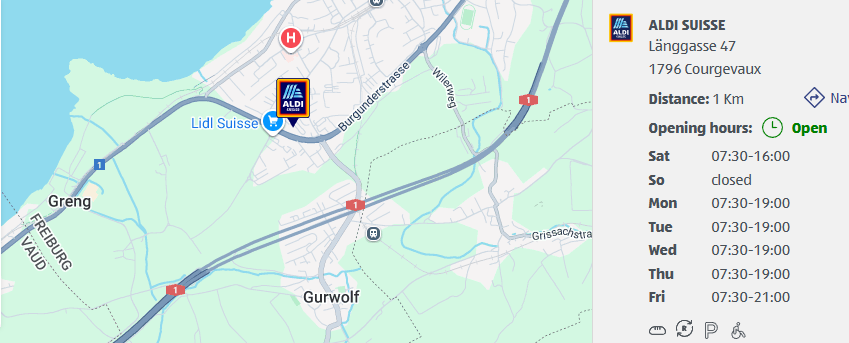
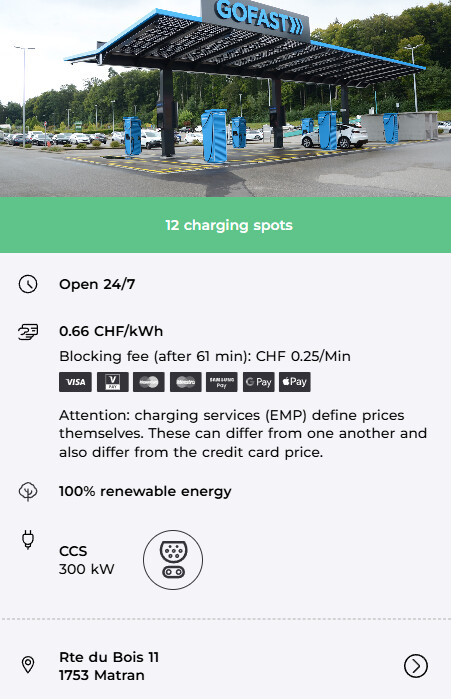
Btw, if anyone’s in the area/passing through the Aldi near Murten (Morat) now has 8 Go Fast charging points in its car park. Opened just after Christmas.
Aldi have fitted charging posts at a lot of their stores - I suspect any where it’s possible space -wise.
It’s probably a subtle and rather clever way of getting people to shop there whilst they wait.
The limiting factor isn’t space. It’s the electrical connection. Fast chargers need a lot of power - much more than a usual connection of a house or a small commercial building usually has.
These “fast chargers” appear to be 50 or 60kW - and will of course cost.
Our local garden centre used to have a couple of bays in their underground parking with free 11kW chargers. They took these out and put in 10 “fast chargers” untethered and they cost. Nobody uses them, except to park their EVs when it’s busy.
Why? If you have an EV travelling to and from your nearest garden centre is probably 25kms max distance - and Aldi even less. If you have an EV you will most likely already have cheap home charging.
I only use external chargers on a road trip and I don’t want to look for an Aldi to get 50kW to fill up.
We’ll see how the market develops, but local low-power supermarket chargers do not seem the way to go…
I imagine that’s the situation in the UK, but here in Switzerland I live in an appt like most people and drive an EV. Therefore all my charging is at public charge points, so if I’m shopping why not get a top up if its easy and cheap?
People with no fixed parking space (the parking musical chairs as I call it) as well as those renting who simply have no charger in their parking garage or only available with a stiff fee.