First of all: you may not have a mechanical stock picking and there is no need for it, even it helps me a lot. But you should have a mechanical cash and position management and that should tell you exactly what to do now.
Analysts can only tell you the truth if they are not alone in what they say, otherwise they must fear for their job. You could do the reverse of what they tell but I found it always best to completely ignore them.
Ethan Allen pays a high dividend and has positive cash flow, even the sales and profits are sinking. I’ll use my mechanical dividend strategy rules to check on it: the only thing that does not fit is the FCF-payout ratio of 100% on the yearly data. On the last quarterly data it is even way over 100%. That I don’t like and it would go to “sell” in my dividend strategy.
You are completely right. It’s not a fundamental bet. As with all small biotech companies ACE.ST is burning money in clinical trials. There is nothing fundamentally about this, it’s often a binary event as the company either makes it or not. Very classical biotech play. As you mentioned there are no options as the company is very small (I had even difficulty to get all my buys executed. The past performance of the stock is irrelevant as is the case for every small biotech. An initial investment is only interesting for the VC that can come in at the private stage but not for retail.
Well we will see, also for me it’s just a side bet to have some fun while my portfolio is like a big cargo ship that does not do any exciting jumps (but luckily so far moves into the right direction).
I wanted to spice this thread up with some more excotic shares
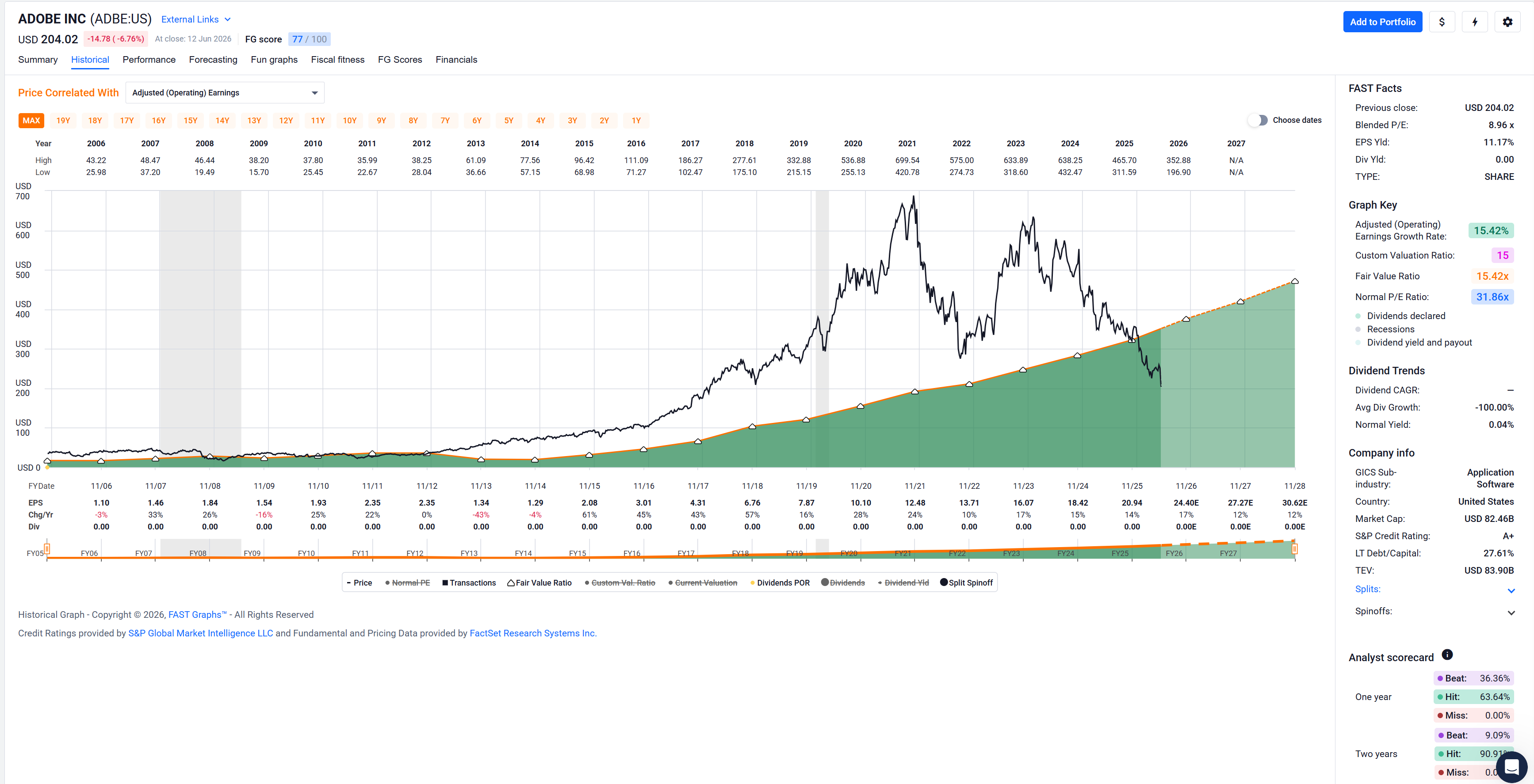
That would Adobe[ADBE], for the benefit of the uninitiated like me.
(Apologies if that’s obvious from the posting history – I just returned from vacation, scrolled up a bit and couldn’t quite figure out what company you were talking about. AI to the help:
Goofy: “what company acquired Semrush?” …
Gemini: "Adobe acquired Semrush. Start paying for your tokens, finally, you cheap dumbass …)
Eternal advice!
Just suppress the urge to do anything when there is nothing to do.
"I just wait until there is money lying in the corner, and all I have to do is go over there and pick it up. I do nothing in the meantime.
Even people who lose money in the market say, ‘I just lost my money, now I have to do something to make it back.’ No, you don’t. You should sit there until you find something."
— Jim Rogers
That said, I just now went through my portfolio to update my potential shopping list in case any company drops some money into a corner that I may want to pick up …
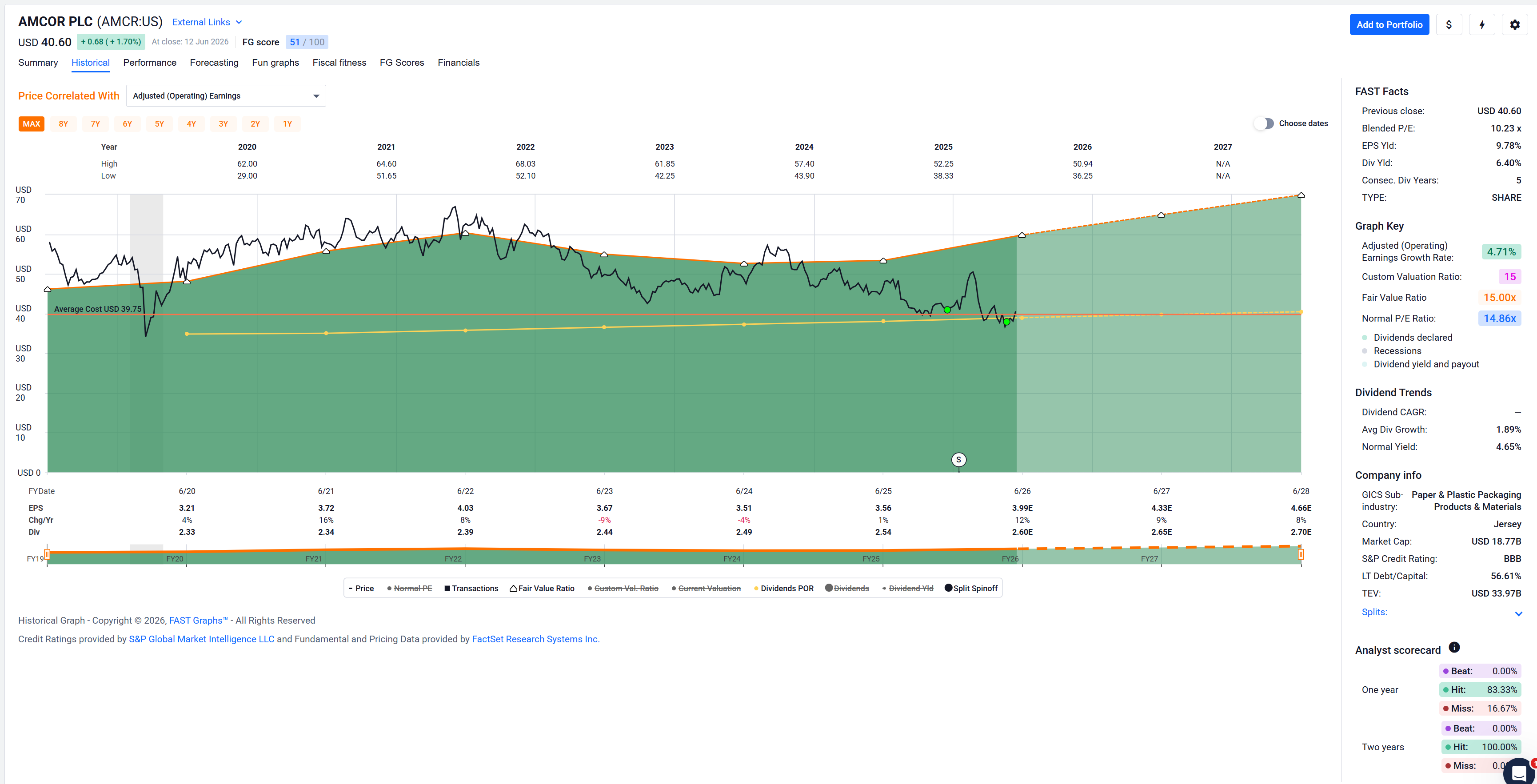
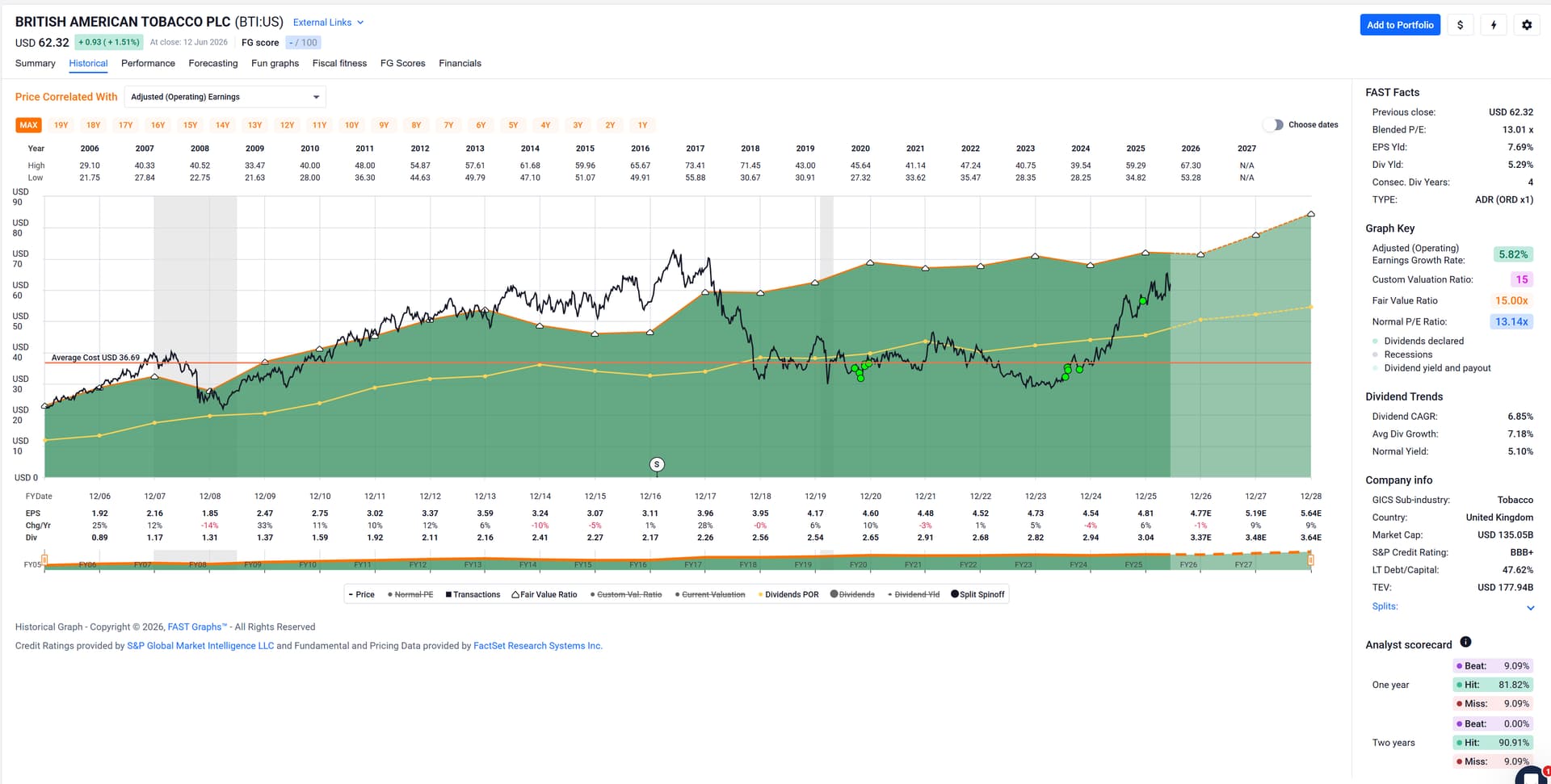
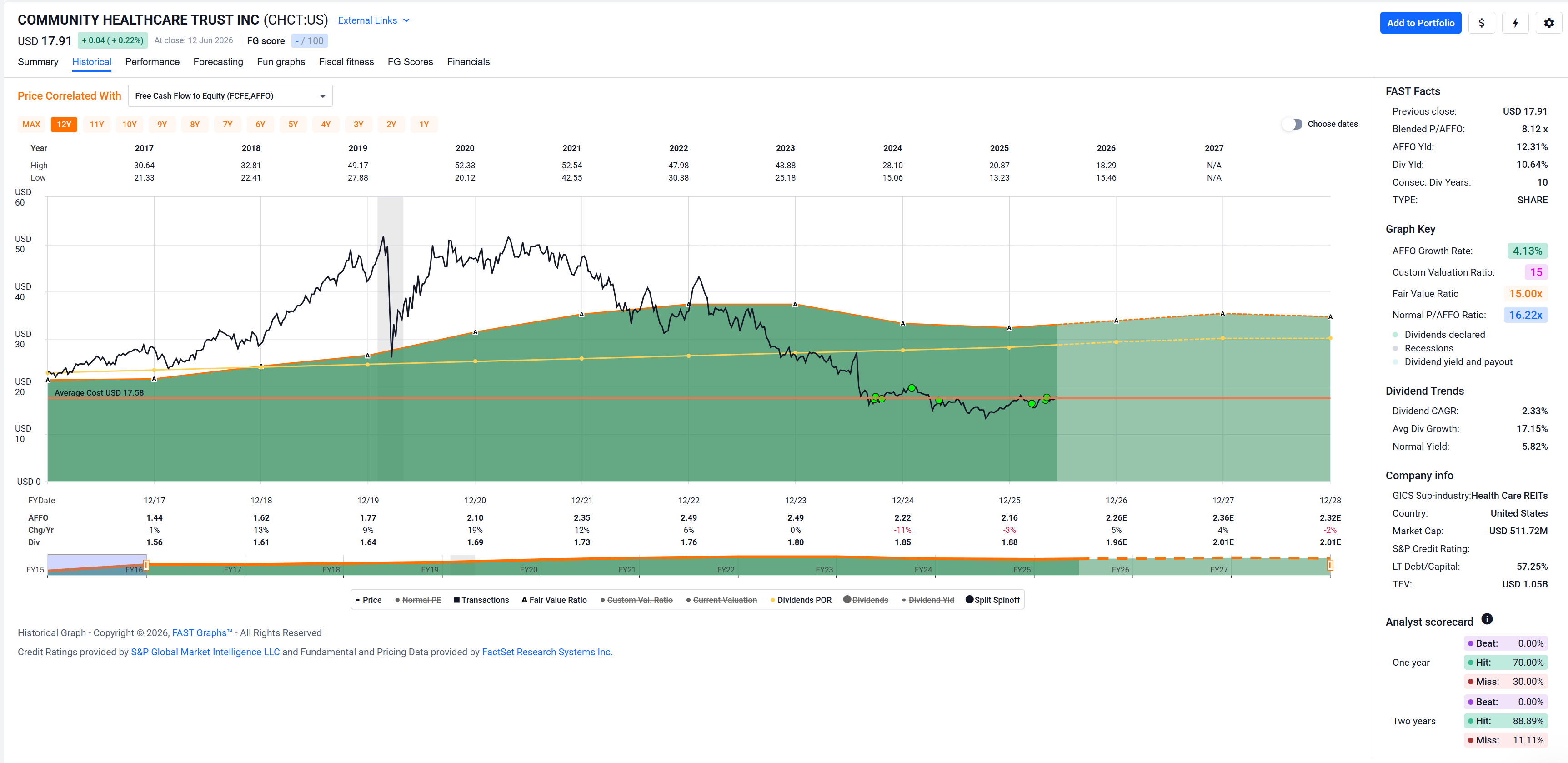
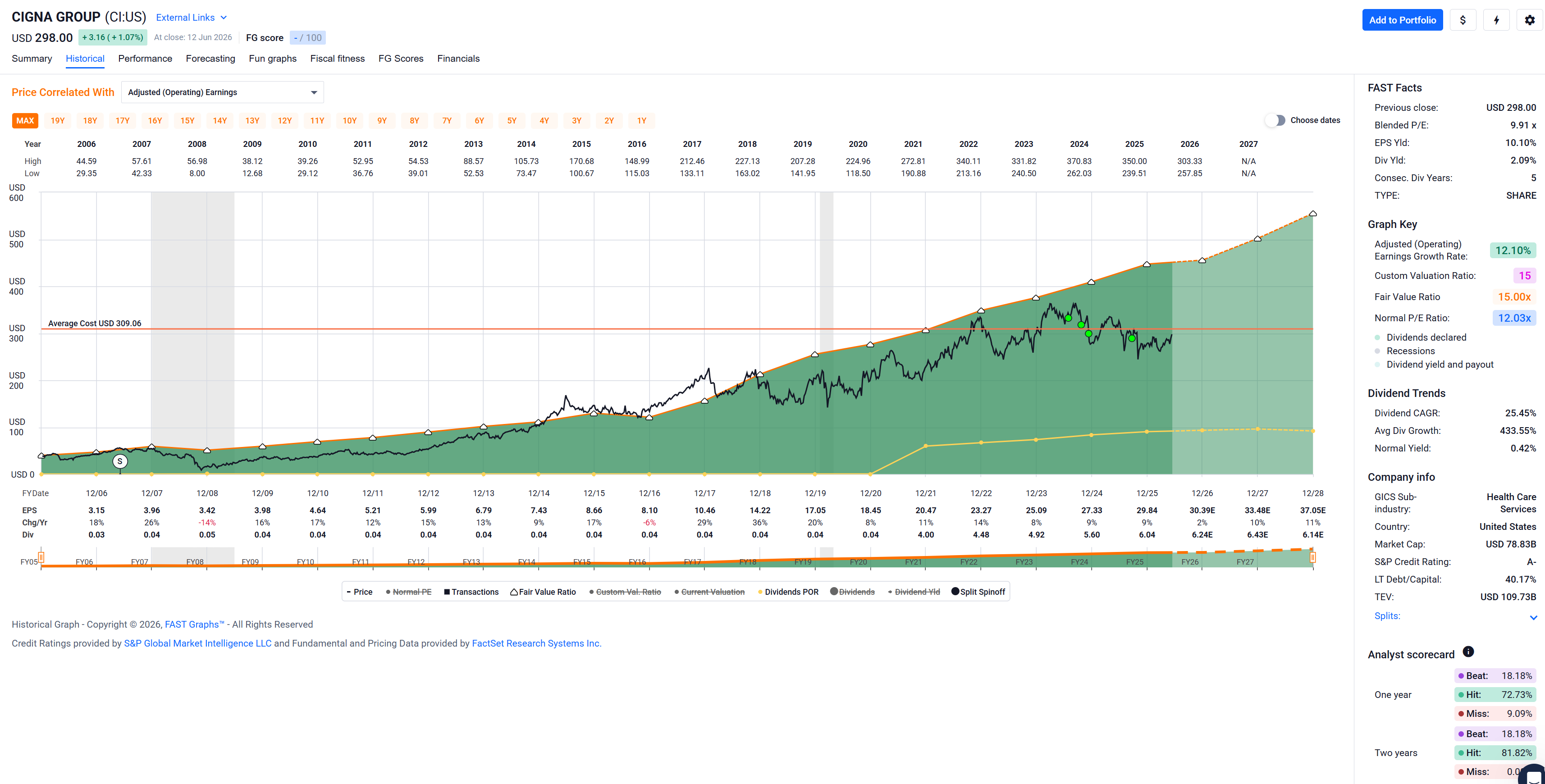
I found more companies still buyable than I expected. Of course, this isn’t a list for you, it’s a list for me and my particular and idiosynchratic needs to provide somewhat safe cash flow with yields satisfying myself:
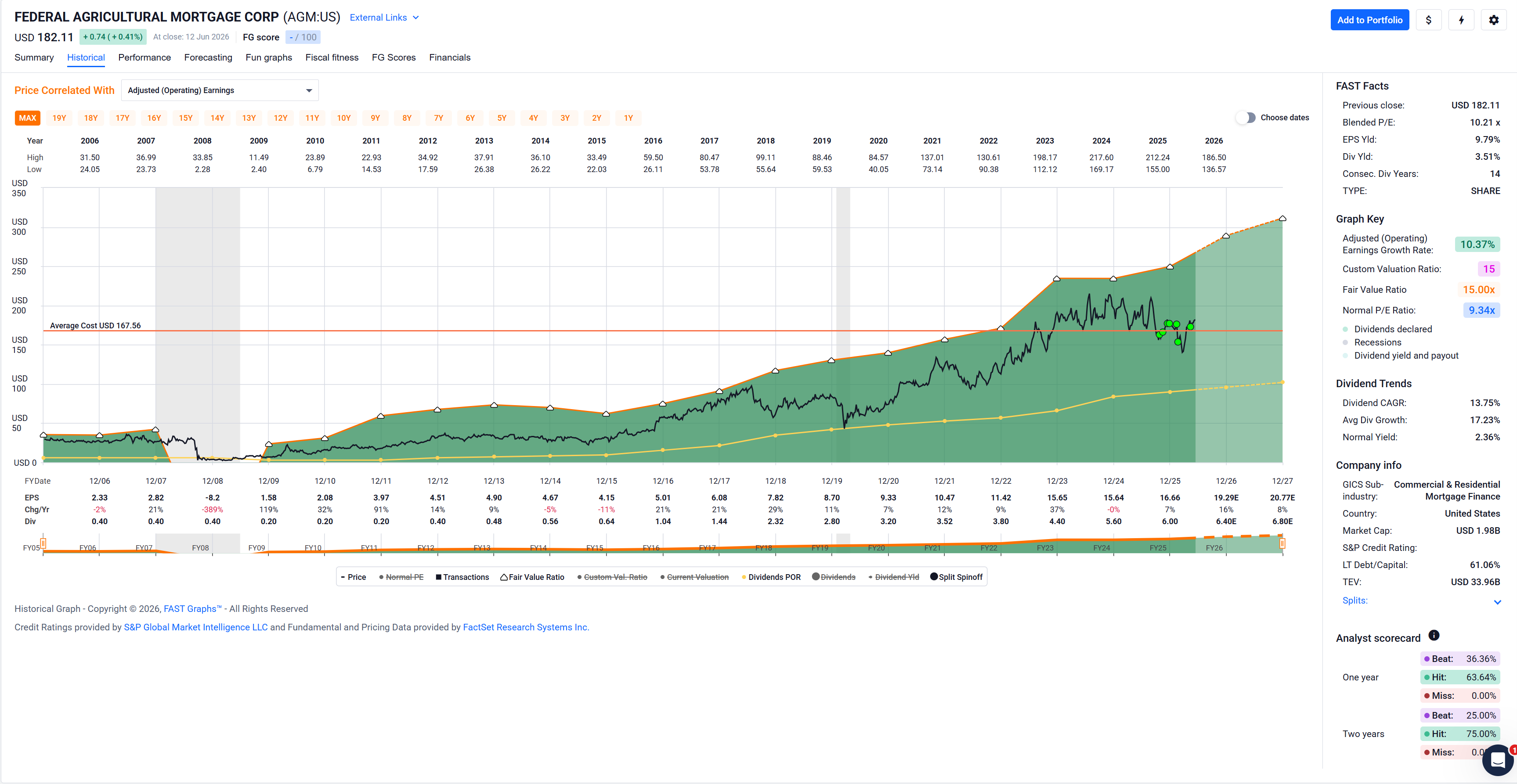
Federal Agricultural Mortgate [AGM]
Amcor [AMCR]
British American Tobacco [BTI][$]
Community Healthcare Trust [CHCT]
Cigna Group [C]I[$$]
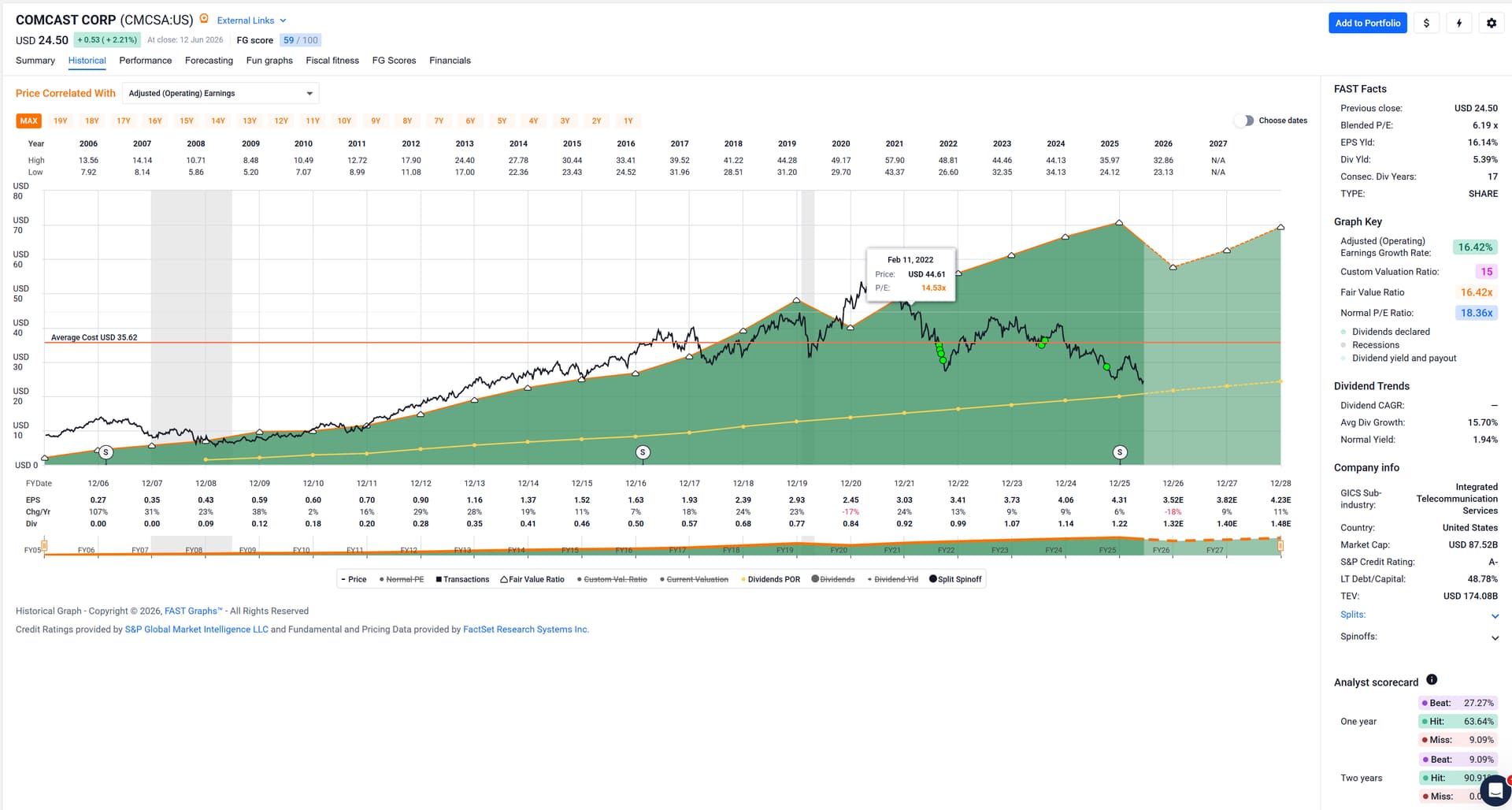
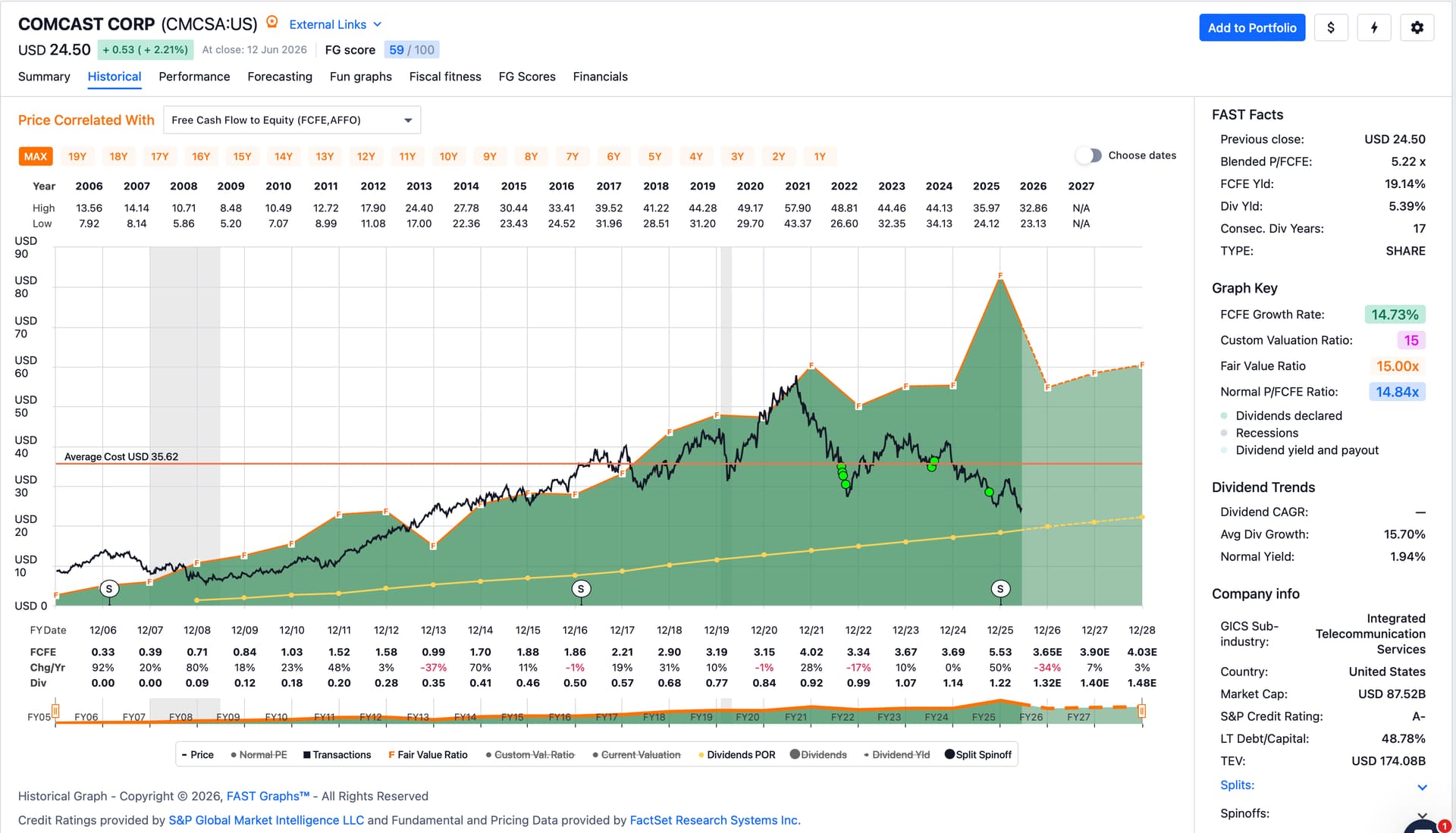
Comcast [CMCSA]$$$]
Ok, we’ve only circled through letter ‘c’. Further letters may contain further opportunities.
I’ll leave you with this for now.
$ BTI is bumping against my position sizing / risk management as it delivers already more than 2% of my dividend income, but, hey, rules are just rules, right?
In practice, I probably would not add to this position, unless there is some “obvious” market overreaction, like a 10% or 20% drop or so. I’d then probably sell a long dated Put way out of the money and just collect the premium on the capital at risk (with a higher yield on the capital at risk than the dividend yield if I bought the company outright.
It’s rarely liked that the CFO leaves, Dan Durn announced that he switches to Marvell Technologies.
Meanwhile, in relation to the SpaceX IPO and the first 15 days thereafter, Fidelity dictates that you can’t flip it too often, 3 flips and you’re banned for life from further IPOs!
If I am allocated shares of SpaceX during the initial public offering (IPO), when can I sell them?
As with any investment, you are free to sell the securities obtained during an initial public offering (IPO) whenever you determine it is appropriate for you. However, if you are allocated shares of SpaceX and you sell within the first 15 calendar days from the start of trading in the secondary market, it will affect your ability to participate in future new issue equity public offerings through Fidelity for a defined period of time. The defined period is as follows:
First Flip – Blocked for 6 months
Second Flip – Blocked for 1 year
Third Flip – Permanently banned by your SSN
Comcast must be one of the most hated companies. I (only kinda) get it why they were hated before as their cable business was a declining business. I don’t get it why they are still hated after they split that business off. The market doing its efficiency thingy, I guess …
Anyway, their free cash flow is strong which makes me believe they’ll be able to keep paying and raising their dividend which is what I mostly care about.
The dollar symbols are just footnote symbols different from the tickers. I used the dollar symbol footnotes as commentary while I kept the ticker symbol footnotes for the FASTgraphs.
Letters D through L that are still buyable in my book:
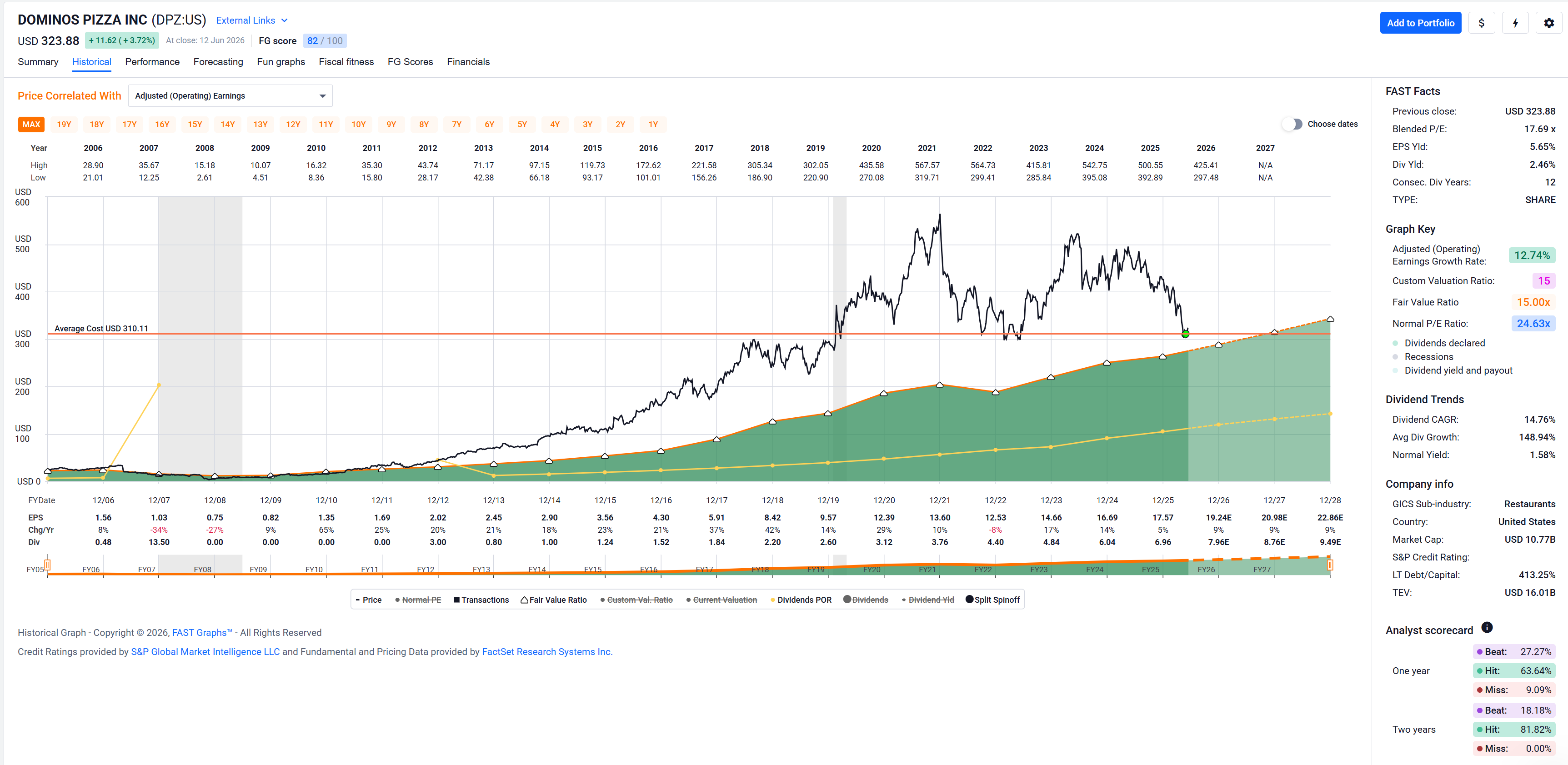
Domino’s Pizza [] [$]
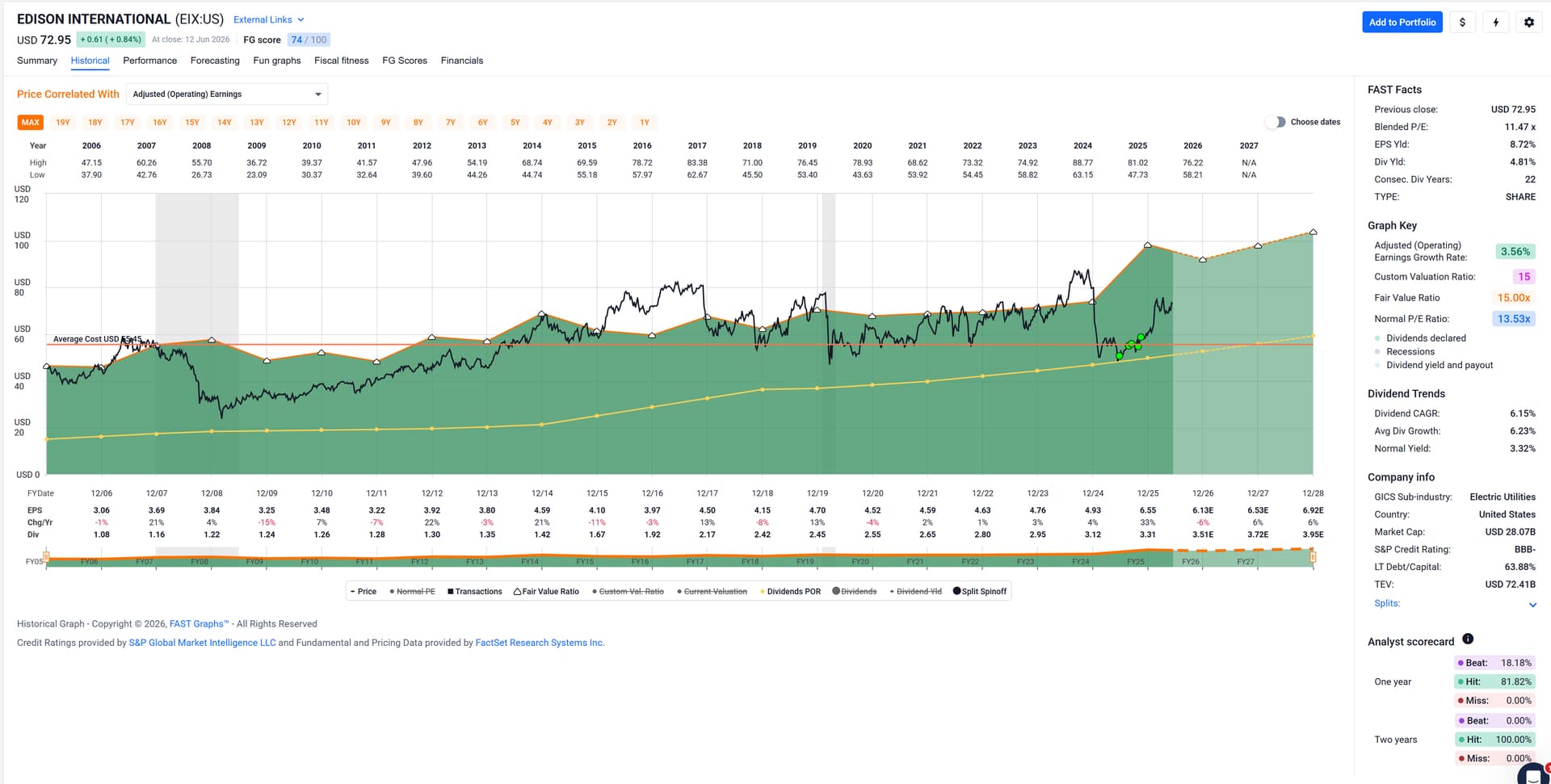
Edison International [EIX]
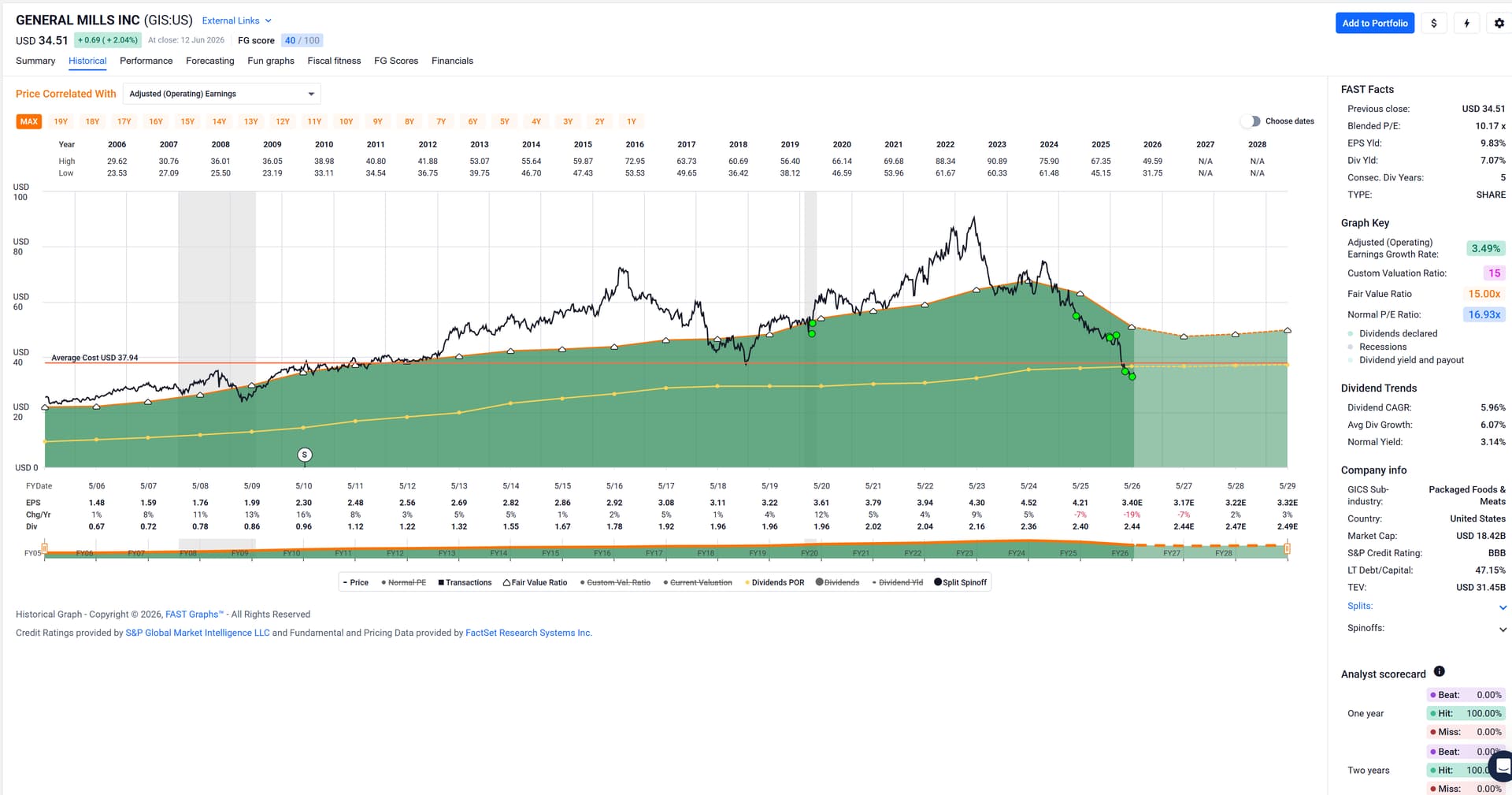
General Mills [GIS]
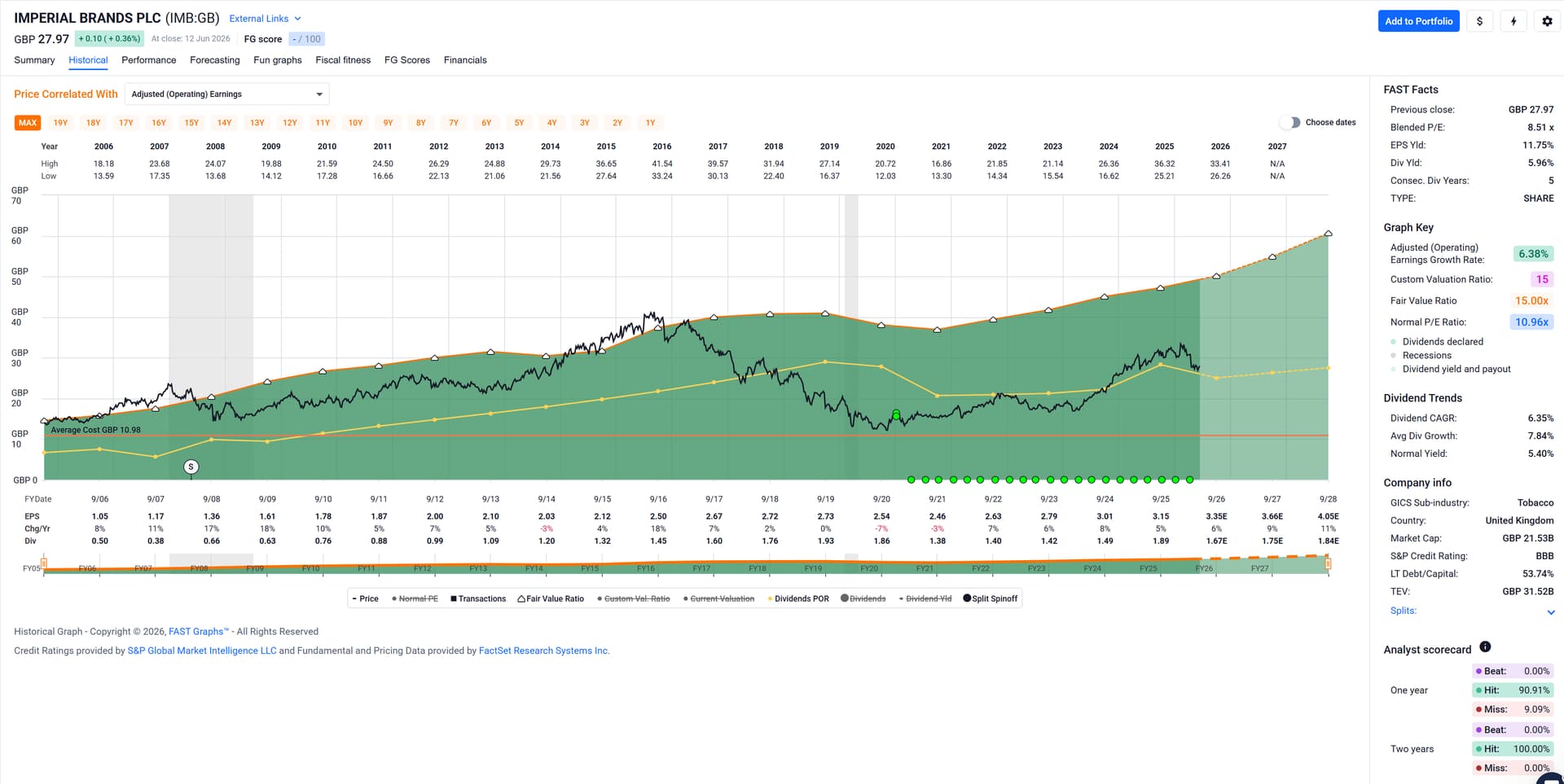
Imperial Brands [IMB]
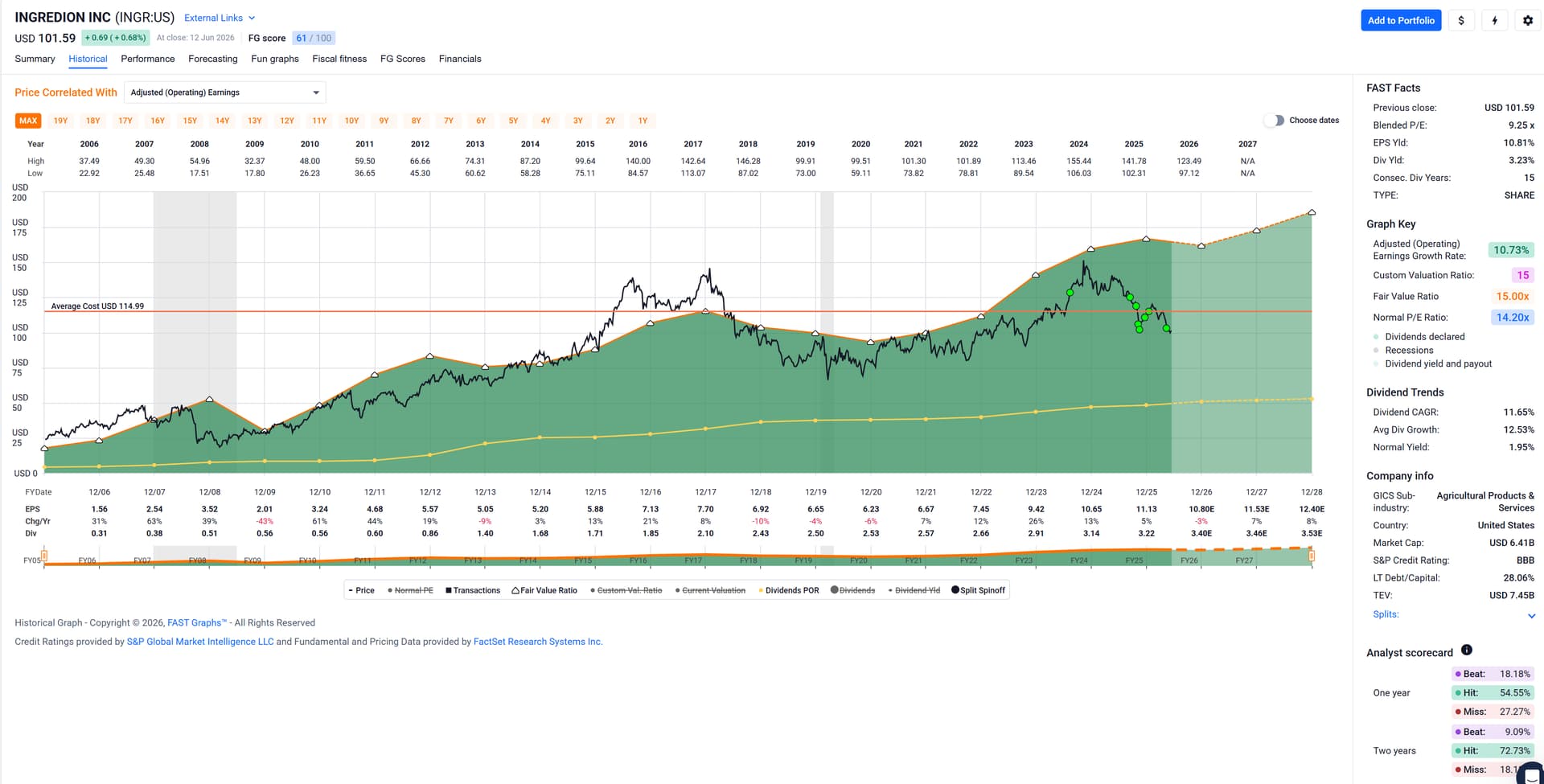
Ingredion [INGR]
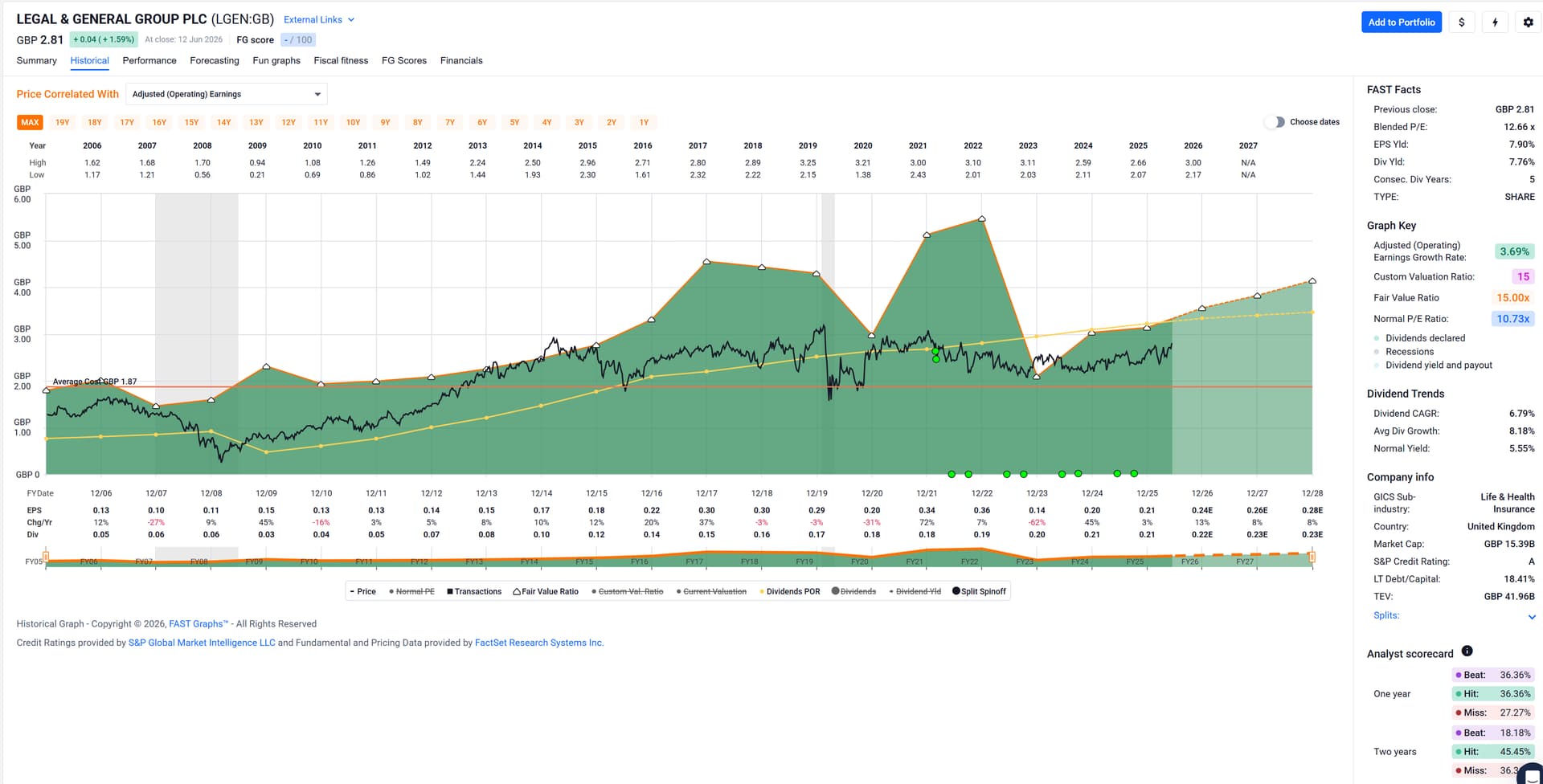
Legal & General Group [LGEN]
I might add more. I usually go through the whole list on the weekend to update potential buys for the upcoming week, but documenting them here takes about 100x more time than going through them within FASTgraphs and eyeballing the graph within a second or two. []
Occasionally, I will spend a couple of minutes on the company, going through the different FASTgraphs views, e.g. forward looking earnings estimates, operating cash flow, FCF, etc.
When evaluating a new company or seriously doubting an existing company in my portfolio, I’ll take a look at EDGAR and the 10-Q and 10-K. Balance sheet, debt maturity schedule, that kind of thing.
I am a bad landlord, to rent space in my portfolio is very expensive. Today I charged the yearly rent from Constellation Energy (CEG), my second oldest holding in the gambling strategy. Last year I think they paid more. But OK, I got back already multiple times what I invested and the position is still 357% in the green.
Wouldn’t recommend that. Tell them to imagine losing 60% of their invested money, ask how that would make them feel. If they invest long enough they probably will see such losses. Do you have advice what to do exactly in such a situation? Do they understand?
In sunny weather like the last decade(s) or so investing is easy. Making money is easy, everybody knows how to do that. But losing money is more important and more difficult!
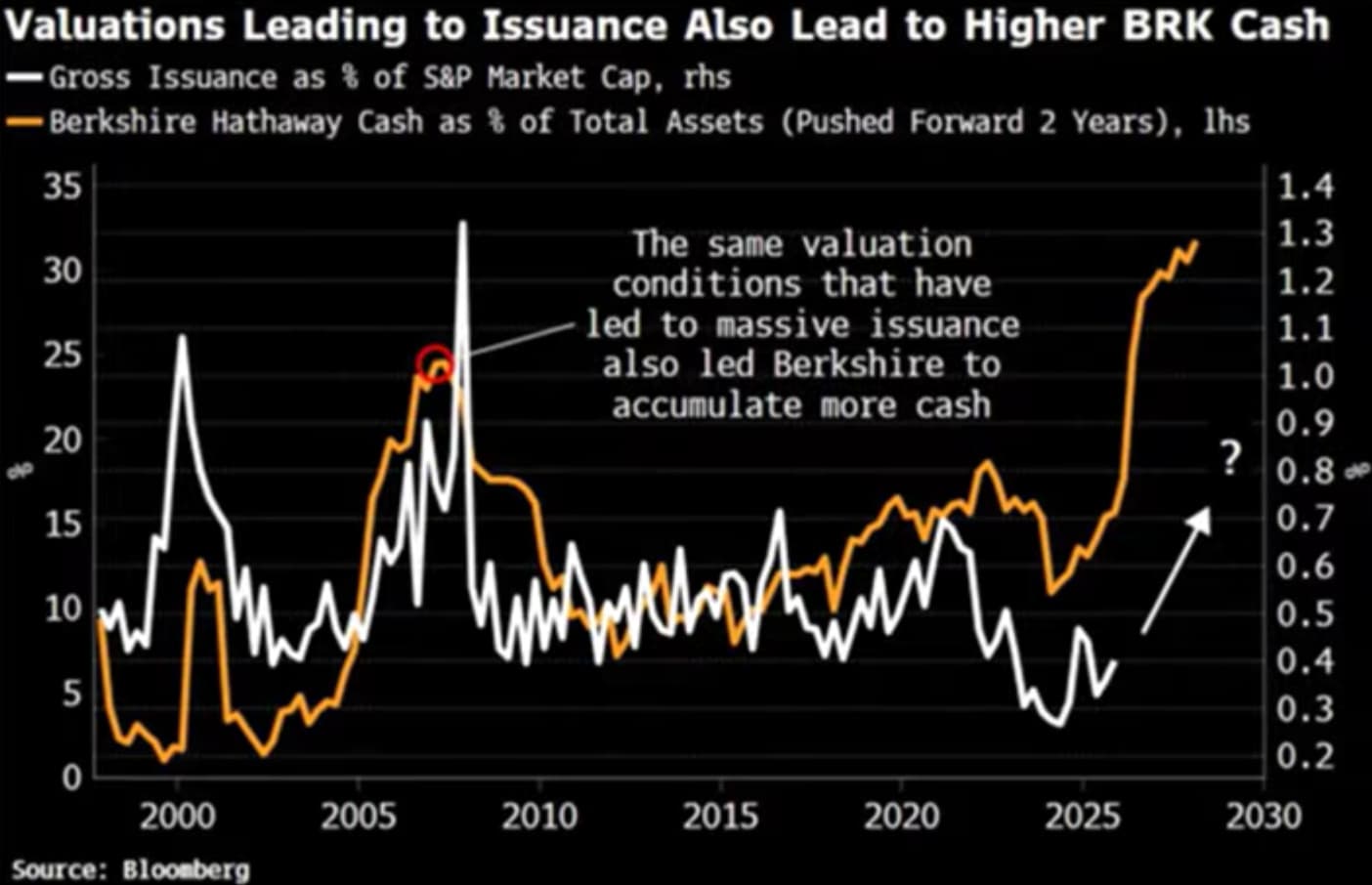
Amounts raised in IPOs, history and planned for this year
All amounts in $$$ billions, according to Perplexity AI, apparently at least the historic data is taken from Renaissance Capital. I didn’t bother checking, let alone making a chart since you already know that it looks like one of Elon’s rockets. We’ll have to wait and see if this works out as well as those.
2017
35.5
2018
46.9
2019
46.3
2020
78.2
2021
142.4
2022
7.7
2023
19.5
2024
29.6
2025
44.0
2026
100.3 includes SpaceX, but there’s still the pipeline
In the pipeline:
OpenAI
60
Anthropic
60
DataBricks
160
Stripe
95
Canva
50
Shein
55
—
—
Total
480 pending
So the the total this year is up to 600, more than 4x the previous record.
Considering the market action last week we’ll have to wait and see if the market’s capacity is big enough for all this shit. Where does all that money come from, will cryptos be the victim and perhaps deflate like a leaky balloon?
You certainly are right that this is a honest question and scenario that would need to be discussed. Still, I think this would need to be well embedded into the whole discussion. Starting my pitch to invest with this statement would probably not be the most successful tactic
One solution could be to show historical graphs of share indices, pointing to the few times in the past 100 years that destroyed 60% of the value. Such a graph could then also be used to show that all these losses have been recovered again.
Fixed. But agree, when I was a neophyte I shouted from the rooftops “Go all in on VT, ride the wave of the global economy, you can’t lose in the long term”. Now and for a couple of years I stopped doing that, mostly because I find it annoying that people didn’t listen the first time, and now FOMO about - one or two even borderline accuse me of not “pushing them” hard enough…You can’t win really!



 ] [$]
] [$] ]
]