Well, it’s already been a while since I last traded … 
| Ticker | Date | Buy | Sell | Cash Source |
|---|---|---|---|---|
| AMCR | 07/08/2026 | 30 | dividends | |
| LON:SVT | 07/09/2026 | 100 | VXUS | |
| LON:ULVR | 07/09/2026 | 65 | VXUS | |
| PEP | 07/09/2026 | 30 | BND | |
| BND | 07/09/2026 | 55 | ||
| VXUS | 07/09/2026 | 105 |
Had some cash to deploy and wanted to buy the dip saw another opportunity in Pepsi after it had dropped more than 5% today. Mr. Market probably accidentally drank a caffeine free diet Pepsi this morning and was therefore in a bad mood … no sugar, no caffeine, no wonder he had a fit!

Also started with my plan of exchanging some VXUS (paltry dividend yield of less than 3%) for some international companies that yield a bit more and fit my criteria.$
Wanted to start with Europe and since really only GB, Ireland and the Netherlands (and of course Switzerland) are investable from a dividend (growth) investor perspective$$ I started with GB by going through the FTSE 100.
In addition to Imperial Brands and Legal & General (which I both already own in somewhat full positions), my screener (with the criteria$ applied) came back with these tickers:
- III – I already own too many financials, otherwise mostly – cut the dividend during the GFC
 – LGTM
 - ADM – slightly overvalued, dividend is a bit jumpy
- BNZL – just about fairly valued, would prefer a margin of safety; also, below 3% dividend yield
- CCEP (US listed)
- DCC – overvalued, otherwise looks great
- ICG – looks pretty good, cut the dividend during the GFC
- IGG – looks fairly valued, no margin of savety
- ITRK – overvalued, otherwise LGTM
- LSEG – this company looks awesome but is overvalued, alas!
- LMP – looks interesting but requires further research
- NG – just about fairly valued, but recently cut their dividend
- POLR – looks interesting, just about fairly valued, needs more research
- REL – I would like to buy this once it becomes at least fairly valued (currently overvalued)
- SGE – ditto
- SDR – I already have too many financials, slightly overvalued, otherwise interesting
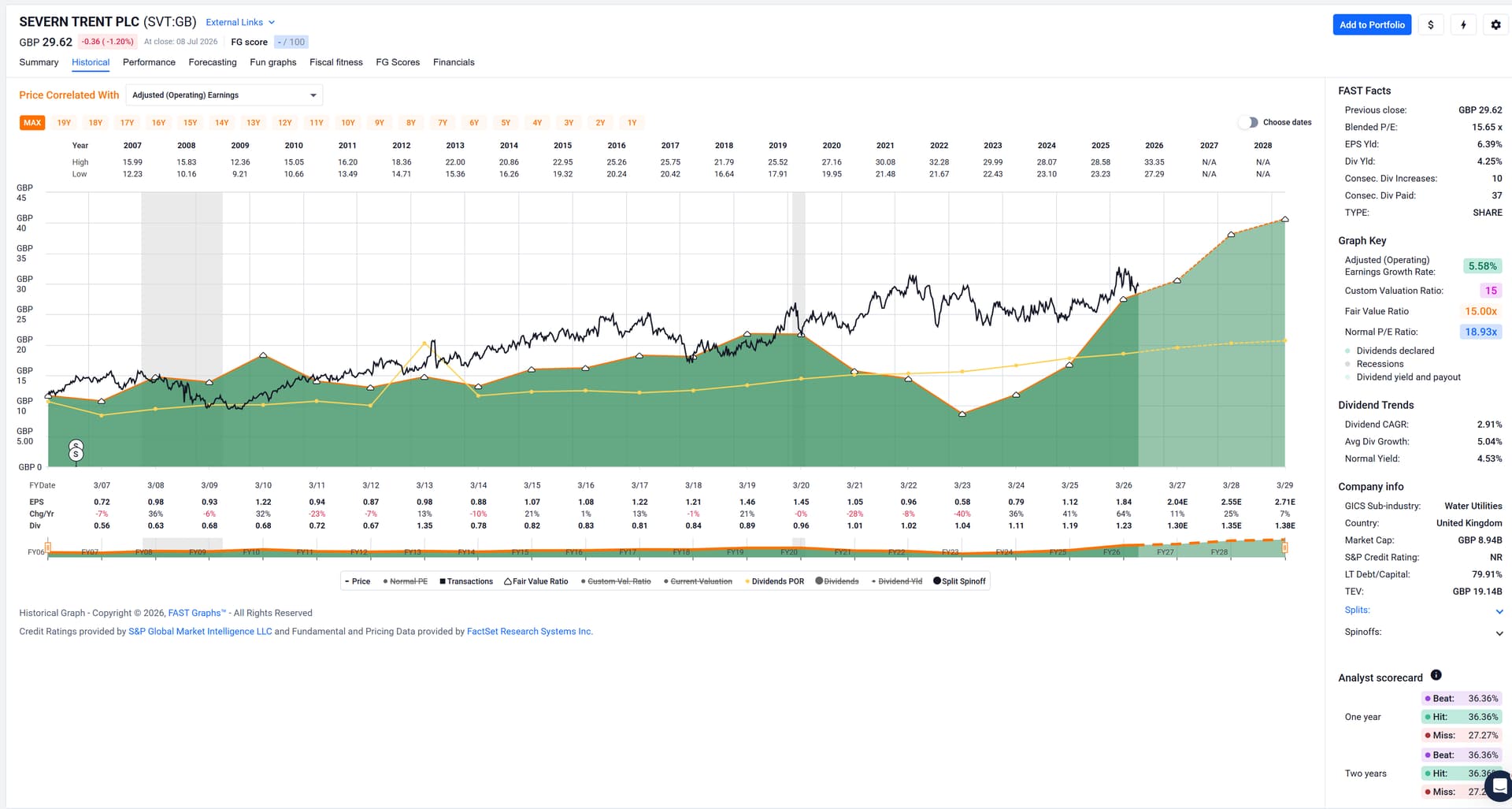
- SVT – see footnote with FASTgraph

- SN – interesting, just a tad undervalued, would have preferred no dividend cuts in 2025
- SPX – overvalued, otherwise looks great
- BBOX – looks interesting, needs more research
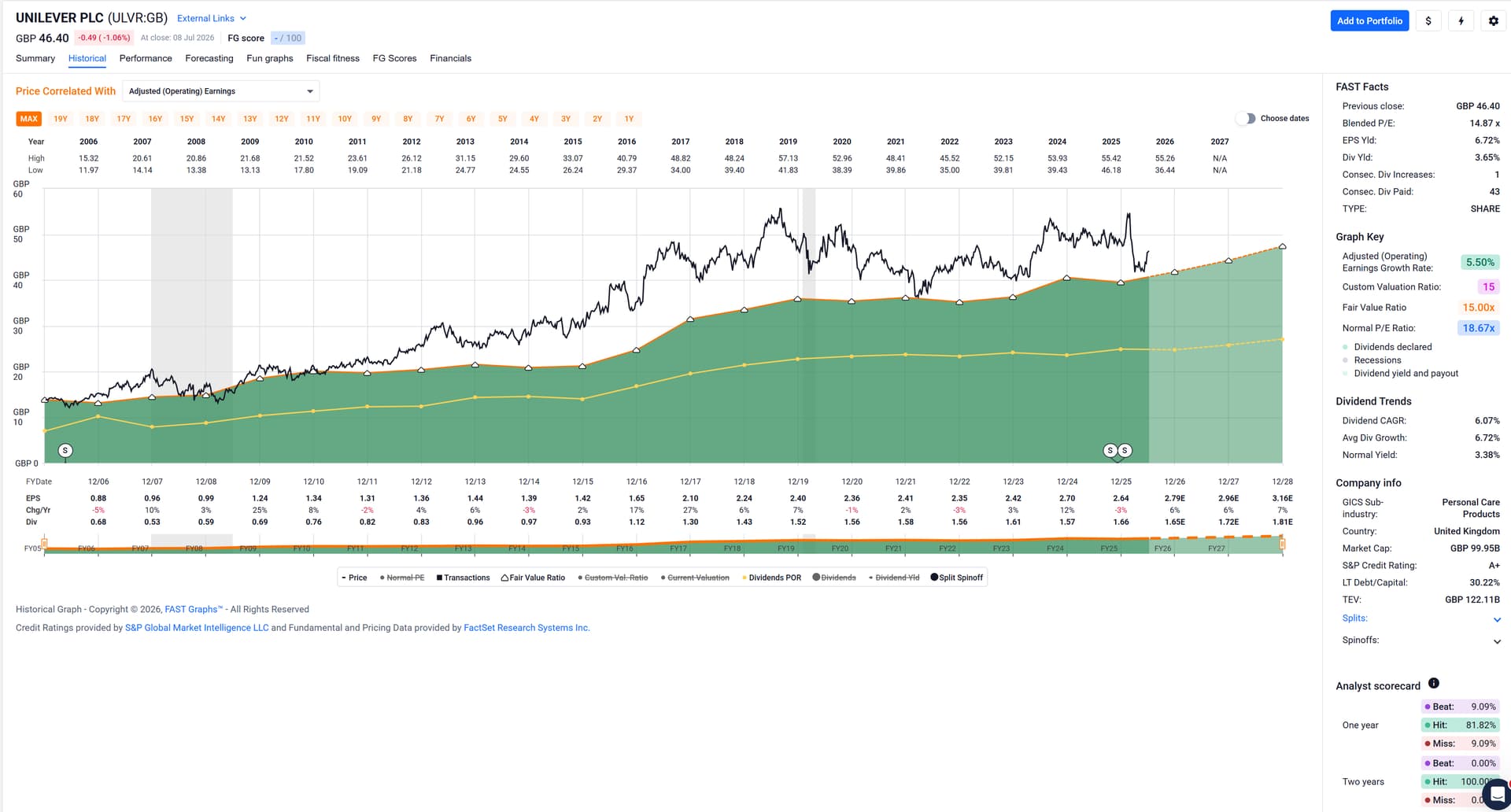
- ULVR – see footnote with FASTgraph
- UU – this thing looks awesome – unfortunately cut the dividend after the GFC
Only two survived for trading today. The remainder will join my watchlist.
$ The Criteria:
- earnings growth picture looks like a JNJ or some boring utility over at least a decade, ideally two
- undervalued aka earnings yield ideally 6.5% or more (equivalent to a P/E of 15 or below)
- dividend yield above 3%
- ideally growing but at least stable dividend
- dividend should grow at least with inflation
- the higher the dividend yield the less the requirement for growing the dividend
- no recent dividend cuts, e.g. through COVID-19
- bonus points if the dividend was not cut during the GFC
- bonus points if the dividend was not cut during the GFC
- low debt (unless it can be explained away, e.g. Utilties)
- at least investment grade credit rating
- ideally not in a sector that is already bloated in my portfolio
Global Financial Crisis, 2008-2009.
$$ Good luck with getting back the taxed at source cut from most other countries …
Severn Trent Plc. Probably too much debt, but who is going to put them out of business? They seem to have a wide (water) moat.
Unilever Plc. Looks like a great company at a fair price. Too bad I didn’t do my research a month or two earlier.
Continuing with my journey to replace some low yielding VXUS with international dividend (growth) stocks. Looked at some Dutch companies with the MSCI Netherlands as my universe.
This is the shortlist I came up with:
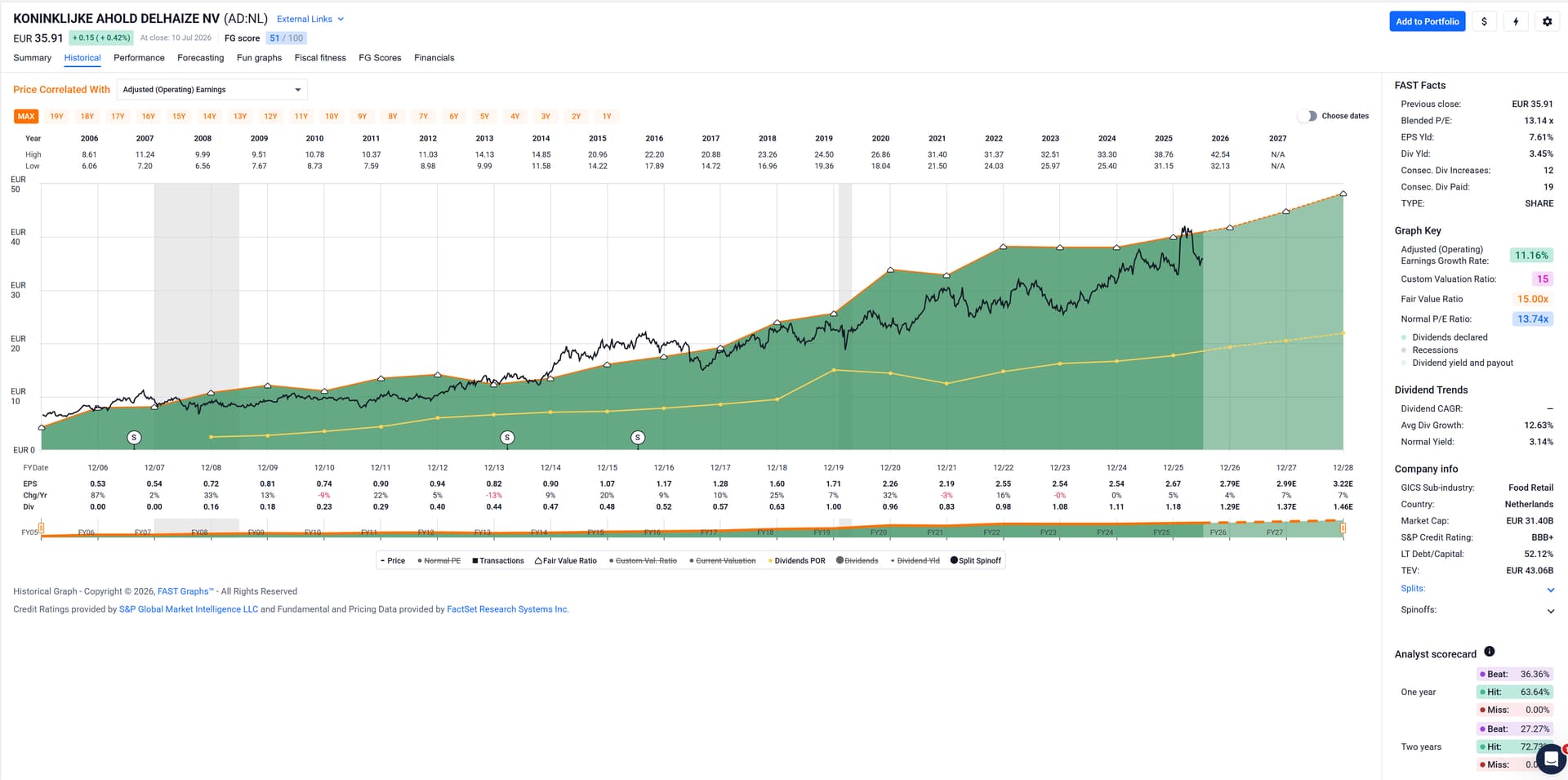
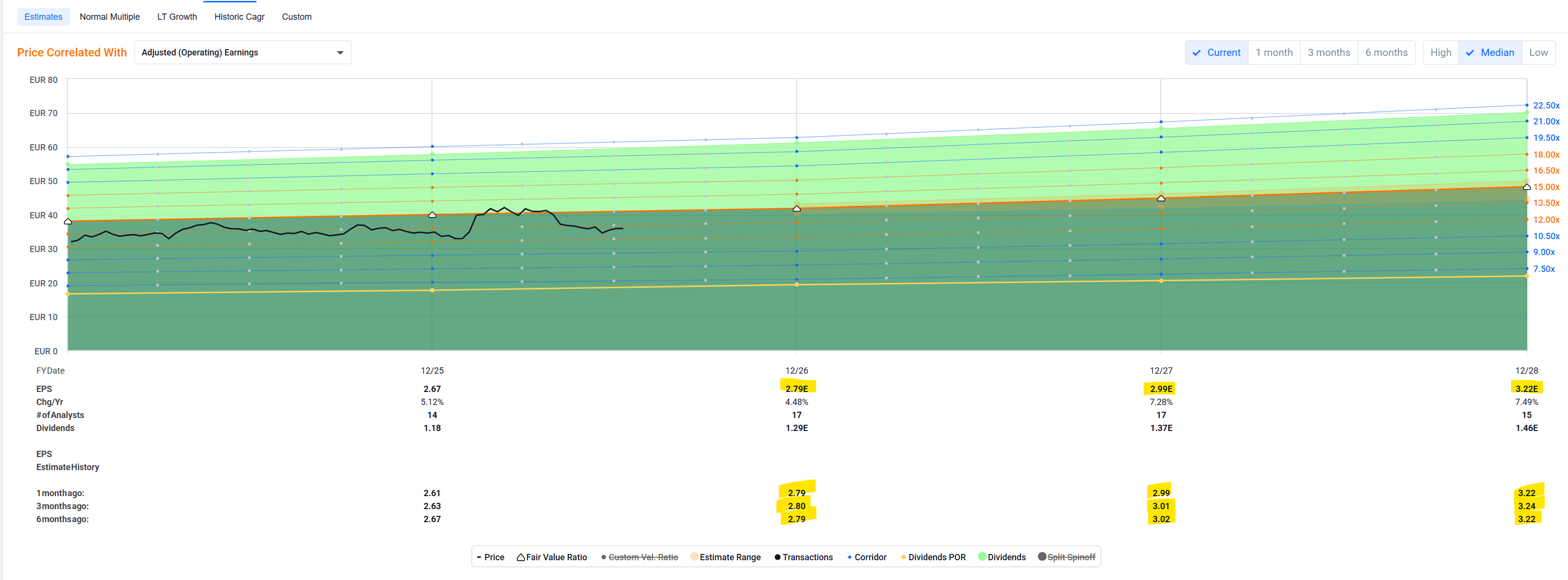
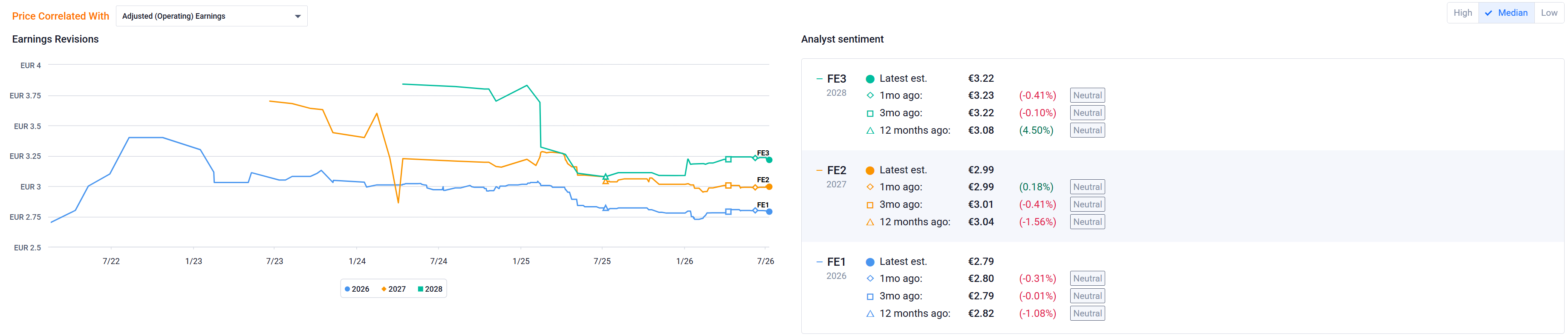
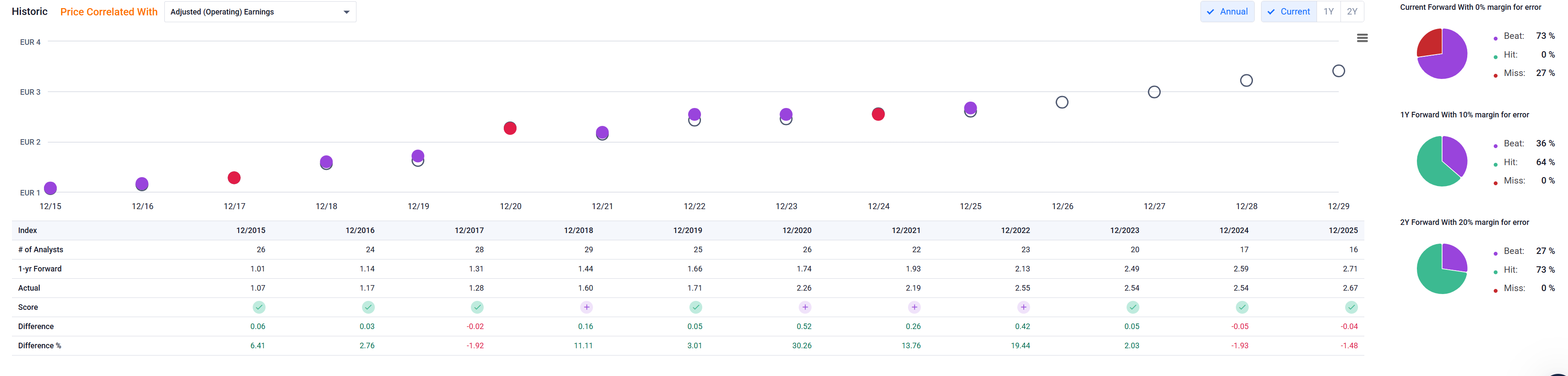
- Koninklijke Ahold Delhaize (AD:NL)
NN Group (NN:NL)
After looking at them in more detail in FASTgraphs, especially the cash flows, I decided to ditch this company from the short list. Maybe someone with more Financials knowledge would know better- Wolters Kluwer (WKL:NL)
- Royal Vopak (VPK:NL)
If you’re interested in some FASTgraphs for these companies, see below. If you have opinions on these companies, please share.
If you have any other GB or NL stocks that fit my criteria (see footnote $ of my previous post), feel free to throw them also into the ring (of fire  ).
).
Koninklijke Ahold Delhaize NV engages in the management and operation of supermarkets and e-commerce business.
FASTgraphs
Adjusted (Operating) Earnings:
Earnings forecasting:
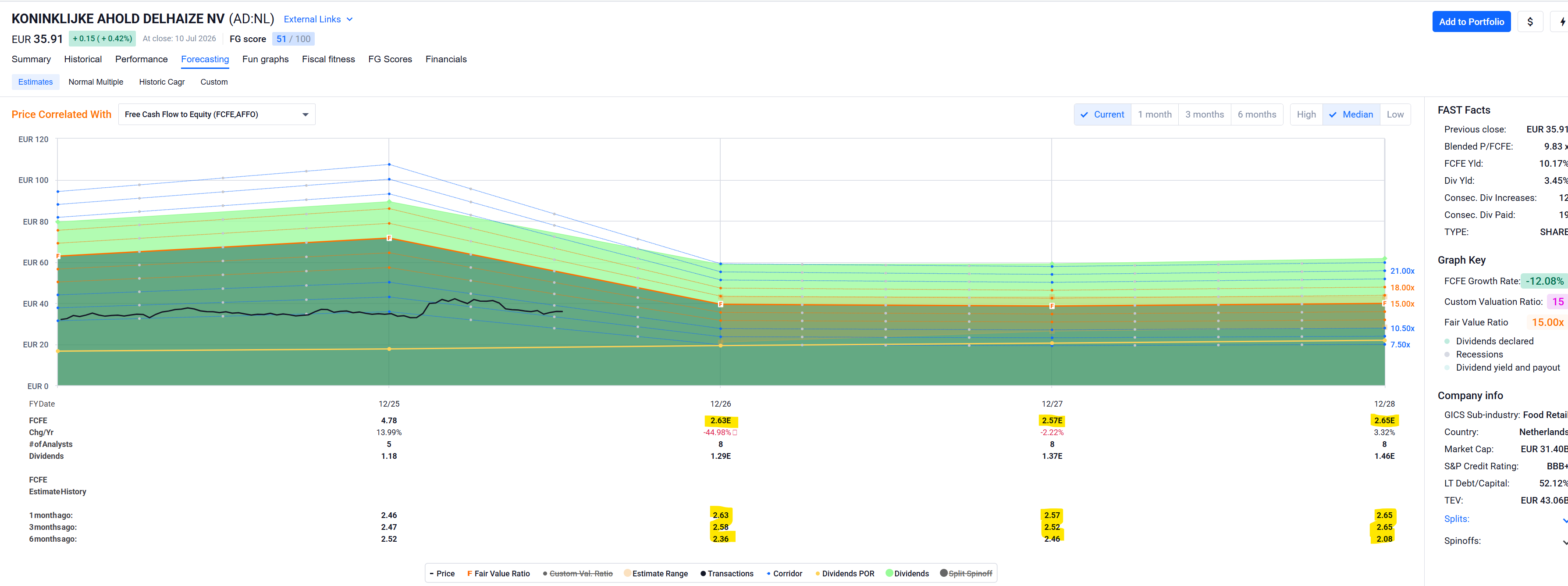
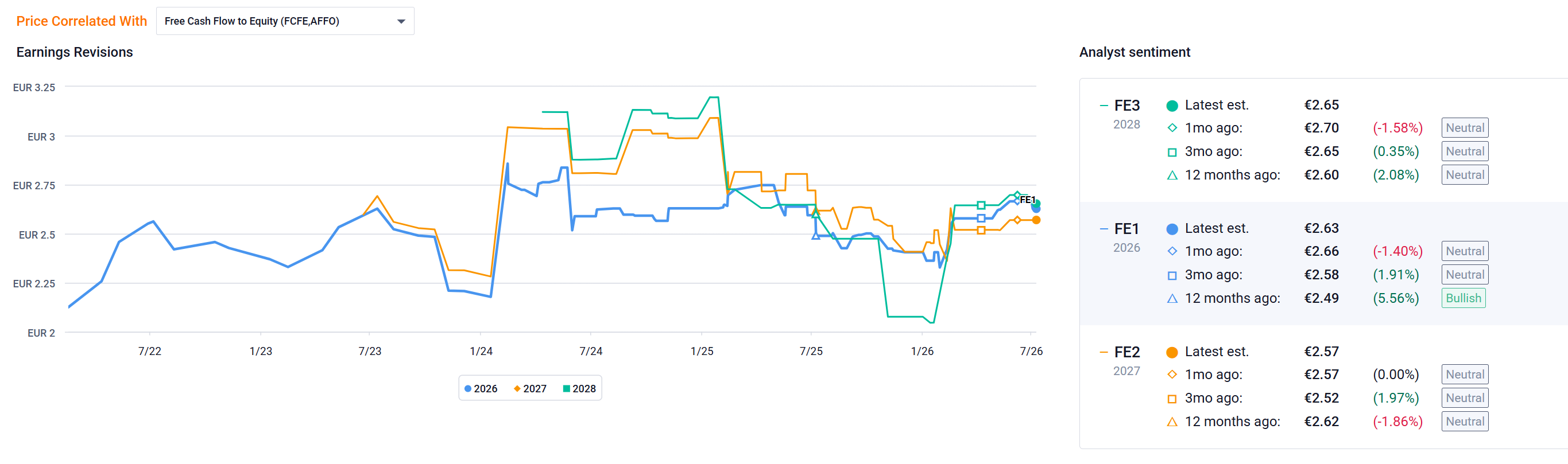
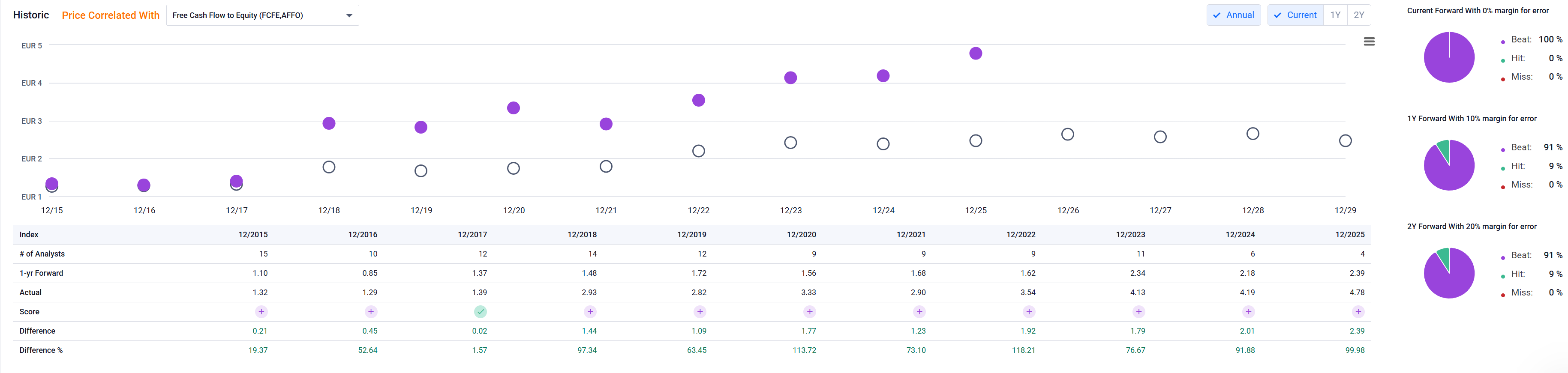
FCF forecasting:
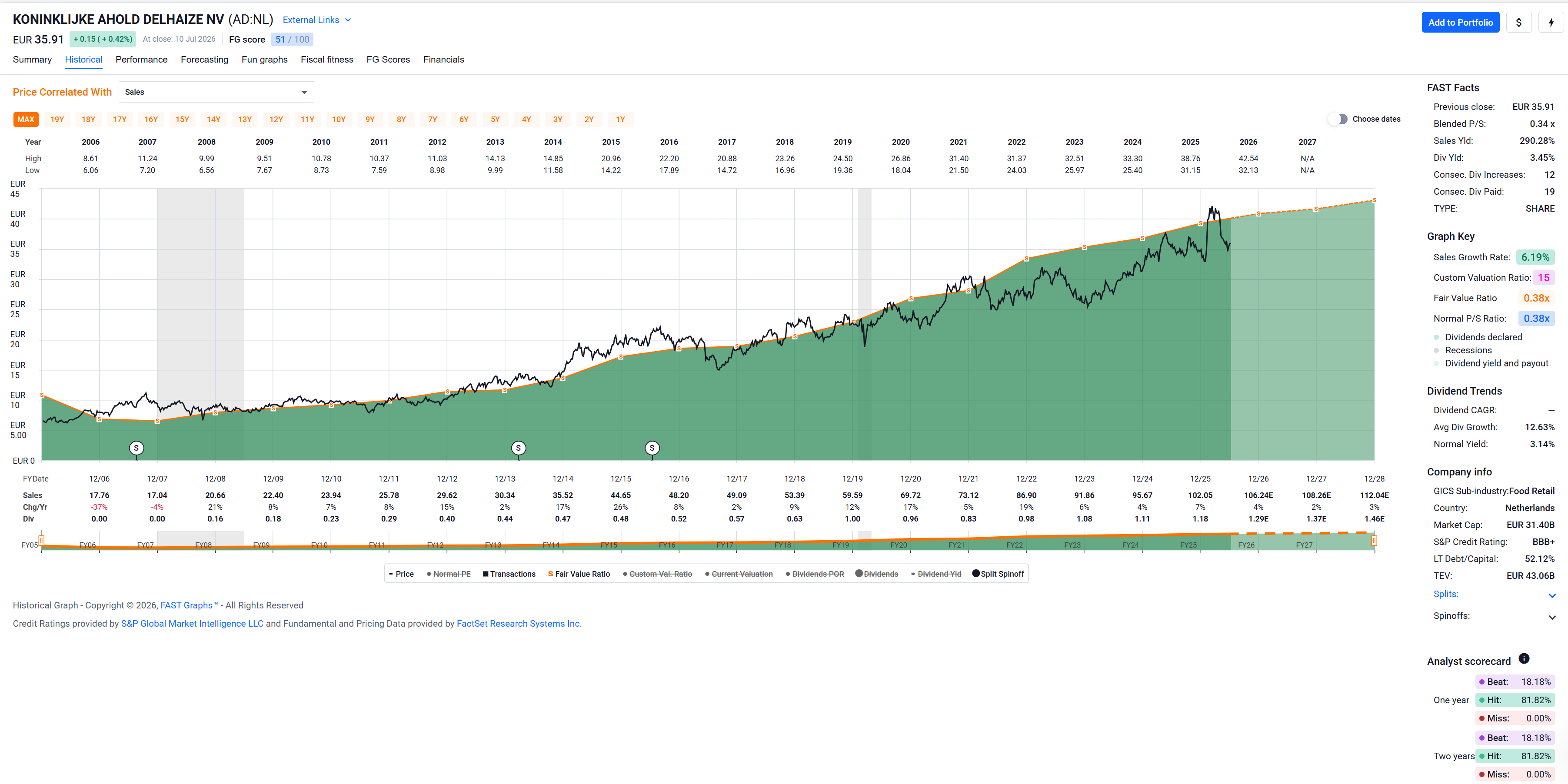
Sales:
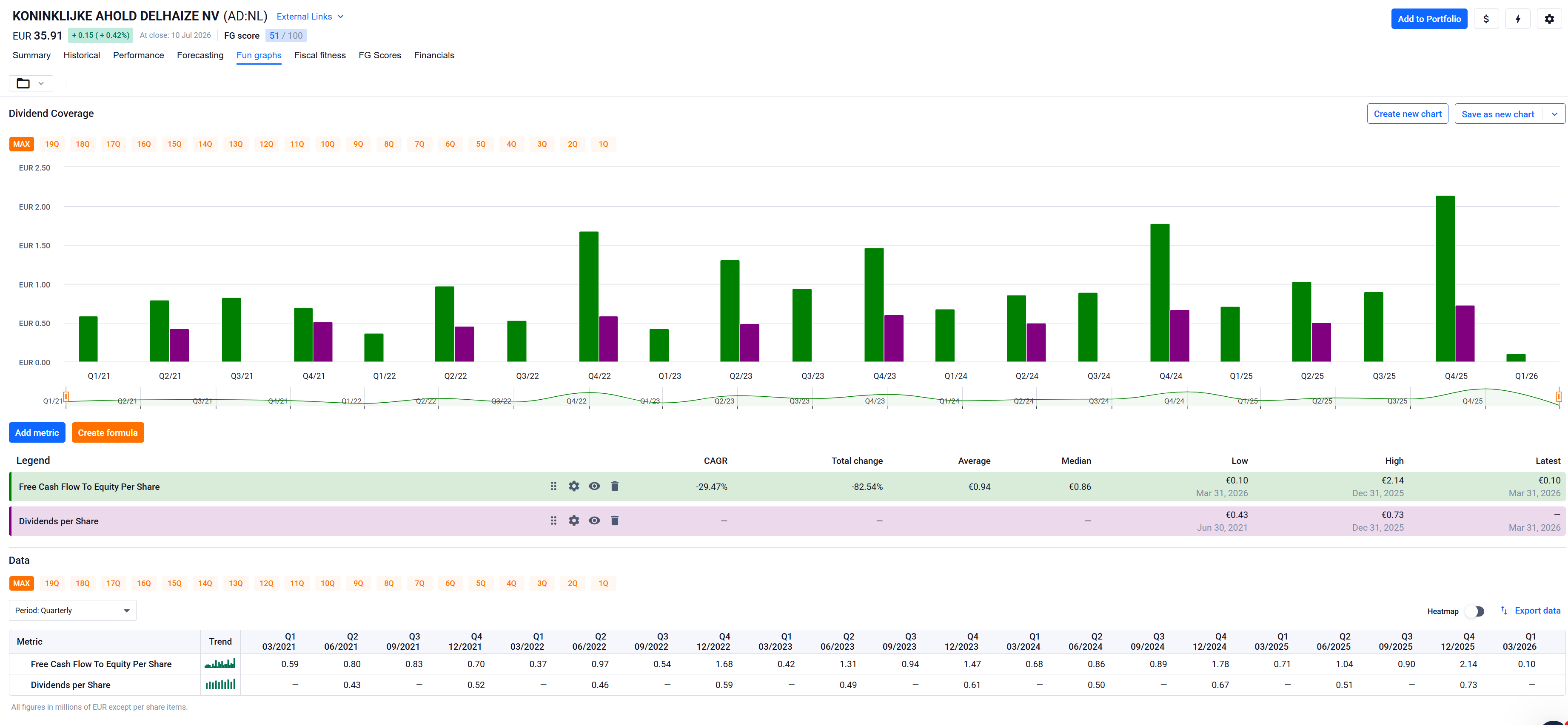
Dividend coverage (half-yearly dividend payouts):
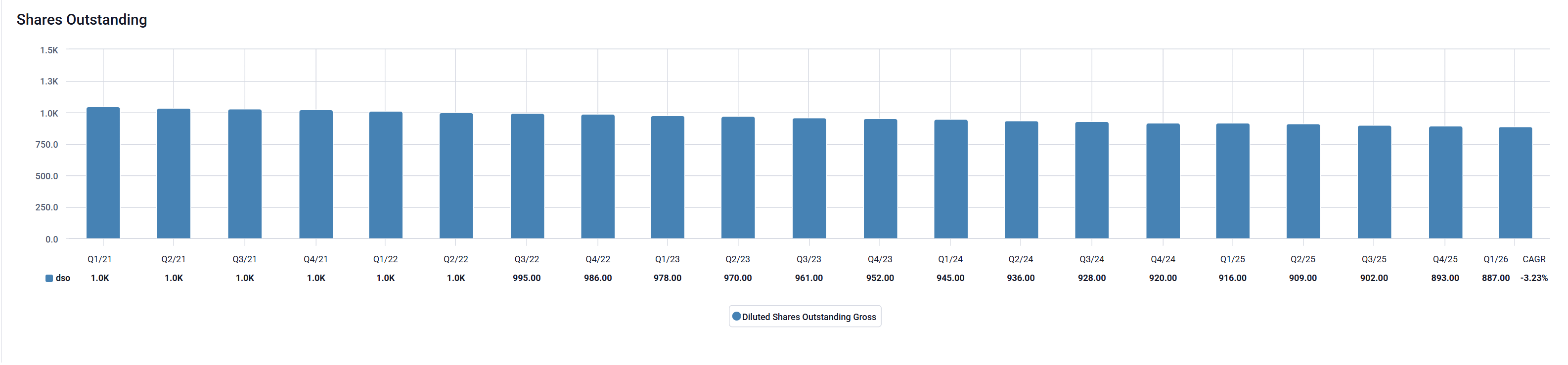
Shares Outstanding:
FASTgraphs scores:
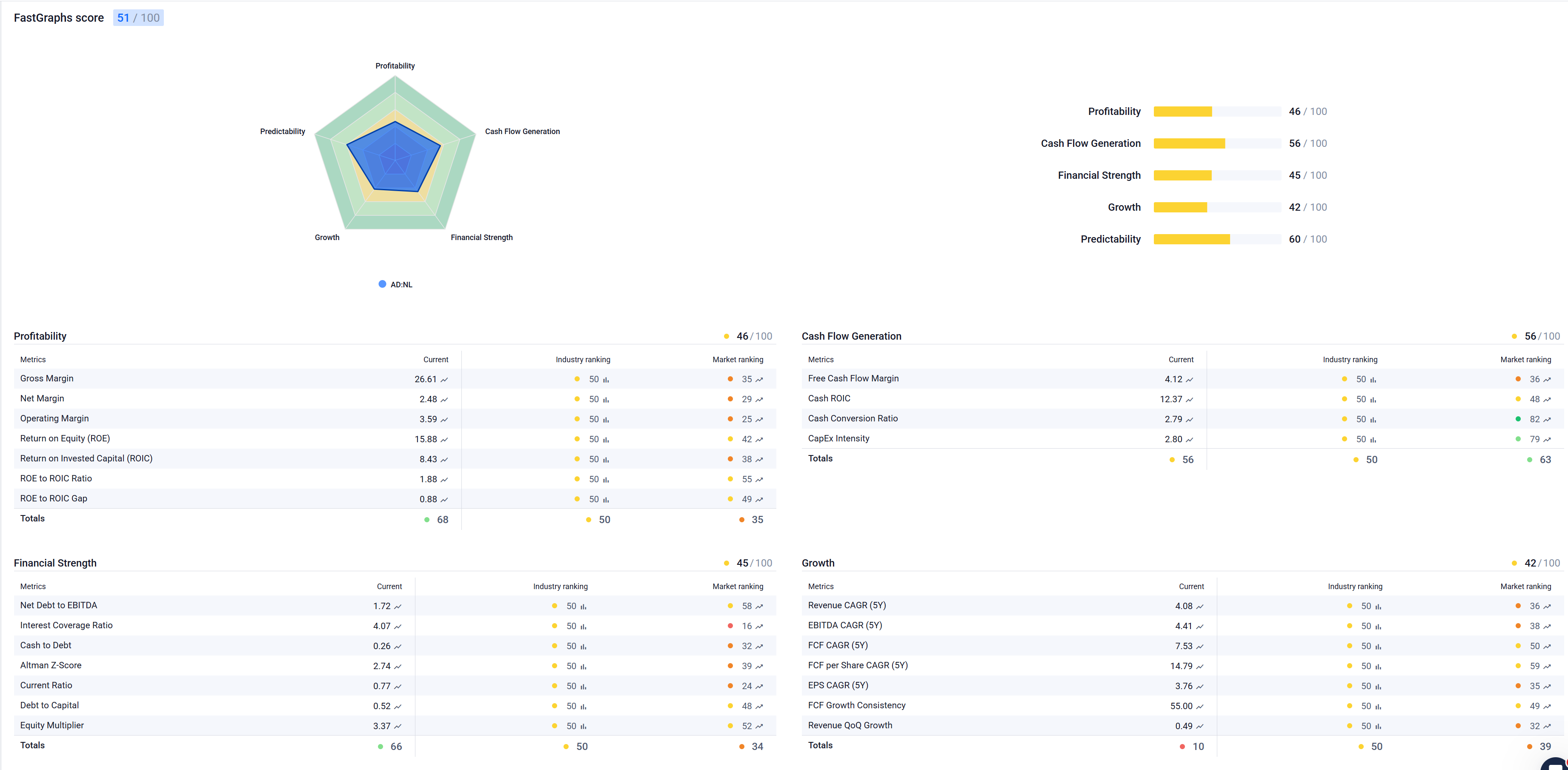
This mostly looks like worth further exploring to me:
- growing earnings
- growing dividends (11.7% CAGR); technically two cuts since the dividend was initiated in May 2008 (sic!), but if you look at the line from 2018 to 2021 it looks to me that they were a bit overzealous with their dividend hike in 2019 and corrected things in 2020 and 2021 to bring things back in line
- their FCF is supposed to shrink quite a bit. According to Gemini it’s because of
- US Restructuring: their Stop & Shop brand there apparently needs refreshment
- heightened digital & automation CapEx (probably a good idea?)
- margin compression from consumer downshifting due to inflation
Sounds all like defensive spending versus some acquisition folly, so probably ok.
- a little high on debt but a great BBB+ credit rating and sufficient cash flow to service the debt
NN Group NV is a financial services company, which engages in providing retirement services, pensions, insurance, banking, and investments.
FASTgraphs
Adjusted (Operating) Earnings:
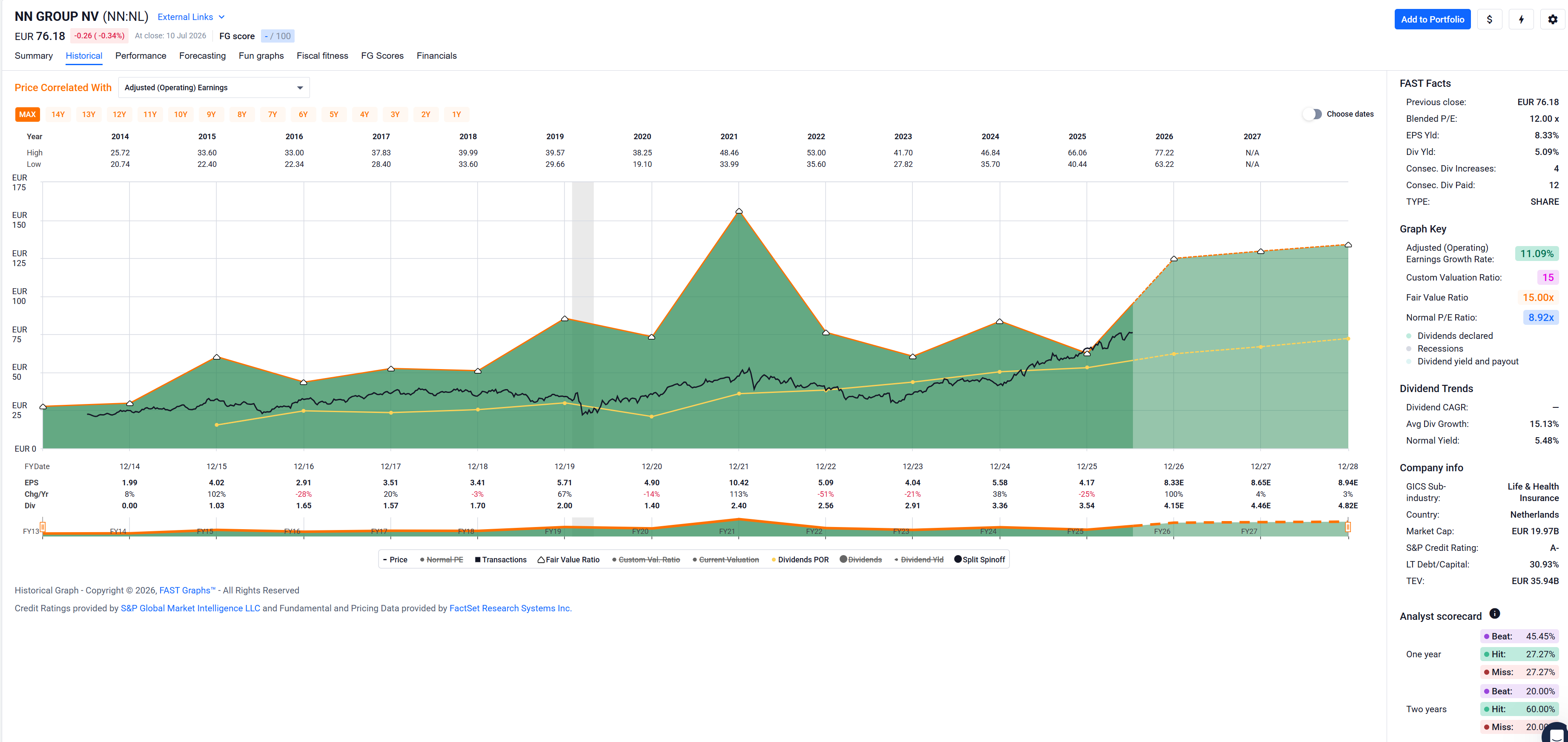
Dividend coverage (half-yearly dividend payouts):
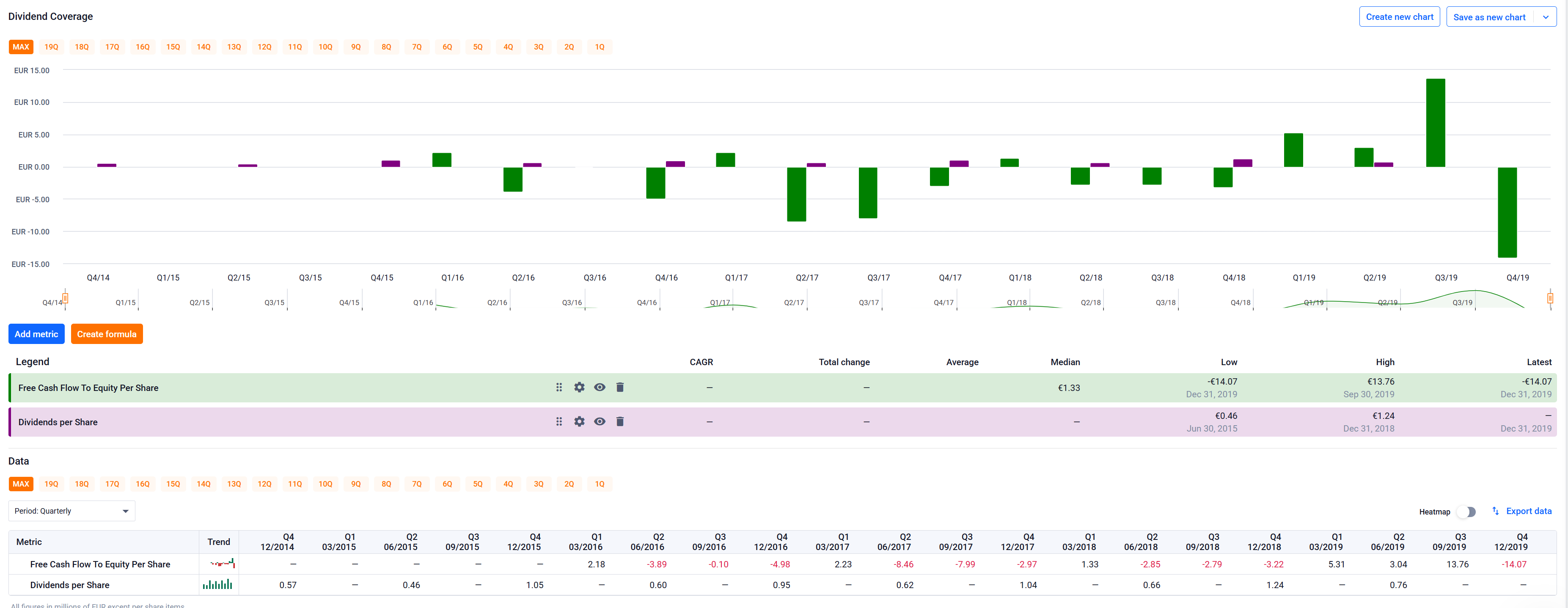
Operating cash flow looks equally bad and I stopped digging further at this point. I also don’t really know enough about Financials to judge whether this can actually easily be explained.
It’s easier to stick to businesses that I have a better chance of understanding than to dig deeper here … there’s no extra points granted in investing for picking difficult or complicated businesses.
Wolters Kluwer NV engages in the provision of information, software solutions, and services for professionals in the health, tax and accounting, finance, risk and compliance, and legal sectors.
FASTgraphs
Adjusted (Operating) Earnings:
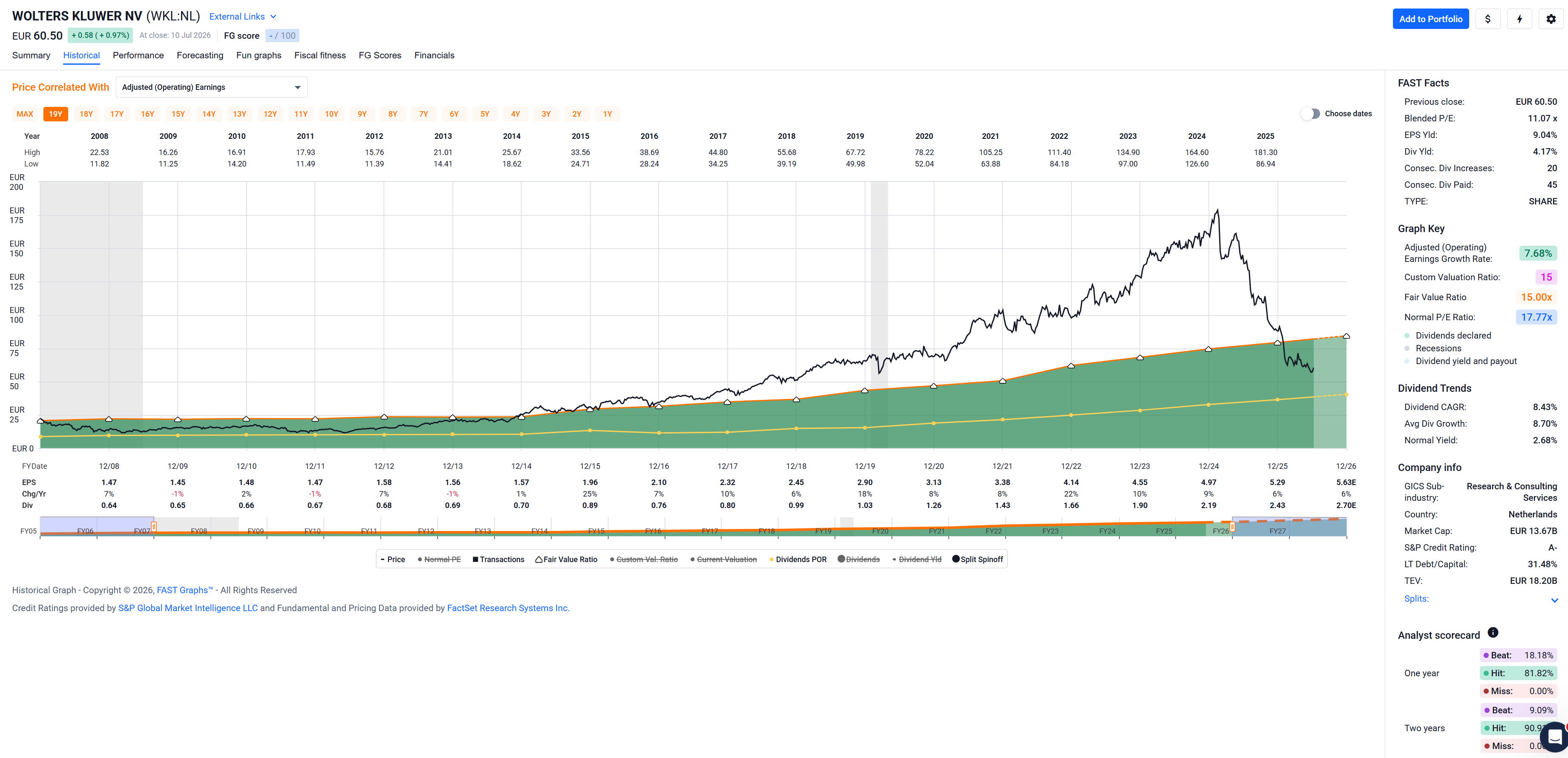
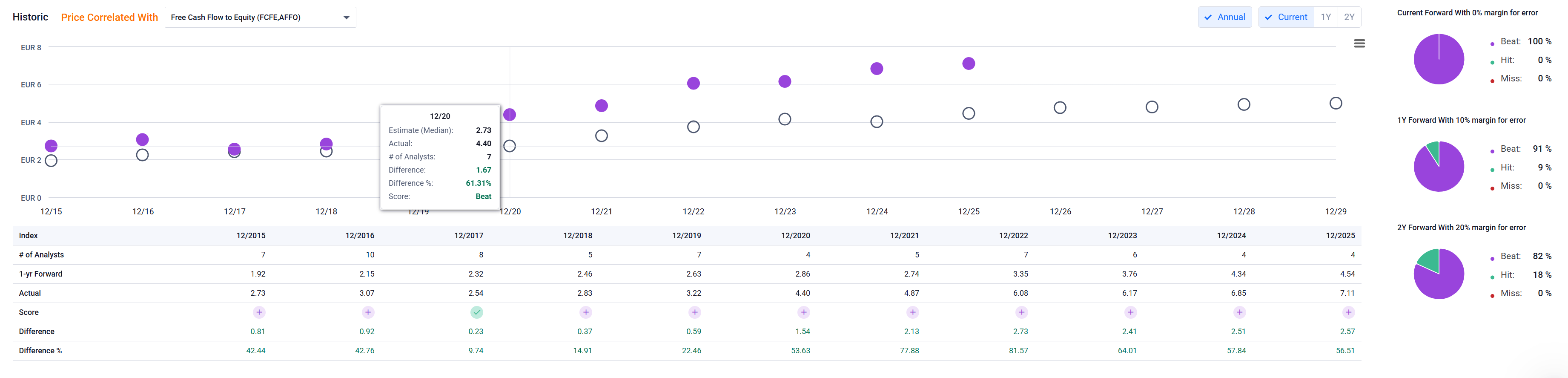
FCF vs Dividend:
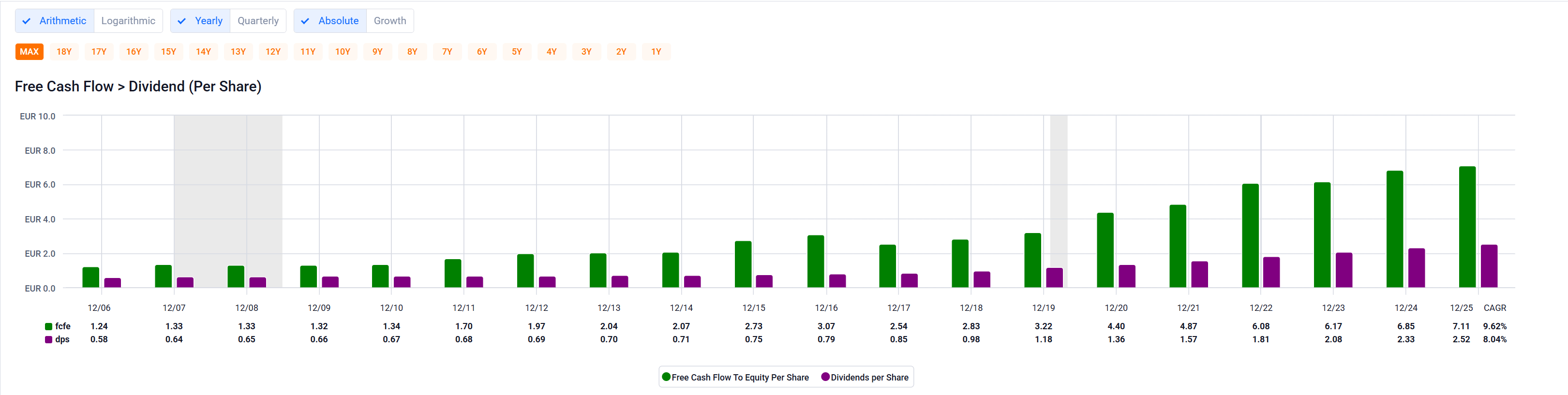
Earnings forecasting:
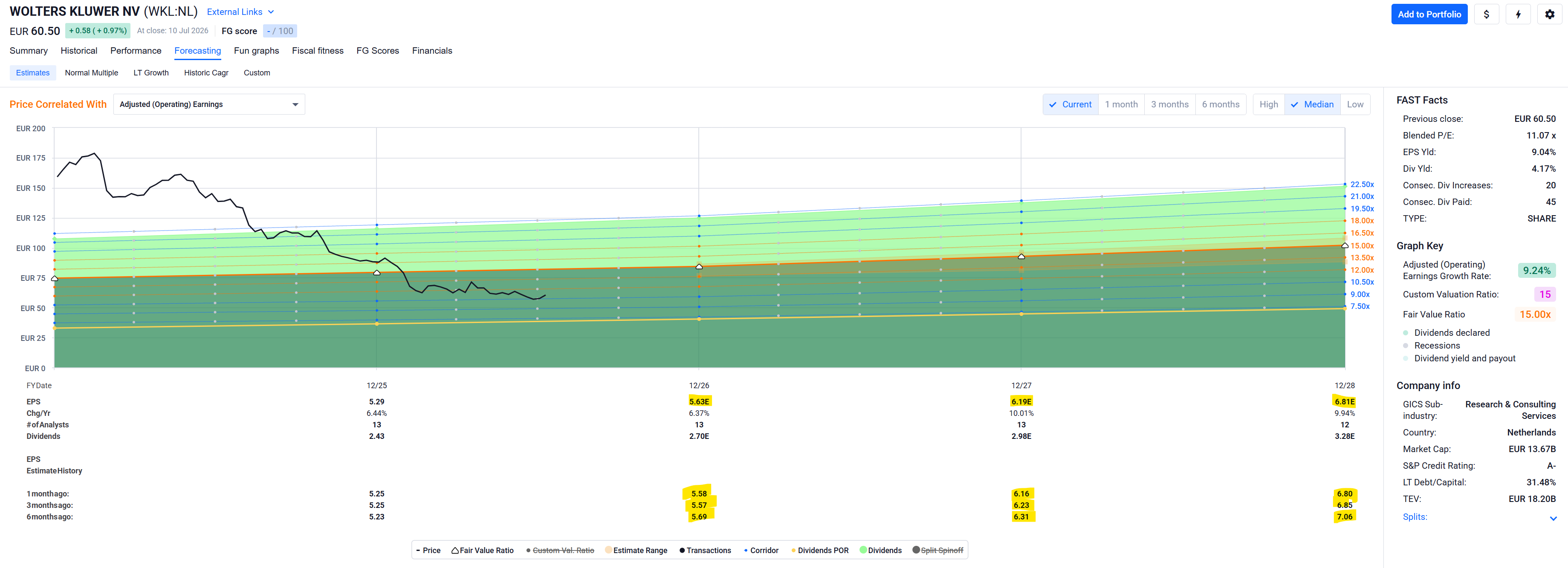
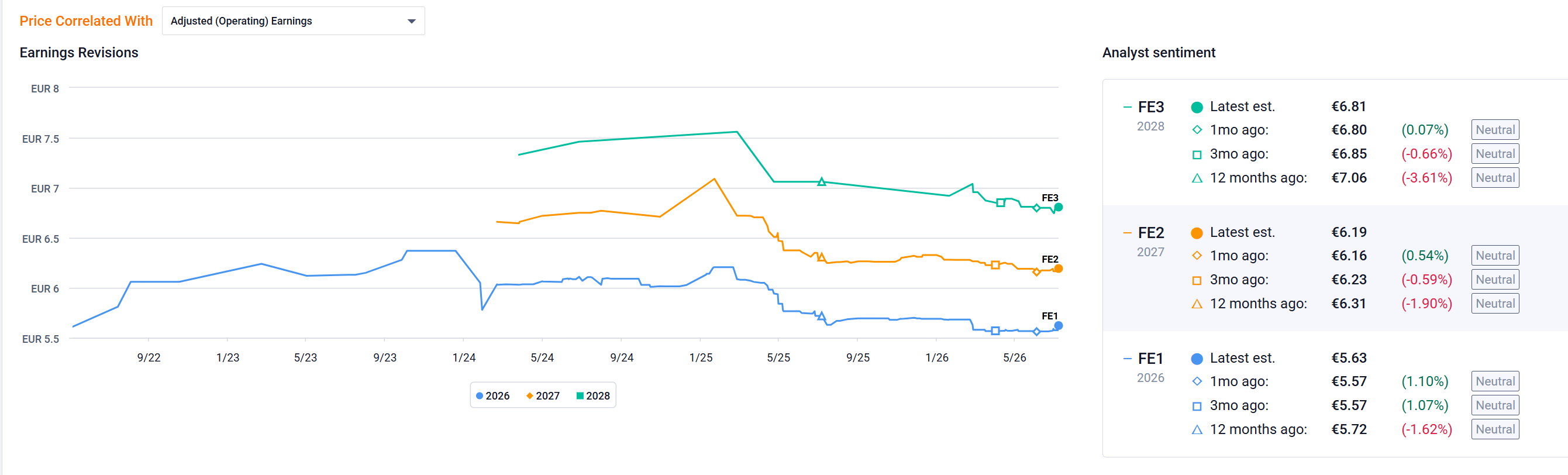
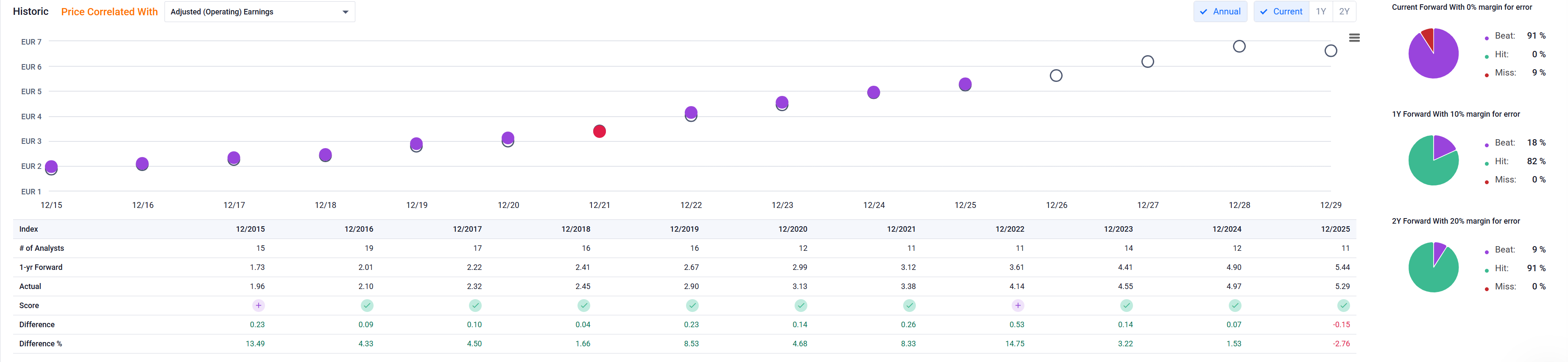
FCF forecasting:
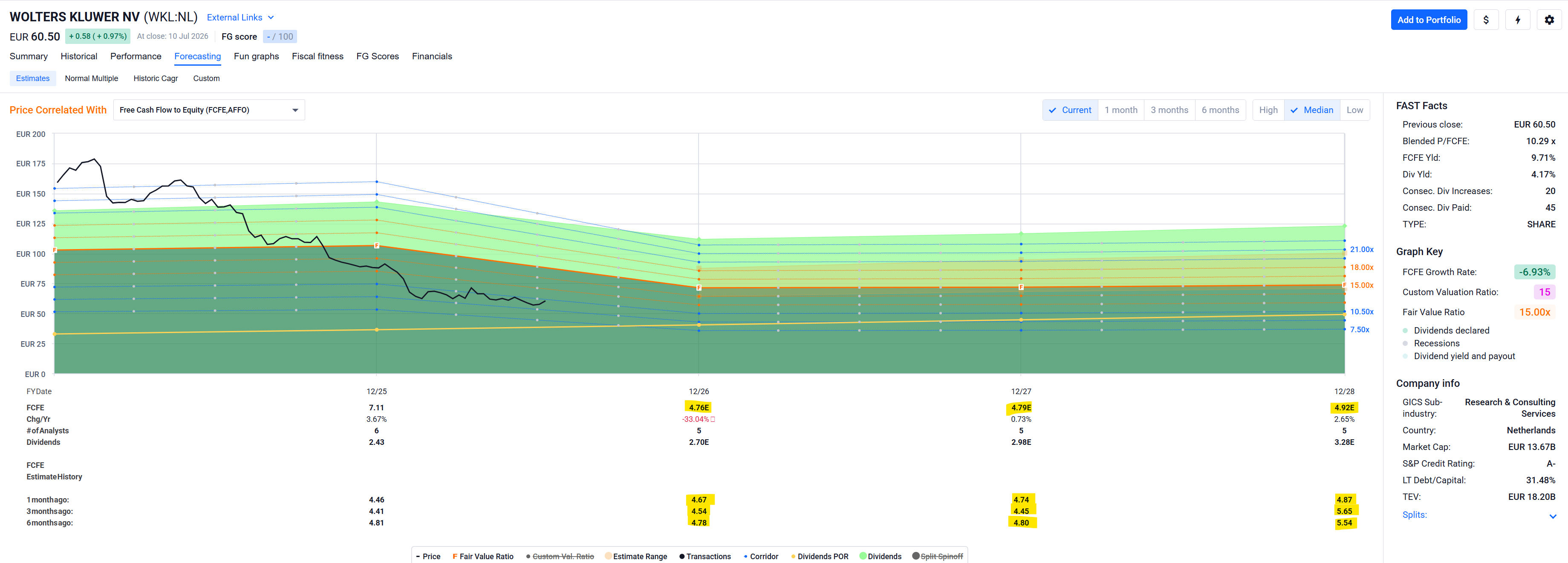
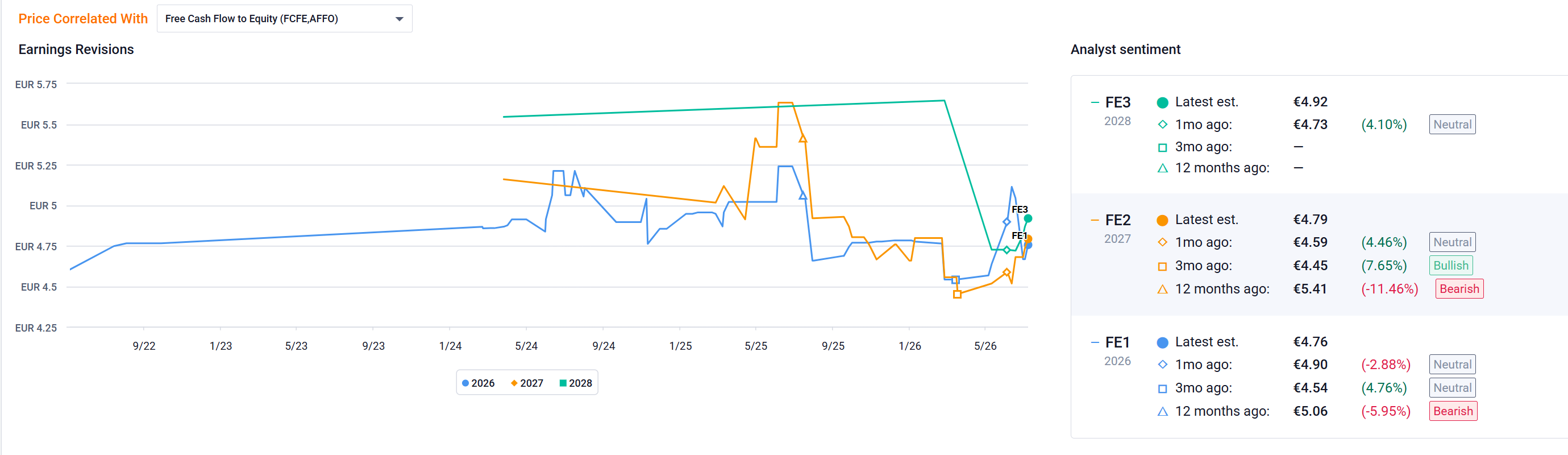
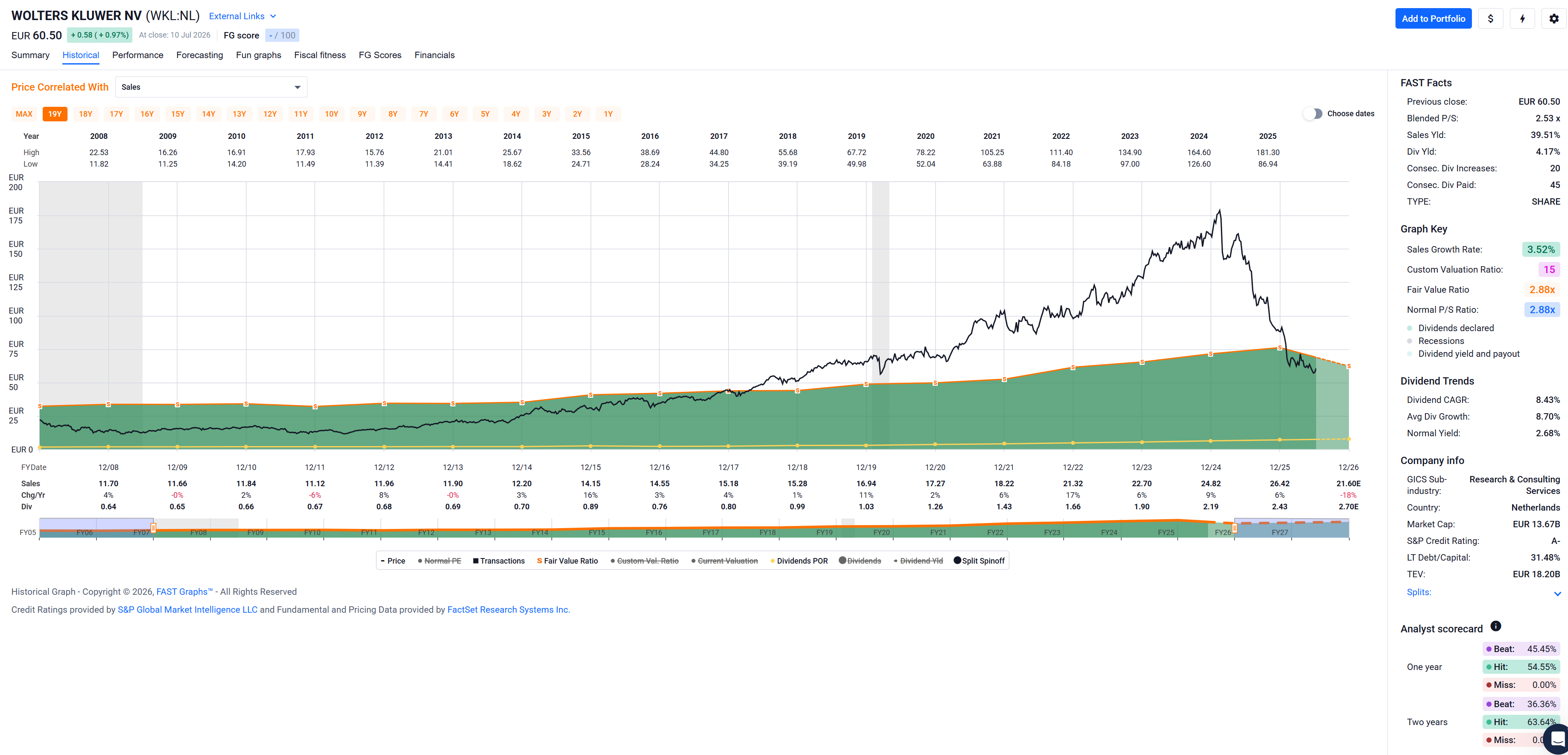
Sales:
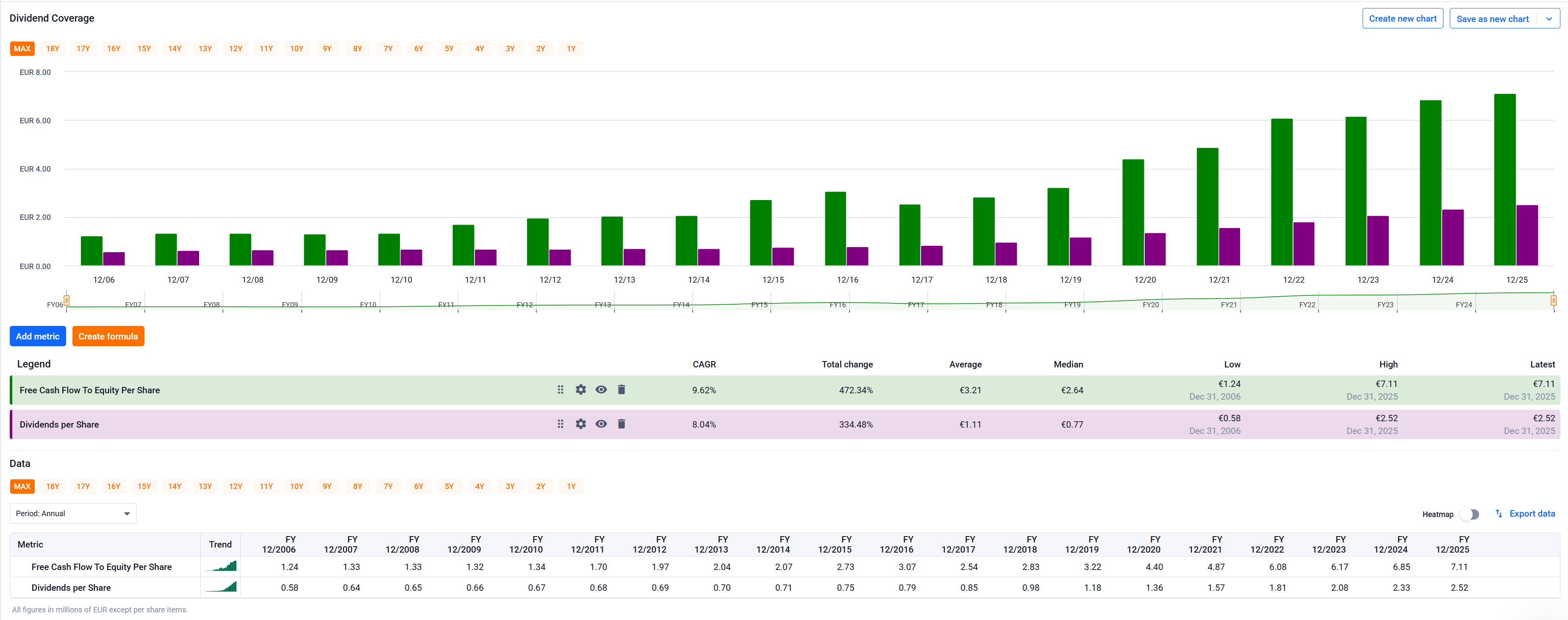
Dividend coverage (half-yearly dividend payouts):
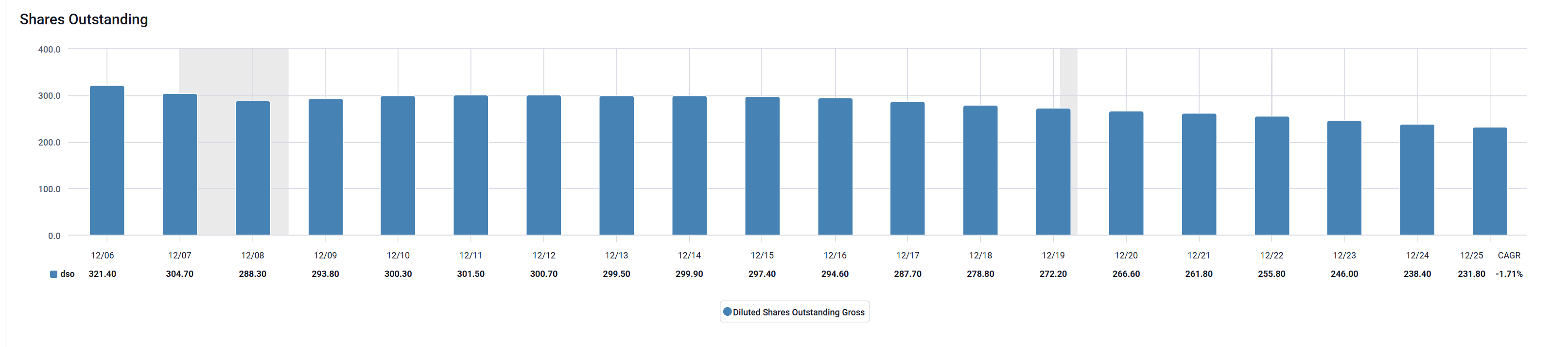
Shares Outstanding:
This mostly looks like worth further exploring to me:
- growing earnings
- growing dividends (8% CAGR); technically one cut in 2016 … ok, fine
- their FCF is supposed to shrink quite a bit. According to Gemini it’s because of
- massive ramp-up in AI and product spending
- higher net financing costs (share buybacks, debt servicing)
Sounds all ok to me.
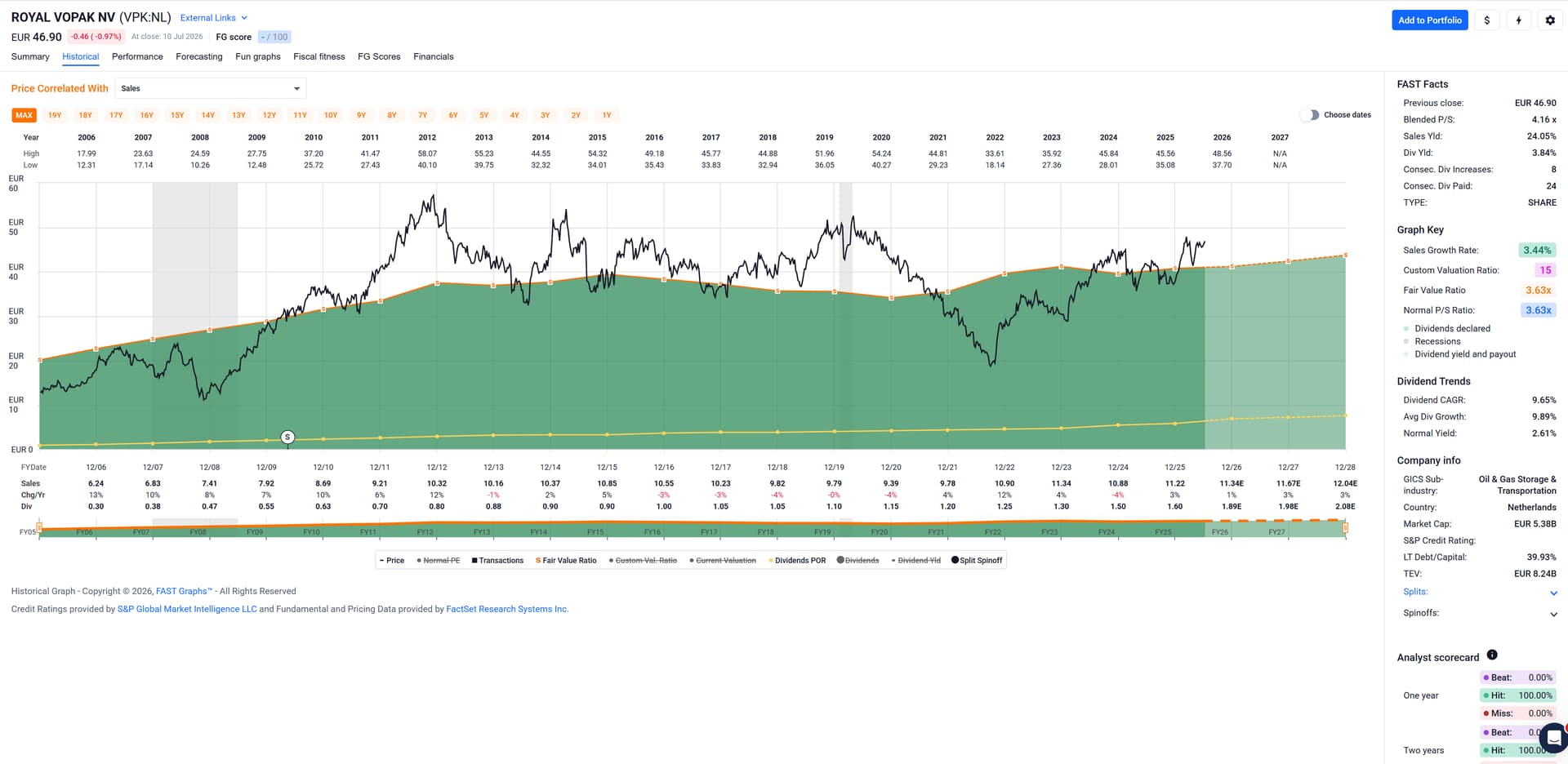
Royal Vopak NV operates as an independent tank storage company.
FASTgraphs
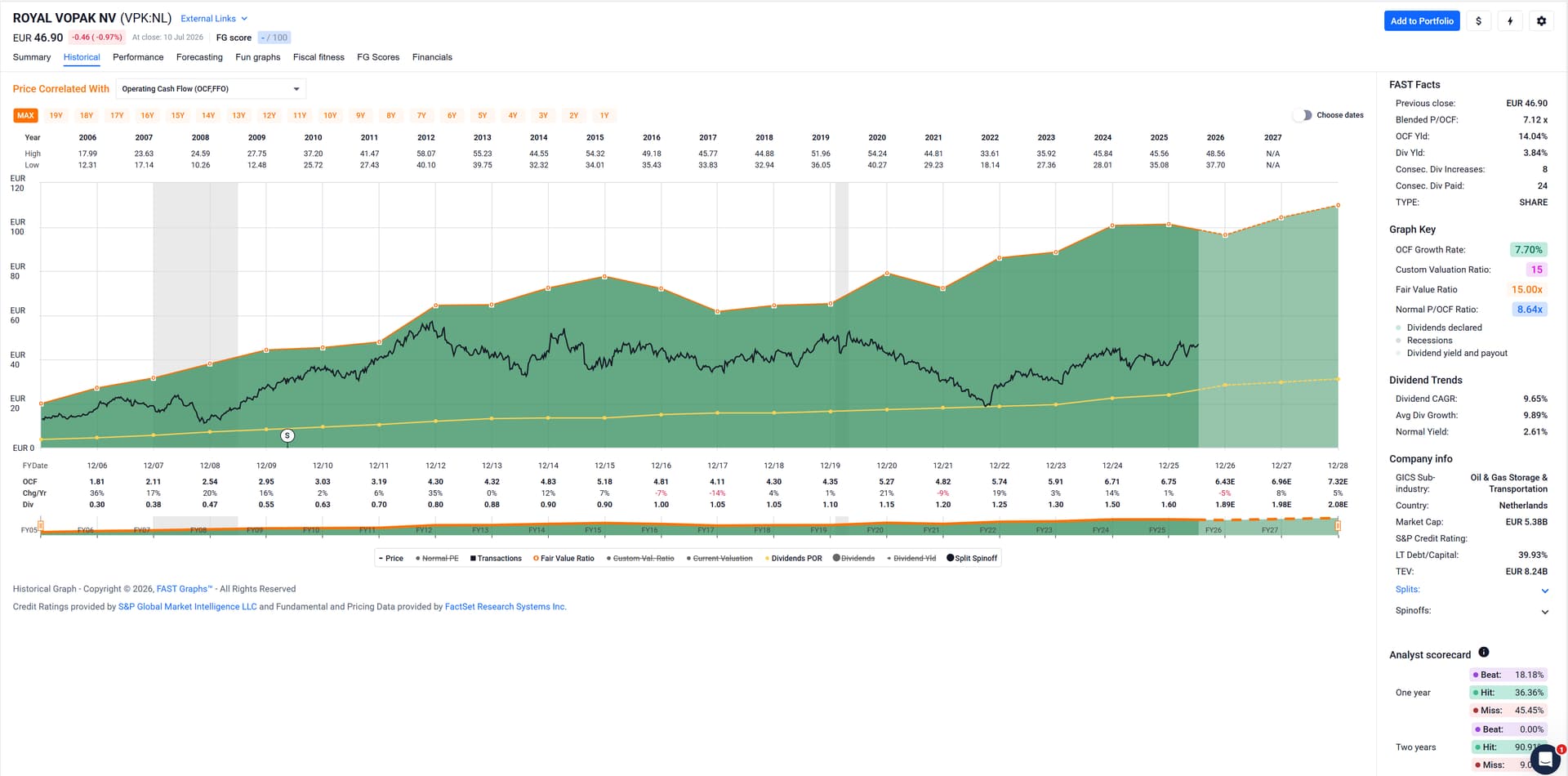
Operating Cash Flow:
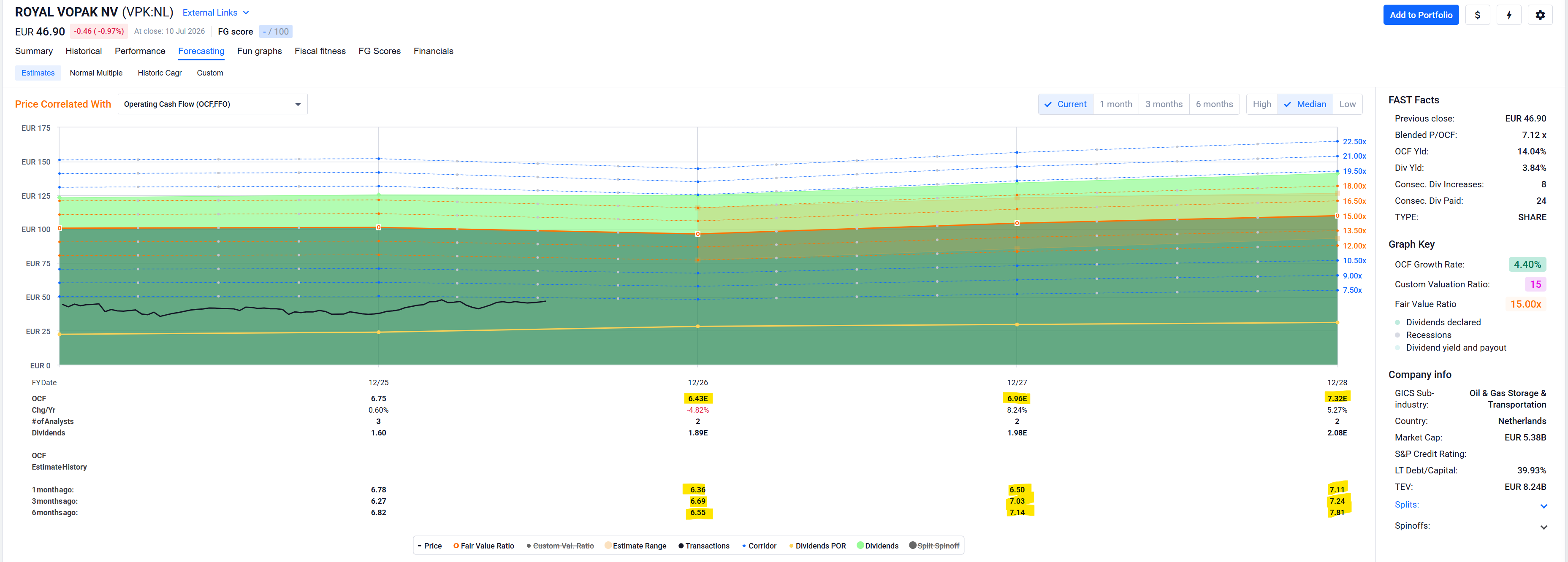
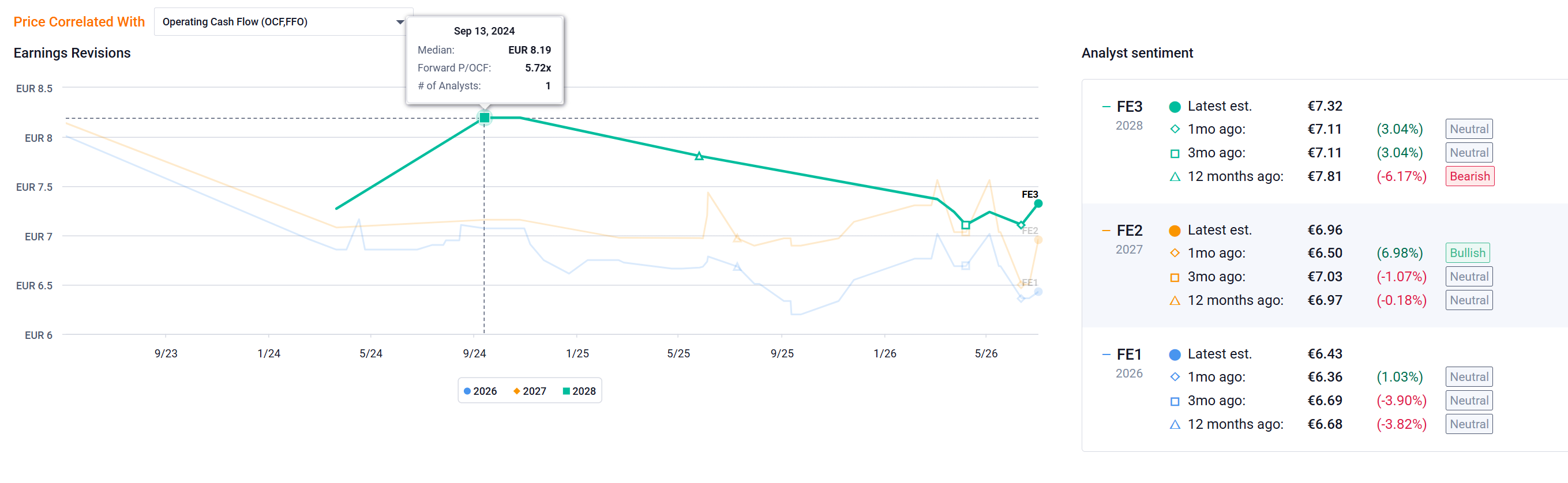
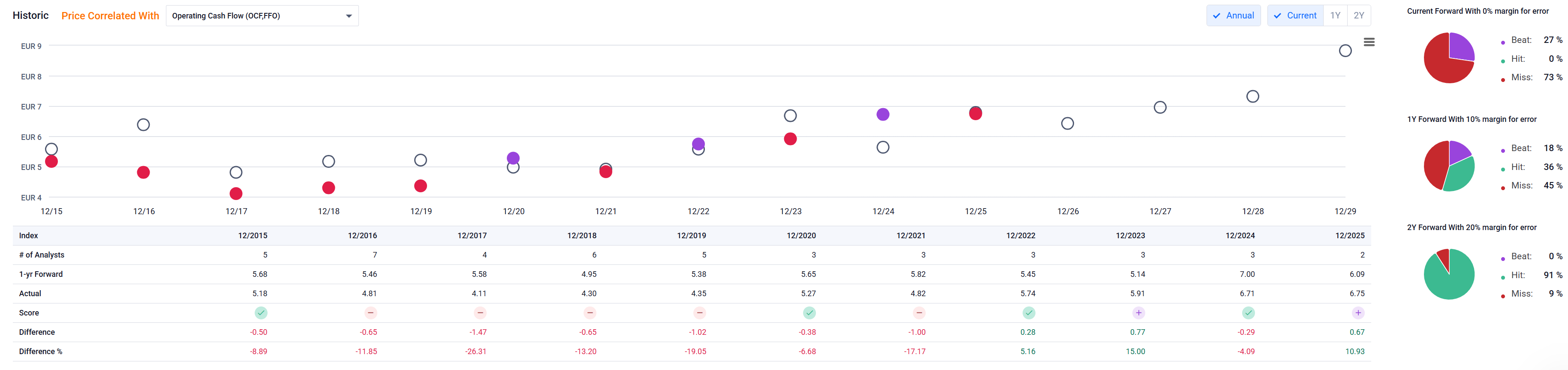
OCF forecasting:
Sales:
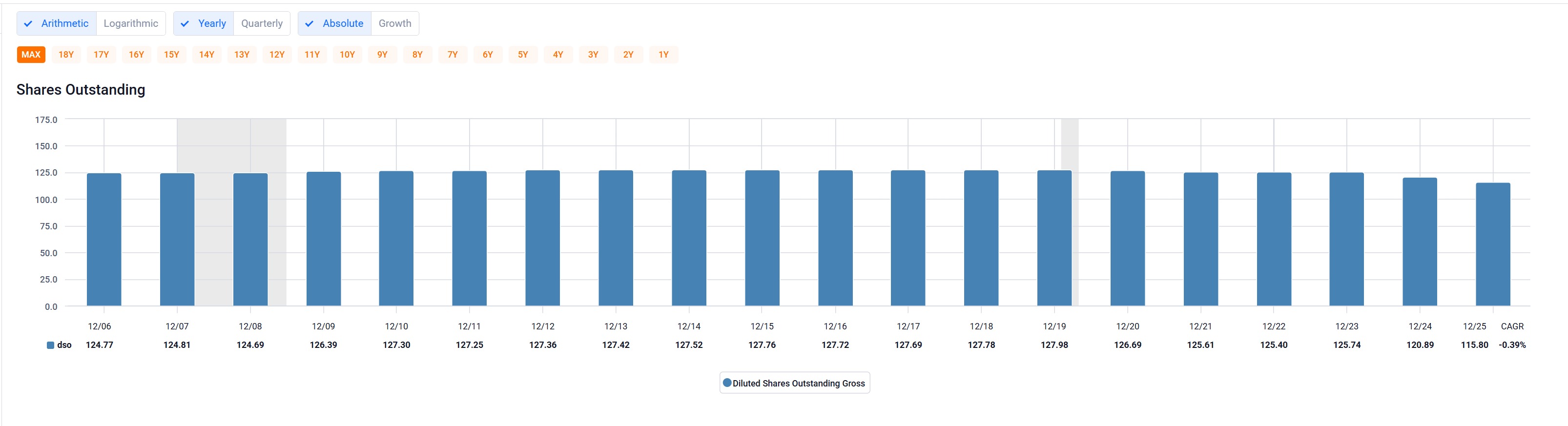
Shares outstanding:
This mostly looks like worth further exploring to me:
- growing OCF
- growing dividends (9.7% CAGR); no cuts
WKL generates 2/3 of its sales in USD, which got hit by the weak greenback (after profiting from the inverse effect 2024, which probably made the hammer hit doubly hard 2025) (chart courtesy fxtop.com):
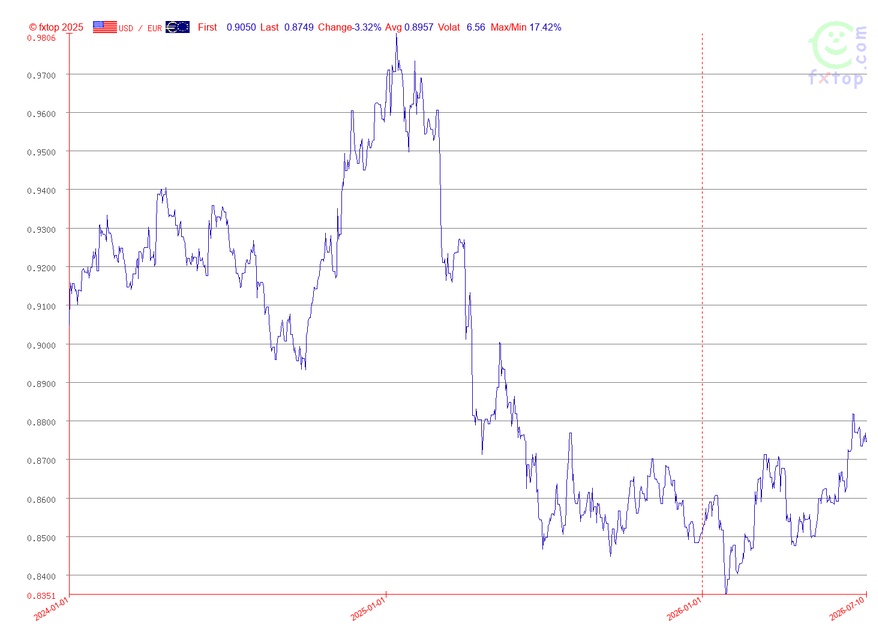
I don’t recall who this was, but someone posted a similar question regarding Japan (or a japanese company) recently. Unfortunately the JPY presents a similar problem, it loses 4-5% annually vs the CHF since at least the turn of the millenium.
That’s one hell of a headwind to overcome just to make an investment equally profitable.
Granted, the USD and EUR lose something like 2% annually as well against the CHF, but in the long run the difference is huge. And of course that doesn’t begin to take into account the vastly superior US returns.
Probably me. 
It’s in fact on my list to dig deeper (for specific companies) after I’ve clarified the double taxation situation with holding dividend paying Japanese stocks as a Swiss resident (I believe it’s fine, but haven’t done any deeper digging yet).
True – which is why I don’t hold currencies, but companies. If the companies only did business exclusively in their domestic market, the currency exposure would probably suck when holding only such companies. Luckily, for most companies the FX risks and fluctuations are dwarfed by the market risks and fluctuations.
Yeah, don’t get me started on this topic … I see you already liked my post venting on the subject …
However …
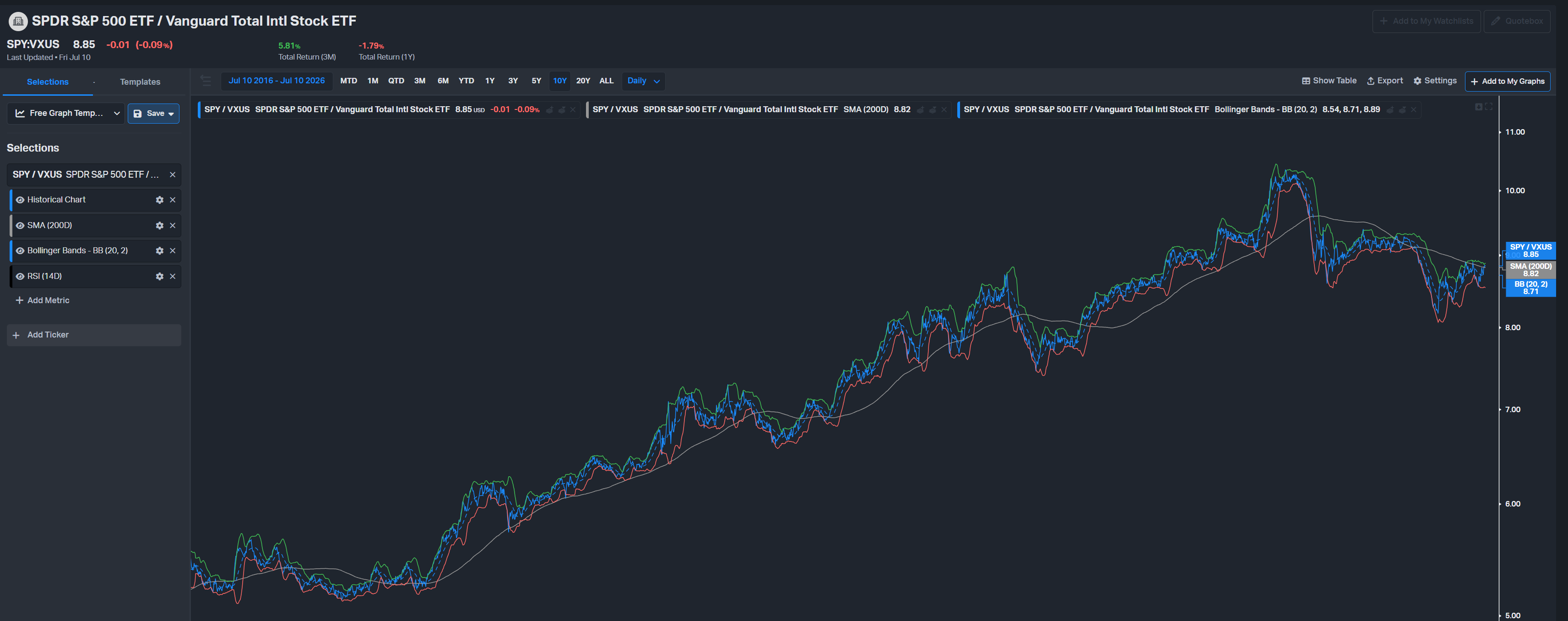
I think it’s just a hiccup for US returns and maybe due to some previouly for many years leading stocks taking one to the chin for now, but I still prefer to be at least somewhat internationally diversified even though lots of these companies in those major indices make their profits globally and FX matters only to some degree.
Again, if you hold currencies, your CHF in cash from the turn of the millenium probably lost more than 10% in purchasing power. If you held bonds, you probably lost money? If you held the SMI instead, you probably doubled your holding during the same period.
Purchase the S&P 500 in (overvalued) year 2000 in CHF and sell today (still overvalued) in CHF … I bet it’s even more than a doubling!
Anyway, I think we’re mostly in violent agreement (or I truly misread) – just wanted to add some color.
Very much so, and thx for the color 
That is true, but the interest difference makes up for it over the long term. At the moment the difference is like 3.62% and the Dollar is even up against the CHF YTD.
I don’t care for currencies, I hold companies. Many of them make their money all around the world in many currencies. Every stock is it’s own currency.
A devalued currency is good for exports and tourism, if inflation doesn’t eat up the difference.
Well, darn, after some Gemini prompting it looks like only these countries are hassle free for stock picking with IBKR as a Swiss resident:
- US
- UK
- Australia
- Ireland
- Netherlands
- Singapore
- Hongkong
- Switzerland
Other countries (like Canada, Germany, France, Japan, maybe others are a hassle as IBKR will withhold more than necessary, the Swiss tax authorities will only count towards DA-1 what has been agreed in the double taxation agreements and it’s up to you to get the difference back. Via forms and sending them to the tax authorities of these countries.
Sounds like fun … thank you, but no.
If you have a Swiss broker, the “no hassle” countries list becomes larger (as the Swiss broker/bank) will only withhold what is counted towards taxes paid via DA-1. Since I don’t plan to trade via Swissquote anymore – the fees …  … mon Dieu! – I’ll limit myself to exploring further the countries listed above for “diversifying” from my VXUS holding.
If anyone has more accurate information, please chime in.
Side note: why do these “hassle” countries (or no double taxation agreement countries) make it complicated? Do they not want my money and their taxed at source cut?

Might be because capitalism is bad and needs to be punished? Or they prefer only foreign investments through passive “buy our whole shitty market” country ETFs?
Rant over.
The problem being that you pay income tax on the interest, with usually 25-35% marginal tax rate that bite is uncomfortably large. However that (2% loss of USD and EUR, etc) only works in the very long run with decent reliability, in the short term factors like the interest rate difference (and the rate’s directional moves) seems much more relevant, plus of course the occasional flight to safety.
You dont’ trade stock vs stock, you trade stock vs currency and you measure performance in currency amounts/percentages. That’s why your quip lands short even though there’s a good amount of truth to it.
Actually until next year I can deduct the margin debt interest payments while the capital gain is free of tax. But soon I will not be able to deduct debt interest any longer, so I changed much of my margin debt from USD to CHF, saving a lot on interest. But last year I would have lost as the Dollar lost more than the interest difference.
It is an inverse carry trade with debt. Does not make sense with the actual tax laws but will make sense with the new laws where interest payments can no longer be deducted.
The Dollar is OK for measurement of performance, but indeed every company is a currency of its own.
Wow, a new yearly high for the Dollar:
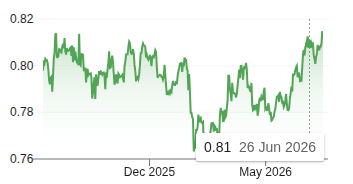
Nice, the debt I did change to CHF pays for itself. 
And of course (again) a good time to be an oil sheikh. I wonder what sector my captain will put me in next…
Yesterday: KOS +16.2%, CVI and PBF +8%, EQNR (go Norway) +6.3% and in South Africa some chemicals get rare so SSL+4%.
Was enough to lift my gambling portfolio 1.87%… but after suffering a bit from oil selloff the last weeks. Let’s see how things fold out. It was a very beautiful first half year, let’s hope the second continues that way.
The recent pullback wasn’t quite enough for me to have added to the oil refiners, but they are still doing nicely. SaaS finally turned from massive loss to slight profit, but maybe that reverses later today (this year, every gain was quickly given back):
| Ticker | Yield | %MV | %Gain |
|---|---|---|---|
| + SaaS | 0.6% | 22.7% | +3.0% |
| + Oil Refiners | 1.9% | 5.7% | +22.8% |
| Total | 0.9% | 28.4% | +6.4% |
And thanks IBM for putting out a warning for lower sales.

About 24 hours ago:
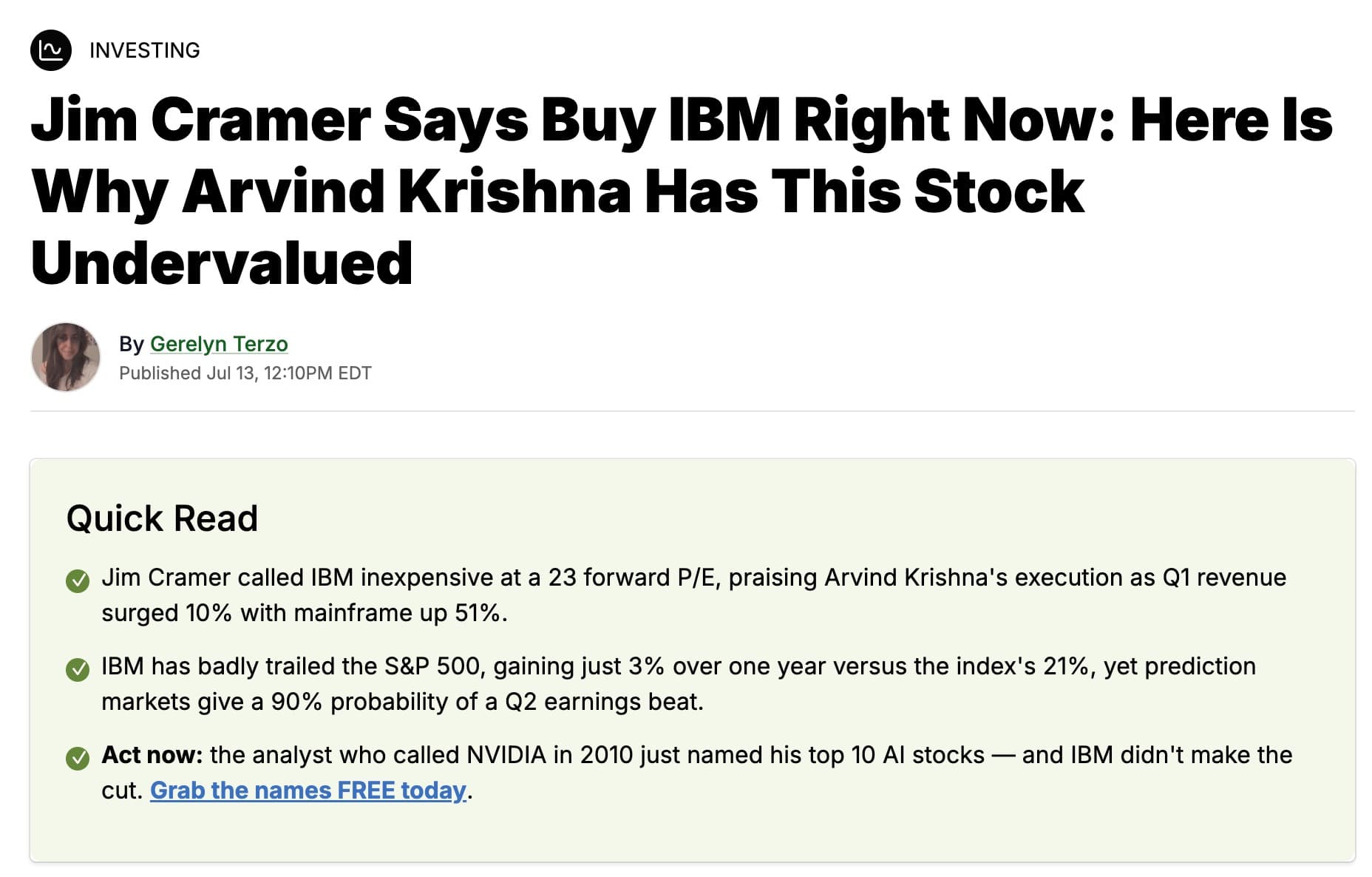
(Source)
In different news I exchanged some VXUS for Wolters Kluwer today. My first direct investment in a Dutch company. See my analysis above if interested.
| Ticker | Date | Buy | Sell |
|---|---|---|---|
| VXUS | 07/14/2026 | 100 | |
| AMS:WKL | 07/14/2026 | 100 |
Wish me luck?
This transaction turned about $200 in expected 2026 VXUS dividends (for 100 shares worth about $8.5k) into about €240 in expected 2026 WKL dividends (for 100 shares worth about €6.1k.
Some $ cash left on the table that I don’t know yet how to deploy. Maybe IBM? (Just kidding)
Nice, Jim Cramer. There was a reverse Jim Cramer ETF (ShortJIM, SJIM), but it probably performed too good, was liquidated in 2024:
The Inverse Cramer Tracker ETF (ticker: SJIM) is an actively managed fund that sought to track the opposite performance of the stock recommendations made by television personality Jim Cramer. The fund was officially liquidated and permanently closed in early 2024 due to a lack of investor interest.
Reason for closure: Portfolio manager Matthew Tuttle cited a lack of investor interest in volatile Long/Short funds and the sheer difficulty of executing an inverse strategy across Cramer’s rapid-fire media appearances
I think you can still follow the ShortJIM Strategy on autopilot, where trades are just copied:
Looked at some Irish companies this week (again with the purpose of replacing some of my low yielding VXUS).
Couple of companies made it through my screen:
- Cairn Homes
- DCC
- Glanbia
- Kerry Group
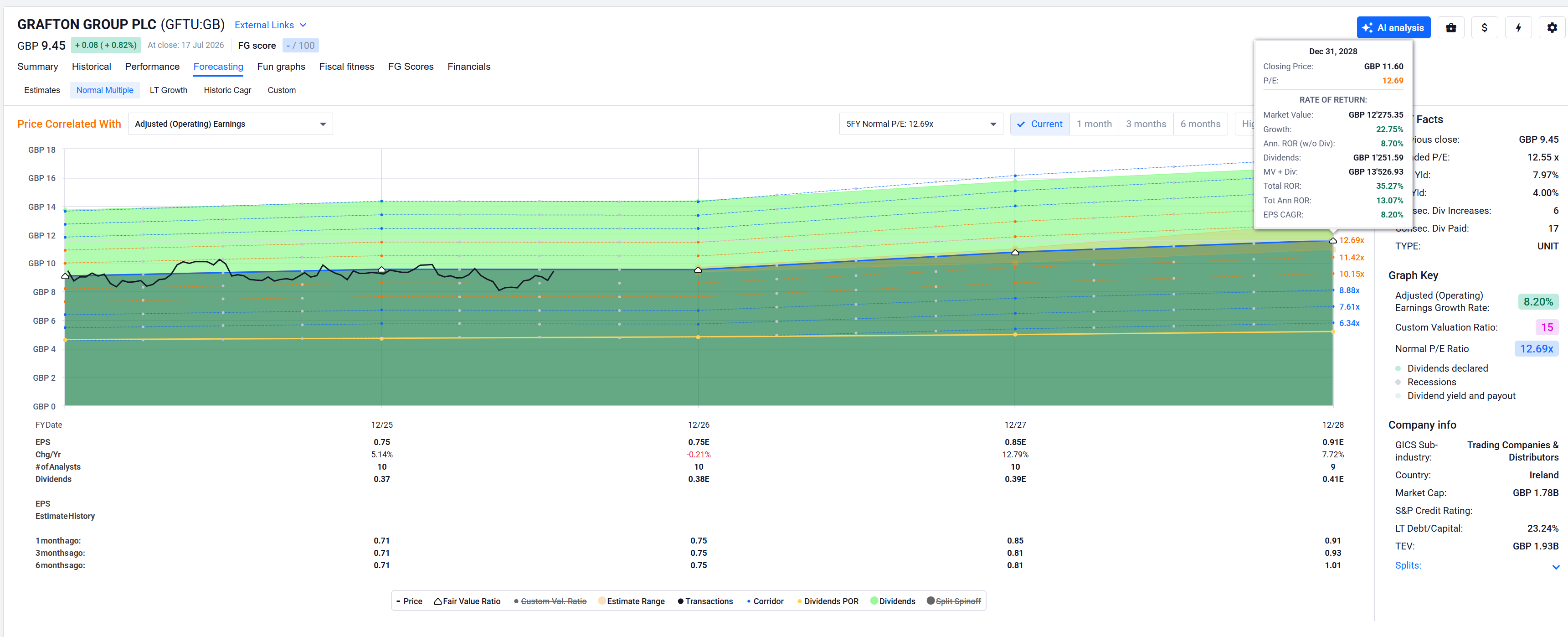
- Grafton Group
(See below for FASTgraphs of each of these)
If you have any other Irish companies you like, throw them into the hat.
Guiness unfortunately isn’t its own company anymore (now belongs to Diageo), but I once heard a fun story on a podcast (The Market Huddle) about Sir Arthur Guiness Son & Co. taking the private holding into a public corporation in 1886.
It involved The Battle of Bishopsgate Street (and Dublin) when crowds would try to physically fight their way into the financial district and e.g. throwing buy orders attached to stones into the windows of the banks involved with the issuance of the security and smashing the front doors of Barings’ – the then premier investment bank in London – main office on Bishopsgate Street.
Gory details of that IPO narrated by Gemini
The story of the Guinness IPO in October 1886 is one of the most legendary, chaotic frenzies in stock market history—and yes, the detail about people throwing buy orders over barriers is very close to the mad truth. It was the Victorian era’s version of a modern tech boom IPO hyper-drive, except driven entirely by stout, panic, and paper.
Here is how the madness unfolded:
The Setup
By 1886, Arthur Guinness Son & Co. was already the largest brewery in the world, pumping out rivers of dark stout. Sir Edward Cecil Guinness decided to transition the family empire from a private holding into a public corporation.
To pull this off, he hired Baring Brothers & Co., the premier investment bank of London. Barings valued the brewery at £6 million—an astronomical sum for the late 19th century—and split the offering into ordinary shares, preference shares, and bonds.
The Prospectus Panic
When the prospectus (the investment brochure) was announced on October 21, 1886, the public went absolutely wild. The promise of pulling a regular dividend from the world’s favorite beer brewery caused a mass hysteria.
- The Premium Paper: Demand was so overwhelming that Barings completely ran out of printed prospectuses. In a bizarre twist of secondary-market madness, people began buying and selling the blank application forms outside the banks, with copies fetching up to 12 shillings and sixpence each (roughly half a week’s wages for a laborer at the time) just for a chance to fill one out!
The Battle of Bishopsgate Street (and Dublin)
When the application books officially opened on Monday, October 25, 1886, Barings planned to keep them open for 36 hours. They lasted barely three hours before being forced to slam the doors shut.
- The Crowds and the Cabs: In London, an aggressive, surging crowd blockaded the financial district. Couriers and wealthy investors who couldn’t physically fight their way through the bottleneck to hand over their checks and application slips began desperately screaming out orders.
- Throwing the Orders: Because the banking houses were fenced off or barricaded by security and police trying to keep the peace, people literally began wrapping their buy orders and bank drafts around stones, weights, or whatever they could find, throwing them over the heads of the crowd and through the open windows or over the courtyard gates of Barings in a desperate bid to get their paperwork stamped before the books closed.
- The Scrimmage: The crush was so intense that the front doors of Barings’ main office on Bishopsgate Street were completely smashed off their hinges by the sheer weight of the crowd.
- The Dublin Riot Threat: Meanwhile, over in Dublin (the home of the brewery), notice of the IPO had arrived slightly late. Local Irish investors realized they were being boxed out by the London speed, and angry crowds gathered outside the Dublin financial offices. The police had to deploy heavy details to prevent an outright riot against the bankers.
The Aftermath
When Barings finally tallied the flying pieces of paper, stones, and mail bags, they realized the public had offered an unfathomable £127 million. The IPO was oversubscribed more than 20 times over!
Because there weren’t enough shares to go around, Barings had to drastically ration the allotments. Investors who managed to catch a piece of the action saw the £10 shares instantly rocket up to £16 on the secondary market within two weeks—a massive 60% gain that solidified the Guinness “Beer Rush” as one of the wildest market events in history.

Nowadays nobody needs to riot to buy a hot stock. You can just open your phone broker app and shell out a few bucks to buy a fractional share of the latest hot stock, say, SPCX or so.
À propos … 
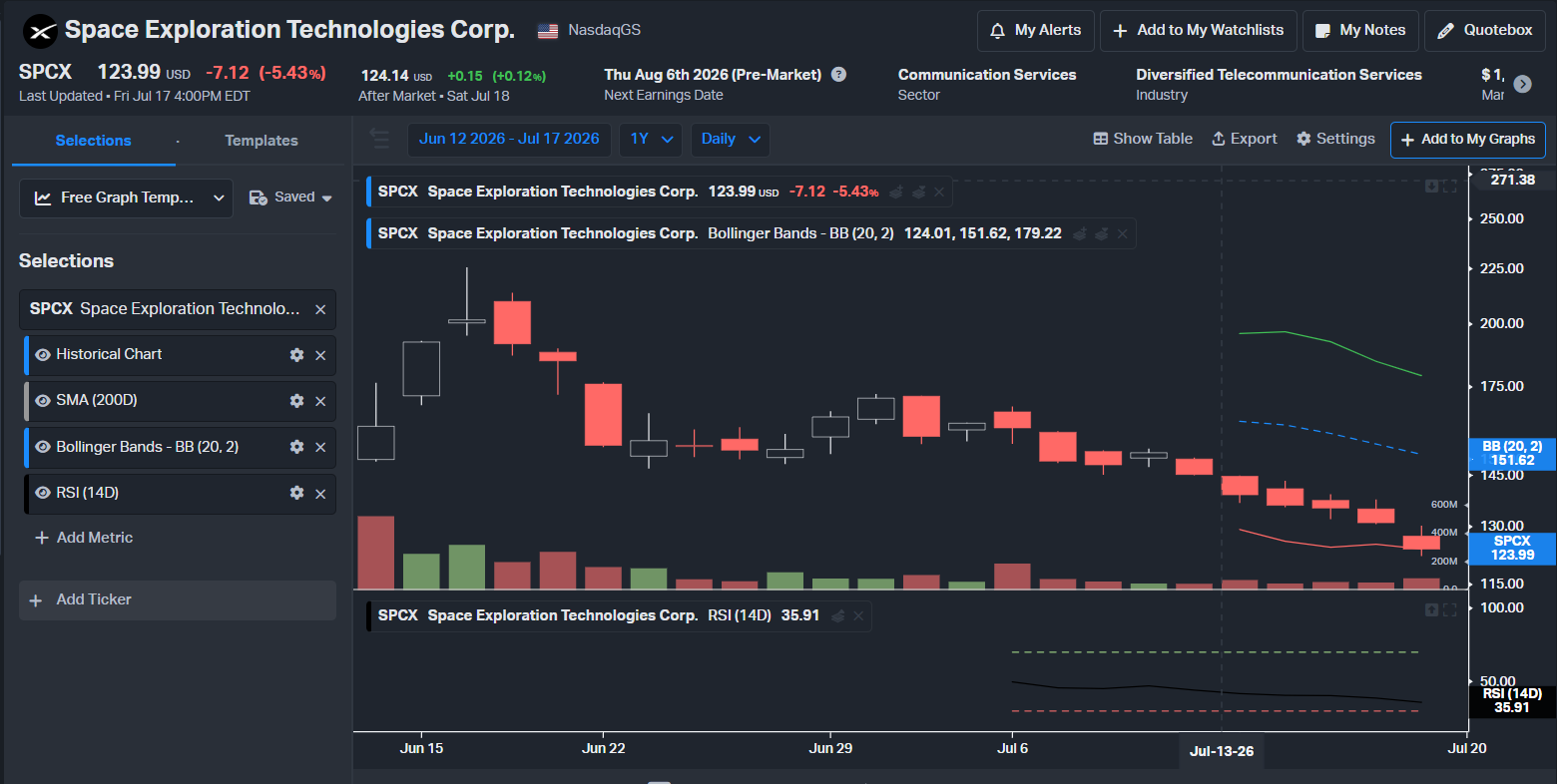
The process of buying hot stocks is less violent today, the behaviour is still the same.
Plus ça change, plus c’est la même chose.
Cairn Homes
Cairn Homes Plc engages in building and property development services. It offers construction of new homes with an emphasis on design, innovation, and customer service.
Adjusted Operating Earnings:
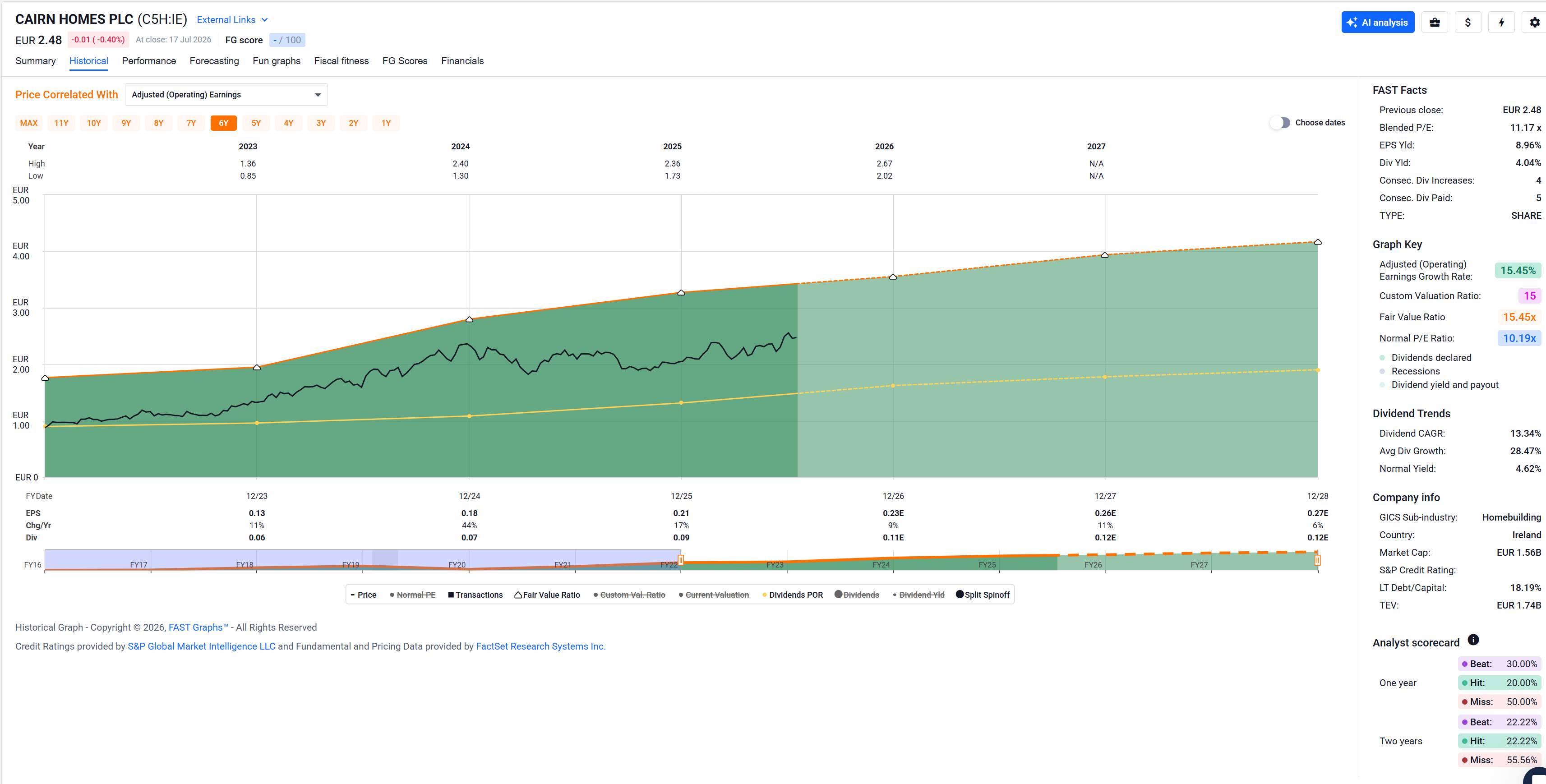
Free Cash Flow:
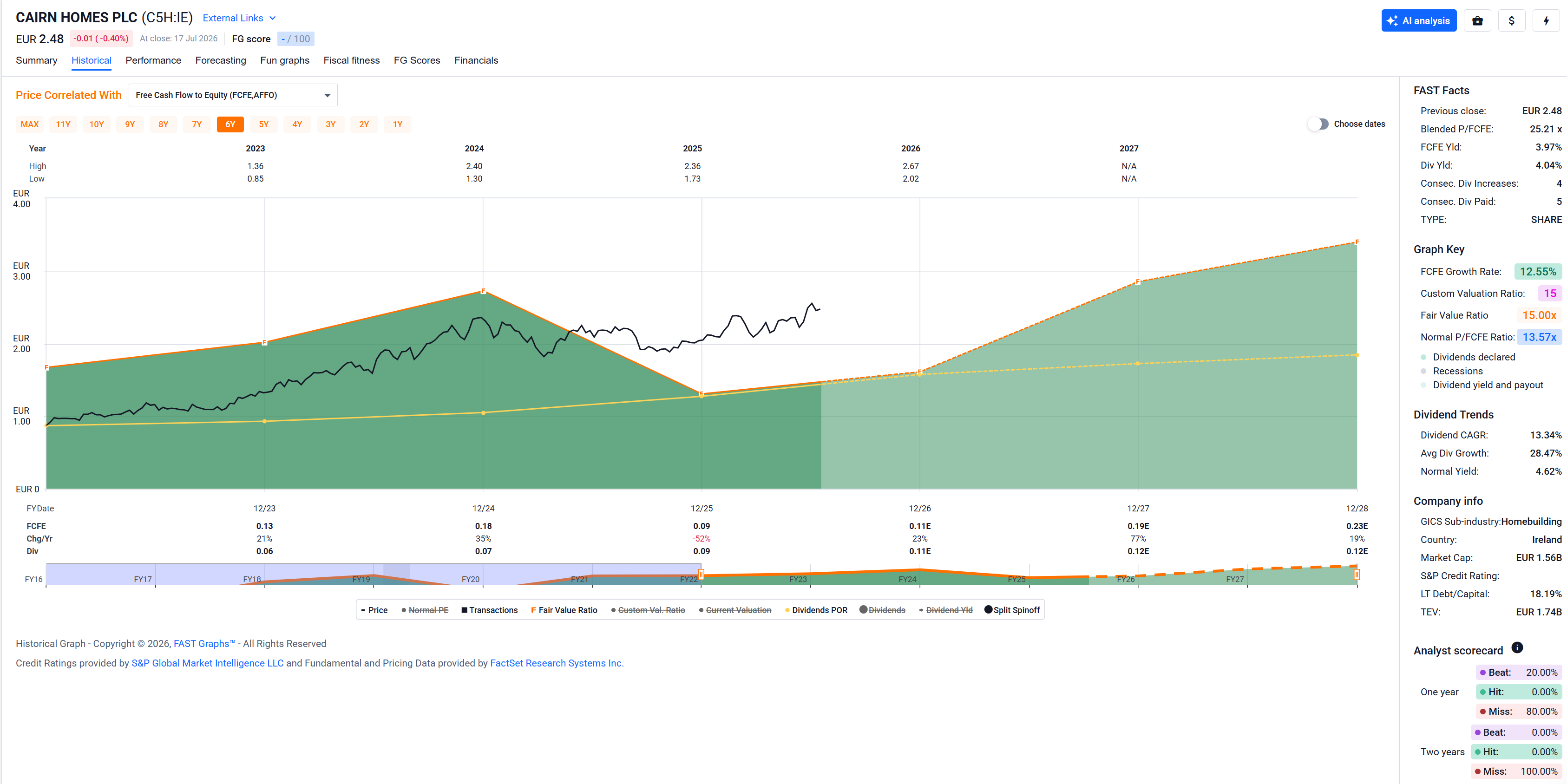
Maybe a little iffy on FCF covering the dividend …
Forecasting:
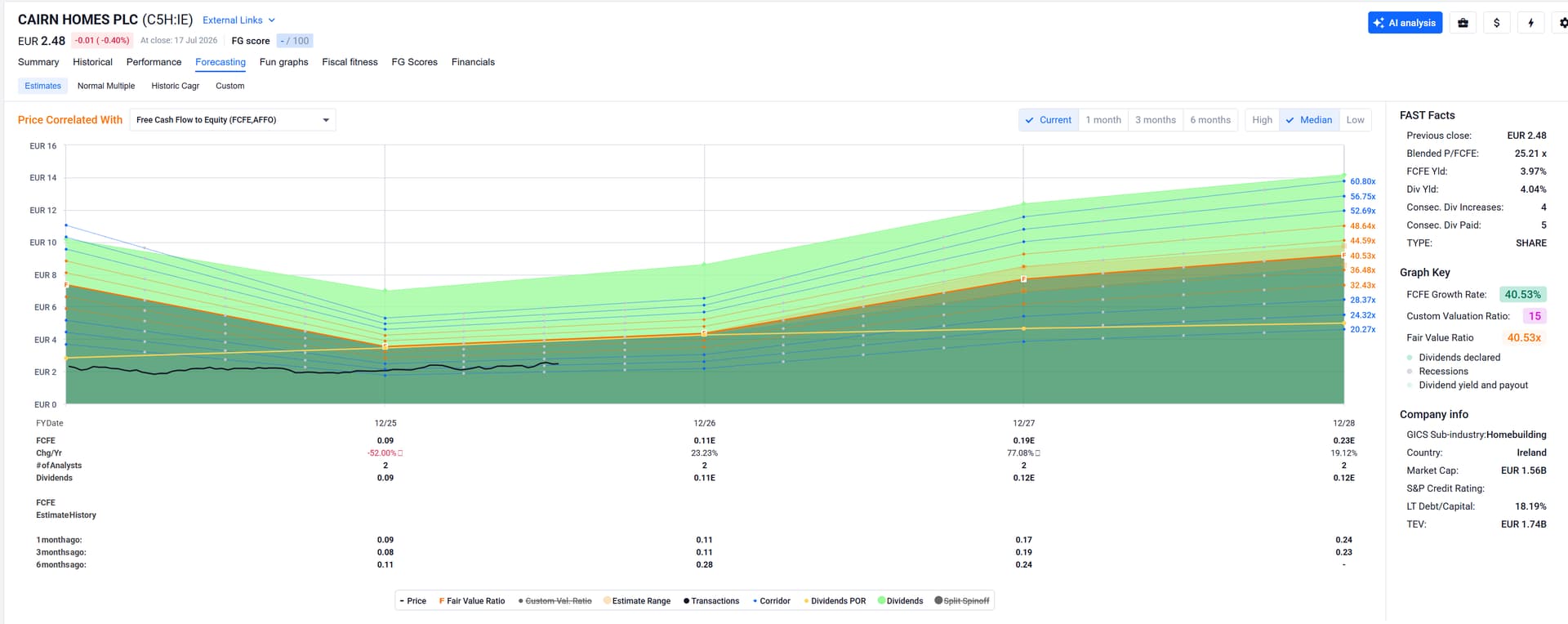
… and only two analysts covering the company.
I like how fast they’ve been growing their dividend (13.3% CAGR) and how small the company is.
Probably a watchlist candidate only for now.
DCC
DCC Plc engages in the provision of international sales, marketing, and business support services.
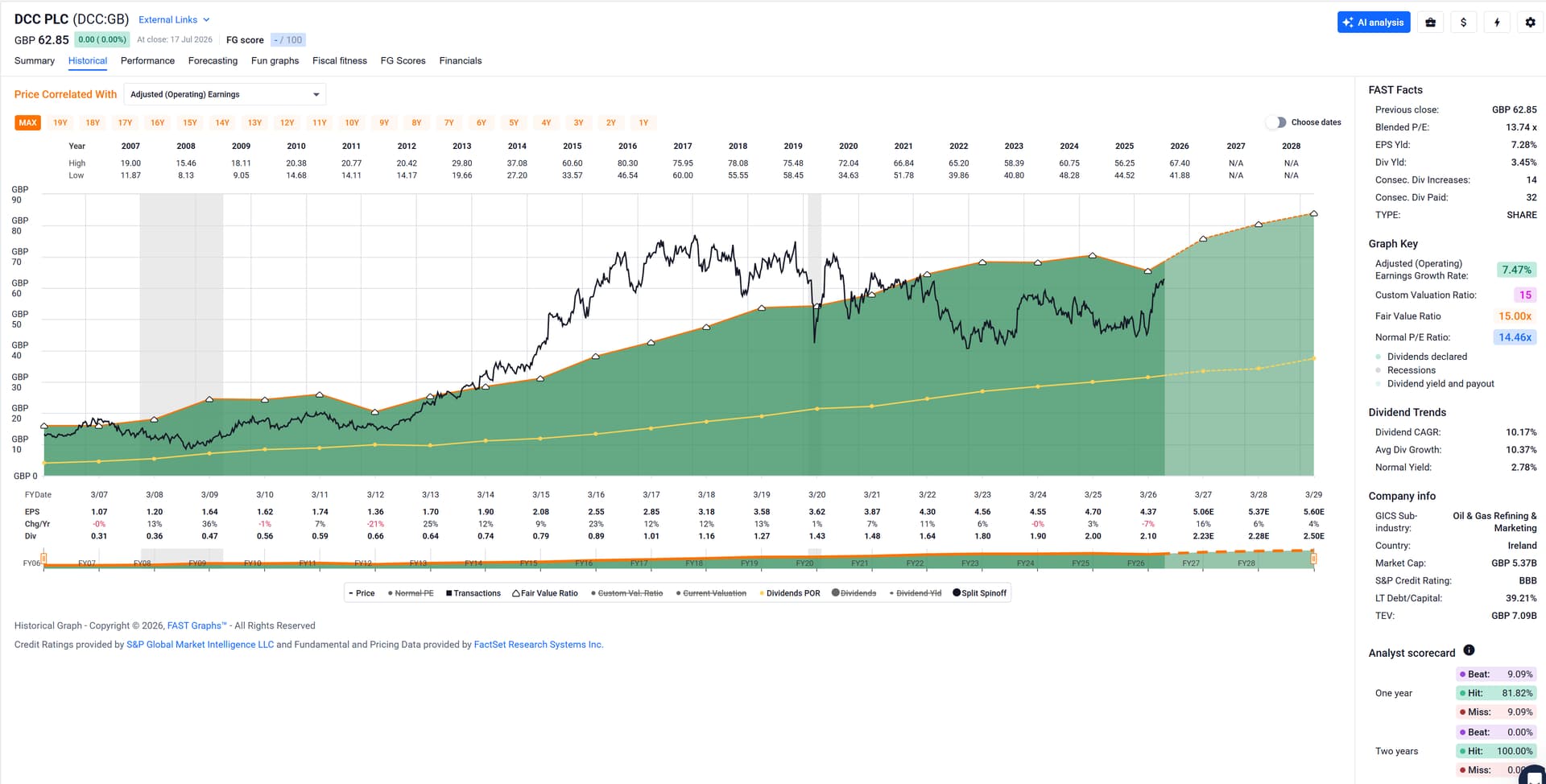
Adjusted Operating Earnings:
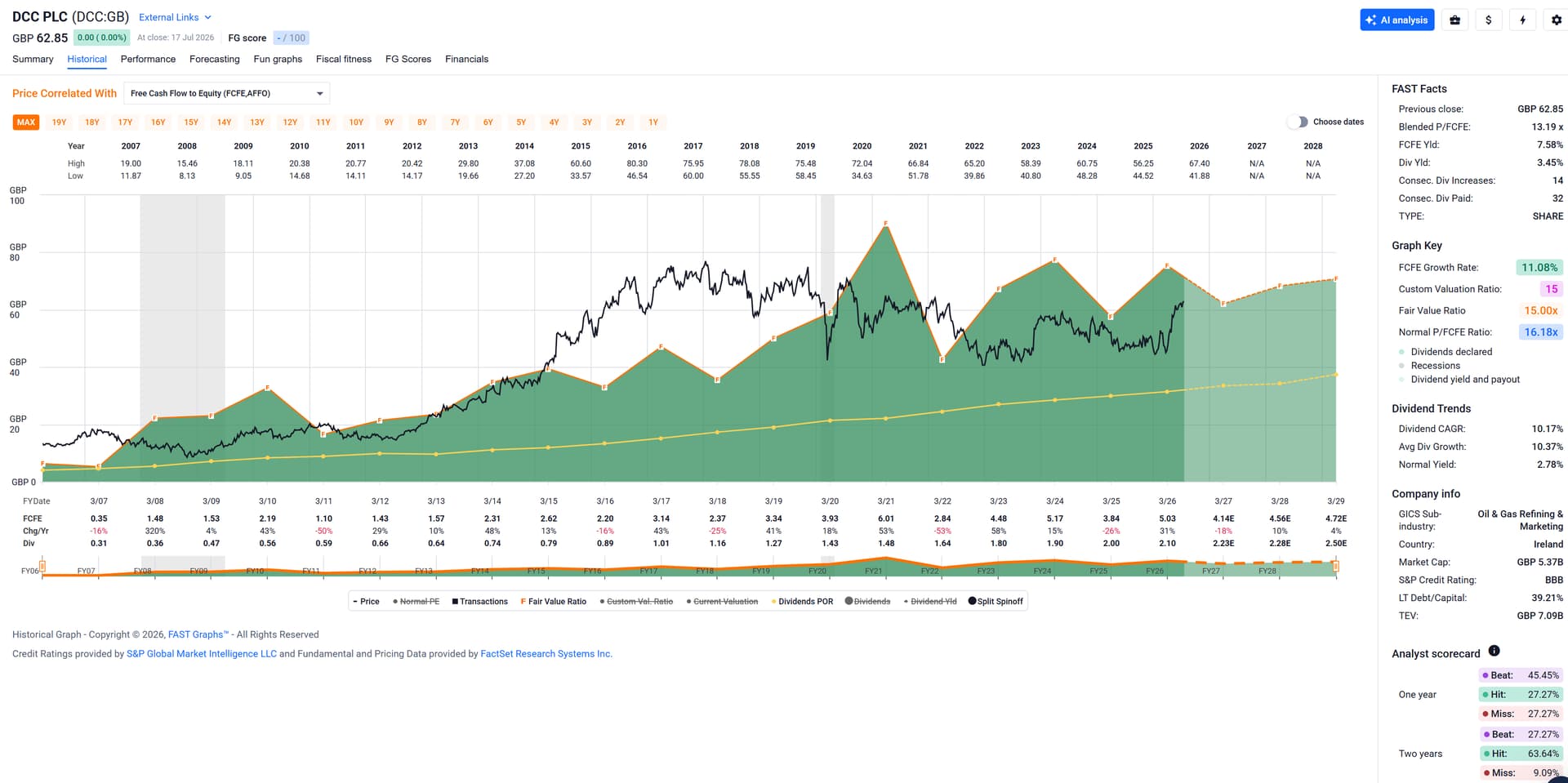
Free Cash Flow:
Sales:
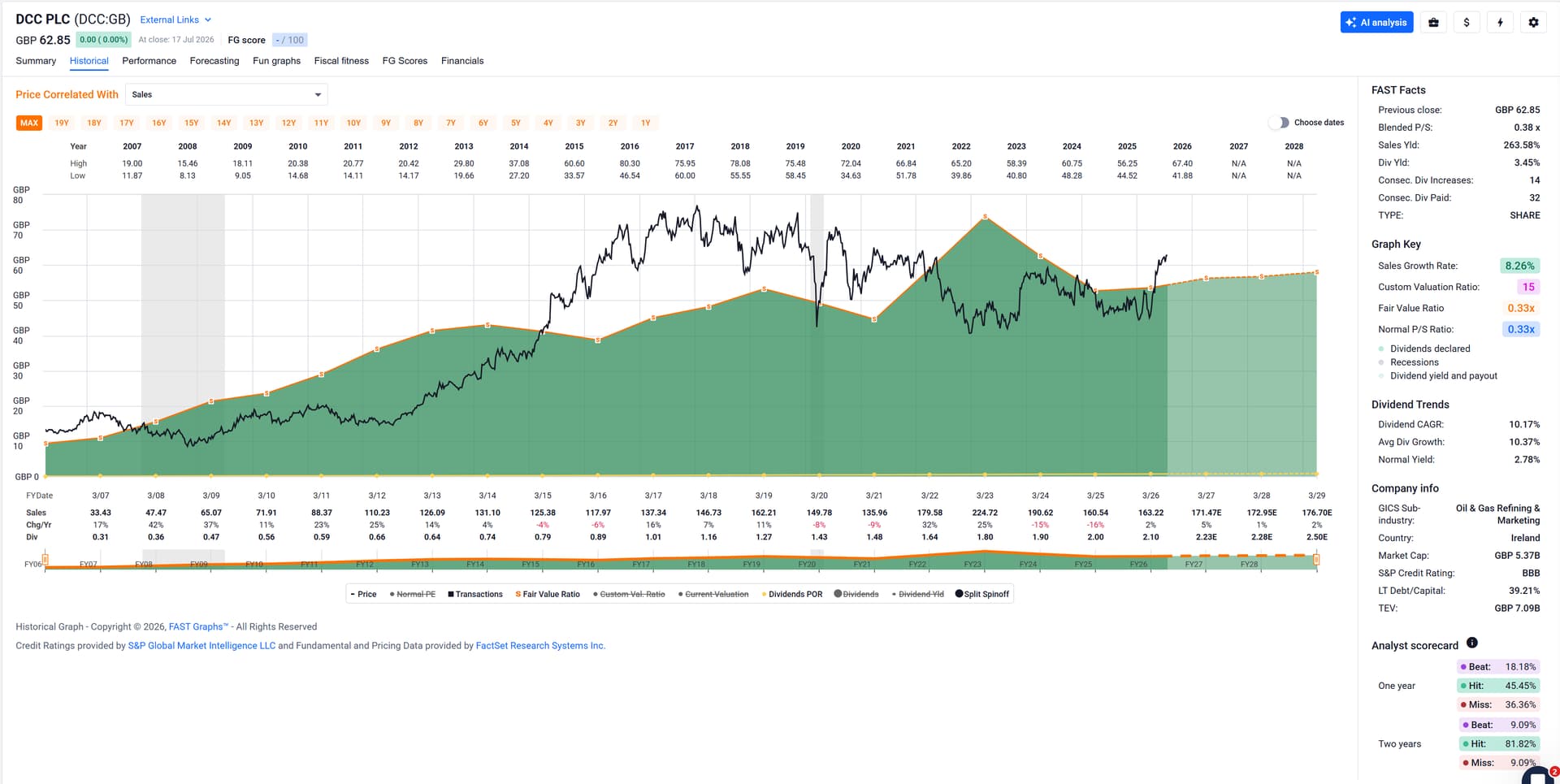
Should’ve looked at this last year when it was cheap. Still has a margin of safety currently.
Dividend CAGR is 10%. Maybe more debt than I’d like, but their BBB credit rating helps.
Looks like a buy to me. One can never have enough energy …
Glanbia
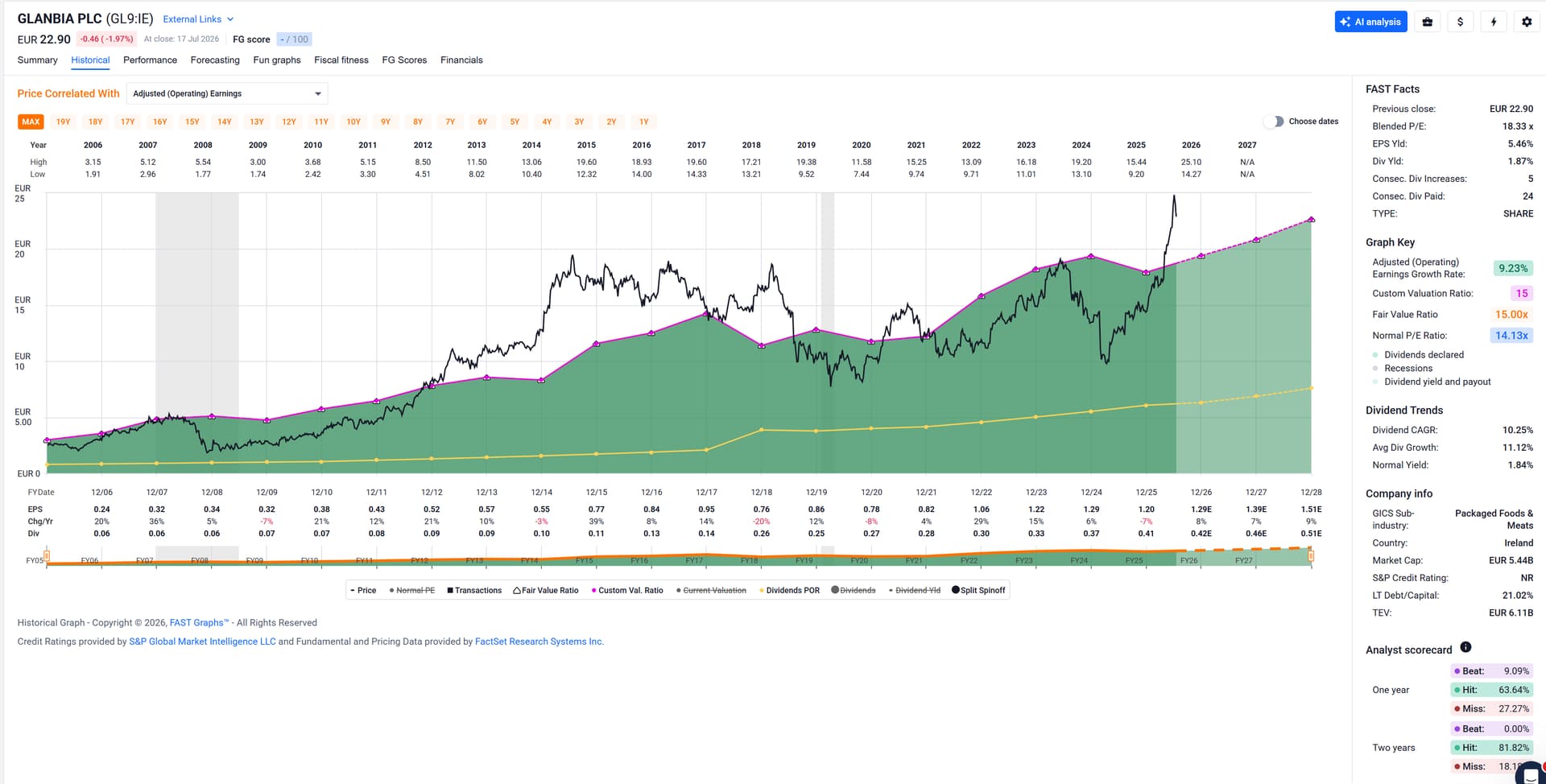
Glanbia Plc engages in the manufacture and distribution of dairy and nutritional ingredients.
Adjusted Operating Earnings:
Free Cash Flow:
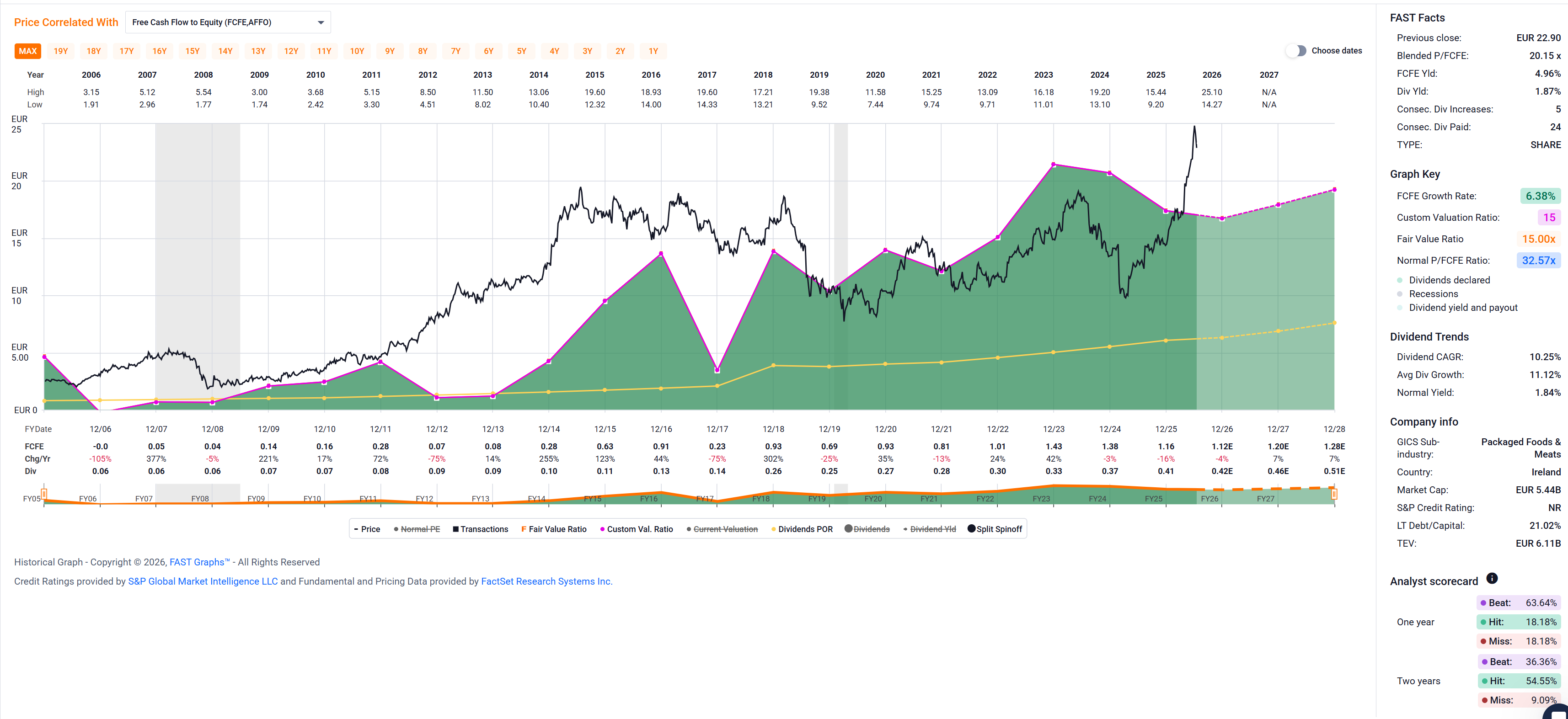
Currently overvalued, so only a watchlist candidate for now, but I like the earnings growth and the dividend CAGR of 10%.
Kerry Group
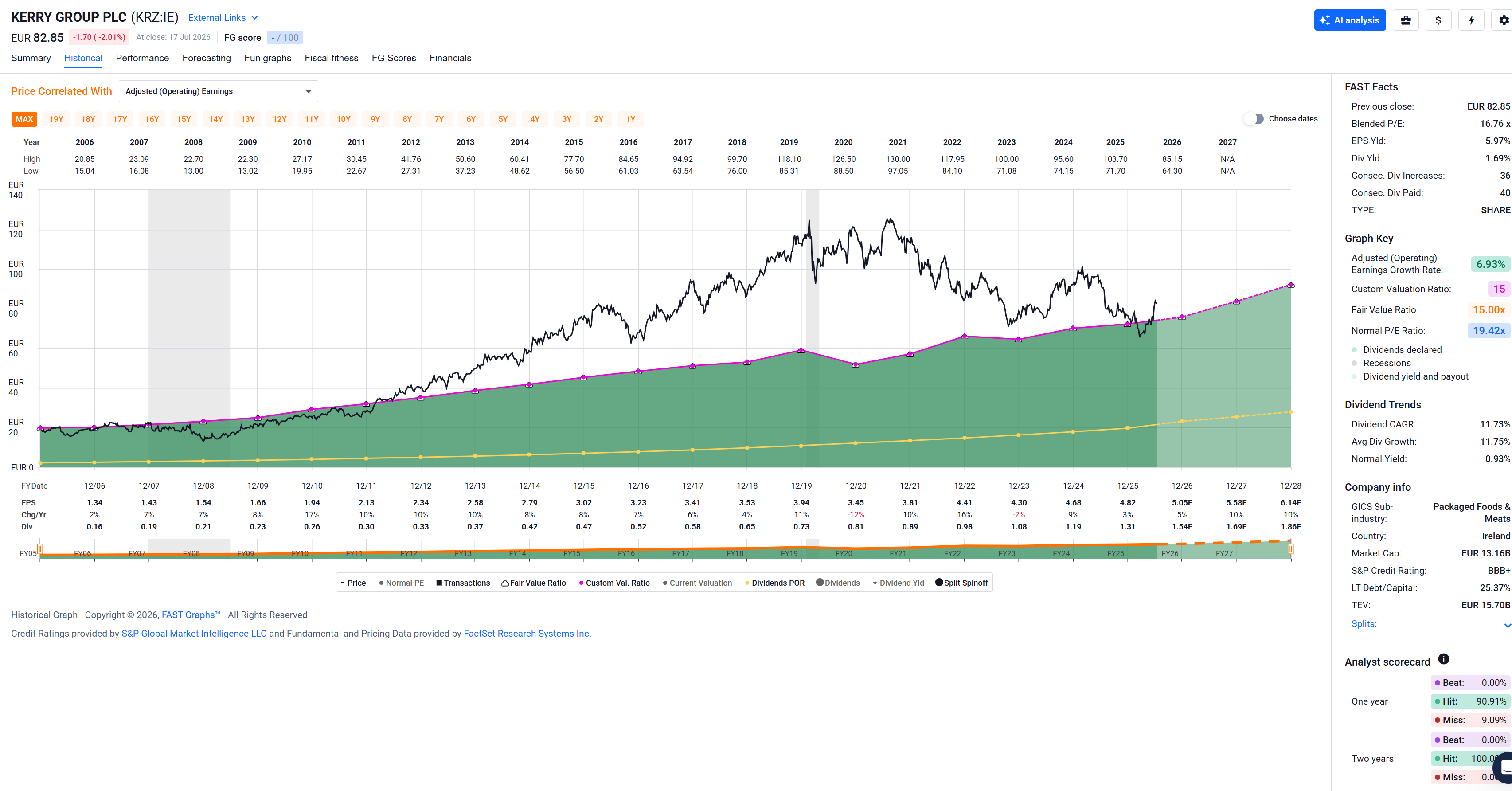
Kerry Group Plc engages in the manufacture and distribution of food and beverages.
Adjusted Operating Earnings:
Free Cash Flow:
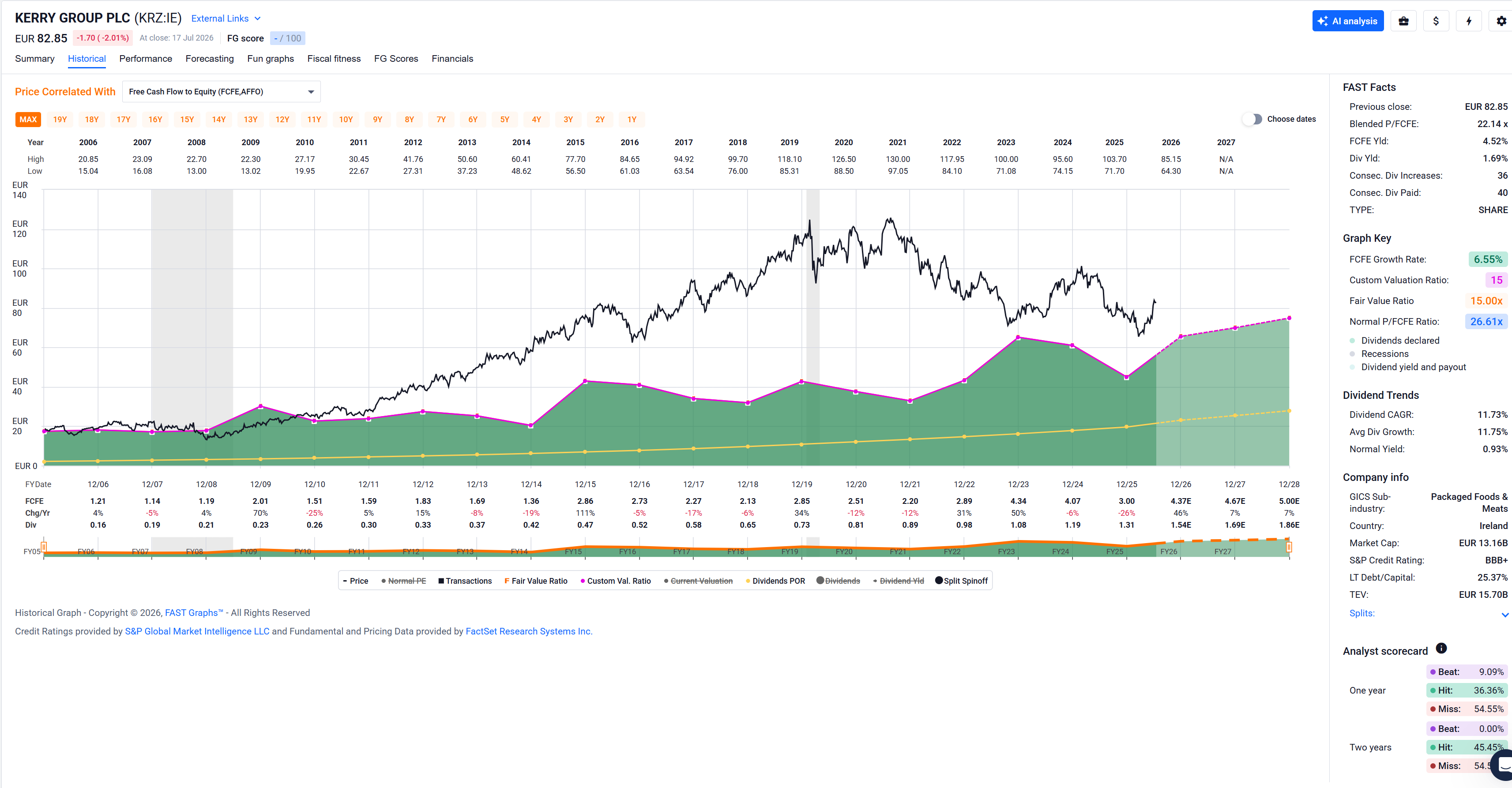
Slighly overvalued right now, nice dividend CAGR of almost 12%, low on debt, very nice BBB+ credit rating. Low dividend yield, alas.
Watchlist candidate for now.
Grafton Group
Grafton Group Plc engages in the distribution of construction products. It operates through the following geographical segments: Island of Ireland, Great Britain, Northern Europe, and Iberia.
Adjusted Operating Earnings:
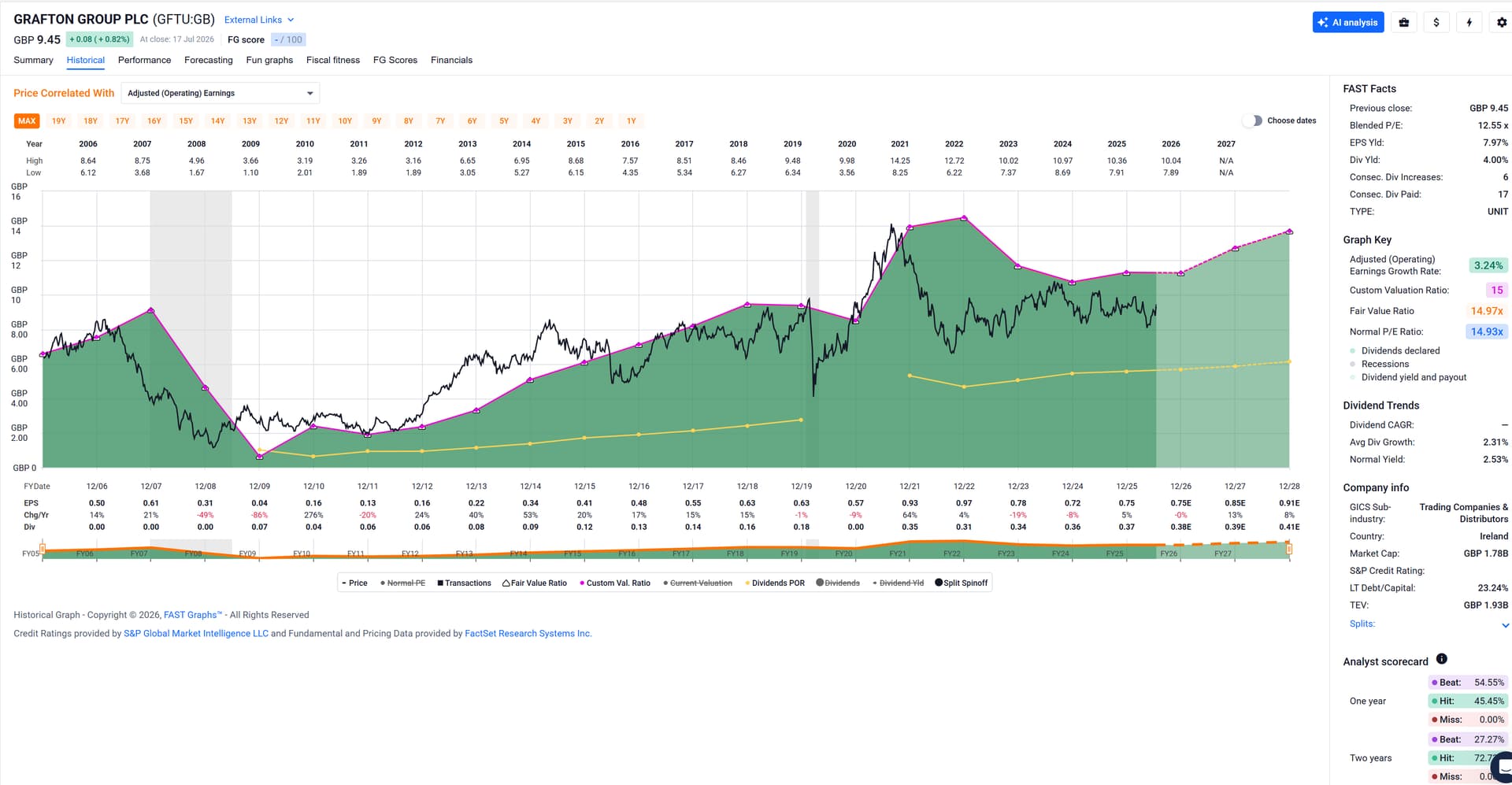
Kind of a hiccup there during COVID-19, but the made up for it somewhat in the following year and then returned to the path of slowly raising their dividend.
Free Cash Flow:
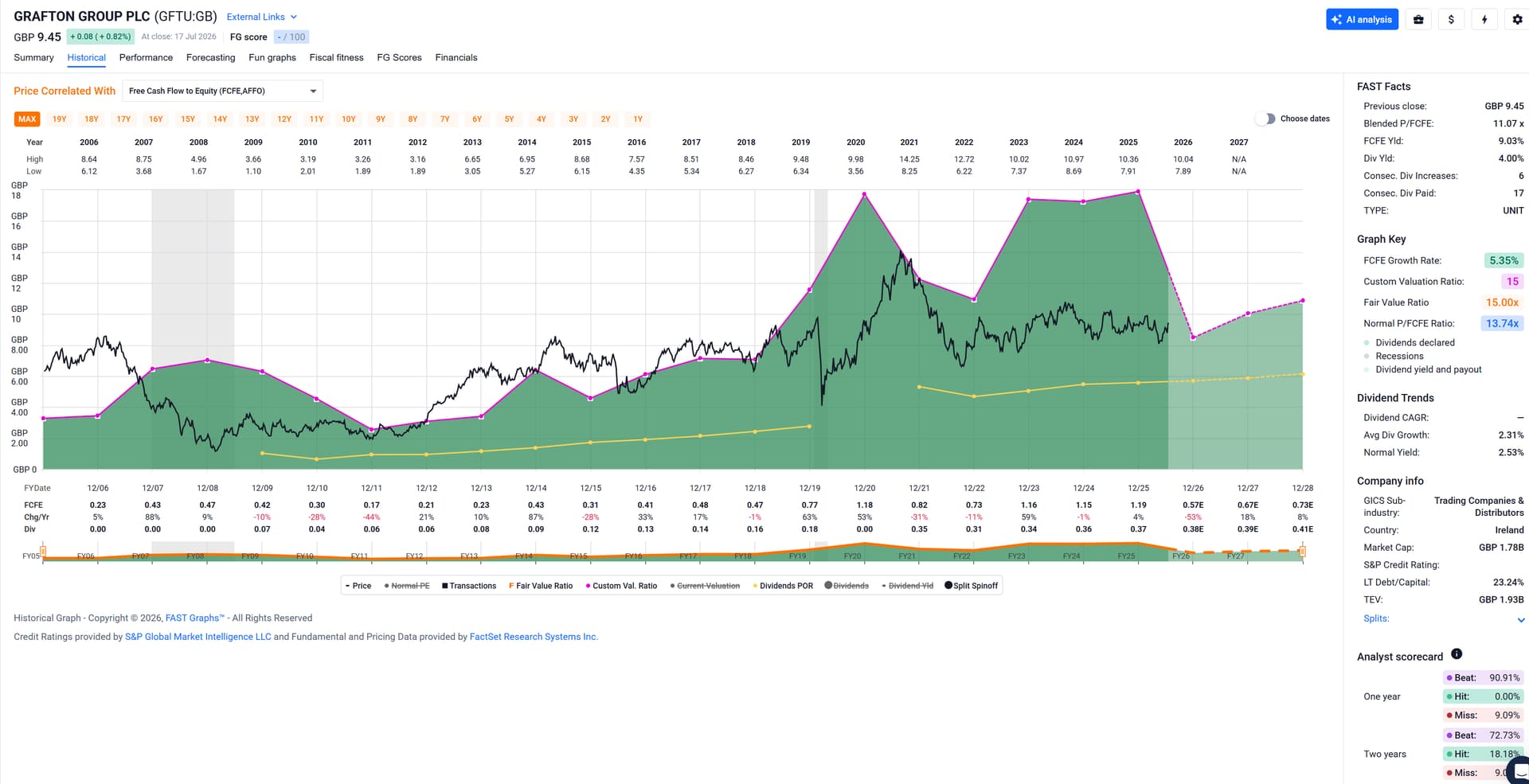
Probably just a watchlist addition for now and a company that needs a little more research but in principle fairly attractive (at least relative to VXUS).